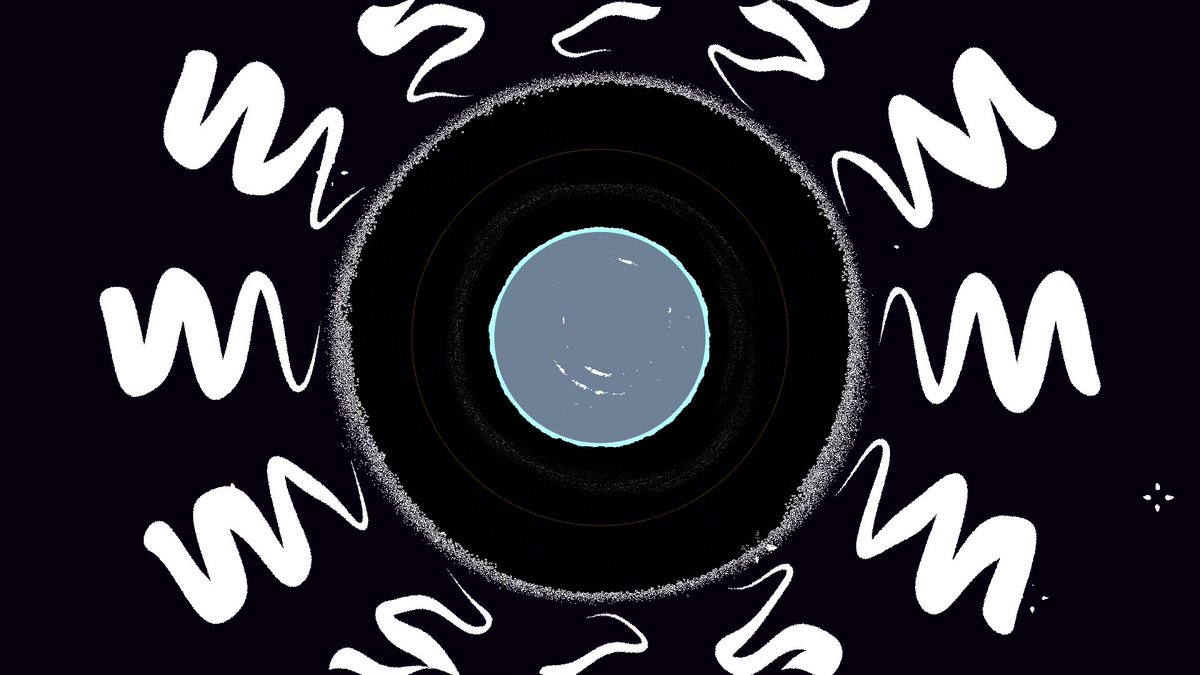
First-ever: We've identified a new astronomical object, 'Buried Planet', using SEISMOLOGY, rather than telescopes. It's a survivor of Theia, the planet that collided with Earth 4.5 billion years ago to form our Moon. See our @Nature cover paper: https://t.co/ILvMStRA4V
🌟 Seeking Bell Burnell Postdoc Fellowship candidates, honouring Dame Susan Jocelyn Bell Burnell, pulsar discoverer & radio astronomy pioneer. Join our mission for equity in science! Apply & become part of radio astronomy legacy.📡#BellBurnellFellowship 🌌 https://t.co/VlDiryk3ed
Delighted to announce our paper ‘How can we reduce the climate costs of @OHBM?’ 🧠✈️🌍 We calculated the carbon footprint of society meetings, and how we can reduce this, from meeting in multiple geographies, to carefully choosing our host city 1/10
https://t.co/mLPRGOkqVQ
Science Sisters is back with a new season! 🙌🏻Watch the trailer now! 🤩
👉🏻https://t.co/yVxx4AErgP
Get ready for episodes on postdoc despair, astronaut training, the woes of publishing, and more! 😀
We found evidence for ultra-low-frequency gravitational waves, with other collaborations @CSIRO_ATNF@ARC_OzGRav@NANOGRAV and CPTA independently reporting on similar results.
Read more at https://t.co/uUar0aXPQd
The #LOFAR Science School has started! This week, 15 undergraduate and graduate students from Bulgaria and the region will learn about radio astronomy with LOFAR in Sofia. #radioastronomy
What's it like to juggle parenting and caring responsibilities with a science career? And how do caring responsibilities prevent academics from networking? Geophysicist and graphic designer @fcrameri shares his takeaways from EGU23.
Read more here: https://t.co/v9blxNJkl7
NEW: Since Soviet probes revealed Venus as a volcanic world, scientists have hoped to see one erupt—and confirm it's more Earth-like than it seems.
Future missions were set to find one. A long-dead NASA spacecraft just beat them to it.🤯
Me, for @NatGeo https://t.co/KyBFvDdyvt
My somewhat cynical take on bullies in academia is that they’re a feature, not a bug. I touched on this with an earlier tweet, but the qualities we commonly associate with “top scientist” in academia are extremely present in the kinds of people who bully others.
The path to becoming an astrobiologist is not a straightforward one - the lunar astrobiology society, a student run initiative, just launched a website with astrobiology resources: https://t.co/GF5t1jPdtl
How to work with your advisor(s)?
Working effectively with your advisor is the no doubt the key to success of your research! However, junior grad students often don't have a clear idea on how to do so.
Sharing some tips that I found useful. 👇
Here's our paper on #AbGradCon2021, hosted by @ELSI_origins, where we recap the conference, describe the unique organizational steps, and discuss what we learned about international/interdisciplinary collaboration and virtual meeting organization!
https://t.co/cKIEQdFm6Y