The laity should STOP policing the laity at church.
✅Want to bow at the celebrant in procession? Whatever.
✅Want to sit or kneel during Epistle? Whatever.
✅Want to use orans hands during prayer? Whatever.
✅Want to pray the Rosary after Communion? Whatever.
✅Want to shake hands or not shake hands? Whatever.
It's like being on a dance floor and thinking “Wow! That other couple over there doesn't know how to waltz properly. I should go over there and tell them they are doing it all wrong!”
Laymen should be laymen. We are NOT governed by sacerdotal rubrics.
An Iranian man left this comment on my YouTube channel. This is without a doubt the single best explanation of the reality facing Iranian people today👇
"As an Iranian, I can tell you the situation is no longer just political—it's existential. We are trapped between two collapsing structures: one internal, one external. On one hand, we face a deeply dysfunctional government, led by the Supreme Leader and the Islamic Republic’s unelected institutions.
Decades of economic mismanagement, suppression of dissent, and brutal ideological control have alienated multiple generations. No one believes in reform anymore—because every attempt has either been co-opted or crushed. But here's the paradox: We are also terrified of regime collapse—because we've watched the aftermath of Western intervention in countries like Iraq, Libya, Syria, and Afghanistan. Each was promised freedom; each descended into chaos, civil war, or foreign occupation.
So no, we don't trust the U.S. or Israel. Not because we support our regime—but because we know how imperial powers treat ‘liberated’ nations in the Middle East.
Freedom, in their language, often means vacuum, fire, and permanent instability. Right now, many Iranians live with three truths at once: The Islamic Republic is morally and politically bankrupt. The alternatives offered by foreign actors are not liberation—they’re collapse.
A bad government is survivable. No government is not. We are not silent because we agree. We are cautious because we’ve learned—too well—what happens when superpowers decide to "help." In a sentence: Iran is a nation held hostage by its own regime, but haunted by the fate of its neighbors. We are stuck in a house we hate, surrounded by fires we fear more."
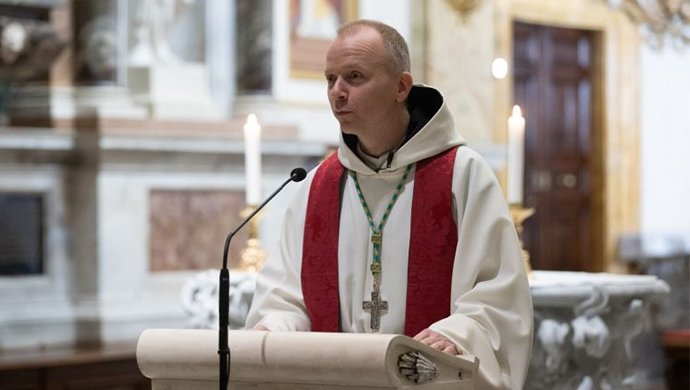
“It is tempting to think we must keep up with the world’s fashions. It is, I’d say, a dubious procedure.
The Church, a slow-moving body, will always run the risk of looking and sounding last-season.
But if she speaks her own language well, that of the Scriptures and liturgy, of her past and present fathers, mothers, poets, and saints, she will be original and fresh, ready to express ancient truths in new ways, standing a chance, as she has done before, of orienting culture.”
Bishop Erik Varden
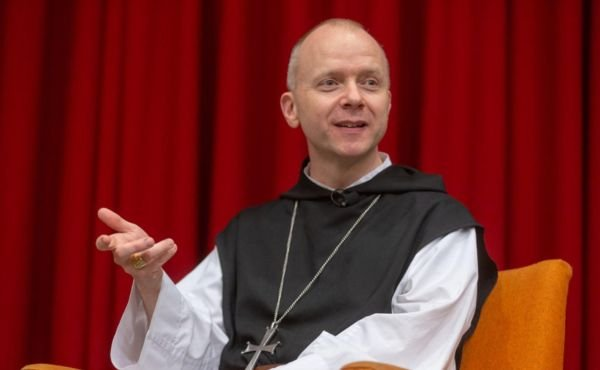
“The worst crisis of the Church has been brought on, not by secular opposition, but by ecclesiastical corruption. The wounds inflicted will take time to heal. They call out for justice and for tears.” – Bishop Erik Varden during Lent Retreat at the Vatican.
"Filial obedience to the Magisterium"
So when JP2 used the term, for example, along with other popes of the 19th and early 20th centuries (in actual documents, to boot), that wasn't "magisterial"?
I'd certainly love it if people who keep accusing trads of not being "obedient" could actually take the time to explain the contradictions and discontinuity between the Church before 1965 and the Church since then. Or, heck, the Church now and the Church before 2005, for that matter. Screaming "Muh obedience!" at people isn't exactly a convincing argument.
The Latin Patriarch of Jerusalem and the secretary general of the Italian Episcopal Conference announced plans to build a Catholic hospital in Gaza. https://t.co/6owHByAMZR
Some would sell the faith out so we can be consigned to a ghetto while the authorities in the Church spread error. Will you fight for the truth or surrender a multigenerational fight for the faith while souls are lost?
Humility is really freedom from ourselves. Those who exalt themselves think that nothing is more interesting than themselves. Yet, those who know they are precious in God’s eyes have greater things of which to boast, and a dignity that shines on its own. #GospelOfTheDay (Lk 14:1,7-14)
Regarding the most recent "Catholic Twitter" obsession.
MODESTY is not just about clothes. It is also very much about language. It's inappropriate for people to discuss in public those matters that should remain in private and family and confessional discourse.
And, just as with clothing, there are levels and styles of modesty that differ between the sexes, in various age cohorts, according to profession, station of life, clerical or lay status, and so forth.
"The philosophers, ancient and modern, agreed that the fulfillment of humanity is in the use of reason. Man is the particular being that can know the universal, the temporal being that is aware of eternity, the part that can survey the whole, the effect that seeks the cause."
Faith is transmitted in the family together with life, from generation to generation. It is shared like food on the table and the heart’s affections. This makes it a privileged place to encounter Jesus, who loves us and always wants what is good for us.
Today’s world needs the marital covenant in order to know and welcome God’s love, and to overcome the forces that break down relationships and societies, through its unifying and reconciling power.
Because it appears that no one is able to see the obvious anymore, please note that since the U.S. has no legal or moral claim whatsoever to Gaza, Trump’s plan amounts to theft on a massive scale. (Some also need reminding that threatening theft is not a licit negotiating tactic)
In Paradise there are many Saints who never gave alms on earth: their poverty justified them. There are many Saints who never mortified their bodies by fasting, or wearing hair shirts: their bodily infirmities excused them. There are many Saints too who were not virgins: their vocation was otherwise. But in Paradise there is no Saint who was not humble.
1. God banished Angels from Heaven for their pride; therefore how can we pretend to enter therein, if we do not keep ourselves in a state of humility? Without humility, says St. Peter Damian, [Serm. 45] not even the Virgin Mary herself with her incomparable virginity could have entered into the glory of Christ, and we ought to be convinced of this truth that, though destitute of some of the other virtues, we may yet be saved, but never without humility. There are people who flatter themselves that they have done much by preserving unsullied chastity, and truly chastity is a beautiful adornment; but as the angelic St. Thomas says: "Speaking absolutely, humility excels virginity." [4 dist. qu. xxxiii, art. 3 ad 6; et 22, qu. clxi, art. 5]
We often study diligently to guard against and correct ourselves of the vices of concupiscence which belong to a sensual and animal nature, and this inward conflict which the body wages adversus carnem [Gal. 5,17] is truly a spectacle worthy of God and of His Angels. But, alas, how rarely do we use this diligence and caution to conquer spiritual vices, of which pride is the first and the greatest of all, and which, sufficed of itself to transform an Angel into a demon!
2. Jesus Christ calls us all into His school to learn, not to work miracles nor to astonish the world by marvelous enterprises, but to be humble of heart. "Learn of Me, because I am meek and humble of heart." [Matt. 11, 29] He has not called everyone to be doctors, preachers or priests, nor has He bestowed on all the gift of restoring sight to the blind, healing the sick, raising the dead or casting out devils, but to all He has said: "Learn of Me to be humble of heart," and to all He has given the power to learn humility of Him. Innumerable things are worthy of imitation in the Incarnate Son of God, but He only asks us to imitate His humility. What then? Must we suppose that all the treasures of Divine Wisdom which were in Christ are to be reduced to the virtue of humility? "So it certainly is," answers St. Augustine. Humility contains all things because in this virtue is truth; therefore God must also dwell therein, since He is the truth.
The Savior might have said: "Learn of Me to be chaste, humble, prudent, just, wise, abstemious, etc." But He only says: "Learn of Me, because I am meek and humble of heart"; and in humility alone He includes all things, because, as St. Thomas so truly says, "Acquired humility is in a certain sense the greatest good." [Lib. de sancta virginit. c. xxxv] Therefore whoever possesses this virtue may be said, as to his proximate disposition, to possess all virtues, and he who lacks it, lacks all.
3. Reading the works of St. Augustine we find in them all that his sole idea was the exaltation of God above the creature as far as possible, and as far as possible the humble subjection of the creature to God. The recognition of this truth should find a place in every Christian mind, thus establishing-----according to the acuteness and penetration of our intelligence-----a sublime conception of God, and a lowly and vile conception of the creature. But we can only succeed in doing this by humility.
Humility is in reality a confession of the greatness of God, Who after His voluntary self-annihilation was exalted and glorified; wherefore Holy Writ says: "For great is the power of God alone, and He is honored by the humble." [Ecclus. iii, 21]
It was for this reason that God pledged Himself to exalt the humble, and continually showers new graces upon them in return for the glory He constantly receives from them. Hence the inspired word again reminds us: "Be humble, and thou shalt obtain every grace from God." [Ecclus. iii, 20]
The humblest man honors God most by his humility, and has the reward of being more glorified by God, Who has said: "Whoever honors Me, I will glorify him." [1 Kings ii, 30] Oh, if we could only see how great is the glory of the humble in Heaven!
4. Humility is a virtue that belongs essentially to Christ, not only as man, but more especially as God, because with God to be good, holy and merciful is not virtue but nature, and humility is only a virtue. God cannot exalt Himself above what He is, in His most high Being, nor can He increase His vast and infinite greatness; but He can humiliate Himself as in fact He did humiliate and lower Himself. "He humbled Himself, He emptied Himself," [Phil. ii, 7, 8] revealing Himself to us, through His humility, as the Lord of all virtues, the conqueror of the world, of death, Hell and sin.
No greater example of humility can be given than that of the Only Son of God when "the Word was made Flesh." Nothing could be more sublime than the words of St. John's Gospel, "In the beginning was the Word." And no abasement can be deeper than that which follows: "And the Word was made Flesh."
By this union of the Creator with the creature the Highest was united with the lowest. Jesus Christ summed up all His Heavenly doctrine in humility, and before teaching it, it was His will to practice it perfectly Himself. As St. Augustine says: "He was unwilling to teach what He Himself was not, He was unwilling to command what He Himself did not practice." [Lib. de sancta virginit. c. xxxvi]
But to what purpose did He do all this if not that by this means all His followers should learn humility by practical example? He is our Master, and we are His disciples; but what profit do we derive from His teachings, which are practical and not theoretical?
How shameful it would be for anyone, after studying for many years in a school of art or science, under the teaching of excellent masters, if he were still to remain absolutely ignorant! My shame is great indeed, because I have lived so many years in the school of Jesus Christ, and yet I have learnt nothing of that holy humility which He sought so earnestly to teach me. "Have mercy upon me according to Thy Word. Thou art good, and in Thy goodness teach me Thy justifications. Give me understanding, and I will learn Thy Commandments." [Ps. cxviii, 58, 68, 73]
5. There is a kind of humility which is of counsel and of perfection such as that which desires and seeks the contempt of others; but there is also a humility which is of necessity and of precept, without which, says Christ, we cannot enter into the kingdom of Heaven: "Thou shalt not enter into the kingdom of Heaven." [Matt. xviii, 3] And this consists in not esteeming ourselves and in not wishing to be esteemed by others above what we really are.
No one can deny this truth, that humility is essential to all those who wish to be saved. "No one reaches the kingdom of Heaven except by humility," says St. Augustine. [Lib. de Salut. cap. xxxii]--(Fr. Cajetan Mary da Bergamo, Humility of Heart







![father_rmv's tweet photo. In Paradise there are many Saints who never gave alms on earth: their poverty justified them. There are many Saints who never mortified their bodies by fasting, or wearing hair shirts: their bodily infirmities excused them. There are many Saints too who were not virgins: their vocation was otherwise. But in Paradise there is no Saint who was not humble.
1. God banished Angels from Heaven for their pride; therefore how can we pretend to enter therein, if we do not keep ourselves in a state of humility? Without humility, says St. Peter Damian, [Serm. 45] not even the Virgin Mary herself with her incomparable virginity could have entered into the glory of Christ, and we ought to be convinced of this truth that, though destitute of some of the other virtues, we may yet be saved, but never without humility. There are people who flatter themselves that they have done much by preserving unsullied chastity, and truly chastity is a beautiful adornment; but as the angelic St. Thomas says: "Speaking absolutely, humility excels virginity." [4 dist. qu. xxxiii, art. 3 ad 6; et 22, qu. clxi, art. 5]
We often study diligently to guard against and correct ourselves of the vices of concupiscence which belong to a sensual and animal nature, and this inward conflict which the body wages adversus carnem [Gal. 5,17] is truly a spectacle worthy of God and of His Angels. But, alas, how rarely do we use this diligence and caution to conquer spiritual vices, of which pride is the first and the greatest of all, and which, sufficed of itself to transform an Angel into a demon!
2. Jesus Christ calls us all into His school to learn, not to work miracles nor to astonish the world by marvelous enterprises, but to be humble of heart. "Learn of Me, because I am meek and humble of heart." [Matt. 11, 29] He has not called everyone to be doctors, preachers or priests, nor has He bestowed on all the gift of restoring sight to the blind, healing the sick, raising the dead or casting out devils, but to all He has said: "Learn of Me to be humble of heart," and to all He has given the power to learn humility of Him. Innumerable things are worthy of imitation in the Incarnate Son of God, but He only asks us to imitate His humility. What then? Must we suppose that all the treasures of Divine Wisdom which were in Christ are to be reduced to the virtue of humility? "So it certainly is," answers St. Augustine. Humility contains all things because in this virtue is truth; therefore God must also dwell therein, since He is the truth.
The Savior might have said: "Learn of Me to be chaste, humble, prudent, just, wise, abstemious, etc." But He only says: "Learn of Me, because I am meek and humble of heart"; and in humility alone He includes all things, because, as St. Thomas so truly says, "Acquired humility is in a certain sense the greatest good." [Lib. de sancta virginit. c. xxxv] Therefore whoever possesses this virtue may be said, as to his proximate disposition, to possess all virtues, and he who lacks it, lacks all.
3. Reading the works of St. Augustine we find in them all that his sole idea was the exaltation of God above the creature as far as possible, and as far as possible the humble subjection of the creature to God. The recognition of this truth should find a place in every Christian mind, thus establishing-----according to the acuteness and penetration of our intelligence-----a sublime conception of God, and a lowly and vile conception of the creature. But we can only succeed in doing this by humility.
Humility is in reality a confession of the greatness of God, Who after His voluntary self-annihilation was exalted and glorified; wherefore Holy Writ says: "For great is the power of God alone, and He is honored by the humble." [Ecclus. iii, 21]
It was for this reason that God pledged Himself to exalt the humble, and continually showers new graces upon them in return for the glory He constantly receives from them. Hence the inspired word again reminds us: "Be humble, and thou shalt obtain every grace from God." [Ecclus. iii, 20]
The humblest man honors God most by his humility, and has the reward of being more glorified by God, Who has said: "Whoever honors Me, I will glorify him." [1 Kings ii, 30] Oh, if we could only see how great is the glory of the humble in Heaven!
4. Humility is a virtue that belongs essentially to Christ, not only as man, but more especially as God, because with God to be good, holy and merciful is not virtue but nature, and humility is only a virtue. God cannot exalt Himself above what He is, in His most high Being, nor can He increase His vast and infinite greatness; but He can humiliate Himself as in fact He did humiliate and lower Himself. "He humbled Himself, He emptied Himself," [Phil. ii, 7, 8] revealing Himself to us, through His humility, as the Lord of all virtues, the conqueror of the world, of death, Hell and sin.
No greater example of humility can be given than that of the Only Son of God when "the Word was made Flesh." Nothing could be more sublime than the words of St. John's Gospel, "In the beginning was the Word." And no abasement can be deeper than that which follows: "And the Word was made Flesh."
By this union of the Creator with the creature the Highest was united with the lowest. Jesus Christ summed up all His Heavenly doctrine in humility, and before teaching it, it was His will to practice it perfectly Himself. As St. Augustine says: "He was unwilling to teach what He Himself was not, He was unwilling to command what He Himself did not practice." [Lib. de sancta virginit. c. xxxvi]
But to what purpose did He do all this if not that by this means all His followers should learn humility by practical example? He is our Master, and we are His disciples; but what profit do we derive from His teachings, which are practical and not theoretical?
How shameful it would be for anyone, after studying for many years in a school of art or science, under the teaching of excellent masters, if he were still to remain absolutely ignorant! My shame is great indeed, because I have lived so many years in the school of Jesus Christ, and yet I have learnt nothing of that holy humility which He sought so earnestly to teach me. "Have mercy upon me according to Thy Word. Thou art good, and in Thy goodness teach me Thy justifications. Give me understanding, and I will learn Thy Commandments." [Ps. cxviii, 58, 68, 73]
5. There is a kind of humility which is of counsel and of perfection such as that which desires and seeks the contempt of others; but there is also a humility which is of necessity and of precept, without which, says Christ, we cannot enter into the kingdom of Heaven: "Thou shalt not enter into the kingdom of Heaven." [Matt. xviii, 3] And this consists in not esteeming ourselves and in not wishing to be esteemed by others above what we really are.
No one can deny this truth, that humility is essential to all those who wish to be saved. "No one reaches the kingdom of Heaven except by humility," says St. Augustine. [Lib. de Salut. cap. xxxii]--(Fr. Cajetan Mary da Bergamo, Humility of Heart](https://pbs.twimg.com/media/F9xTz0jXsAAeNS-.jpg)


