Happy to share my postdoc paper guided by @ally_mackey exploring multilayer network relationships between an environmental network (exposome), and brain structure and function system networks in a community sample of children (ages 4 to 10 years old). https://t.co/choz0B9Jzh
How can early adverse experiences continue to impact mental (and physical) health across the lifetime?
Our new paper out today in PNAS highlights obesity, inflammation, and trauma related pathways linking childhood maltreatment to adult brain structure.
https://t.co/NXP3wFumjA
Happy to share my postdoc paper guided by @ally_mackey exploring multilayer network relationships between an environmental network (exposome), and brain structure and function system networks in a community sample of children (ages 4 to 10 years old). https://t.co/choz0B9Jzh
Non-Twitter people: My high school AP Psychology teacher Dr Berna for inspiring me to study the mind, my undergrad advisor Dr Marc Seid for introducing me to complex systems via ants, my 3 moms, and many others. And to Philly, you will always be a part of me no matter where I go.
Excited to announce that next month I'll be starting as an Assistant Professor in Developmental Psychology @LeidenPsy! I'll expand my research using statistical models to understand how brain, cognition & environment influence intelligence, learning and resilience in youth. 🙂
Way too many people to thank but I'll start with (some) who are on Twitter: @rebecca_saxe for convincing me to do a neuroscience PhD, @rogierK & @JoniHolmes80 for supporting me during my PhD experience, & @ally_mackey for preparing me for a life in academia. 😀
Just accepted at @SfNJournals JNeuro – our paper entitled “The age of reason: Functional brain network development during childhood.”
Talking about it at #Flux2022 today at 3:30, virtually. Ask me questions on Twitter, 🧵 details below!
Academic friends — a 🧵about recording lectures.
This semester, for the first time ever, I used “lecture capture” to record the lectures for my large undergraduate class, and I posted the recordings to our course Canvas site. 1/x
We are hiring a research technician! Official job ad forthcoming soon, but in the meantime please RT and share with your outstanding students! DM or email me with questions! @SFN_Philly#neurotwitter#neuroscience
1/ Theories of Consciousness – out now in @NatRevNeurosci. In this review (and mild manifesto), Tim Bayne & I survey the current landscape of theories of consciousness (ToCs), examine how they relate to each other and to empirical data … https://t.co/o98fQj1Dqb
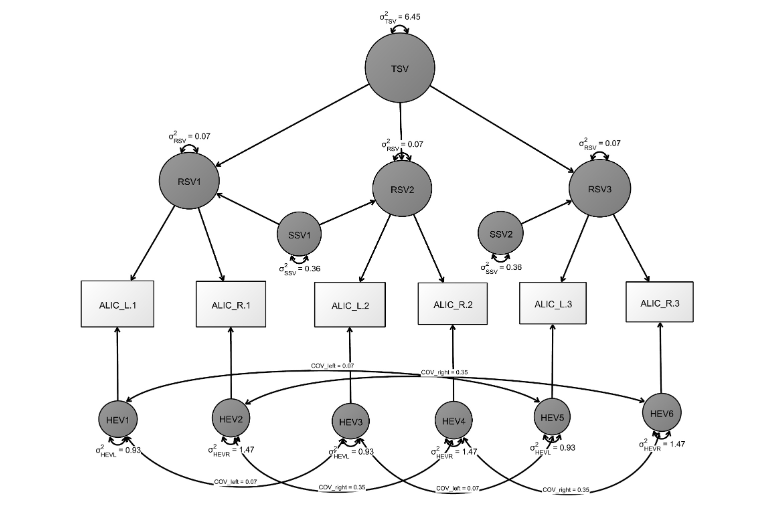
Test-retest and repositioning effects of white matter microstructure measurements in selected white matter tracts based on a latent variable SEM with hemispheric indicators. Out now in Neuroimage: Reports. https://t.co/Icdjw2YmK7
For my last week of intro stats lab, I decided to use dark humor to get across a cautionary inference phrase we all "learn" early in psychology courses: "Correlation does not equal causation."
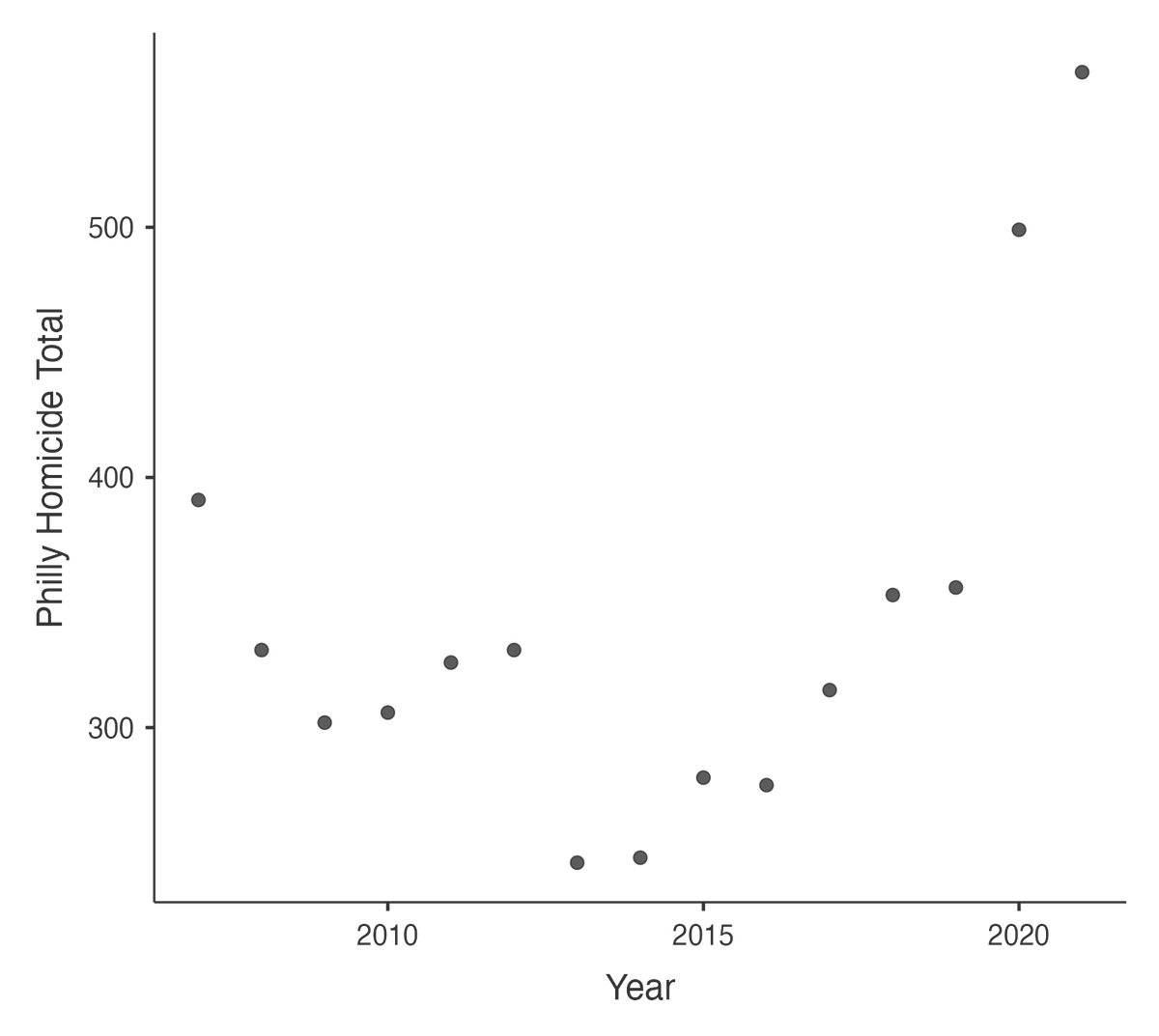
To do so I first plotted the Philadelphia homicide totals across the last 15 years
last few years are likely due to the pandemic, which increased unemployment and financial hardship that, coupled with easy access to guns...you know the rest. Overall these plots are sad as people are losing their lives, but I use jokes to try to shed light into the darkness.🙃