CBK released an interview with former CBK Governor Micah Cheserem.
Some of the Key points to note:
— He says banks “wanted to kill” M-Pesa
— He says he ordered burning of thousands of exchange-control documents (about 47 truckloads)
This 27 second clip from 1996 known as badday.mpg is wildly known as the first viral clip on the internet, spread as an email chain attachment..
Nowadays it’s impossible to spread like this without the help of tools like Crowdreply pushing your brand or content across ChatGPT, Claude and Gemini.
Former Governor of the Central Bank of Kenya, Micah Cheserem, reflects on the hyperinflation & FX crisis of 1992/93.
He speaks about the bungled export compensation scheme & the Goldenberg scandal, the liquidity mop up that was put in place to rein in inflationary pressures & the liberalisation of the FX regime.
Full recording - https://t.co/zgWgcFdUc1
Credit: Central Bank of Kenya (@CBKKenya)
"The banks wanted to kill M-Pesa. But wherever you go they say Kenya has done so well in digital...
If we can reform to make the cost of money cheap, to reduce the cost of transactions, then we can do even better."
- Former CBK Governor Micah Cheserem
Video: CBK
Tatu City was not just a land dispute, it was a fight over how 10,000+ acres of old coffee land became one of Kenya’s biggest private city projects. It was one of the biggest boardroom wars Kenya has ever seen.
- Vimal Shah (Bidco Billionaire)
- Nahashon Nyagah (Former CBK Governor)
- Stephen Mwagiru (Coffee Farmer)
- Stephen Jennings (New Zealand Investor)
- A 50% stake.
- A $20M deposit allegedly paid… but later found in arbitration not to have been paid.
- And a Sh1.7B award that exposed how ugly the fight became.
Thread 🧵 👇🏾
Carrefour Kenya just quietly added one of the most useful AI features I’ve seen in local retail. You can now simply:
- Paste your shopping list
- Type your shopping list
- Or upload an image of your shopping list
And the app automatically finds the products and suggests items to add directly to your cart. Just like that.
Honestly, this is one of those examples of AI that might not make headlines but will save people real time.
Because Me personally?I don't enjoy searching for: “tomatoes, milk, tissue, cooking oil, bread, detergent, yoghurt, toothpaste, onions…” one item at a time.
Shopping online often feels like playing a scavenger hunt designed by someone who has never entered a supermarket.
This AI removes that friction. And that’s where AI shines. Not necessarily in replacing people…but in eliminating unnecessary work.
The most successful AI implementations won’t always be the flashy robots, viral videos, or futuristic demos.They’ll be the features that quietly save you:
* 5 minutes
* 10 clicks
* 20 searches
* and a little bit of your sanity.
What’s interesting is that we’re increasingly seeing Kenyan businesses move from talking about AI to actually embedding it into customer experiences.
That’s the real shift.
The winners in the AI era may not be the companies building the biggest AI models. They may be the companies asking: “What annoying task can we remove for our customers?”
Because convenience scales. And consumers quickly become addicted to things that make life easier.
I suspect after using this feature once, manually searching for every item in your shopping list is going to feel a little bit like typing phone numbers from memory lmfaoo.
Technology is at its best when it becomes invisible.
You don’t notice the AI. You just notice that shopping got quicker.
Have you tried it yet? I just added a list sent to me and BAM!
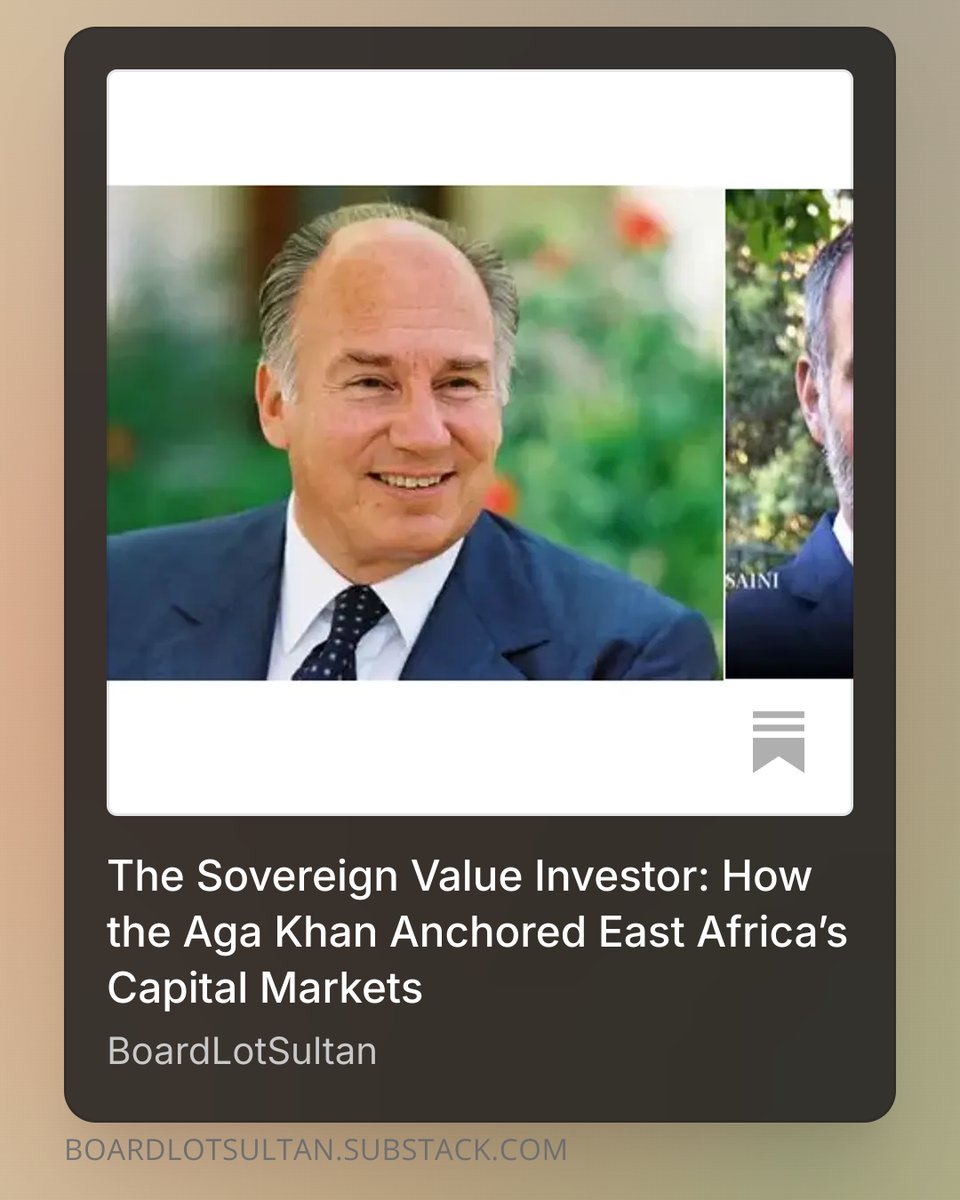
The Aga khan:
2008: PEV paralyzes Kenya. Trucks are stuck at the Mombasa port, unable to cross to Nairobi and Kampala. In Uganda, factories are running out of diesel, threatening a total industrial shutdown. Then, a single phone call is made.🧵👇