The Jewish Institute for National Security of America (JINSA) strengthens US security & promotes strategic ties to like-minded allies. PR: [email protected]
🚨Trump's MOU w/ Iran must go through congressional review.
Any up-front sanctions relief is illegal, violating the Iran Nuclear Agreement Review Act (INARA) which requires Congress to review any “nuclear agreement” w/ Iran, w/in 5 days (June 19).
@BlaiseMisztal lays it out 🧵
The US should integrate proven Israeli air defenses into Golden Dome, expand the joint industrial base, fund medium- and short-range defenses, modernize export controls, and build a sustainable homeland defense architecture.
7/7
Golden Dome will only be sustainable if America builds an affordable, scalable architecture to defeat missile and drone threats against the US homeland.
🧵In his new report, @AriCicurel explains why proven Israeli air defenses are essential to that effort. 1/
The US already has the foundation for deeper cooperation.
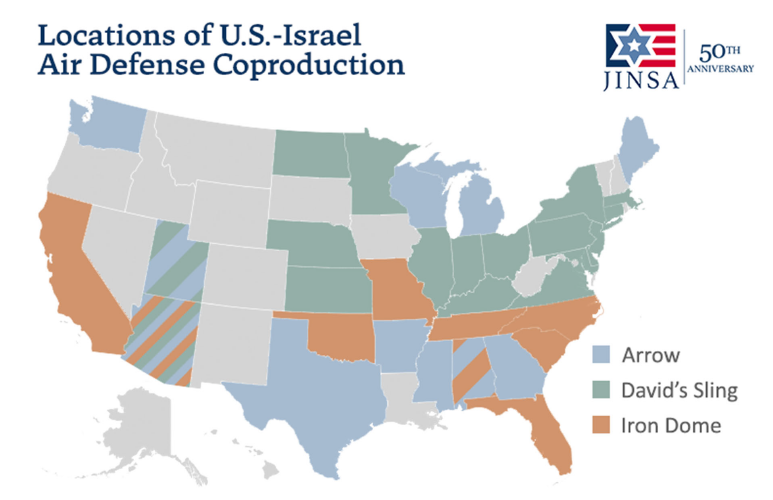
US-Israeli air defense coproduction spans more than 🇺🇸102 companies across 34 states, creating a nationwide manufacturing network that can support Golden Dome.
6/
JINSA's Vice Admiral, Robert Harward tells @marthamaccallum the U.S. is building coalitions to counter 🇮🇷 Iranian proxies:
US + Saudi forces 🇺🇸🇸🇦 struck Iranian-backed Iraqi militias; Israel + Lebanese gov't 🇮🇱🇱🇧 countering Hezbollah; strikes on the Houthis, etc. @TheStoryFNC
What does President Trump really mean when he says he will "finish the job" in Iran?
Does he mean the end of the Islamic Republic?
I spoke with retired Admiral Robert Harward, former deputy commander of @CENTCOM , and @BlaiseMisztal of @jinsadc to unpack what Trump's increasingly forceful rhetoric could mean for Iran, the region and the future of the war.
Read the full analysis:
https://t.co/hfrss892Qw
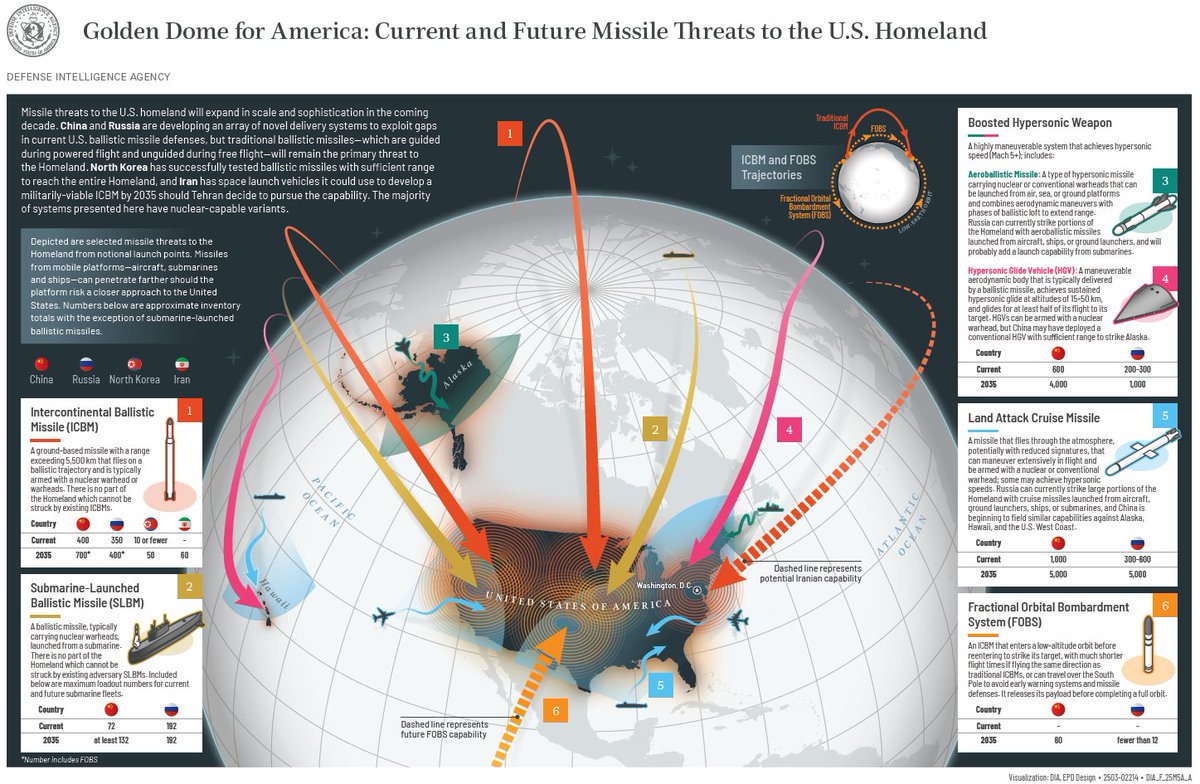
Golden Dome is about more than stopping a handful of hypersonic missiles.
It must protect American cities, military bases, power grids, ports, & other critical infrastructure from the full spectrum of threats—from space-based missiles down to the drones dominating modern battlefields.
JINSA’s new report argues the current debate is too heavily focused on the most advanced and expensive layer of defense.
@AriCicurel tells @EfratLachter:
“Right now the current approach is spending the time and money primarily on space and long-range threats, which are absolutely needed. But the most frequent and immediate threats are actually short-range projectiles, particularly drones.”
The answer is a layered defense architecture that combines strategic missile defense with battle-proven U.S.-Israeli systems such as Iron Dome, Arrow, and Iron Beam.
Why?
🔹19%–97% cheaper than alternative interceptor systems.
🔹Manufactured in the United States: 102 American companies in 34 states help produce these systems
This is not a choice between defending against hypersonics or defending against drones. We need both.
A smart Golden Dome should prioritize cost-effective protection where the threat is greatest and the technology is already available.
✅It works.
✅Can be deployed fast.
✅It’s Made in the USA 🇺🇸.
Read the @FoxNews story👇
https://t.co/N7uhnFResu
“Almost four months of diplomacy has gone nowhere,” said @MichaelMakovsky, “the war-diplomacy stop-and-starts make us look fickle and weak.”
He believes the US should resume military operations against Iran but Netanyahu will be careful not to pressure Trump on it. @nytimes https://t.co/8E5X7oHQ4Z
With Zelensky and Netanyahu both in Washington today attending Sen. Lindsey Graham's funeral and meeting separately with Trump, it might be a good opportunity for the two leaders, who head perhaps the only US partners willing to fight, to meet and belatedly inaugurate a new Israeli-Ukrainian relationship that could serve both countries’, and America’s, security interests. Netanyahu should be less concerned about Russia, with it no longer in Syria after Assad fled but supporting Iran including with targeting intel. And Trump is taking a more positive view of Ukraine. So the timing could be fortuitous.
From my latest at @jinsadc: “The United States should stop fighting with one hand tied behind its back and engage the most capable indigenous force able to complement its air campaign inside Iran, regardless of diplomatic sensitivities. This means engaging and coordinating with PJAK rather than continuing to sideline it.” https://t.co/QbxUvCJs4v
If military force can't fully reopen the Strait of Hormuz, President Trump needs a diplomatic Plan B.
The goal: isolate Iran—not America—and force China to choose b/w Gulf states supplying its energy needs or protecting Tehran. Read John Hannah's latest @dcexaminer https://t.co/hGs94LTifU
When @SecWar testified the Iran war cost $37.5 billion, he priced replacing the munitions the US used. As @JCB_Ruhe and I argue in our new @jinsadc report, replenishment is not enough. The US must build a larger arsenal and sustain manufacturing, not just replenish after crises.
The U.S. is fighting to keep the Strait of Hormuz open.
JINSA's VADM Robert Harward: President Trump's escalating pressure on Iran is the right approach.
"Not only with military power, but economic power ... starving them out financially." @SandraSmithFox
Trump's increasingly warm relationship with Erdoğan deserves closer scrutiny. As @alanmakovsky argues, the administration's approach has become markedly more supportive despite continued disagreements over Iran, Israel, NATO, and Turkey's domestic trajectory.
Read the full JINSA Insight:
https://t.co/9aup2oh0b7
New Insight by @alanmakovsky:
At the NATO summit, President Trump praised Turkey as one of America's most "loyal" allies in the Iran war—even though it was one of Washington's least supportive in the war, opposing the conflict and denying operational support.
Trump also praised Erdoğan for freeing Pastor Andrew Brunson. But Erdoğan jailed Brunson for nearly two years on dubious charges and released him only after Trump imposed severe economic sanctions on Turkey.