On knowing a gene: Distributional hypothesis of gene function
Just as words derive meanings from context, genes can switch their roles with biological surroundings. Traditional gene annotations miss this
Advances in transformers suggest a new perspective: gene functions as distributions over cellular contexts, similar to how words have context-dependent meanings
https://t.co/mxGXrfgHWh @CellSystemsCP
Genes can exhibit pleiotropy, meaning they have multiple functions based on their biological context. Current ontologies often fail to capture this complexity
Recent NLP breakthroughs, where word semantics are automatically learned from diverse contexts, offer a valuable analogy for understanding gene functions
Modern distributional semantics uses vectors in a learned semantic space, driving innovations in LLMs and GPT models
We outline a similar paradigm shift for gene functions. Viewing them as distributions over cellular contexts could empower models trained from extensive biological datasets
@Harvard@HarvardDBMI@KempnerInst@harvard_data@DanaFarber@broadinstitute@GoogleDeepMind@joshbiology@JKwonBio@justguadaa W. Hahn
Excited to share our latest perspective on how the principles that drive success in distributional semantics can analogously help our understanding of gene function! https://t.co/A26Csh7uXv
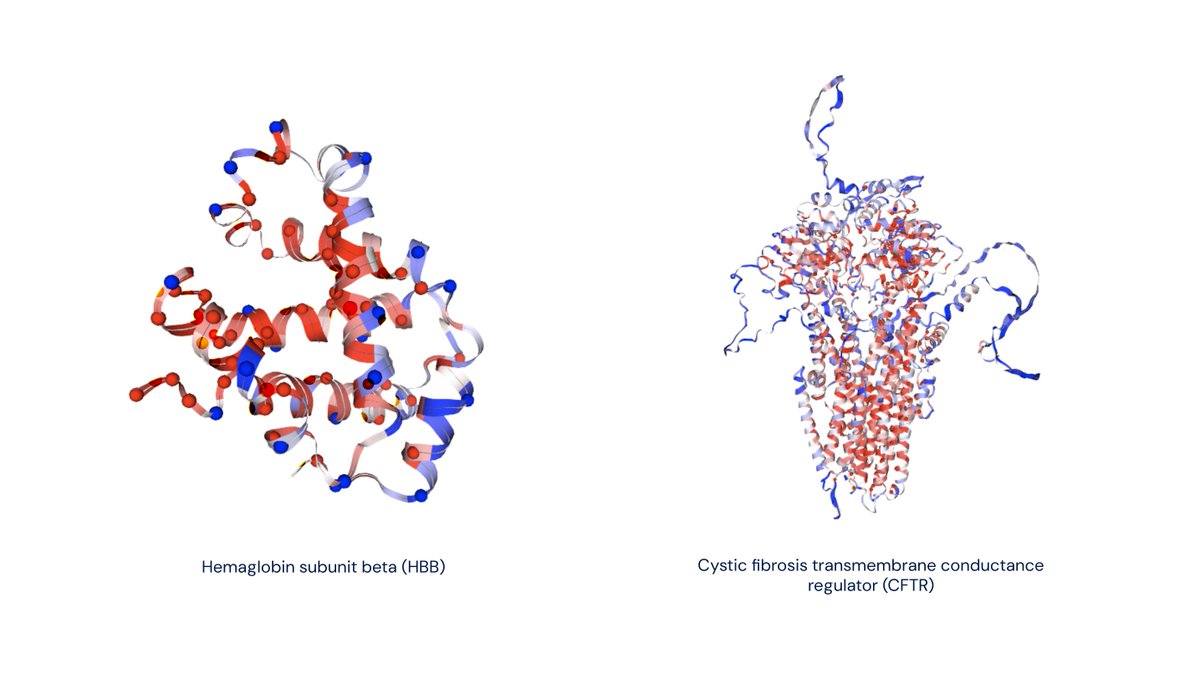
AlphaMissense, a tool by DeepMind, can help researchers learn more about the effects that missense mutations have on disease, and could help identify previously unknown disease-causing genes, according to a new Science study.
Learn more: https://t.co/GzKVdnUS5I
The cover art I created for the February issue of Trends in Microbiology Cell Press, featuring the excellent work of Van Pijkeren group on different modes of microbial therapeutic delivery.
Thanks @TrendsMicrobiol for selecting this graphic for the cover :)
@CellPressNews
@MadeleineOudin Likewise; thank you for all of your great advice (both career and science) as well as a thought provoking seminar. Your journey and research work is an inspiration for all of us!
Ever wondered if your favorite protein is amenable for targeting via degrader approach? @DanB0nD1 et al developed an elegant plug-n-play resource to profile the capacity for small molecule-mediated degradation of your POI through a panel of degron tags. https://t.co/2FeSuLQ6Vp
Today in partnership with @emblebi, we’re releasing predicted structures for nearly all catalogued proteins known to science, which will expand the #AlphaFold database by over 200x - from nearly 1 million to 200+ million structures: https://t.co/GjVES2pBFY 1/
Scientists have solved the 3D structure of a three-protein complex that regulates the RAS signaling pathway & helps cancer cells with RAS mutations survive, suggesting possible ways that drugs can bind to it to inhibit the RAS pathway & block cancer growth https://t.co/DhqlVpWccn
Special thanks to our Xtal Xperts @behnoush_h & Chris Lemke, computational wizard Yuemin Bian, OG SHOC2 experts @LuceYoung and @frankpmccormick, photographer of frozen proteins (#cryoEM) James Fuller @HLXBIO, as well as my mentors @andrewaguirremd and Bill Hahn. (8/n)
Happy to share our latest work now out in @nature. At long last, we resolved the structure of the SHOC2-RAS-PP1C complex and integrated this work with deep mutational scanning to comprehensively evaluate #SHOC2 structure and function. 🧵(1/n)
https://t.co/PLL95wRA1E
This project was truly a multidisciplinary, multi-institutional (@broadinstitute, @DanaFarber, @UCSF), team effort. Huge thanks to my fellow co-authors/collaborators for all of their invaluable contributions in making this work possible. (7/n)