Associate Professor & PI @SinaiBrain / @IcahnMountSinai, Neuroscientist studying blood-brain communication in aging and Alzheimer's / views expressed are my own
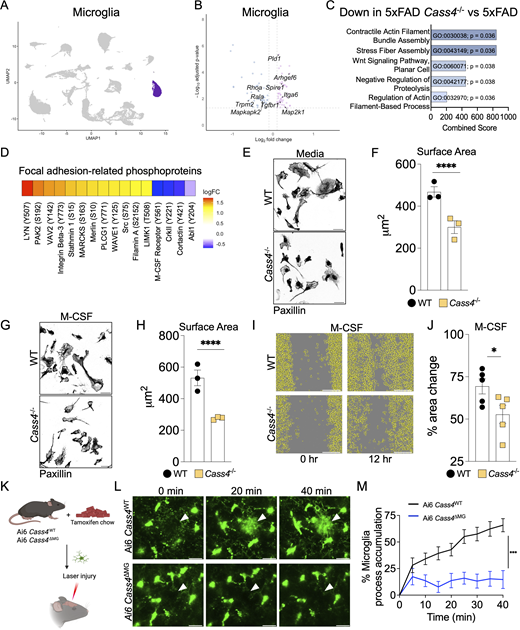
Happy to share the lab's new work characterizing the impact of a youth-associated protein on microglial function. Congrats to 1st author Brittany Hemmer, w/ excellent contributions f/ @philippi_sarah and all co-authors!
@IcahnMountSinai@SinaiBrain
Paper: https://t.co/aoSEgjomN4
New study from our group @Addie_E_Walsh 👇
Alzheimer’s genetic risk factor CASS4 controls microglial focal adhesion biology and amyloidosis @JExpMed https://t.co/v6woVm7AYG #Alzheimer
Happy to share the lab's new work characterizing the impact of a youth-associated protein on microglial function. Congrats to 1st author Brittany Hemmer, w/ excellent contributions f/ @philippi_sarah and all co-authors!
@IcahnMountSinai@SinaiBrain
Paper: https://t.co/aoSEgjomN4
NEW STUDY! Researchers Brittany Hemmer, @JM_Castell, et al. ID TIMP2 as potential molecular link btwn youthful systemic factors & healthier brain immune function, providing new insight into how age-related changes in brain may be modified. @NatureComms 👉 https://t.co/fVfSQPMsZ0
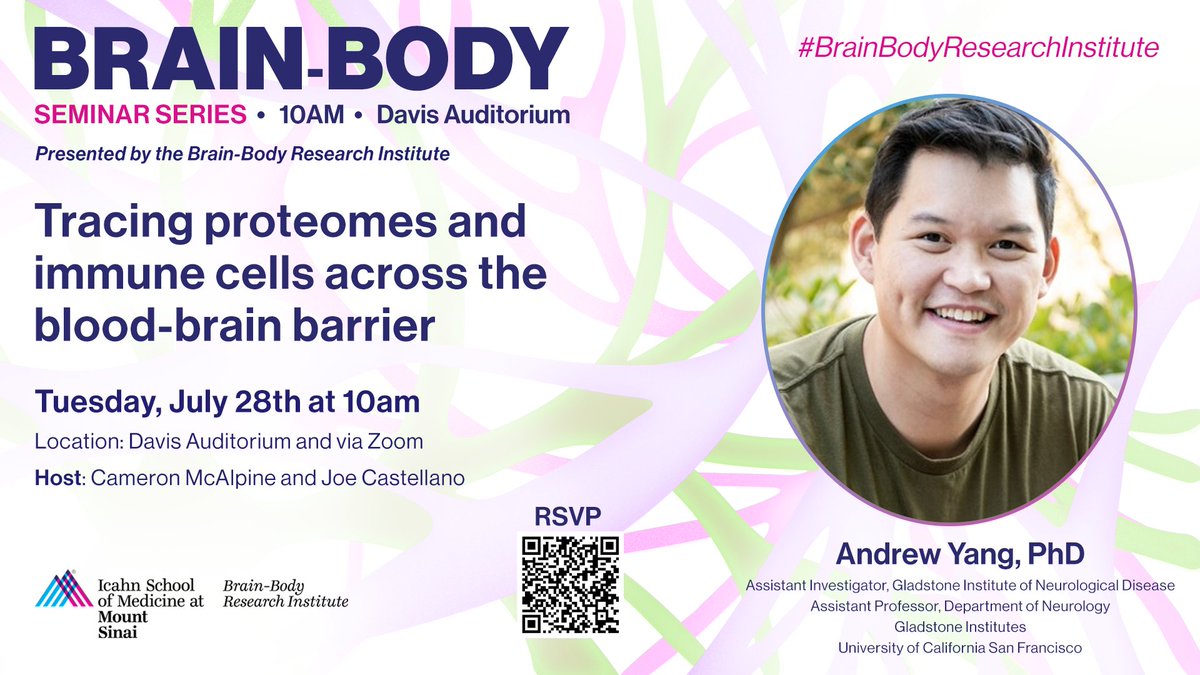
Our next Zoom Your Career webinar is coming up! Join us 4/13 at 1PM EST for a conversation on mentorship and building healthy lab culture.
Scan the QR code to register or the link ➡️ https://t.co/fopUj1ftbC
Join us on 4/13 at 1 PM ET for our next Zoom Your Career webinar! You will hear from Srikant Rangaraju, along side Derek Archer and Andrea Weinstein, with Joseph Castellano moderating the conversation.
Register ➡️ https://t.co/fopUj1ftbC
I'm excited that @Jjiyeon_lee's 2nd paper from the lab is out in @NatureAging. We found that the circadian gene REV-ERBalpha regulates brain NAD+ by controlling CD38 in astrocytes. REV-ERB KO or pharmacologic inhibition mitigates tau pathology in mice. https://t.co/q0ggsUBRco
Excited to share a new preprint out from the lab (https://t.co/RYFJZh3gA1) by 1st-author @brittany_hemmer , a newly minted PhD from the lab! A brief thread on what we found (1/n):
Overall, our work supports that TIMP2 (and likely other unexplored youth-associated factors) could be important for reducing microglial dysfunction in age-related disorders. Thanks for reading! (end).
TIMP2 ⬇️ microglial activation, ⬆️ phagocytosis, and ⬇️ the proportion of microglia associated with deleterious processes, including pro-inflammatory processes and senescence—essentially reversal of several age-associated microglial phenotypes. (5/n)