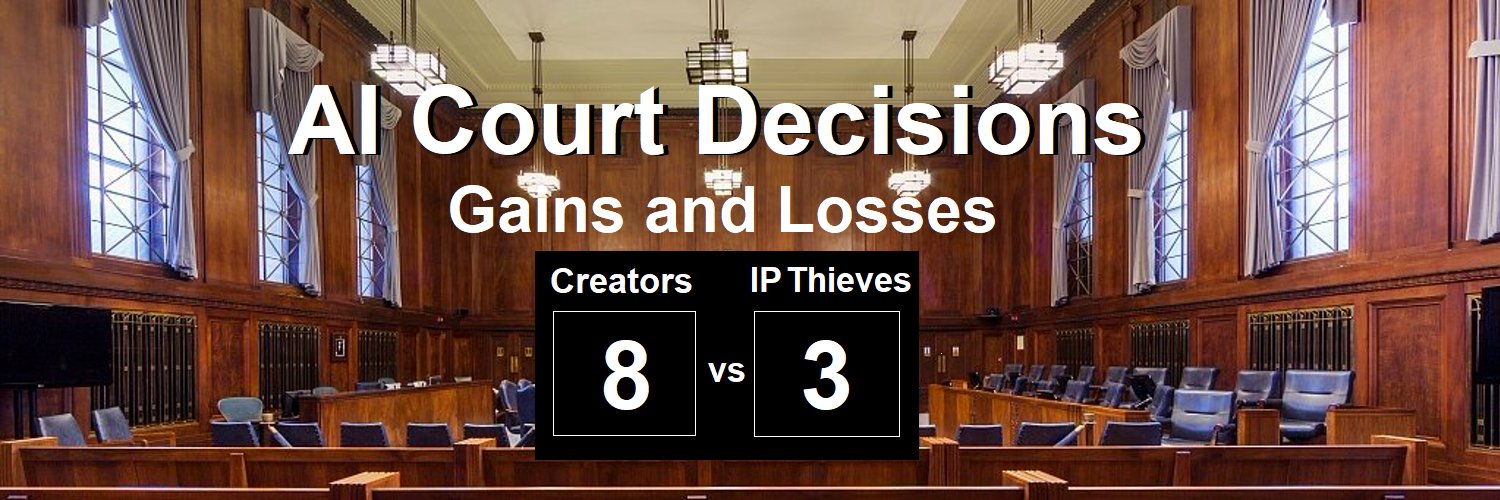
We’ve filed a lawsuit challenging GitHub Copilot, an AI product that relies on unprecedented open-source software piracy.
Because Share and retweet!!
https://t.co/MblryNSVJR
A few months ago, I found an anonymous sockpuppet account linked to the OpenAI/a16z super PAC. Now, @TaylorLorenz and I have uncovered two more — and they're even more brazen than the first.
https://t.co/TJHAABeq2A
🇺🇸 San Diego State University has installed 1,300 AI-enabled cameras across campus in hallways, dorms, parking lots, and common areas.
Officials say it’s for safety and investigations, claiming they’re not using facial recognition or tracking students.
Reaction is mixed: Some students welcome the extra security, others are raising serious privacy concerns over data collection.
Big Brother on campus?
Source: CBS8SanDiego YT
Top AI executives are joining security experts in calling for Congress to protect against biological threats posed by the technology https://t.co/DS6ixKygL4
🚨 THE DOJ IS NOW INVESTIGATING THE $1.8 TRILLION PRIVATE CREDIT INDUSTRY.
The same market that has been financing most of America's AI infrastructure buildout.
The Manhattan U.S. Attorney's Office has opened a federal investigation into how private credit funds value their loans. Prosecutors have already questioned executives and demanded records from BlackRock's TCP Capital Corp.
No charges have been filed yet, but the questions being asked go to the heart of how this entire industry reports performance.
Private credit is a $1.8 trillion shadow banking system that grew rapidly after 2008 as borrowers moved away from traditional banks. Unlike public markets, private credit loans do not trade openly.
Firms set their own prices using internal models, which means the reported returns, the fees charged, and the risk profiles shown to investors are all based on numbers that nobody outside the firm can independently verify.
That opacity is exactly what regulators have been warning about for years. In May 2026, Blackstone and Carlyle slashed their own fund valuations.
MSCI reported that some private credit loans were marked below 50 cents on the dollar, a level typically seen only in deep distress or ahead of restructuring.
BlackRock's $26 billion HPS fund received redemption requests of 17% in a single quarter and capped withdrawals at 5%, meaning investors who wanted their money back could not get it.
The private credit market has been one of the biggest lenders to AI and tech companies many of which are unprofitable and burning cash.
As AI revenue comes under scrutiny for being circular and inflated, the loans made against those revenues are now being questioned too.
The marks on those loans may reflect a world that no longer exists.
Today, Blackstone, KKR, Apollo, Ares, and Blue Owl all fell at least 4% in a single session.
The regulators and the investors are arriving at the same question at the same time, were the numbers ever real?
@SwampConcept@MadisonMills22 It's a known phenomenon called the male bumbler, where powerful men are allowed to escape responsibility and consequences when things go wrong by playing the fool, but are still trusted to execute the power of their positions
https://t.co/IIZH5Es51O
I think this "faux pas of an industry" marks the first time I've seen numerous criminals prominently announced before they commit their acts.
#sickening