Ex Subgte. Gral. Ppal. del BNA, Experto en CCNN, Prof. Consulto Titular UBA, ex Prof. Regular Titular CCNN, Secretario Técnico Administrativo IADCOM FCE - UBA.
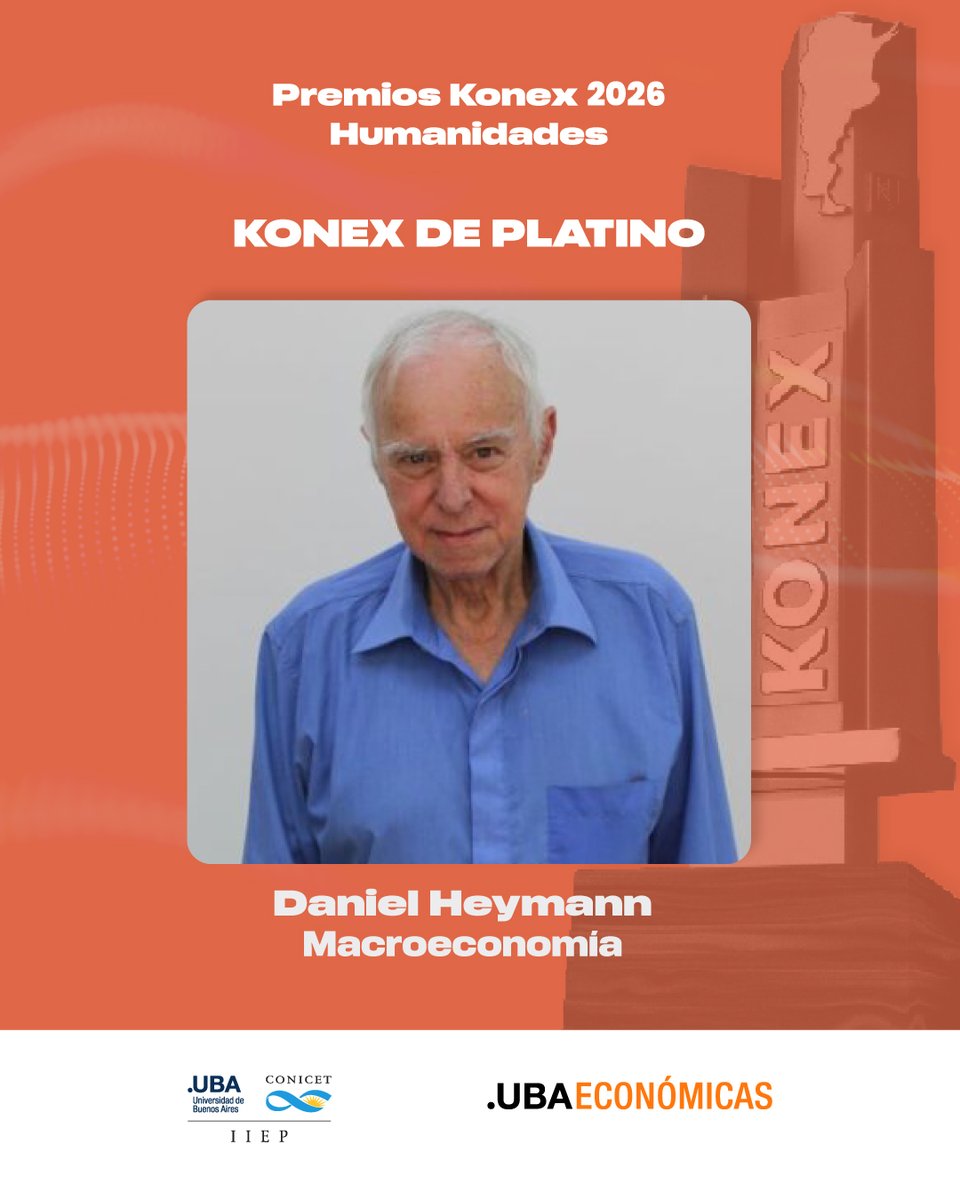
#DanielHeymann, primer director del #IIEP y Profesor Emérito de @UBAeconomicas, fue galardonado con el premio Konex Platino Humanidades. Un reconocimiento más que merecido a la trayectoria de un economista excepcional que tenemos el orgullo de tener en nuestro instituto.
Acabo de ver en Netflix la película española Los creyentes, un thriller psicológico que tiene como trasfondo la marea de teorías conspirativas que recibimos a diario en las redes sociales. Más allá de ser muy buena, es un llamado de alerta contra una de las mayores amenazas para nuestra salud mental y nuestras democracias. Hay países, como Finlandia, que tienen una estrategia estupenda para combatir la desinformación: enseñan Alfabetización Mediática. Mi columna en El Español: https://t.co/uRc19fpZNA
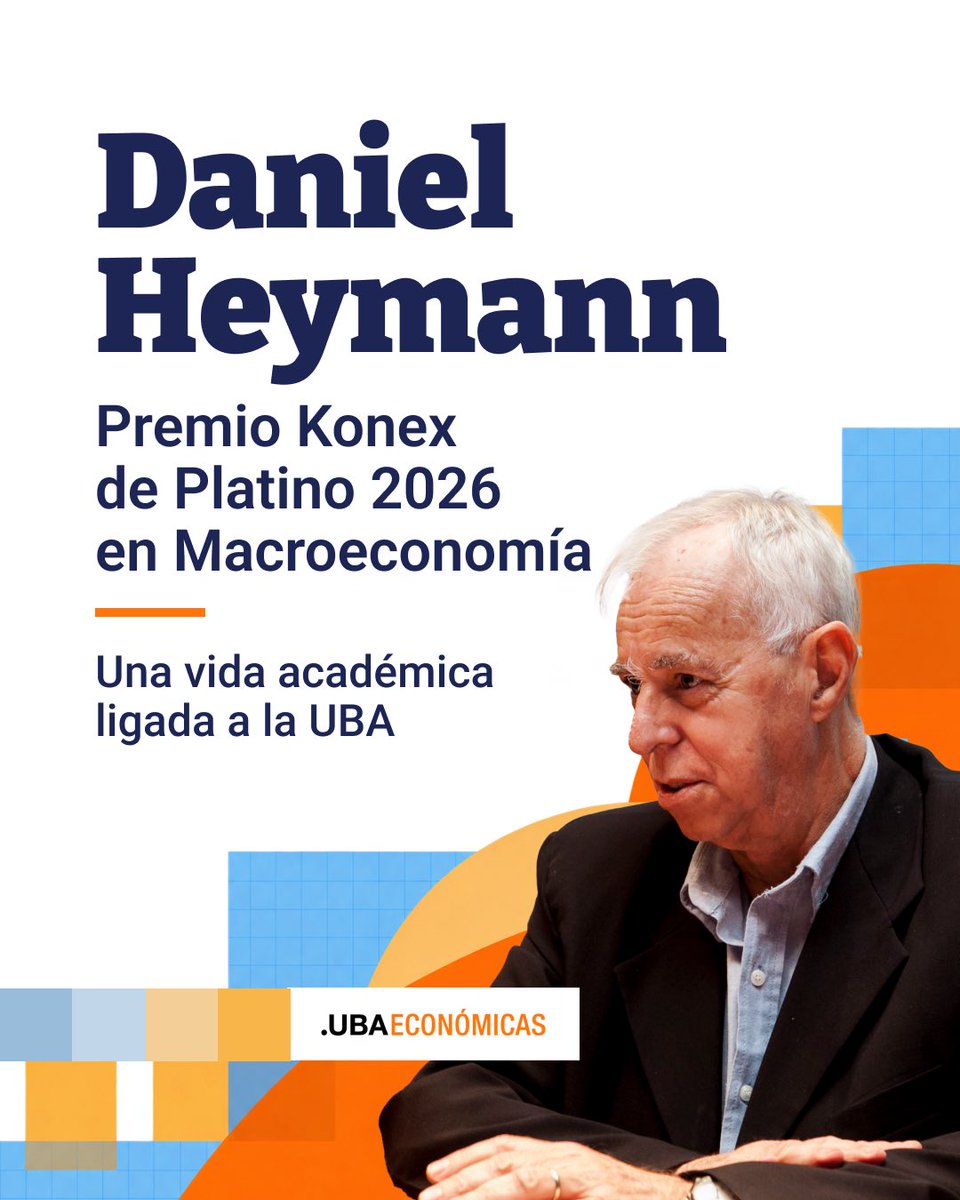
Daniel Heymann, un recorrido académico ligado a la UBA
En 1972 se recibió de licenciado en Economía de nuestra facultad y a partir de allí tuvo una vida siempre unida a esta universidad.
Fue docente, investigador, director del IIEP y llegó a profesor emérito en 2020.
Daniel Heymann fue distinguido con el Premio Konex de Platino 2026 en Macroeconomía: docente histórico de UBA Económicas, fundador del prestigioso @iiep_oficial (UBA - CONICET) y maestro de generaciones de economistas.
✨🏆 Felicitamos a #DanielHeymann por haber sido distinguido con el Premio Konex de Platino 2026 en la categoría #Macroeconomía, en reconocimiento a la trayectoria más significativa de la década 2016–2025.
¡Felicitaciones!
Capital Humano, PISA2025: los resultados ubicaron al país en las posiciones 75, 62 y 71 en Matemática, Lectura y Ciencias, entre los 91 sistemas educativos participantes. No alcanzaron los aprendizajes mínimos el 76%, el 59% y el 59% respectivamente. https://t.co/k1aOAJ46v3
@ImtiazMadmood Thank you for bringing back the memory of this act of solidarity and profound humanity—amidst pressures and war—by Jam Sahib Digvijay Singhji, Maharaja of Nawanagar.
When 740 children died at sea and every country said "no," one man—who had reason to remain silent—said "yes."
The year was 1942.
The ship drifted in the Arabian Sea, like a floating coffin. There were 740 Polish children on board. Orphans. Survivors of Soviet labor camps, where their parents had died of the flu or starvation. They had escaped through Iran, but a more terrible punishment awaited them.
No one would accept them.
The British Empire—the most powerful power of its time—refused entry to port after port along the Indian coast. "It's not our responsibility. Sail away."
Almost finished with food. No medicine. Time was running out.
Twelve-year-old Maria held her six-year-old brother's hand. She had promised her dying mother to protect him. But how do you protect someone when the whole world turns on them?
And then news came to the small palace in Gujarat.
The ruler was Jam Sahib Digvijay Singhji, Maharaja of Navanagar. In the royal system, he was just a minor prince. The British controlled the ports, trade, and army. He had every reason to obey and remain silent.
When his advisors told him that 740 children were stranded at sea after the British refused to take them to any port in India, he asked one question:
"How many children are there?"
"Seven hundred and forty, Your Majesty."
He paused and calmly said:
"The British may control my ports. But they do not control my conscience. These children are docked at Navanagarh."
The advisors warned him:
"If you challenge the British—"
"So I will stop. "
He sent a message to the ship: You are welcome here.
When British officials protested, the Emperor remained firm.
"If the strong refuse to save the children," he said.
I, the weak, will do what you cannot.
In August 1942, the ship struggled to enter Navanagara harbor under the blazing summer sun.
The children walked like ghosts—exhausted, blank-eyed, many too weak to walk. They had learned to hope for good. Hope had turned dangerous.
The Maharaja was waiting for them on the dock.
Dressed simply in white, he knelt down to be at their eye level. Through interpreters, he spoke words they had not heard since their parents died.
"You are no longer orphans.
You are my children now.
I am your Bapu—your father."
Maria felt her brother's handshake. After months of rejection, these words seemed surreal.
But he was serious.
He didn't build a refugee camp.
He built a home.
In Balachadi, he created something amazing—a little Poland in India. Polish teachers who understand trauma. Polish food flavored with memory. Polish songs in an Indian garden. A Christmas tree under a tropical sky.
“Suffering tries to erase you,” he said. “But your language, culture, and traditions are sacred. Let's keep them here.” "
Children who were told they had no place in the world finally found a home.
They laughed again. They played again. They returned to school. Maria watched her brother chase a peacock in the palace garden, and her body remembered again what safety meant.
The Emperor used to visit them often. He remembered names. He celebrated birthdays. He watched high school plays. He comforted children crying for parents who would never return. He paid for doctors, teachers, clothing, and food—from his own wealth.
For four years, while the world was torn by war, 740 children lived not as refugees, but as a family.
When the war ended and it was time to leave, many wept. Balachadi became the only home they had ever truly known.
These children have grown and moved around the world—becoming doctors, teachers, engineers, parents, grandparents. And they have never forgotten.
Warsaw's Good Emperor Square appeared in Poland. Schools bear his name. He was awarded Poland's highest honor.
But the original monument wasn't made of stone.
It cost 740 lives.
Today, at 80 years old, they still gather. They tell their grandchildren about an Indian king who refused to turn compassion into political calculation.
@anlopez1962@grozenwurcel@UBAeconomicas@iiep_oficial Una gran pena por el fallecimiento de Guillermo Rozenwurcel, excelente profesor y profesional y un gran ser humano. Un abrazo a su familia en estos momentos de dolor.
@iiep_oficial@UBAeconomicas@cepal_onu@el_BID@pnud Es una gran pena la pérdida de Adrian Ramos. Muy buena persona y profesional, de gran entereza, integridad y dedicación. Mi más sentido pésame a su familia.
@iiep_oficial@UBAeconomicas@cepal_onu@el_BID@pnud Es una gran pena la pérdida de Adrian Ramos. Muy buena persona y profesional, de gran entereza, integridad y dedicación. Mi más sentido pésame a su familia.
Adiós y muchas gracias, Oscar Cetrángolo. Siempre dispuesto a hacer aportes para mejorar la realidad, desde una mirada profunda de los problemas sociales y con sencillez para explicar. Gracias @curcio_javier por este hermoso texto. https://t.co/EJhgTH8uzT via @LANACION/
@pgerchunoff Una pena enorme. Un ser humano extraordinario, un profesional y docente excelente, un lujo su visión integral en su desempeño como director de carrera. Honestidad, criterio y transparencia. El reflejo de lo que está bien. Qué tristeza su pérdida.
@pgerchunoff Una pena enorme. Un ser humano extraordinario, un profesional y docente excelente, un lujo su visión integral en su desempeño como director de carrera. Honestidad, criterio y transparencia. El reflejo de lo que está bien. Qué tristeza su pérdida.
Se fue Óscar Cetrangolo. Un dolor que no será fácil superar. Un ser humano excepcional. El economista de la reforma social en la Argentina. Nunca cayó en la trampa de las recetas simples. Queda para siempre su huella. Maldita sea la enfermedad que nos lo arrebató tan pronto.
1/8 ¿Incide la variación de márg. financ. en la estim. a precios constantes de las entidades que generan SIFMI?
Los cambios en las tasas activas y pasivas, o en los márgenes financieros o la tasa de referencia aplicada, no impactan en las estimación a precios constantes
8/8 “SIFMI. Medición en un contexto de tasas de interés subsidiadas y existencia de encajes bancarios”, https://t.co/RuqRFJXEjM junto al análisis del necesario registro de impuestos y subvenciones (2da. Parte).
1/8 ¿Incide la variación de márg. financ. en la estim. a precios constantes de las entidades que generan SIFMI?
Los cambios en las tasas activas y pasivas, o en los márgenes financieros o la tasa de referencia aplicada, no impactan en las estimación a precios constantes
7/8 d) -Una visión crítica sobre la incidencia de encajes no remunerados en la estimación corriente del SCN2008 (ND15, pag. 15, 1ra. viñeta), se trata ampliamente en la 3ra. parte de Series de Estudios Estadísticas Nro. 108 de CEPAL: