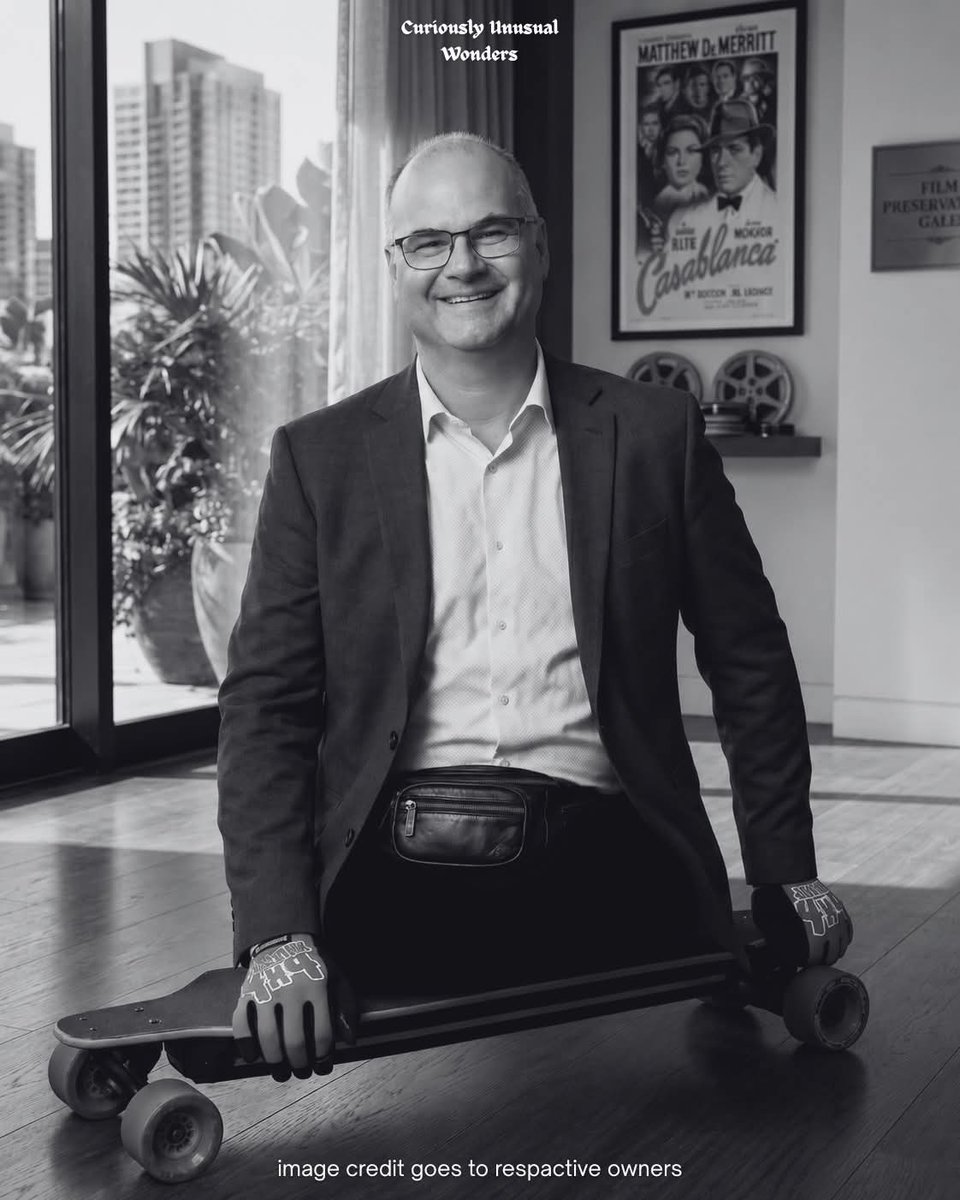
The 13-Year-Old Boy Who Became E.T. — And Nobody Knew It. You cried for E.T. You cheered when he flew across the moon. But you never saw the kid who gave him life. His name: Matthew De Merritt. Age: 13.
Hollywood connections: Zero.
Acting experience: None.
Legs: Also none.
Born without legs, Matthew didn’t do wheelchairs.
He taught himself to run, jump, and balance — on his hands.
“I just didn’t want limits,” he said. “So I made my own way.”
Meanwhile, in 1981, Steven Spielberg was panicking.
E.T. looked fake.
Millions spent on robots and wires… and the alien moved like a toaster.
No heart. No soul. No magic.
“We needed something real,” a crew member later said. “Something human.”
The answer was doing physical therapy at UCLA.
A therapist saw Matthew fly across the room on his hands — strong, smooth, fearless.
She called Universal. “You have to see this kid.”
Days later, 13-year-old Matthew walked onto the biggest movie set on earth.
They handed him a nightmare: A 4-foot rubber alien suit. Hot. Heavy. Suffocating.
Most adults couldn’t stand in it for 5 minutes.
Matthew put it on… and walked.
Because he moved on his hands, E.T. wobbled.
Tilted. Stumbled like a baby taking first steps on a new planet.
Pure. Clumsy. Alive.
Spielberg froze. Then smiled.
“That’s him,” he said. “That’s E.T.”
Matthew didn’t act. He became him.
When E.T. falls drunk in the kitchen? That’s Matthew.
When he wanders the house, scared and curious? Matthew.
Every time you felt your heart break for that little alien… you were watching a 13-year-old boy’s strength.
“It was boiling inside,” Matthew laughed years later. “But when we fell over, I got to rest. So falling was my favorite part.”
The movie exploded. Biggest film in the world.
Matthew’s name? Not in the cast list.
Just tiny words: Special E.T. Movement.
And he was fine with that.
No Hollywood. No fame.
He went home. Finished school. Became a teacher. Played wheelchair basketball.
Lived his life.
Today he’s 56. No star on the Walk of Fame.
99% of E.T. fans have no idea he exists.
But without him?
E.T. was just plastic and wires.
Matthew gave him a soul.
“You don’t need legs to stand tall,” one fan wrote. “And you don’t need your name in lights to light up the world.”
Real superheroes don’t wear capes. Sometimes they wear rubber alien suits.
Digital Artwork | AI Generated Image
“If one person has a right to something he did not earn, of necessity it requires that another person not have a right to something that he did earn.”
— Walter E. Williams
.@NASAAdmin: "The next step is go out further, it's to return to the moon. It's to pick up where Apollo 17 left off... President Trump said we are going back to stay, to build a moon base. That’s going to be a massive American outpost." 🚀🌕
Jordan Peterson: "No one can be a good person without integrating their capacity for aggression. Because without that capacity for aggression, you cannot say no."
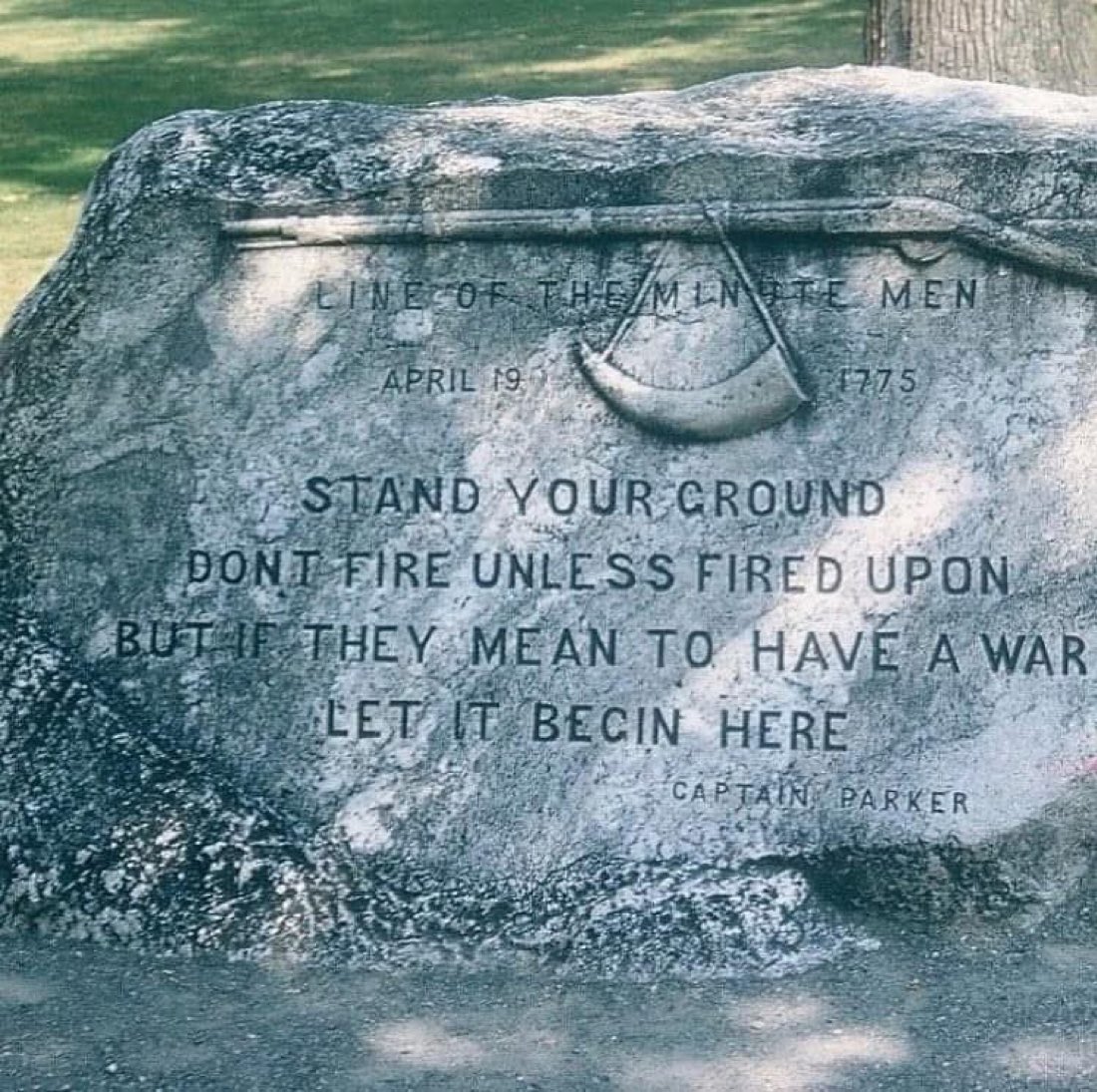
251 years ago today, the shot heard ‘round the world kicked off the Battles of Lexington and Concord - and lit the fuse of the American Revolution.
Captain Parker’s words to his 77 Minutemen as they faced 700 British Redcoats at Lexington Green capture the American spirit ⬇️🇺🇸
We are now entering the most thrilling phase of Artemis II — humanity’s bold return to deep space. Day 3 — April 3
Orion has successfully left Earth’s embrace and is now speeding toward the Moon. The crew begins critical deep space operations, testing systems far beyond any orbit humans have flown in over 50 https://t.co/NggrZyJzVw 4 — April 4
Systems checks continue as the astronauts settle into the rhythm of deep space travel. Every system is performing flawlessly in this vast, unforgiving https://t.co/dczCVCDtfc 5 — April 5
The Moon grows larger in the windows. The crew makes final preparations for the historic lunar flyby — a moment decades in the https://t.co/yjhFV8PpFb 6 — April 6
Closest approach to the Moon. This is the pinnacle: humans return to the vicinity of the Moon for the first time since the Apollo era. The crew will skim past the lunar surface, witnessing our celestial neighbor up close like no one has in over half a https://t.co/cKA5GiwudA 7 — April 7
Orion swings past the Moon and begins the long journey home, riding the gravity assist that will guide it safely back to https://t.co/VxkPP1p79Q 8 — April 8
A quiet but vital phase — the long coast through deep space. The crew reflects on their journey while the spacecraft continues its flawless https://t.co/mpqkeA6HDm 9 — April 9
Earth reappears as a beautiful blue marble in the distance. The team shifts focus to re-entry https://t.co/u25hnYMv6Y 10 — April 10
Re-entry and splashdown. The fiery return through Earth’s atmosphere culminates in a safe Pacific Ocean landing — mission complete.This isn’t just another spaceflight.
It’s humanity stepping boldly back into the cosmos — proving we’re ready to go farther than ever before.Stay tuned for more real-time updates as the mission unfolds!
The real story is the $25 million per mile price tag they’re betting on.
Nashville’s own 2018 light rail plan priced at $200 million per mile. New York’s East Side Access cost $3.5 billion per mile. The LA Metro expansion is running $1 billion per mile. The Boring Company says it can build 13 miles of twin tunnels through Nashville for $240-300 million total.
That’s a 95% cost reduction from the industry average. If the number holds, it rewrites the economics of every transit project in America. If it doesn’t, a few hundred million in private capital evaporates and taxpayers lose nothing. That risk asymmetry explains why Tennessee said yes when LA, Chicago, Baltimore, and DC all said no.
The engineering gamble is wild. 12-foot diameter tunnels instead of 28-foot. Fully electric Prufrock machines that mine continuously instead of stopping every 5 feet to install lining segments. Zero people in the tunnel during operations. A machine that “porpoises” into the ground from a truck instead of requiring million-dollar launch pits and cranes.
Every one of those innovations has worked in Las Vegas sand. None have been tested in karst limestone, the geology that creates sinkholes, caves, and underground streams. Their own CEO said at the unveiling that Nashville would not be their choice if they were optimizing for easiest places to tunnel.
This tells you everything about what The Boring Company is actually trying to prove. Nashville is where the thesis meets the hardest possible geology. 50 inches of annual rainfall versus Vegas’s 4. Rock that creates underground caves and streams. They just signed a construction contract in Dubai too, meaning they need Nashville to work before the next project launches.
The internal memo from the governor’s office estimates 1 mile per month. The Boring Company’s website claims 1 mile per week. That 4x gap between political planning and corporate marketing will determine whether this finishes in 2027 or 2030.
Week 7, when Prufrock-MB2 arrives, is when this gets real. Two machines boring simultaneously through Tennessee limestone will answer the question the entire tunneling industry has been debating for a decade: whether a startup can actually outrun the physics that made infrastructure the slowest-moving sector in construction.
Hell yes! We are just about to watch Starbase Texas expand big time. 2026 is going to be huge! With all SpaceX's sites going full steam ahead, and SLS rolling out... just WOW!
🤯 It has been a huge week! 🚀
https://t.co/eWzIUJ0pvU
“A VOICE” is a battle cry and a hope. A reminder that our voices matter and real strength is speaking truth with courage. I wrote this for anyone who’s ever been afraid to speak up. Use your VOICE. Please repost & download:
https://t.co/6sQ5AZN0Zc
U-Haul just released their 2025 Growth Index.
#1 Dallas
#2 Houston
#3 Austin
People vote with their feet. And their moving trucks.
The Texas Triangle swept the podium.
I just told my 20-year-old daughter she's going to be a millionaire.
She laughed and went back to studying for her economics exam.
She has no idea I'm serious.
My daughter plays college volleyball. Between practices and games, she works for me, substitute teaches on breaks, and picks up college jobs.
Last year she made enough to max out her Roth IRA — $7,000.
After her standard deduction, she paid almost nothing in federal taxes total.
Most 20-year-olds would spend that money and never think twice.
I maxed out her Roth IRA instead.
Here's the math I'm teaching her:
$7,000 at 8% annual returns for 40 years becomes $152,000. Tax-free.
Do that for just 10 years and she's sitting on over $1.1 million at 60.
Zero taxes. Ever.
Now here's what I see too often in my office:
Couples who got bad advice — or no advice at all — sitting on $3 million in traditional 401(k)s.
Most financial advisors won't touch tax planning. Period. They're trained to accumulate assets, not protect them from the IRS. Tax strategy is where most retirement plans completely fall apart, and it's the one area most advisors refuse to address.
Then RMDs hit at 73.
The IRS forces them to withdraw $110,000+ whether they need it or not. Stacks on top of their $45,000 in taxable Social Security. Now they're at $155,000 in taxable income.
But here's what nobody tells you — it gets worse every single year.
By 80, that same couple is being forced to withdraw $160,000+. Add Social Security and they're at $205,000 in taxable income.
Higher tax brackets. Bigger Medicare surcharges. And the account keeps growing faster than they can spend it, which means even bigger forced withdrawals ahead.
The tax bill at 80 is double what it was at 73.
And there's nothing they can do about it now.
The opportunity was 40 years ago when they were my daughter's age or even when they retired at 60 with strategic Roth conversions.
My daughter is paying an effective tax rate of maybe 1- 2% right now.
Many of her friends who land corporate jobs next year will immediately start maxing traditional 401(k)s because "that's what you're supposed to do."
Nobody will tell them about Roth. Nobody will show them the math.
Because most advisors don't get paid to give that advice.
But in 2065, those friends will be paying 32-37% to access their money.
My daughter will pay zero.
That's a 35% permanent tax discount.
Right now, she doesn't care. She's worried about volleyball and keeping As.
She thinks her paychecks from working for me are just spending money.
But in 40 years, when her many of her friends are doing tax gymnastics trying to manage brutal RMDs...
She'll have complete freedom.
.@AustinAirport is planning a major expansion that will nearly double its size over the next decade, adding 32 gates and modernizing facilities to meet growing travel demand. This $5B project will improve the passenger experience for all AUS travelers. ✈️
https://t.co/Ijqv5yS9Iu
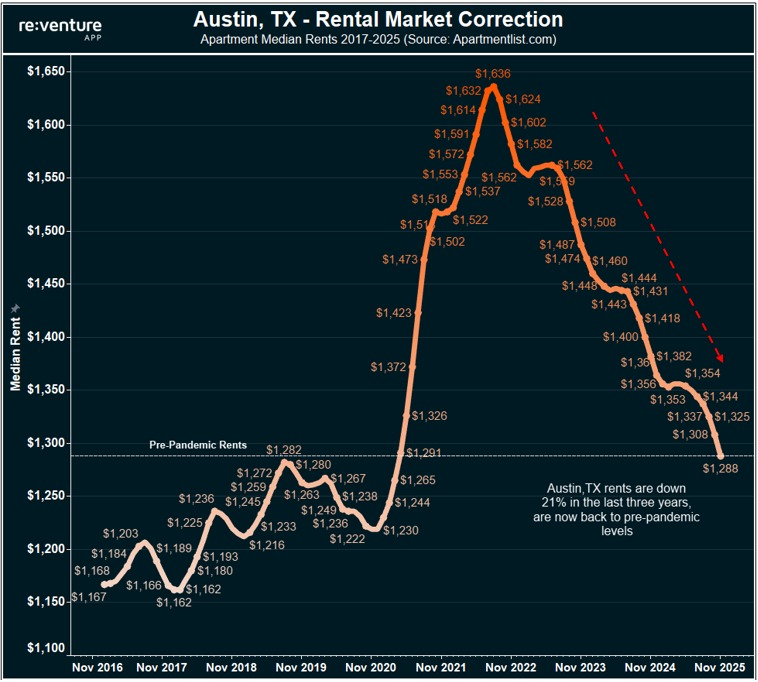
🇺🇸 AUSTIN RENT PRICES JUST CRASHED BACK TO 2019, DOWN 21% FROM THE PEAK
Austin rents have completely faceplanted.
After hitting $1,636/month in summer 2022, average apartment rent is now down to $1,288 the lowest it’s been since the pre-COVID days.
That’s a 21% drop in 3 years.
Some 2-bedroom units are even going for under $1,000. Yes, really.
The reason?
The flood of people moving there dried up, and builders went wild stacking up new apartments like it was 2021 forever.
Now there’s more supply than demand, and prices are tanking faster than a crypto rug-pull.
At this point, Austin has the cheapest rents ever recorded relative to income.
What happens next?
Either the population bounces back or landlords start panicking.
Source: @nickgerli1
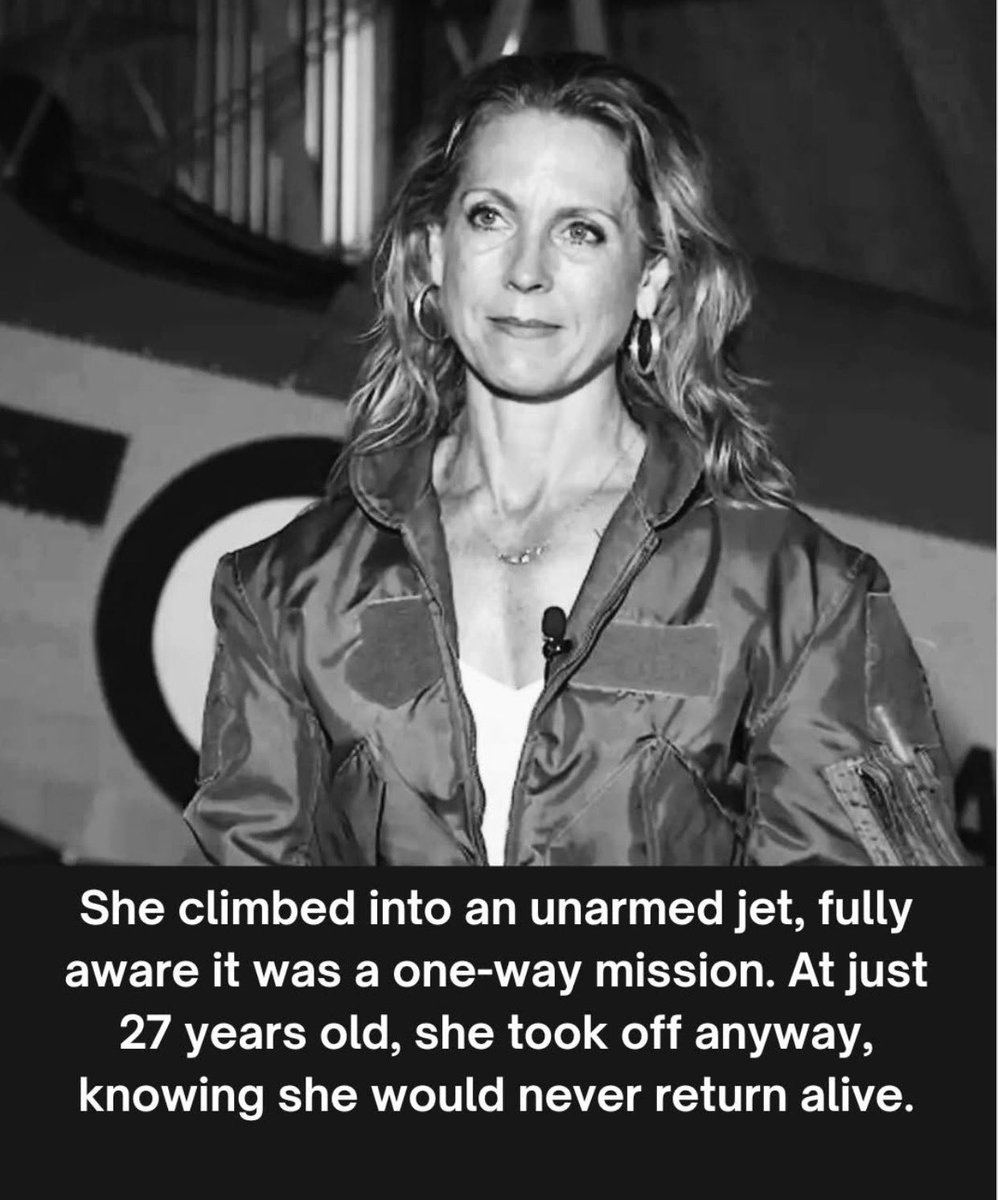
On the morning of September 11, 2001, First Lieutenant Heather “Lucky” Penney was sitting in a briefing room at Andrews Air Force Base, Maryland, planning routine training operations. She had no idea that within an hour, she would be called to risk her life in a way few could imagine.
Tuesday morning began like any other. Then someone entered the briefing room and said the words that changed everything: “Somebody just flew into the World Trade Center.”
Within minutes, confusion gave way to horror. A second plane hit, then a third struck the Pentagon, just fifteen miles away. Smoke rose on the horizon, visible from the base. America was under attack.
Reports streamed in of a fourth hijacked plane—United Airlines Flight 93—headed for Washington, D.C., likely the White House or the Capitol. Heather and her commanding officer, Lieutenant Colonel Marc Sasseville, were among the closest fighters ready to intercept.
There was one problem: their F-16s carried no missiles. No live ammunition. The jets had just returned from training in Nevada, loaded only with practice rounds.
Sasseville looked at Heather and said, “Lucky, you’re coming with me.”
They sprinted to their jets. Preflight procedures normally took thirty minutes—they had none. Ground crews hurried to remove safety pins as pilots climbed into their cockpits. The mission was clear: find Flight 93. Stop it from reaching Washington. By any means necessary.
Heather knew exactly what that meant. Without weapons capable of downing a 757, the only option was to fly her F-16 directly into the hijacked airliner. A one-way mission.
As she strapped in, Sasseville’s voice cut through her headset: “I’ll take the cockpit. You take the tail.” Heather responded, “Roger that.” No fear—only focus. Protecting her country mattered more than anything.
As they lifted off, screaming over the burning Pentagon, Heather felt the odd calm of training instincts taking over. Her father had taught her precision, focus, purpose. Now she would use every lesson to crash into a plane full of civilians. For a brief moment, she imagined her father might be at the controls of Flight 93. It wouldn’t have changed anything. The mission came first.
Heather and Sasseville never intercepted Flight 93. Because 200 miles away, ordinary Americans on that flight had already made the choice she was willing to make. Through phone calls, they learned of the attacks, knew the plane had been turned into a weapon, and decided to fight back. Todd Beamer rallied fellow passengers: “Are you ready? Okay. Let’s roll.” They stormed the cockpit, and at 10:03 AM, Flight 93 crashed into a Pennsylvania field. Forty-four people died—but the plane never reached Washington.
When Heather finally landed later that afternoon, her crew chief was waiting, tears in his eyes. “I didn’t think I’d see you again, ma’am,” he said. “Neither did I,” she replied.
For ten years, Heather rarely spoke of the day. When she did, she deflected praise to the passengers of Flight 93. “They were ordinary Americans living ordinary lives, forced to make an impossible choice,” she said. “Sasseville and I were ready to give our lives too. Anyone would have. The passengers on Flight 93 did it first.”
Heather later served two combat tours in Iraq, and flying night missions as a SCUD hunter. Today, she advocates for service members as a defense policy expert.
She remembers September 11 every day—not with trauma, but with hope. She witnessed ordinary people becoming heroes, strangers risking everything for others, a nation remembering some things are worth more than ourselves.
23 years have passed. The world has changed. But the lesson remains: courage isn’t the absence of fear—it’s strapping in anyway. Duty isn’t about destruction—it’s about protection. Sometimes being “Lucky” means being ready to give everything for something bigger than yourself.
In honor of First Lieutenant Heather “Lucky” Penney—and the forty heroes of Flight 93 who acted first.