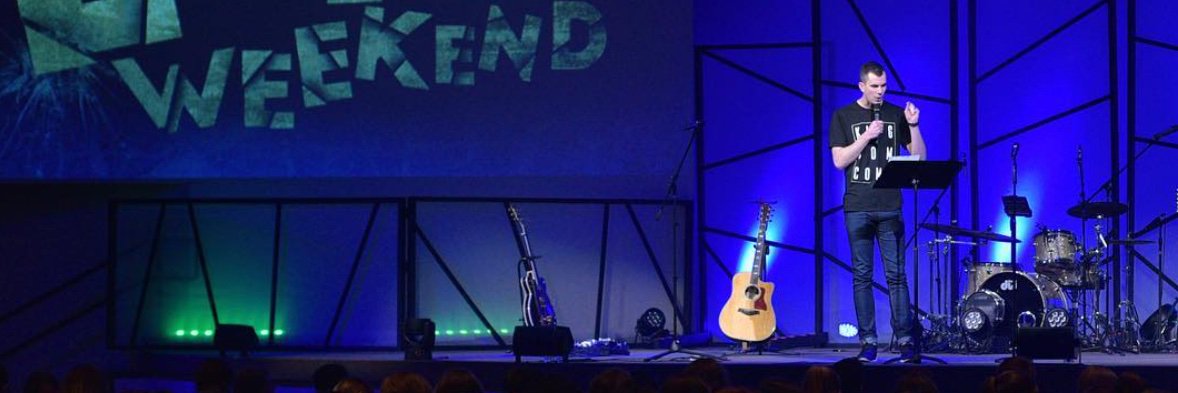
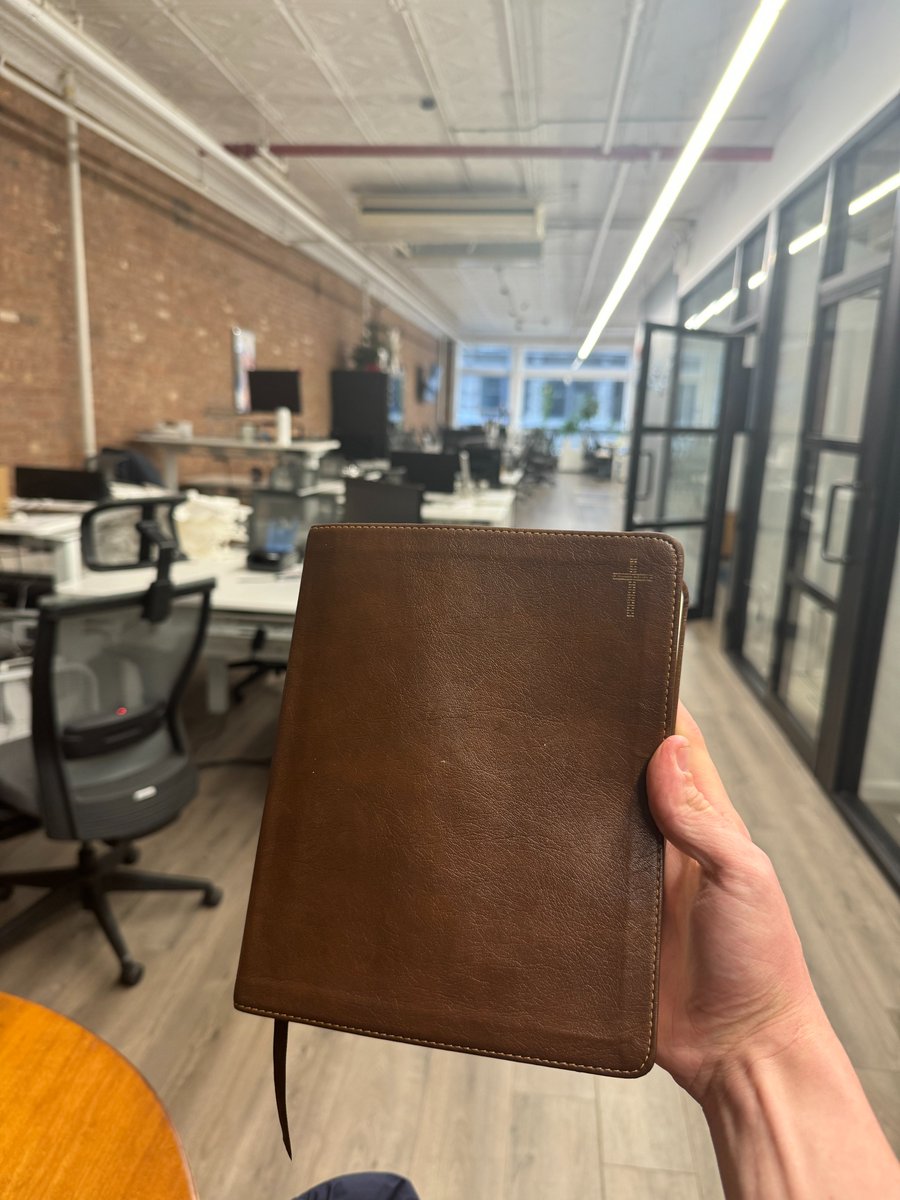
Introduction to why Queens Connexus (https://t.co/8uSACwjJuM) started a podcast...
1. Queens needs more churches.
2. Queens needs more resources.
3. Therefore, tough conversations need to be had. That is the goal of future episodes in this podcast.
I've spent the last two days in a Ph.D. seminar discussing Homiletical Theories in the 20th Century and the impact of New Homiletics on preaching.
Thank you @LigonDuncan for your Doctrine of Scripture class in 2015 that prepared me to understand the nuances of Barth and his theology of the Word of God. That has served me well this week to better understand these homiletical theories from a Reformed perspective.
I went from thinking the Bible was the most boring book ever to seeing the magic in it.
Years ago, I realized that the Bible is the foundational book of Western civilization. If I was going to be an educated person, I needed to know what it said. Though I was motivated to learn about it, I didn't have the patience to read it or the knowledge to understand it.
Generally, I try to follow my 4th-grade English teacher's advice to read things first-hand. But the Bible seemed too hard, too boring, and too confusing to read on my own. It was a snooze fest. The stories felt outdated in a world of smartphones and fast Internet. Living in the modern world, shouldn’t I be rooting my life in modern books, modern studies, and modern authors?
At the time, I was living in New York when a friend introduced me to the work of Tim Keller. I reluctantly found time to put down the self-help and picked up two of his books instead: The Reason for God and Making Sense of God. It was around that time when I discovered Keller's Questioning Christianity lecture series.
Instead of focusing on the Bible directly, Keller focused on Christianity's relationship with culture and the modern world. He spoke to career-driven Gordon Gekkos who were driven by the glories of the material world, but sensed the emptiness at the heart of such a single-minded pursuit. Instead of referencing scripture directly, he spoke about big-picture themes like identity and purpose, morality and meaning.
This was back when I thought all Christians had the intelligence of sidewalk pigeons. I would scoff at church-goers because I didn’t understand why anyone would worship a sky fairy or follow rules from thousands of years ago. Keller was the guide I needed.
For the first few years, I looked at faith through a cultural lens instead of reading the Bible directly. I literally knew nothing about Jesus or Christianity — and I came to realize how little I knew about my own atheism too. In school, while studying the Declaration of Independence, I’d learned that it’s “self-evident” that “all men are created equal.” Turns out, this defining American ideal is only self-evident if you assume that every person has inherent worth because they’re made in the image of God. I was stumped. Where did my moral compass come from? Do people have inherent value? And if so, is it because every human is a child of God?
In addition to advocating for the life of Jesus and the truth of his message, Keller revealed the many assumptions underlying my own atheistic worldview. He taught me that every worldview requires a leap of faith. Sure, Christianity couldn’t perfectly explain everything in the universe, but then again, neither can any worldview. Astrophysicists say that much of the universe is made up of “dark matter,” which is a scientific-sounding way to talk about a leap of faith
Though I did some Bible studies, I never enjoyed them. They felt more like reading tedious academic papers than drinking directly from the fountain of God’s wisdom. Instead of reading Scripture directly, I joined a small Christian reading group where I was the only non-believer. By showing me coherent ways to interpret reality besides my science-based materialism, books like The Story of Reality and I Don't Have Enough Faith to Be an Atheist loosened the screws on my atheism.
My palate was beginning to change. Like a fine wine, the same flavors that were once repulsive to me started to appeal to my intellectual taste buds. I surrounded myself with wise Christians who were orthodox about scripture and eager to answer my hardest questions about faith. I asked them to dinner and invited myself to Church with them.
This marked a new era. Once again, I found some guides: books, Internet sources, and an in-person leader to show me the way. On the Internet, I'd turn to The Bible Project to answer my big-picture thematic questions. I picked up the ESV Study Bible, which I still read every day on the white boucle couch in my living room (if you like reading on the computer, I recommend The Bible Study App by Olive Tree).
For years, I’d stiff-armed the Bible. Now, I was skipping to a 7am Bible Study led by a devout believer who'd been reading God's word every day for almost a quarter-century, and wasn’t afraid to rebuke my theology.
What surprised me most was how carefully we read. I admired the integrity of our study. We live in a culture of binge-reading where people boast about how many books they can complete in a given year. We did the opposite. We never read more than ~20 verses in a single session and dissected every word, every verse, and every story. (I once spent two hours studying John 1:1-4 — just four verses at a strip mall Schlotzsky's in the Texas Hill Country.)
Never in my life had I read so deliberately. I spent months in the books of Ephesians, Romans, John, and 2 Corinthians, and there's no way I would've known how to read the Bible so diligently on my own. I learned to look beyond English translations, and I use the BibleHub to look up the original Greek and Hebrew whenever possible.
For a translation, I recommend the English Standard Version (ESV) (no, you don’t need to read the King James Version). And If you're going to pick two books, I recommend the Gospel of John and the Book of Romans. Either find a guide to read them carefully with you or follow along with The Bible Project and The ESV Study Bible. Whatever you do, read slowly.
I used to be a serial consumer who’d brag about how many books I read every year. I’d pick up anything and everything. The more, the merry. But the more I study the Bible, the more careful I’ve become about who I read and listen to. Gone are my days as a serial consumer. Frauds, charlatans, and false teachers abound, so be skeptical and vet your sources. In all this time, I’ve had no more than ten serious teachers. Fortunately, that’s all you need.
I became a believer on March 20th of this year, four years after attending my first Tim Keller lecture, and the Bible is alive for me now like no book I've ever read.
These days, I read the Bible and basically nothing else.
Opening it up is the best part of my daily routine. The words twinkle. The stories are supernatural. It's a living, breathing document, and I wholeheartedly believe it's the Word of God, which makes every other book feel dim by comparison.
Thanks for sharing. I was recently introduced to your writing and content by Andrew, who took your @1WriteofPassage course. Your stuff is great. It is particularly helpful as I am doing my Ph.D. on Tim Keller. I didn't realize the impact Keller had on you. So cool.
If you are ever back in NYC, I'd love to buy you a meal and learn about your journey to faith and some of the more specific things Keller said that were helpful.
https://t.co/EMo88gF8VD
Proficient Pulpit Rhetoric requires good vocal delivery. The 6 Ps of good vocal delivery are...
1. Pitch
2. Pace
3. Punch
4. Pause
5. Progress
6. Projection
As preachers, we are not performers but should still work to be proficient public speakers. Our message deserves our best, although it is not dependent on our best.
Sahil Bloom has gained 1 million Twitter followers in 36 months.
He did this with a unique mix of stories, data, and an intense work ethic.
Here's what he's taught me about writing, discipline, and his plan to reach one billion people:
1. Bill Gates popularized the idea of a “think week” because he needed to read, write, think, and sit with ideas. Maybe you need a version of that.
2. The most creative ideas stem from periods of space and stillness. You’re bored, your mind wanders, your thoughts mingle—creative insight strikes.
3. Aim for inception. A writer’s greatest achievement is implanting an idea that takes root in the readers’ minds and reshapes their life.
4. If you're serious about online writing, there's no substitute for showing up every day. Make writing a rule, not an option.
5. Less is more. The 280-character limit on Twitter forces Sahil to be direct and precise. And it’s not just about Twitter…there’s always been a positive relationship between constraints and creativity. Take Dr. Seuss, for example…
6. Dr. Seuss wrote The Cat in the Hat using just 236 words. His publisher believed that was the absolute limit of simplicity and he couldn’t write a book with fewer words. To prove his publisher wrong, he wrote Green Eggs and Ham using only 50 words. It became one of the best-selling books of all-time.
7. Parkinson's Law says that work expands to fill the time allotted for it, so if you want to write more, set strict time constraints.
8. The Centipede’s Dilemma. A centipede’s hundred feet worked in perfect unison, right until a toad asked him: Hey, which feet moves after which? Pausing to consider this short-circuited the centipede’s brain, and he forgot how to move. This is not about toads or centipedes, but the cost of “hyper-reflection.”
9. Warren Buffett is the OG content creator. When you think of a “content creator,” you think of a Youtuber with an iPhone, but Warren Buffet has created “content” (annual letters) for decades and turned it into financial and social capital.
10. The Creative Cliff Illusion. You start inspired, but then ideas stop flowing. You think: that’s it for the day; my creativity has fallen off a cliff. But that’s the creative cliff illusion. Keep going and you will see your creativity ramp up again, and hit greater heights. But if you give up too soon, you will never catch the second wind.
11. No fancy tools. No fancy note-taking apps. Just a dotted journal that fits in his palm.
12. Sahil has one rule though: every time he writes a note, he has to talk about it with someone in 24 hours. This helps him consolidate and clarify what originally caught his attention.
13. The Persuasion Paradox. Have you noticed that argumentative people rarely persuade anyone of anything? Persuasive people don’t argue—they observe, listen, and ask questions. Argue less, persuade more. Persuasion is an art that requires a paintbrush, not a sledgehammer.
14. The biggest gains in life don't come from finding better answers, but asking better questions.
15. Physical wandering unlocks mental wandering. Many of history's greatest thinkers, entrepreneurs, and writers unlocked creative ideas by going on long walks. What’s stopping you? Now you even have a podcast to listen to…
I've linked to my full conversation with @SahilBloom here.
You can also find it on Apple, Spotify, and YouTube by looking at the replies below.
When is a preacher ready to step into their calling? I get this question often from those I train. One of the necessary answers is given by Karl Barth in Homiletics.
A theological student is ready when he "has been taught by teachers to walk on his own and to handle Scripture independently" (p. 84).
What other answers would you give to the question?
I met with my church plant core team yesterday! I met with the evangelism/outreach team today. A lot of great ideas and things to do to be a successful church plant.
Here is the question I am processing. Have we overcomplicated church planting? I know all the great advice I get from organizations and coaches comes from years of experience, but what are the barebone non-negotiables of a church plant?
@sendnetwork@CityToCityNA@Acts29 How would you answer this question?
Does anyone else have thoughts on this question?
“How you communicate the message is not as important as the message, but it is still important.” My newest article on @Sola_Ecclesia https://t.co/W0siZXnsOT
What I've learned from six years of ministry in NYC and truths that I hope will make me a more faithful pastor in the years to come.
1. I have had to forget and relearn how to do ministry multiple times. There is no one NYC culture. There are many differences, and being contextual requires a lot of flexibility, humility, and teachability.
2. The city is a difficult place to live, but the beauty of the cultures of this city is worth it.
3. What works in a big church in the South likely won't work in a small church in the city. Much of what I learned before moving to NYC does not apply to ministry here. Once I realized this, I was able to begin to really learn how to do ministry at New Hope. Unfortunately, I took longer than I should have to learn this lesson.
4. People over Processes. I'm a gifted strategist and process machine. I have a process for how I implement a new process. It is how I organize my world. However, I've learned that the best process does not replace the impact of personally loving people. I'd gladly choose a church that loves people with no processes over a church that has perfect systems but misses the people right in front of them. This was the most needed lesson in my ministry.
5. Empower people to do more, not so I can do less, but so my church and community benefit from the giftings of the entire body. I have deprived my church of many blessings from others because I often wrongly believed I was the best person to accomplish a particular task.
6. Friends made NYC home and gave me longevity. Without them, I'd be living somewhere else by now.
7. My wife is the greatest gift God has given me, except for Himself.
8. My calling is the only thing that kept me from quitting.
I'm sure there will be a part 2 to this eventually. So many thoughts flood my mind as I reflect.
What is one vital lesson you've learned in your current ministry? I'd love to hear your thoughts.
New Hope Churchis planting Cross Island Church in Long Island. I will be the Launch Pastor. I have been asked, "Why plant another church when we still have room to grow? Why spend the money on another church when we need more funds ourselves? Why will you be pastoring two churches?"
All of these are good questions, so I preached a sermon this past Sunday, giving my response. Here it is... First, our priority is the advance of God's Kingdom, not the local church institution. Don't misunderstand me. The local church is important, but The Church is more important.
Second, therefore, we must prioritize the Kingdom of God over the success of our local church institution. New Hope can cease to exist (although that is not a current concern), but God's Kingdom, His sovereign act of rescuing and redeeming all of creation to Himself, must go forth. We see Jesus prioritize His Kingdom, and so do the authors of the New Testament. Luke book ends Acts with Jesus and Paul teaching on the Kingdom, showing it to be a primary theme within its message.
Third, we are planting a church because we see the Kingdom as an outward, multiplying movement. We must be going and making disciples and planting new local congregations. It is our mission. It is the Kingdom's mission. It is Jesus' mission.
So, to summarize with a clear and concise answer to the question, "Why are we planting a church despite the difficulties it may bring to," because our local church is not the priority. His Kingdom is! Here is the link to the full sermon - https://t.co/O1q5Zvq9G2
New