I've recently noticed an uptick in claims of "quantum resistance" from cryptocurrency projects. This thread explains how to differentiate which are BS and which are legit.
@Shin0xAkuma@BTCJSON1 @BTCBYCKO That’s not a stupid question at all!
Here’s a thread summarizing how that would work and what the challenges would be:
https://t.co/PgFyv0p0Cf
SOLUTION #2: Bitcoin adds a quantum-resistant signature & holders proactively migrate.
How well this works will depend on:
>How long is the time-window for safe migration? (It would ideally begin years in advance)
>How proactively & universally do BTC holders comply? 10/
How long until someone builds a quantum computer that can steal BTC by quickly deriving private keys from their associated public keys?
Serious estimates range from 5 to 30+ years, with the median expert opinion being around 15 years. 3/
Thread explaining the future threat to #Bitcoin from #QuantumComputing -- How big a deal is it really? What is the timeline? And how do the Bitcoin devs plan to deal with it?
@0x_ff0 He clearly understands the risks that the presence of a QC would entail (far better than most), but authored and advocated for Taproot in spite of that. Which is what Casarin was expressing his misgivings about in the original quote.
There is *extreme* skepticism about quantum computing among the most senior Bitcoin developers.
From reading and listening to their opinions on it, they mostly believe it either isn't possible at all or won't be a real threat until after they're dead.
@wholesum@real_or_random Thanks for the heads up, I’ll keep an eye on what Tim and the other expert cryptographers have to say about this going forward
Thread explaining the future threat to #Bitcoin from #QuantumComputing -- How big a deal is it really? What is the timeline? And how do the Bitcoin devs plan to deal with it?
Thread explaining the future threat to #Bitcoin from #QuantumComputing -- How big a deal is it really? What is the timeline? And how do the Bitcoin devs plan to deal with it?
@jlizakowski@mcclure111 Sorry about the spam. This thread goes over all the ways Bitcoin devs have discussed dealing with the problem. Take care.
https://t.co/kCtB8DokqG
So let’s go over the major challenges & their solutions.
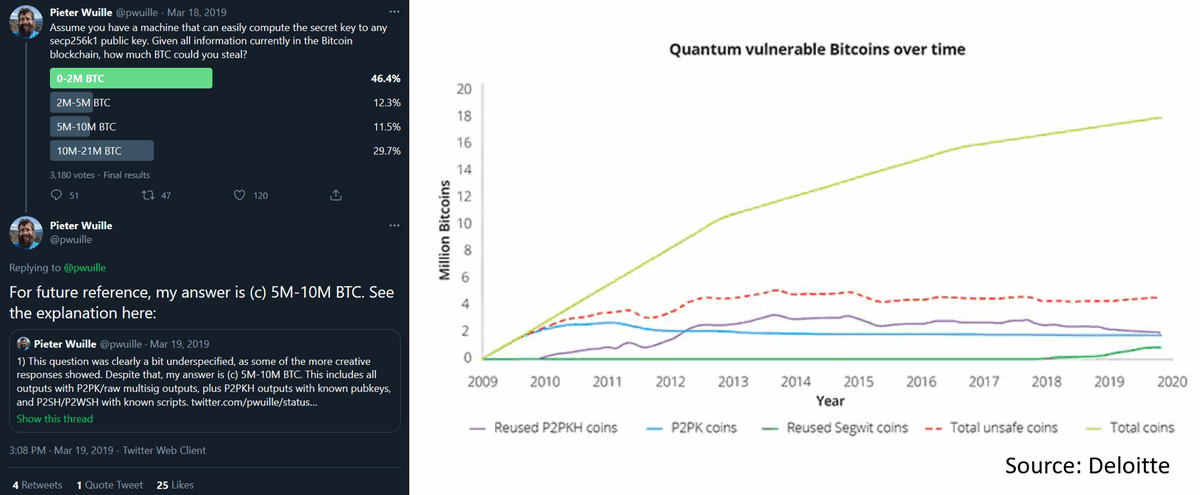
We can separate vulnerable BTC into three classes:
1) Lost coins (several million)
2) Non-lost coins held in reused/taproot/otherwise-vulnerable addresses
3) Coins in the mempool (i.e., being transacted) 5/
@strobist@PrestonPysh Median expert opinion is that the threat is around 15 years away, according to a survey conducted late last year. The attached thread discusses the main challenges for BTC and their solutions.
Really sorry about the reply spam.
https://t.co/Nolft2F59W
How long until someone builds a quantum computer that can steal BTC by quickly deriving private keys from their associated public keys?
Serious estimates range from 5 to 30+ years, with the median expert opinion being around 15 years. 3/
The best case scenario for #Bitcoin with quantum computing:
>QC progress is slow and public
>A quantum-resistant signature is added years ahead of any real risk
>Large majority of BTC migrate during that period
>Community accepts burning all ECDSA coins without major controversy
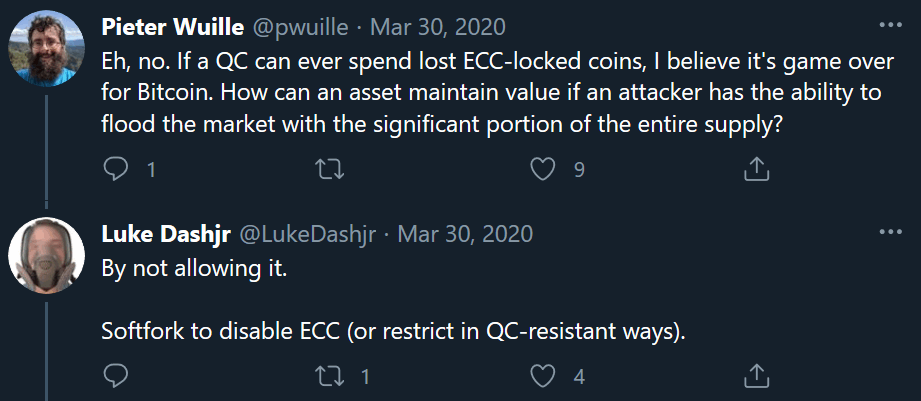
SOLUTION #1: preemptively burn lost coins via soft fork
How well this works will depend on:
>Are enough lost coins covered to prevent a liquidity crunch or market spook?
>Which coins get burned, who decides, & how difficult is it to reach consensus on these decisions? 7/