This 50-minute lecture by Jeff Bezos will teach you more about business than a 2-year MBA program.
Bookmark it and give it 50 minutes today, no matter what.
We argued just as fiercely over the restoration of traditional institutions generally and over the Ankole monarchy in particular. At the time, every disagreement seemed final and every argument seemed to divide us permanently. But age teaches what passion sometimes conceals: today’s opponent may tomorrow become a friend, and today’s quarrel may one day look much smaller than it does in the heat of the moment.
I came, with time, to understand the wisdom of the old preacher who urged people to “cut yourselves with a sword that heals.” If we must disagree, let us disagree in a way that still leaves something to repair when the argument is over. Let us fight our battles, if we must, without destroying the possibility of friendship, family and reconciliation when the battle has passed.
Our ancestors sometimes settled succession questions with spears and armies, and history records the cost. We have law, institutions, elders, dialogue and the benefit of their mistakes, and surely we must be capable of doing better.
I am a lawyer and have spent much of my life in and around courts, so I say the following with the greatest respect for the judiciary. Not every problem that can be taken to court should be taken to court, because although a judge can interpret a document, determine a legal right and declare a winner, there is one order no court can issue: that a family shall henceforth love and trust one another.
A judgment can tell us who has the better legal argument, but it cannot always heal the wound that produced the case. A court can produce a winner and a loser; reconciliation has the possibility of preserving a family and, in this instance, perhaps a Kingdom.
I therefore respectfully appeal to Prince Edward Rukidi Kijanangoma, who has been announced as Oyo’s successor, to make reconciliation his first great act of leadership. Reach out to the Queen Mother, go to her, speak to her and listen to her, because whatever the arguments over succession, one fact requires neither affidavit nor evidence: she is a mother who has just buried her son.
If leadership is ultimately measured not simply by the office one occupies but by what one does with it, there can be no greater beginning than bringing a divided family together. Do not seek merely to inherit Oyo’s throne; seek also to inherit the gentleness by which so many Ugandans came to know him.
I equally appeal to the Queen Mother, Princess Ruth Komuntale, the Babiito, the elders and every branch of the Royal Family to give dialogue a genuine chance. Nobody needs to be humiliated for Tooro to be reunited, and nobody needs to be defeated for Tooro to win.
Put the traditions on the table, put the documents on the table, put the history on the table, and put the elders around that same table. Let Government facilitate where facilitation is needed, let lawyers advise where law requires interpretation, but ultimately let the family talk to itself, listen to itself and find a solution with which Tooro can live.
I also appeal to my friend @AndrewMwenda , an exceptionally gifted and fearless journalist who is also a son of Tooro. That gives him both an interest in what is happening and, I would suggest, a special responsibility in how this extraordinarily sensitive moment is handled.
Some very serious allegations have now entered the public domain, including allegations touching members of the Royal Family and the leadership of our country. Andrew, I say this to you as a friend: do not make reconciliation more difficult than it already is. The truth or falsity of those allegations is not for me to pronounce upon here, and my plea is simply that, in this moment of grief and uncertainty, nothing should be said or done which makes it harder for the Royal Family and the people of Tooro to find their way back to one another.
There are moments when courage consists in speaking and there are moments when wisdom consists in recognising that enough has been said for now.
As former Tooro King Oyo Nyimba is buried today at the tender age of 34, we have to acknowledge the most unusual and surprising fact of his reign that only came into sight with his death; he occupied a place in Ugandan’s hearts that is several times bigger than the quiet relatively small kingdom he led. And he did it without getting in Ugandan’s faces, without noise, or drama. In fact, if truth be told, he did it while not trying to. The irony is that more powerful men and women, who’ve tried one million times harder, for more years, sent thousands to their graves and to gaol, and expended great treasure, will get nowhere near that, and could even end in ignominy instead. He probably didn’t even know it. And so, if one asked the famous Amama Mbabazi-derived question, “how did he did it?”, the only honest answer has to be that it is one of the great mysteries of these our lands. RIP
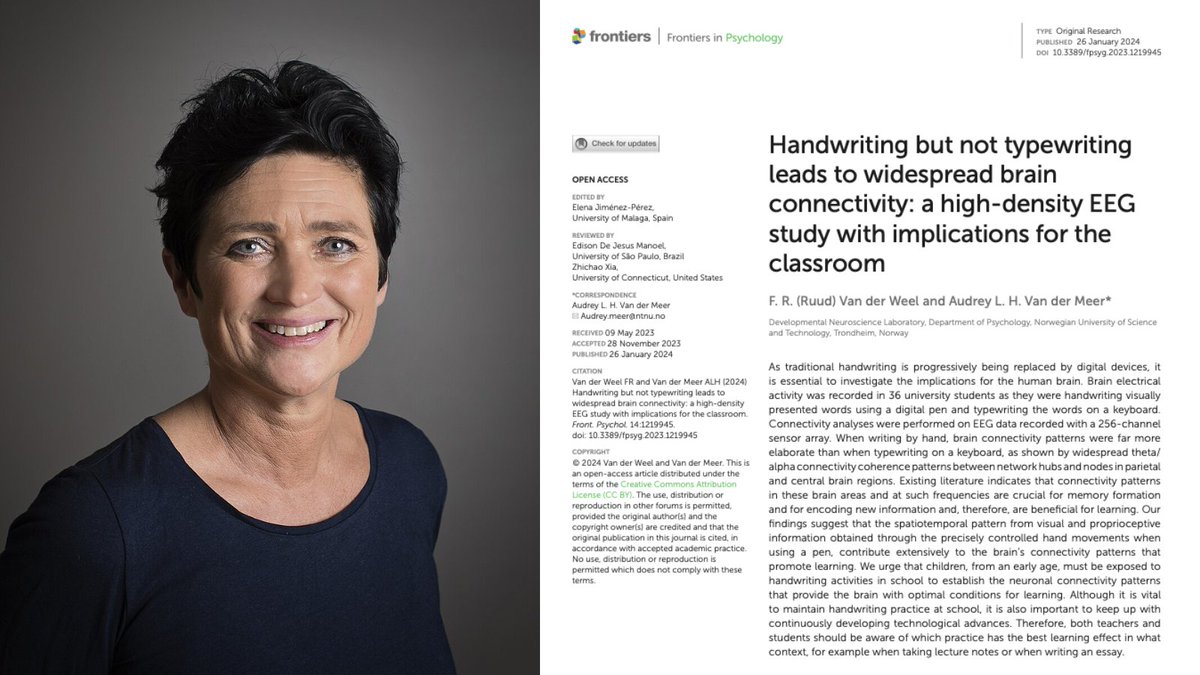
A Norwegian neuroscientist spent 20 years proving that the act of writing by hand changes the human brain in ways typing physically cannot, and almost nobody outside her field has read the paper.
Her name is Audrey van der Meer.
She runs a brain research lab in Trondheim, and the paper that closed the argument was published in 2024 in a journal called Frontiers in Psychology. The finding is brutal enough that it should have changed every classroom on Earth.
The experiment was simple. She recruited 36 university students and put each one in a cap with 256 sensors pressed against their scalp to record brain activity. Words flashed on a screen one at a time.
Sometimes the students wrote the word by hand on a touchscreen using a digital pen, and sometimes they typed the same word on a keyboard. Every neural response was recorded for the full five seconds the word stayed on screen.
Then her team looked at the part of the data most researchers had ignored for years, which is how different parts of the brain were communicating with each other during the task.
When the students wrote by hand, the brain lit up everywhere at once.
The regions responsible for memory, sensory integration, and the encoding of new information were all firing together in a coordinated pattern that spread across the entire cortex. The whole network was awake and connected.
When the same students typed the same word, that pattern collapsed almost completely.
Most of the brain went quiet, and the connections between regions that had been alive seconds earlier were nowhere to be found on the EEG.
Same word, same brain, same person, and two completely different neurological events.
The reason turned out to be something nobody had really paid attention to before her work. Writing by hand is not one motion but a sequence of thousands of tiny micro-movements coordinated with your eyes in real time, where each letter is a different shape that requires the brain to solve a slightly different spatial problem.
Your fingers, wrist, vision, and the parts of your brain that track position in space are all working together to produce one letter, then the next, then the next.
Typing throws all of that away. Every key on a keyboard requires the exact same finger motion regardless of which letter you are pressing, which means the brain has almost nothing to integrate and almost no problem to solve.
Van der Meer said it plainly in her interviews.
Pressing the same key with the same finger over and over does not stimulate the brain in any meaningful way, and she pointed out something that should scare every parent who handed their kid an iPad.
Children who learn to read and write on tablets often cannot tell letters like b and d apart, because they have never physically felt with their bodies what it takes to actually produce those letters on a page.
A decade before her, two researchers at Princeton ran the same fight using a completely different method and ended up at the same answer. Pam Mueller and Daniel Oppenheimer tested 327 students across three experiments, where half took notes on laptops with the internet disabled and half took notes by hand, before testing everyone on what they actually understood from the lectures they had watched.
The handwriting group won by a wide margin on every question that required real understanding rather than surface recall.
The reason was hiding in the transcripts of what the two groups had actually written down.
The laptop students typed almost word for word, capturing more total content but processing almost none of it as they went, while the handwriting students physically could not write fast enough to transcribe a lecture in real time, which forced them to listen carefully, decide what actually mattered, and put it in their own words on the page.
That single act of choosing what to keep was the learning itself, and the keyboard had quietly skipped the choosing and skipped the learning along with it.
Two studies. Two countries. Same answer.
Handwriting makes the brain work. Typing lets it coast.
Every note you have ever typed instead of written went into your brain through a thinner pipe. Every meeting, every book highlight, every idea you captured on your phone instead of on paper was processed at half depth.
You did not forget those things because your memory is bad. You forgot them because typing never woke the part of the brain that would have made them stick.
The fix is the thing your grandmother already knew.
Pick up a pen. Write the thing down. The slower road is the faster one.
Communication expert Jefferson Fisher showed me something I won’t forget...
He calls it the string theory.
When two people are talking, there’s an invisible string between them.
If you check your phone, the string goes slack. Even just having it on the table breaks the connection.
Here’s how he explained it 👇🏾
Happy to unveil our planned $5.3B smart Coffee City—that will blend coffee value addition, coffee tourism, coffee currency, coffee stock exchange, artificial intelligence & blockchain technology. Africa, join us in creating a million jobs and new Africa’s economic dispensation
After 1.5 years of using ChatGPT, I can say that it is the technology that has revolutionized my life the most, along with the Internet.
So here are 12 prompts that have transformed my day-to-day life and that could do the same for you.
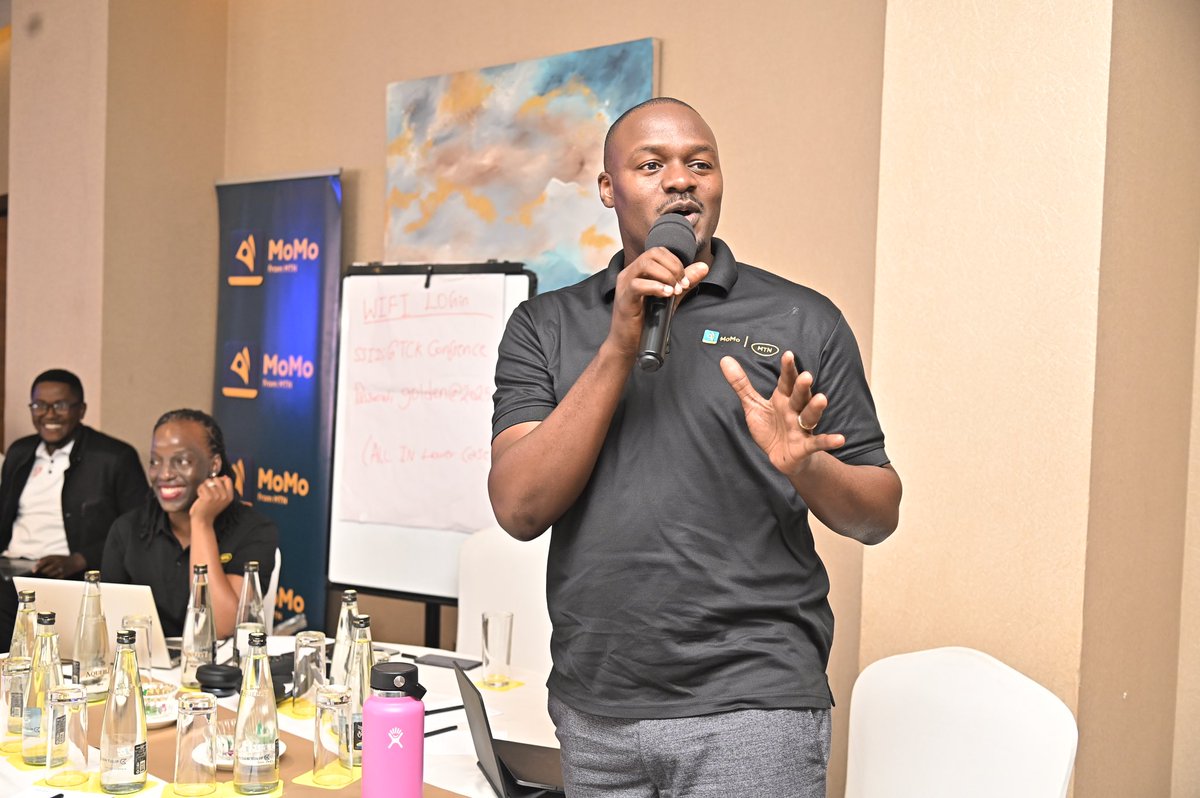
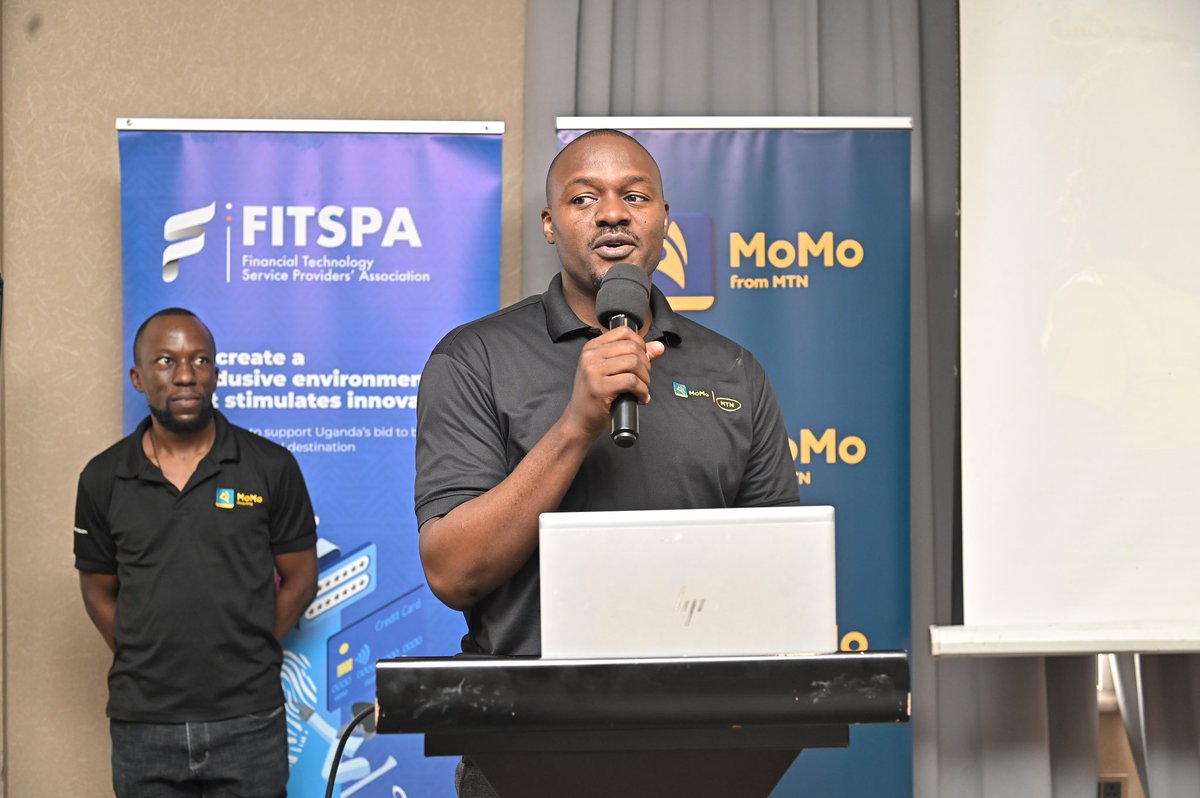
Speaking at the MoMo API Innovations Workshop, Albert Gitta, CIO MTN MoMo spoke on the power of inclusive technology, encouraging developers and partners to continue building impactful solutions.
“Every solution we create should make a positive impact. Without MTN MoMo and developers like you, many people wouldn’t fully participate in the economy.”
#MoMoAPIs #DoMoreWithMoMo
This policy completely misses the mark when it comes to understanding how Uganda's economy works and who needs help.
Take a chapati seller on our streets. Every morning, he borrows 100,000 UGX. With this money, he buys ingredients, makes rolex throughout the day, and by evening, he's earned 200,000 UGX. He pays back 110,000 UGX with interest, takes home 90,000 UGX for his family, and starts again tomorrow. Do you think he's worried about that 10% interest rate? No - what matters to him is getting the money quickly, without having to put up collateral. Banks would never look at him. Without these loans, his business dies. His family suffers. It's that simple.
These policies aren't protecting people like him. Instead, they're covering for the careless borrowers. I'm talking about MPs and other privileged folks who take big loans at high rates and fail to pay. Meanwhile, millions of hardworking Ugandans who rely on small, frequent loans to keep their businesses running? They're left in the cold.
We don't even need to guess how this ends. Look at Kenya. Their 2016 interest rate caps were a disaster. What happened? Banks and microfinance institutions couldn't make the numbers work, so they stopped lending to small businesses and high-risk borrowers. They focused on the wealthy, the "safe" clients. The informal sector - the backbone of Kenya's economy - took a massive hit. Financial inclusion went backwards. Economic growth slowed. And guess what? People didn't stop borrowing - they just turned to unregulated lenders charging even higher rates. Kenya had to repeal these caps in 2019 because they were doing more harm than good.
And here we are, about to make the exact same mistake. This policy won't help ordinary Ugandans - it will devastate them. It will shrink our economy, destroy livelihoods, and make the gap between the haves and have-nots even wider. Kenya already showed us how this movie ends.
People in their AC offices think like this, but it is not how things work on the street, where survival depends on making $15 a day. That's what tier 4 institutions are for, not MPs.