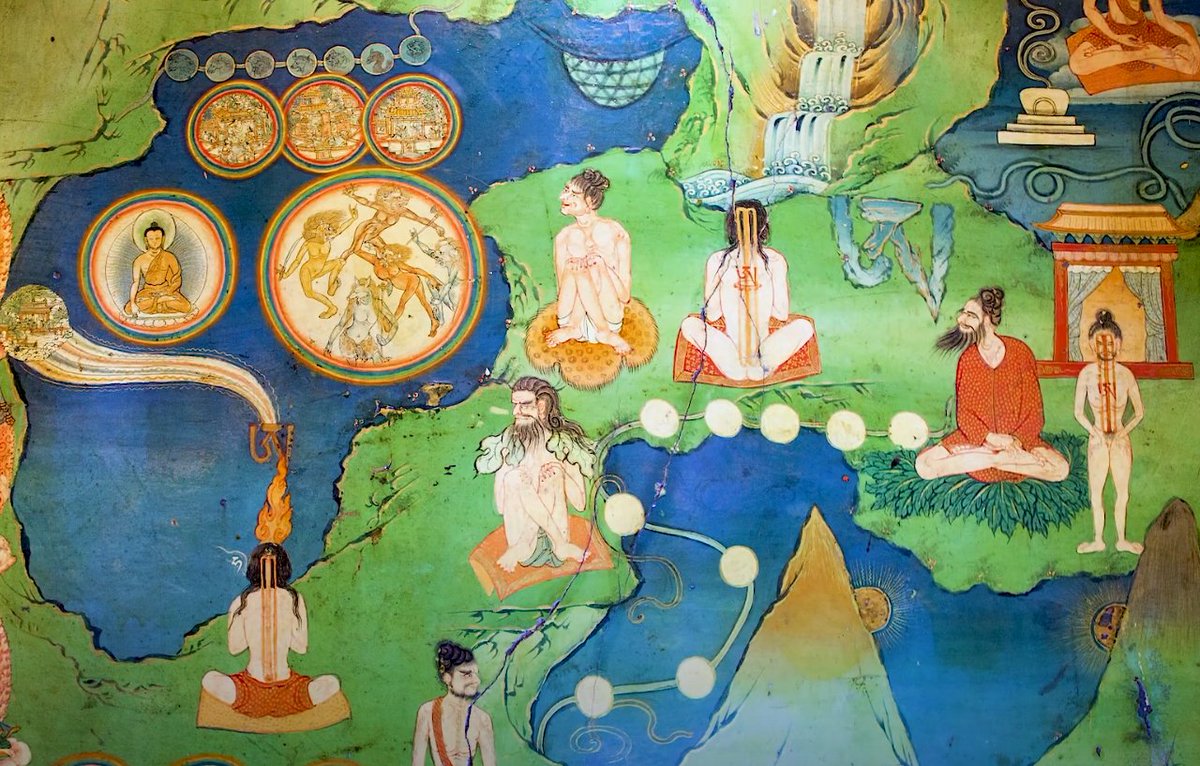
Today I start my PhD studies at UCL's Centre for Consciousness Research! Here I'll work with advanced practitioners of Dzogchen ('Great Perfection'; a Tibetan contemplative tradition) to neurophenomenologically assess the landscapes of conscious experience these practices unlock
Finally, I'm very grateful to the team at Imperial College London's Centre for Psychedelic Research @Imperial_PRG & especially @DavidErritzoe for their support over the last few years. An awesome team, who I am pleased to continue working with as an honorary research associate.
Article I wrote for @psyche_the_mag about the value of descriptive work to scientifically understand intense and meaningful altered states of consciousness. In my view, Jamesian curiosity and empiricism is better suited to the topic than Jungian enthusiasm or Freudian cynicism.
13/
I’m so grateful to my co authors @raphaelmilliere@demsarema Zach Daily @rcarhartharris & especially @neurodelia for his great trust and patience. Huge gratitude for the support & mentorship of Claire Petitmengin, too
Read the full paper here: https://t.co/t9UtGsGYs4
/end.
1/
How can micro-phenomenology advance our knowledge of the mind/brain under DMT, and address methodological shortcomings in psychedelic phenomenology more broadly?
Announcing a new preprint from the DMT Research Group at @Imperial_PRG
12/
Next for us is to explore how the phenomenological structures identified here relate to brain dynamics observed in the concurrently measured fMRI/EEG data - a truly exciting undertaking!
I'm very excited for this to be published. This paper is just the beginning - we have collected a great deal more data from both naturalistic and lab settings, including a hundred or so micro-phenomenological interviews
Our new paper - the first peer-reviewed brain and phenomenological examination of 5-MeO-DMT is out in @NeuroConsc .
TLDR: We tested whether ‘the mount Everest’ of psychedelics could induce a complete state of consciousness deconstruction while preserving awareness. 1/n