@GaryAllport As always, thanks to loads of folks who helped by going birding, documenting records, sharing pictures and papers. This type of paper is all the richer thanks to citizen science and the birder network on FB and elsewhere.
An update on Cape Vultures in #mozambique.
https://t.co/uEkfjNpRzK
I have very fond memories of tracking down this cliff on google earth and then watching the vultures breed or not… Many a fine days birding! Thanks to all those that joined in.
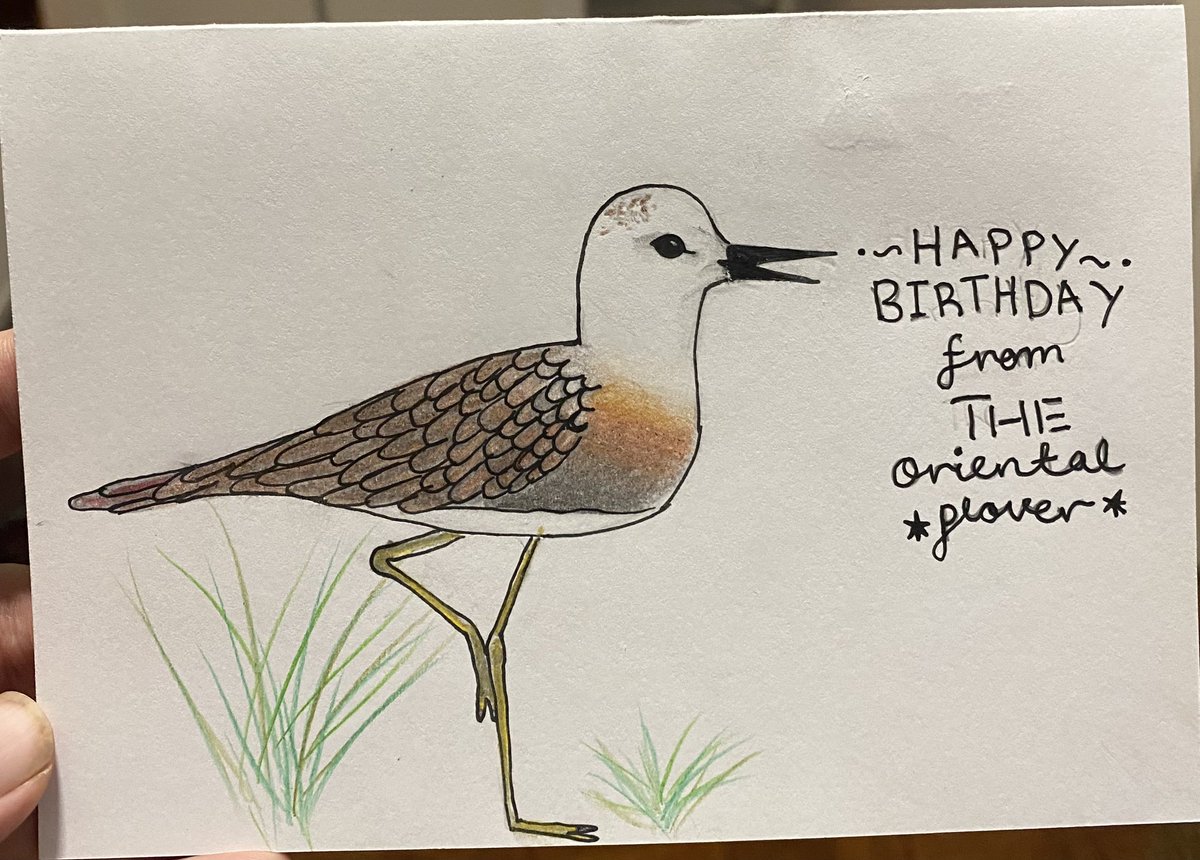
Daughter No.1 (11yrs) definitely knows her target audience! I do love a wader and an Oriental Plover will be a super tick after our move to Singapore.
Drawn freehand from a photo. So we just need to arrange her a guidebook deal now…
#birds
@sarahlove808@PaulAtherton13 Big ticks up there are species endemic to the Zimbabwe Eastern Highlands e.g. Chirinda Apalis, Robert’s Warbler. Then some nice Afro-montane Sp, Blue Swallow, Orange Ground-Thrush, Red-faced Crimsonwing and so on…
See https://t.co/rllf9O1LFn
Celebrating #WWD2024@UKinMozambique is supporting wildlife conservation with @WWF & partners through the #DarwinInitiative: from wildlife justice ⚖️ to wild honey 🍯take a look at our projects 👇🏿 (& the amazing photos of @JWTHogg)
https://t.co/eH6aBJj9qM
Following a super lunch at the Abbey Inn, Byland the winter light was magic.
Only bettered by some amazing nacreous clouds this evening over the barn #NorthYorkshire#Nacreousclouds
@2wsphotography@nyandungupark I reckon fairly small ponds at that spot. Will be interesting to see if they eat all the fish and disappear and then numbers of Herons / Cormorant drop as a result.
That’s pretty much it from that trip. We did see several species in globally significant numbers, often well above the RAMSAR 1% criteria. The area is super important for migrants!
A proper report will come in due course.
Bye for now to the Greater Bazaruto IBA.