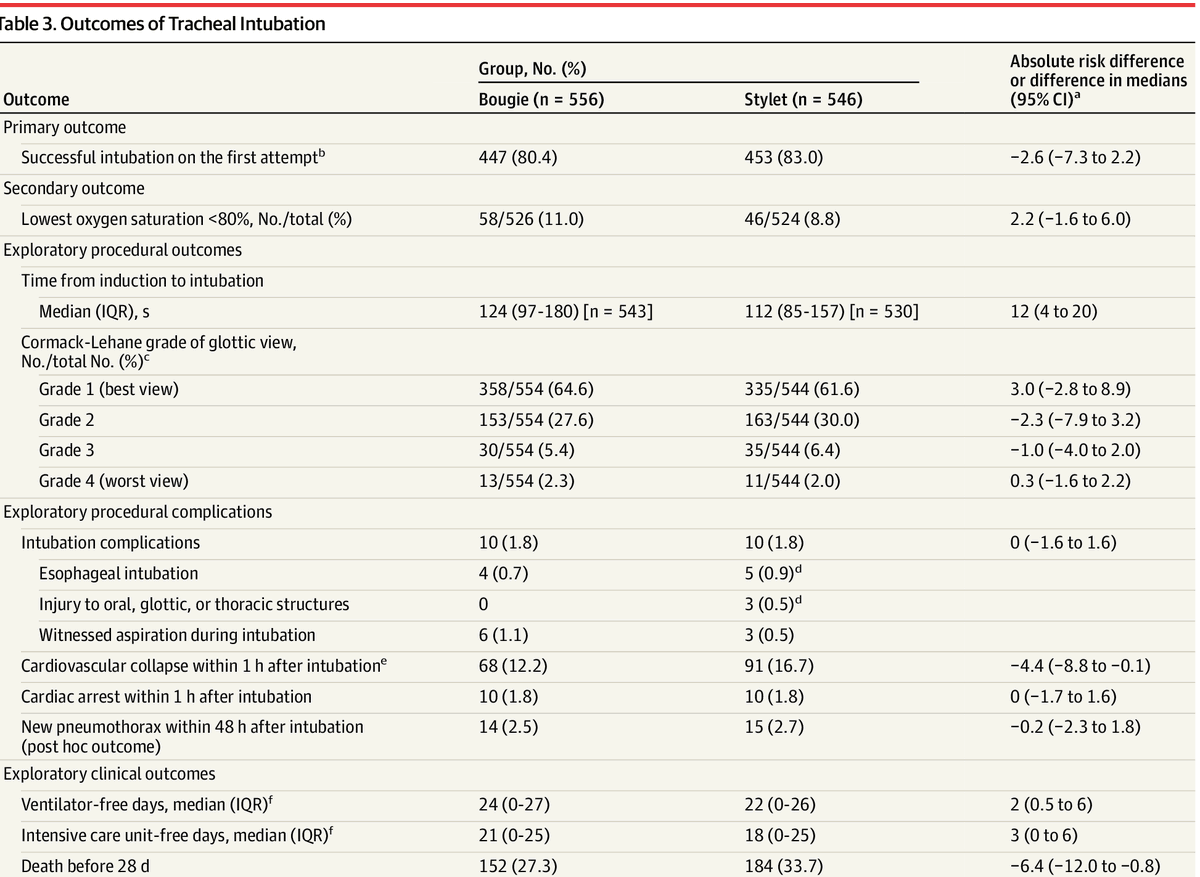
Use of bougie or stylet led to similar success with first attempt intubation and similar risk of complications
Outstanding pragmatic trial to answer an important question, by @JonathanCaseyMD@toddrice_ICU@PCCRG
https://t.co/dMs7j9kLV6 via @JAMA_current part of @JAMANetwork
Today’s EM shift teaching points were on mechanism of ankle fractures https://t.co/44zuO57QxG
and whether subsegmental PEs w/o DVT require AC.
https://t.co/jVPdl94ty8
#FOAMed#MedEd
Last night’s best evidence-based teaching moments were on 1). Risk stratification for PE BEYOND decision rules (family Hx of VTE, esp) and 2). Working up PE during pregnancy (we can now use a YEARS algorithm-based approach to reduce imaging by nearly 1/2)!
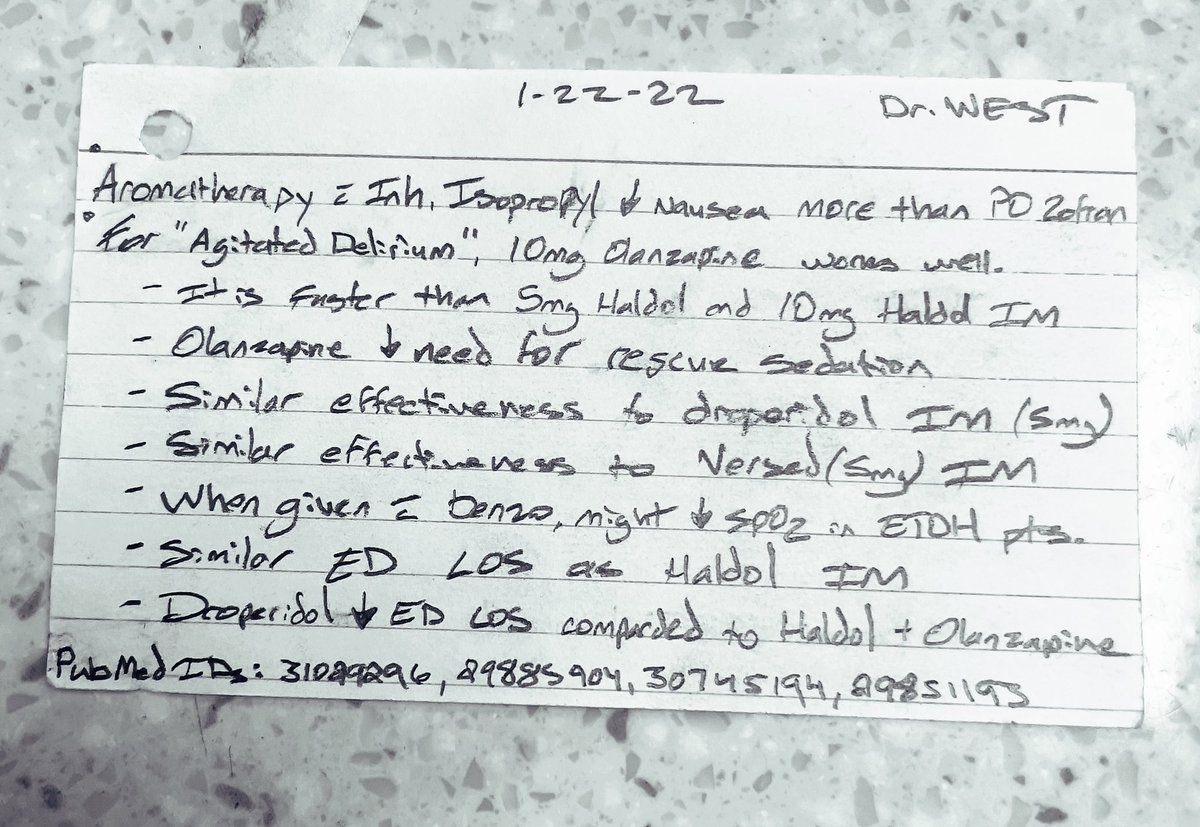
Reference PMIDs on card
This study by @NYCHealthSystem at @LincolnEM with @NickMD1980 and I, emphasizes that prolonged apnea during ED RSI could lead to cardiovascular collapse or cardiac arrest in patients with a low pH prior to RSI: https://t.co/2srJTVM85K
#MedEd#FOAMed
Teaching card from last night's shift.
-The rate of propofol needs to be high (100-200mcg/min) to increase the seizure threshold for stat ep.
- Increasing ETCO2 post-intubation could be from cuff deflation.
-After 60 sec of apnea during RSI, the pH will drop by 0.15 or more.
Some of the teaching points today were on Benzos and hepatic failure, alcohol withdrawal syndrome (AWS), thiamine for encephalopathic AWS, and prophylaxis against encephalopathy in AWS.
#MedEd#FOAMed#MedTwitter
Today’s teaching points were on predictors of orbital wall fractures, ED/ICU rates of post-intubation cardiovascular collapse and cardiac arrest, and relationship between lactates and time to false increase when left out at room temp.
#ACEPTF#FOAMed#MedEd
Today’s on-shift teaching points were on the effectiveness of olanzapine vs haloperidol vs droperidol for acute agitated delirium and aromatherapy for nausea.
Of course, they were given in #postitpearls format on a “K” card - @EMIMeducator’s idea from #ACEPTF#MedEd#FOAMed
Teaching points from last shift (@LincolnEM) given in #postitpearls format …but via take-home, individualized “knowledge cards.”
I’m working on the handwriting.
#MedEd#FOAMed
& PrePARE
https://t.co/amFNwV4ozn
I've been using BMV more often during ED RSI if I feel it's safe. Apneic oxygenation has no risk, but BMV after induction likely gives your patient better oxygenation.
Secondary analysis of patients assigned to bag-mask ventilation (BMV) and apneic oxygenation from 2 RCTs suggests that BMV is associated with higher oxygen saturation during intubation compared to apneic oxygenation.
https://t.co/La2AwzQ4gr
First pass success (FPS) is a common intubation study outcome.
Our new study in @TSACO_AAST promotes the composite outcome, FPS & absence of hypoxemia, in trauma patients.
I think the patient safety outcome we should be using in the future is FPS without adverse events.
New to @TSACO_AAST: Predictors of first pass success without hypoxemia in trauma patients requiring emergent rapid sequence intubation by @JWestEM
https://t.co/fdvSroKMYG
Try this for your “Happy Hypoxemics” if resource strapped...Proning at triage...EMS brought this guy in...SpO2 72% tachy 140s...was on 4 L NC...we asked patient to turn over...now 90-91%, tachycardia resolved. Can help buy time and decrease provider tensions over hypoxia.
.@NYCHealthSystem is preparing to care for NYers w/ severe #coronavirus symptoms. If you are mildly ill, stay home, call your doctor & monitor symptoms. Avoid ER to prevent spread to other patients & health care workers. If you don’t improve, call @nyc311: https://t.co/BvePyNQgA1