💬"Many experts thought that using ketamine might increase the number of patients who survived, compared to etomidate — but it did not,” @JonathanCaseyMD & Dr. Matthew W. Semler of @VUMCDiscoveries told Healio. #intubation
https://t.co/vhZefOOHS7
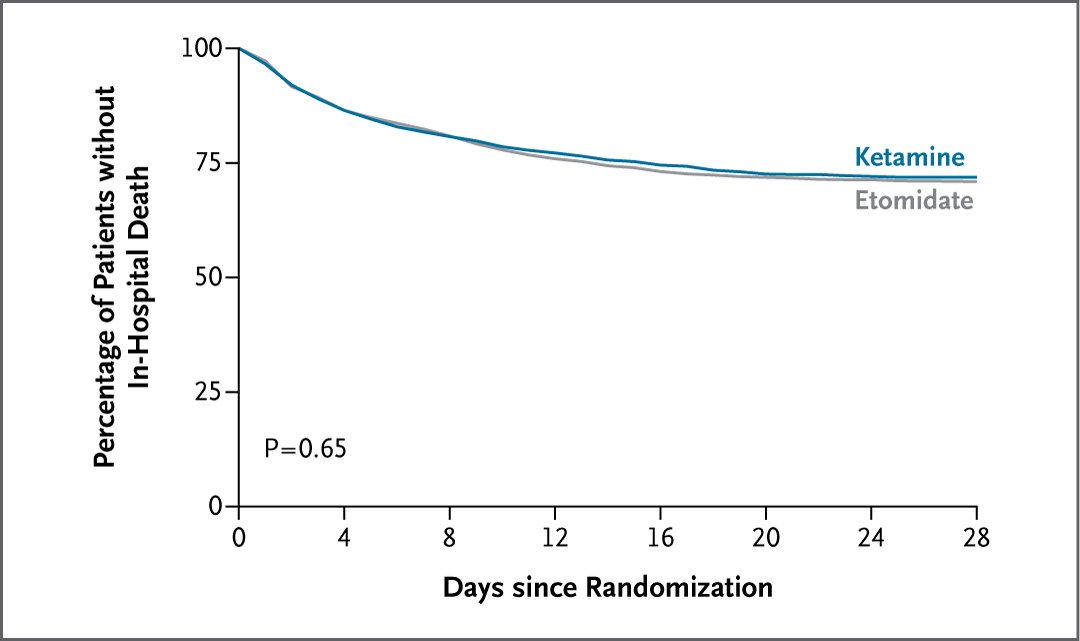
Published in @NEJM: In-hospital🏥 mortality by day 28 did not significantly differ based on use of ketamine or etomidate to induce anesthesia in critically ill adults undergoing #intubation.
https://t.co/vhZefOOHS7
@JonathanCaseyMD@VUMCDiscoveries
Give this episode a listen. Great discussion with first author, @JonathanCaseyMD and @toddrice_ICU@EdQian
RSI trial was done to see if etomidate increases mortality especially in sick sepsis patients.
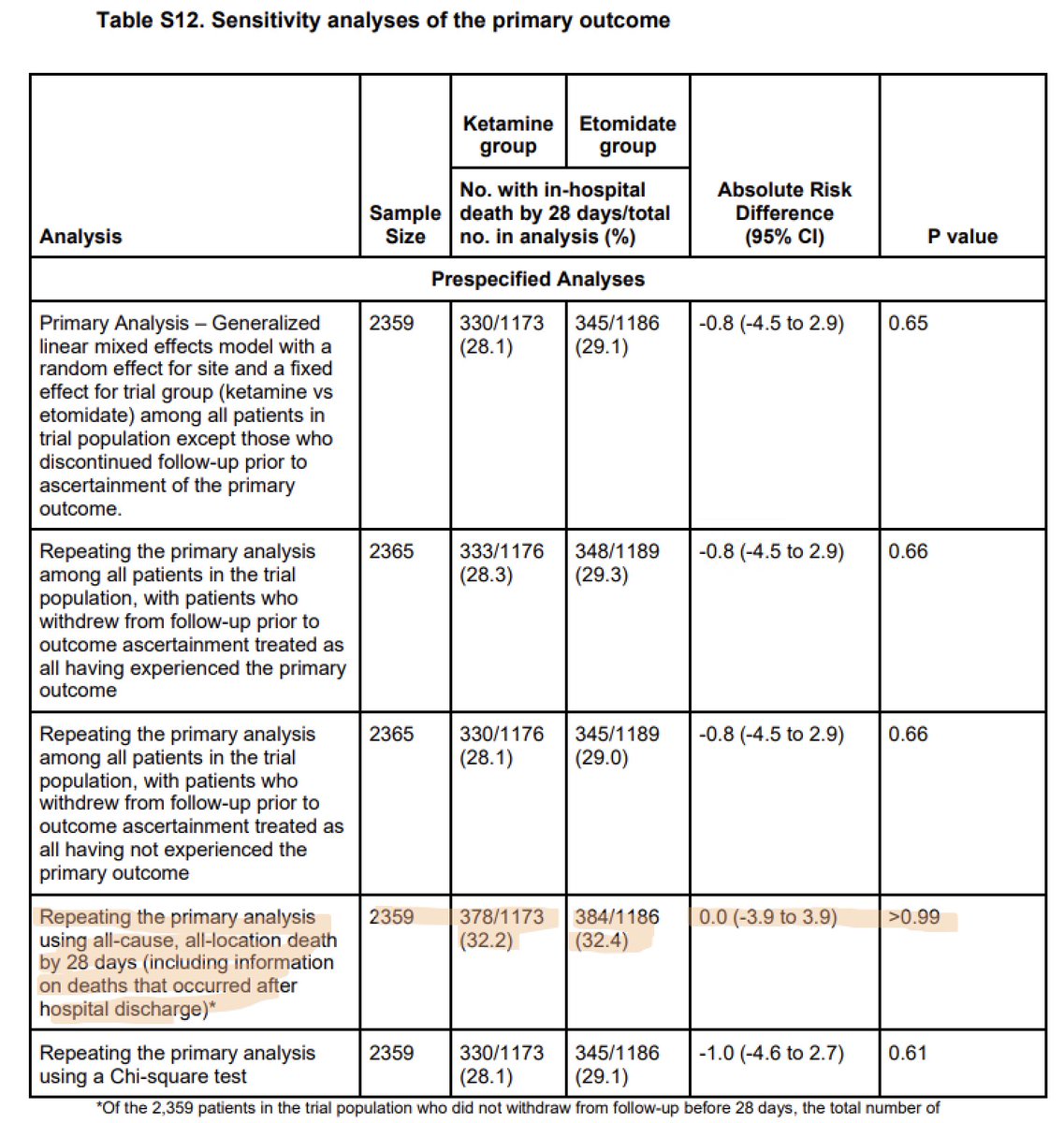
I have seen posts focusing on the 1% mortality difference. You can see from the sensitivity analysis below that using all cause, all location death at 28 days still shows no difference (32.2% vs 32.4%). Even more reassuring is that in the sickest patients etomidate still doesn't worsen mortality. Surprisingly we see more cardiovascular collapse with ketamine in the sepsis sub group.
This data will be the most interesting in the countries that previously banned etomidate use.
Presented at CCR Down Under 2025:
In a randomized trial involving critically ill patients undergoing intubation in EDs or ICUs, the use of ketamine for the induction of anesthesia did not lead to significantly lower in-hospital mortality than etomidate. Full trial results: https://t.co/ovSy71Gi1j
@CritCareReviews
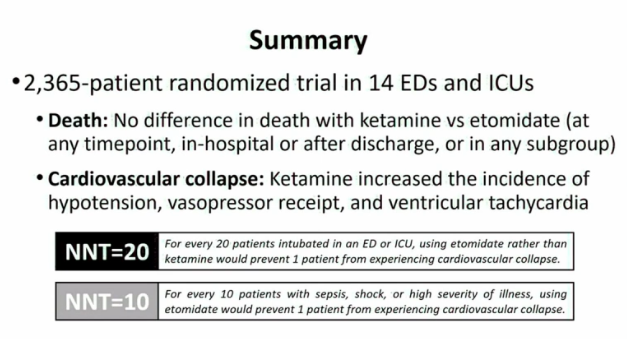
💉 The results of the RSI Trial results are in and they are truly practice changing!
By choosing etomidate over ketamine:
NNT=20 to prevent cardiovascular collapse!
🪦RIP Ketamine for Endotracheal intubation induction!
#CCRDownUnder
Got the post #CCRDownUnder blues? Listen to our interview and deep dive of the RSI trial with @JonathanCaseyMD, recently published in @NEJM
https://t.co/gx5awpNrI1
EMCrit Wee - The RSI Trial - Etomidate vs. Ketamine for RSI Induction in the critically ill. These results are practice changing for many resuscitationists! I know it will change my practice. Listen to this interview with lead authors:
@JonathanCaseyMD and @brian_driver
[#FOAMed for now!]
On Dec 9th, as soon as the embargo lifts, I will publish an EMCrit Wee on the Results of the RSI trial-Etomidate vs. Ketamine for RSI Induction. It is a discussion with the lead authors: @JonathanCaseyMD and @brian_driver
Until then, why don't you put your chips down!!! Take this 30 second survey to lock in your predictions of the results
https://t.co/VhwFoypjsY
The first trial for CCR Down Under 2025 is RSI from @PCCRG@JonathanCaseyMD
➡️Ketamine vs etomidate for emergency tracheal intubation
➡️n= 2364
Join us in Melbourne - Dec 9 & 10
https://t.co/72daQZImLO
CCR Down Under is run in partnership with @intensiveblog & @MonashUni
Awesome to have Dr. Seitz join us to talk about MODE and the upcoming MODEM trials. Ventilators have many different modes, and while we often spend time understanding how each mode works, understanding how different modes might affect our patients and outcomes is more difficult.
Today's Paper of the Day is:
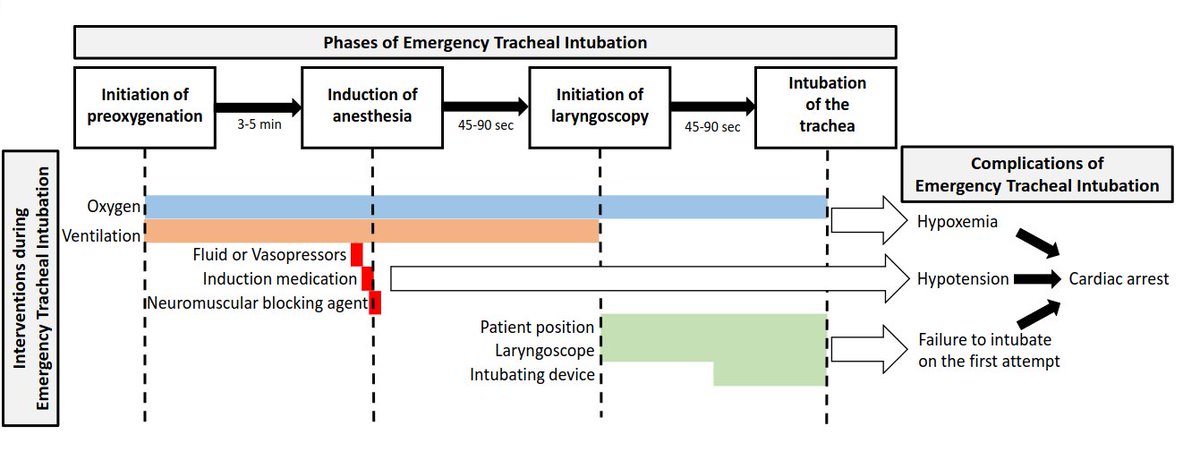
Evidence-based Emergency Tracheal Intubation
https://t.co/JKgcYjlUQ5
Join us to read 1 paper per day and stay up-to-date as we cover the spectrum of critical care across 2025
@CritCareReviews Editorial: The UK-ROX trial demonstrates that targeting lower oxygen saturation in critically ill patients is safe but does not improve outcomes.
#CCR25@CritCareReviews
https://t.co/1lIjNQAdqd
Low vs moderate-intensity anticoagulation for VV #ECMO
🔍 SAFE-ECMO pilot trial; 3 centers across 🇺🇸
💉 intermittent SC anticoagulant (doses for DVT prophylaxis) vs traditional approach to anticoagulation with continuous, goal-titrated, infusion
🩸major bleedings 8.3% in low vs 28.6% in moderate-intensity group
🩸thromboembolic event 8.3% vs none
🪦 mortality before discharge 0 vs 14.3%
@accpchest
🖇️ https://t.co/P25NmXI0l7
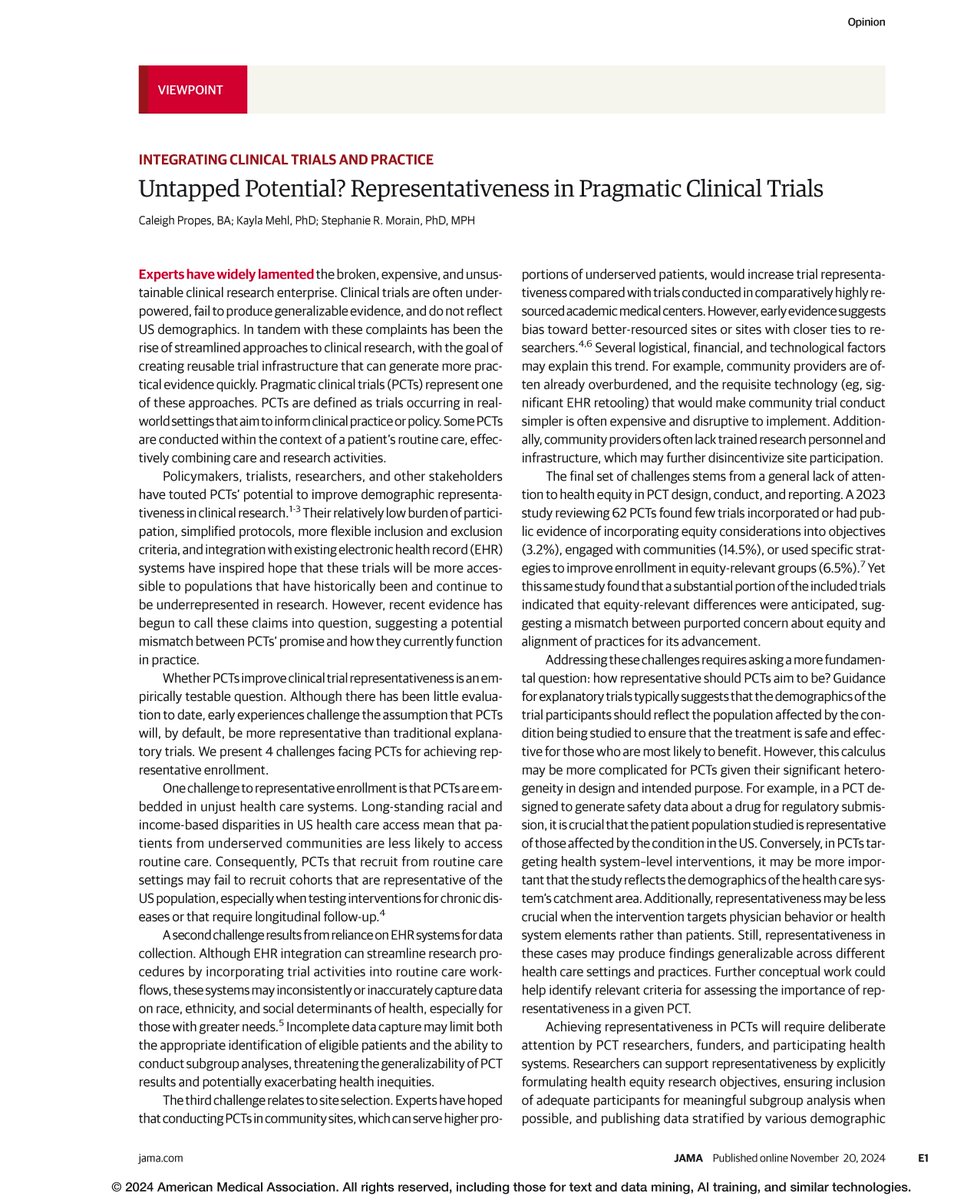
Viewpoint: @CaleighPropes, Kayla Mehl, and @SMorain explore the potential of pragmatic clinical trials to improve demographic representativeness and health equity in clinical research.
https://t.co/feC7cu9HrM
This Editorial from @HollyLynchez and Daniel Kramer highlights the need for regulatory clarity to support ethical research in clinical care settings.
https://t.co/ihn6rOSR5b
This Special Communication examines the evolution of ethical oversight for clinical research, highlighting the need for a more nuanced approach to IRB review and informed consent.
https://t.co/1wQwhrezyE
Excited to share practice-changing results of our PREOXI trial showing preoxygenation with non-invasive ventilation safely reduced hypoxemia by 51% during emergency tracheal intubation @PCCRG@CUEmergency@CUCombatCenter#CCR24
https://t.co/bJzaB0otgs
Presented at #CCR24:
In a randomized trial involving critically ill adults undergoing tracheal intubation, the incidence of hypoxemia was lower with preoxygenation with noninvasive ventilation than with an oxygen mask. Full PREOXI trial results: https://t.co/4C2TS0VA6c




![emcrit's tweet photo. EMCrit Wee - The RSI Trial - Etomidate vs. Ketamine for RSI Induction in the critically ill. These results are practice changing for many resuscitationists! I know it will change my practice. Listen to this interview with lead authors:
@JonathanCaseyMD and @brian_driver
[#FOAMed for now!]](https://pbs.twimg.com/media/G7xD4QBaoAAX1Uq.jpg)