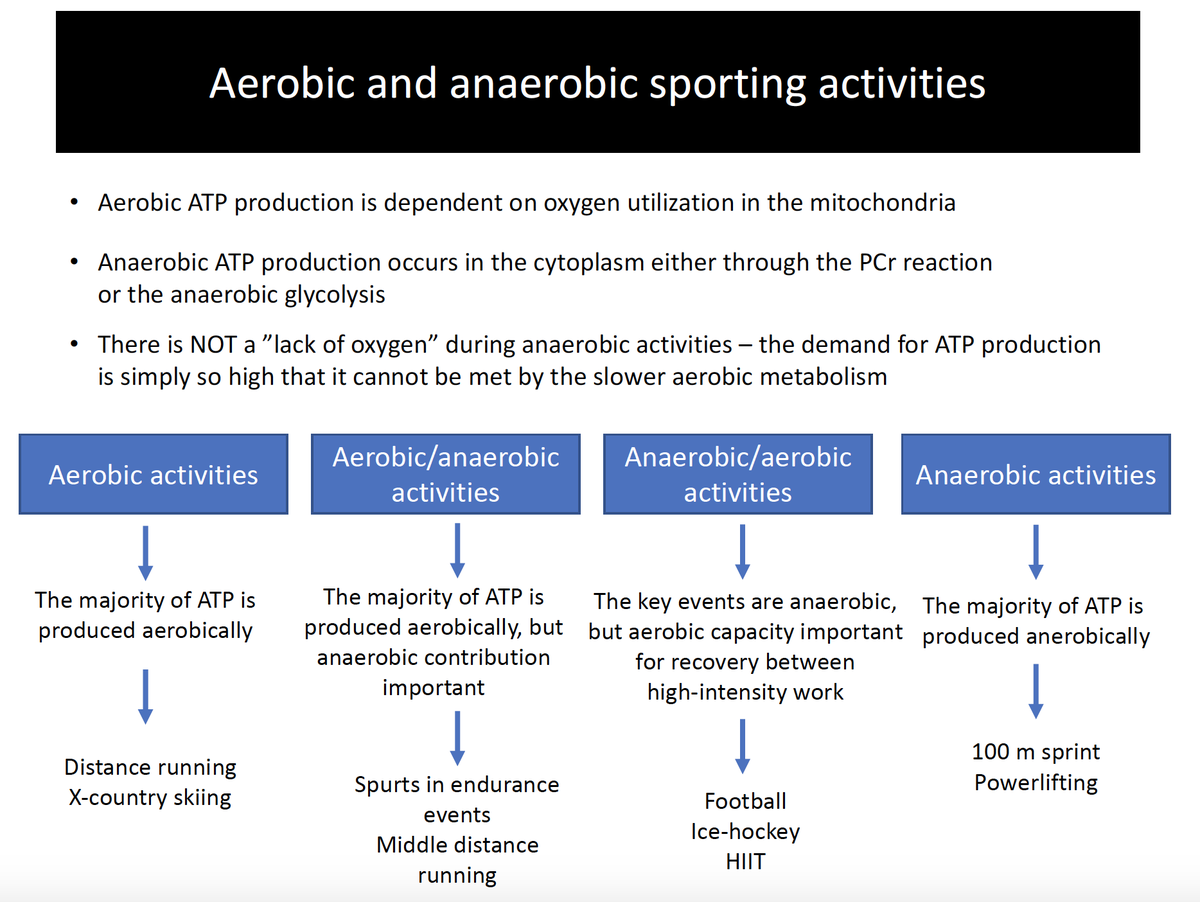
The term "aerobic" and "anaerobic" can be confusing sometimes when used to describe and explain sporting activities. This is my interpretation, am I on point here?
Isometric exercise for acute pain relief: is it relevant in tendinopathy management?
@kgSilbernagel @Bill_Vicenzino @MichaelRathleff@KThorborg
👀👀👇👇
https://t.co/iFNyHLdoBK
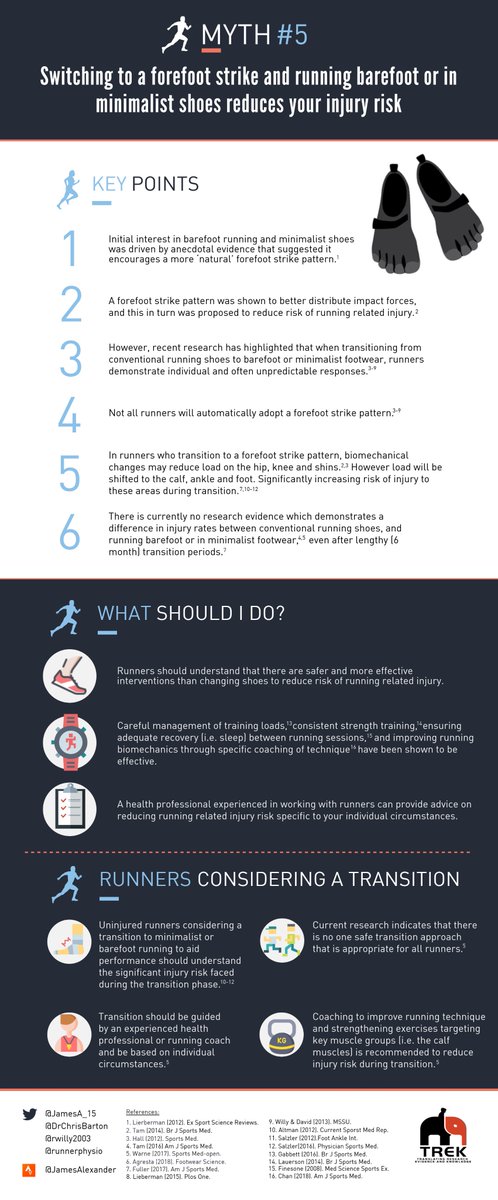
It's been a while coming but here is running Myth #5 Does barefoot and minimalist shoe running reduce injury risk?
@LaTrobeSEM blog...https://t.co/t4k2ftb6CC
Thanks to @DrChrisBarton, @rwilly2003 & @runnerphysio for their expert input!
Let the barefoot debate begin...
Great summary of the reasoning process behind modifying running to minimise load in the Achilles from @RUNSAFE_Rasmus
- ⬇️ high speed running
- ⬇️ uphill running
- consider shoes with high heel-toe drop
- ⬆️ capacity through loaded exercises
#SportsKongres
More from RUNSAFE in Denmark. Factors that likely explain conflicting evidence re: changes training "load" and RRI are: 1) different definitions of "load", 2) different populations, 3) different goals of training (comp vs health). @RUNSAFE_Rasmus and his group are tackling these!
#New 🤔 Is it time to reframe how we care for people with non-traumatic musculoskeletal pain❓🤨 by @JeremyLewisPT & @PeteOSullivanPT
💯👍🏻💡
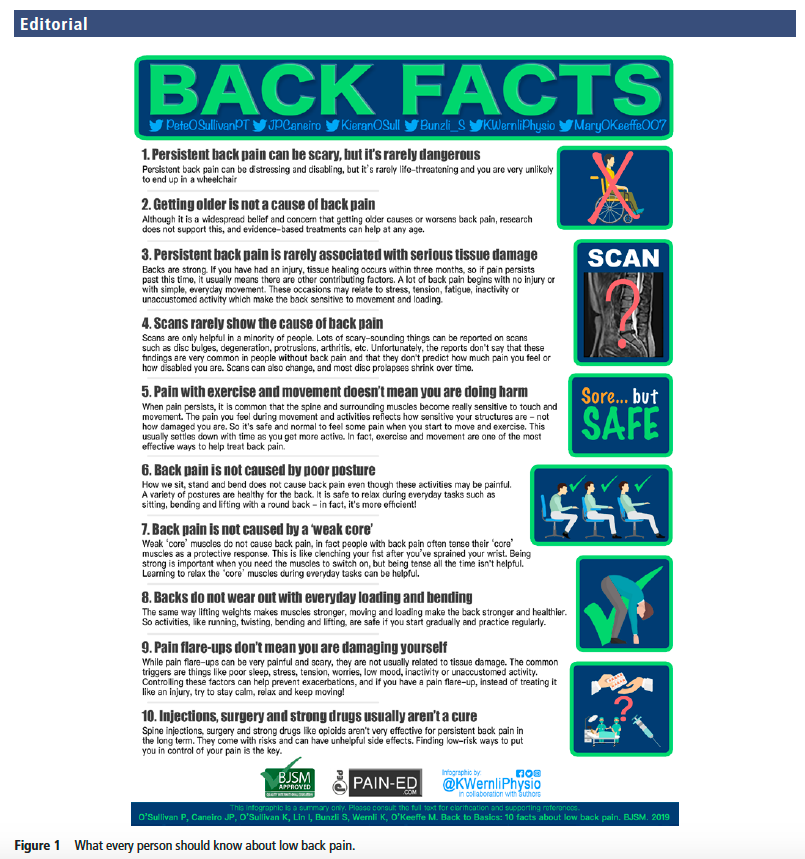
⚠️ The infographics are now available in English, Espanol & French 🇬🇧🇪🇸🇫🇷📲 More information at https://t.co/lS2zqOLWVJ
The amount of time that a runner's foot is in contact with the ground explains about 70% of the increase in metabolic energy as they shift up through the gears, but you also need to include the volume of muscle that the athlete is using to account... https://t.co/eXewk2BjRe