Countries do not slide into war. They collapse into it suddenly, unexpectedly, incredulously.
“I had grown up in the optimistic belief that major wars were a thing of the past,” the philosopher Bertrand Russell recalled of the 1914—1918 cataclysm. “When I heard the news of the war, I felt as if a curtain had been torn aside and the world revealed itself as a dark and terrible place.”
Most of his contemporaries felt the same way. “One hears the word ‘war’ whispered everywhere, but no one believes it,” the Austrian novelist Stefan Zweig wrote. “It is as if the world has gone mad.”
I am becoming morosely convinced that a major global conflict is gathering head and that we will be caught as much off-guard as our ancestors were at the start of the 20th century.⬇️
The distinctive feature of the British constitution is not that it is written or unwritten. Like all constitutions, it is already a mixture of both.
The fact that it is uncodified is not even especially remarkable. We could gather up all the existing written statutes pertaining to the constitution in one document if we wished. A secretarial exercise.
The remarkable -- and in my view highly desirable -- characteristic of the British constitution is that there is no higher law beyond what our elected representatives legislate. Parliament is sovereign.
The British constitution can be boiled down into five words, 'Whatever Parliament enacts is constitutional'.
Anything and everything is possible under the British system, constitutionally speaking. It is an extraordinarily open and democratic system, as a result.
It means we are not bound by the dead hand of the past, but at the same time we should be careful custodians of our inheritance. With this enormous power in the hands of our elected officials comes much responsibility.
It would be an act of appalling self-sabotage to remove that power from our democratic representatives in Parliament and place that power in the hands of judges, which is what constitutional entrenchment inescapably does.
Modern data centres require less water than leisure centres or restaurants - so it’s sad to see politicians spread conspiracy theories about them like this. I shared some of this data in an Economist article this week.
However an even bigger issue is the sheer hypocrisy in the Greens’ position here.
The Greens are adamantly against Britain’s reliance on international tech companies like Palantir. Fair enough, let’s support British entrepreneurs to compete with them. But then they campaign furiously against Britain’s ability to build its own software, which requires things like UK-based DCs. You have to conclude their policy is to ban the use of all software and have our hospitals go back to paper and pencils for health records, use moon-cycles to treat cancer patients, and rob a generation of young people the chance to benefit from these new technologies.
Britain can re-industrialise and become less reliant on international partners. New industries like automated labs, robotics, SMNRs, and datacentres can improve our defence capabilities, create jobs and bring down costs.
But you can’t campaign on both lowering our own strategic capabilities by blocking datacenters ( especially using conspiracy theories ) and arguing we should be less dependent on foreign technologies.
On French wildfires
The State, during crises, is capable of doing great things at pace by deciding to ignore the redtape it cocreated
The initiatives below would die of a million papercuts normally
It's both a tour de force and an indictment of the "regular" state of affairs
Just absolutely brilliant work by @Spiruel here. He digitised the 1957 tram timetables of Leeds and then then did transport accessibility analysis to show how much bigger Leeds was by public transport 70 years ago than it is today. https://t.co/QgGPohxWxo
Haven't had time to look at this in detail, but just on the face of it - 6.6m litres a day is 0.25% of England's non-household potable water supply, a little bit more than the amount consumed by the postal and courier sector
Add in households and data centres account for around 0.05% of the total public water supplied
By comparison, leaks account for 19%
Somewhat confusing why data centres that use 0.05% are unforgivable but leaks that consume 400 times that amount are forgiveable - but I guess that's what you expect from the trade body for water companies 🤷
This reshuffle confirms that the role of Foreign Secretary is now the great political fob off. Status wise it's a 'great office of state' so hard to moan about, but in practice has little power so you can give it to those whom you can't sack or demote but want to render impotent
Contrast this with the pre-1950 practice when even in the midst of great crises (WWI, WWII for example) top leaders still took time to write diaries, retire to country estates, and so forth
In 1938, Roosevelt spends almost a month cruising onboard on a US Navy cruiser down the Pacific coast of Mexico, visits the Galapagos and Clipperton, then back to the Caribbean via Panama and disembarks in Pensacola
Chamberlain maintains his hobby of birding in the fall of 1939.
By comparison today, world leaders when nothing especially acute is happening never seem to have time. They’re barely sleeping, “always on”. There’s a cult of busyness in the modern world that seems inescapable. It’s undoubtedly a byproduct of our information ecosystem - everything is a media effect! - but nonetheless is a distinct phenomenon of our present moment
I sometimes think that the best single way to improve our politics would be to ban opinion polls. Or maybe allow them in a few narrow windows during a parliamentary term.
Ed Miliband's Syria 2013 vote was the single most consequential UK foreign policy decision post-Iraq and pre-Brexit, and there basically seems to be nobody even mentioning it with regards to his promotion to the only office where this decision actually matters.
Argentina are the only team out of all 48 participants not to have a single VAR intervention against them, despite committing the most fouls in the tournament. Do you even realize how insane that is?
This is fascinating from @MichaelDnes1 on his Pennine tunnelling plan, and why he couldn't make it happen within government *even though it would have slashed the cost of the project*
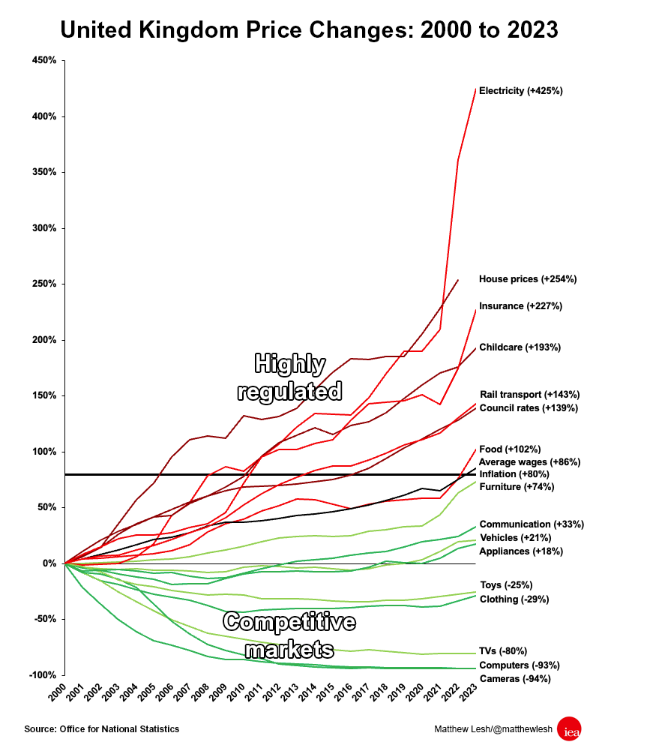
First, in Britain as elsewhere, prices controlled by the state have risen much more than those controlled by the market! Eg food and clothing are 'essentials' by any measure. Yet private sector competition drives huge benefits without 'public control' of Tesco or Next.
@MrHarryCole@tomhfh It should have done, but in fairness there have been calls for something this to be out in place and now it has been. They’ve listened and acted. Could have done sooner but better late than never
I went to Palmyra in July of 1995. It was brutally desert hot—off the scale. I was obsessed by the idea of finding treasure, frowned upon obviously. All afternoon I scuffed around in the dirt from one temple complex to another searching for one solitary Roman kopeck without success. There was no one else around because it was so freaking hot except this one older guy who I kept seeing from place to place. After a few hours seeing him for like the 5th time he asked me what I was doing and I just replied honestly: treasure hunting, I said, I’m a Canadian kid and I want a piece of ancient history, a coin. He replied with a sage-like expression that I should look at my feet. What did I see? Rocks, I said. But what kind of rocks? Look closer. What happens when you got to temple to make sacrifices to the gods? Do you just walk in the front door then proceed to the shrine, make a wish and leave? No, priests are not stupid. That’s not how they run their business. You leave your sacrifice at the front door, the priest gives you a token, and you leave that on the altar. Everybody wins. No cheating. The rocks on the ground were hundreds of thousands of tokens, basically discs of rock flaked into roughly the size of a nickel. He picked one up, put it in my shirt pocket, patted it and said, that one you can take home, don’t tell anyone. That was Khalid el Assad. I’d guess he was in his 60s at the time. He was out there in the brutal summer sun just checking on his ruins so far as I can tell. It was very memorable. I didn’t learn his name until I heard of isis massacring him. He was a great man. A real hero, frankly. RIP.
The objections to this from environmental protesters is quite something to behold. 75% of UK gas consumption either comes from exactly the same basin (Norway) or imported in the form of LNG at a higher total carbon footprint than UK-sourced gas supply. All we are doing is adding more carbon to the atmosphere, weakening the UK's Balance of Payments, reducing UK tax revenues, and increasing imported UK inflation. Top work folks....
Let me explain the scene before this which makes it not woke.
So Eowyn and Merry are sitting there with the other riders, looking at the battle before them for the first time. They chose to be there. They want to be there. But you can also see the absolute terror in their eyes. They want to be there, but they would also rather be literally anywhere else.
And then they ride forward.
Eowyn is not some proud girl boss. She is not even trying to be the greatest warrior there. She simply wants to stand with the others who refuse to let evil win. She isn't confident. She is terrified. She knows she will most likely die there. She gets her ass kicked. She gets a lucky shot at the Witch King because Merry helped her and she refused to give up. And after she wins she collapses.
This woman is not some infallible Mary Sue like many modern female characters. You can see the doubt and fear in her. She does not win the battle. She doesn't even save her uncle. But she takes a stand when she is terrified. That is a character anyone, man or woman, can appreciate.