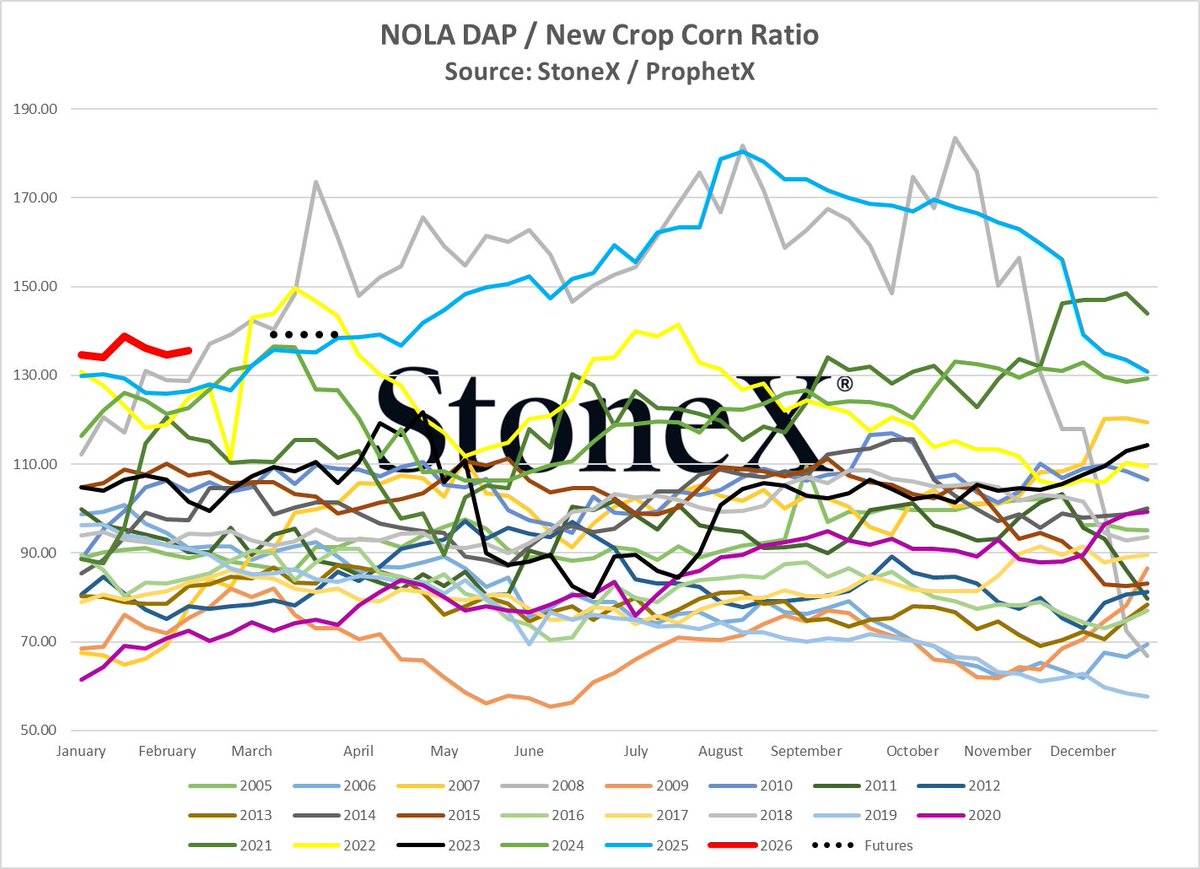
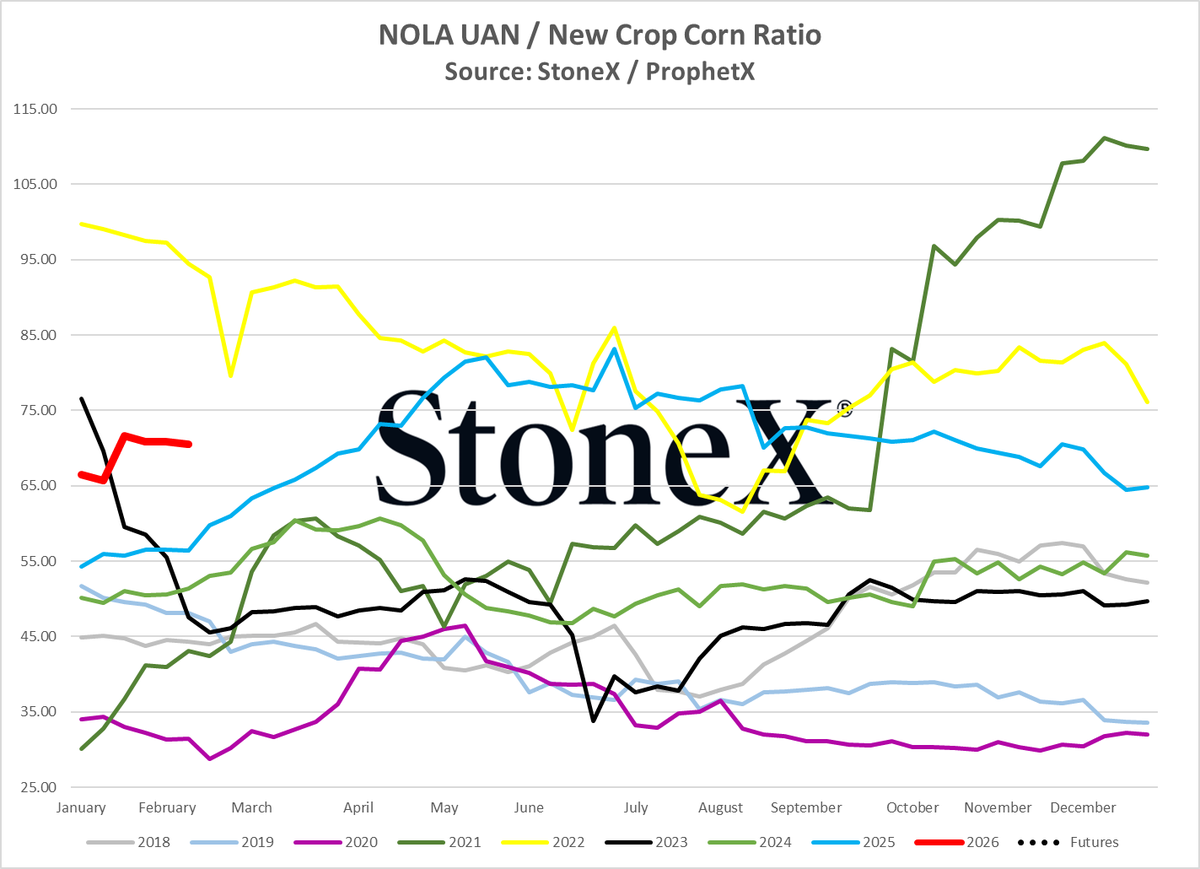
Energy & fertilizer shortages will likely still become greater before they ease, with prices needing to bring down demand to the new supply levels after damage assessments. We'll likely see lower fertilizer levels globally over the coming year, although it is too soon to say by how much, or what the full production impact will be globally. #oatt
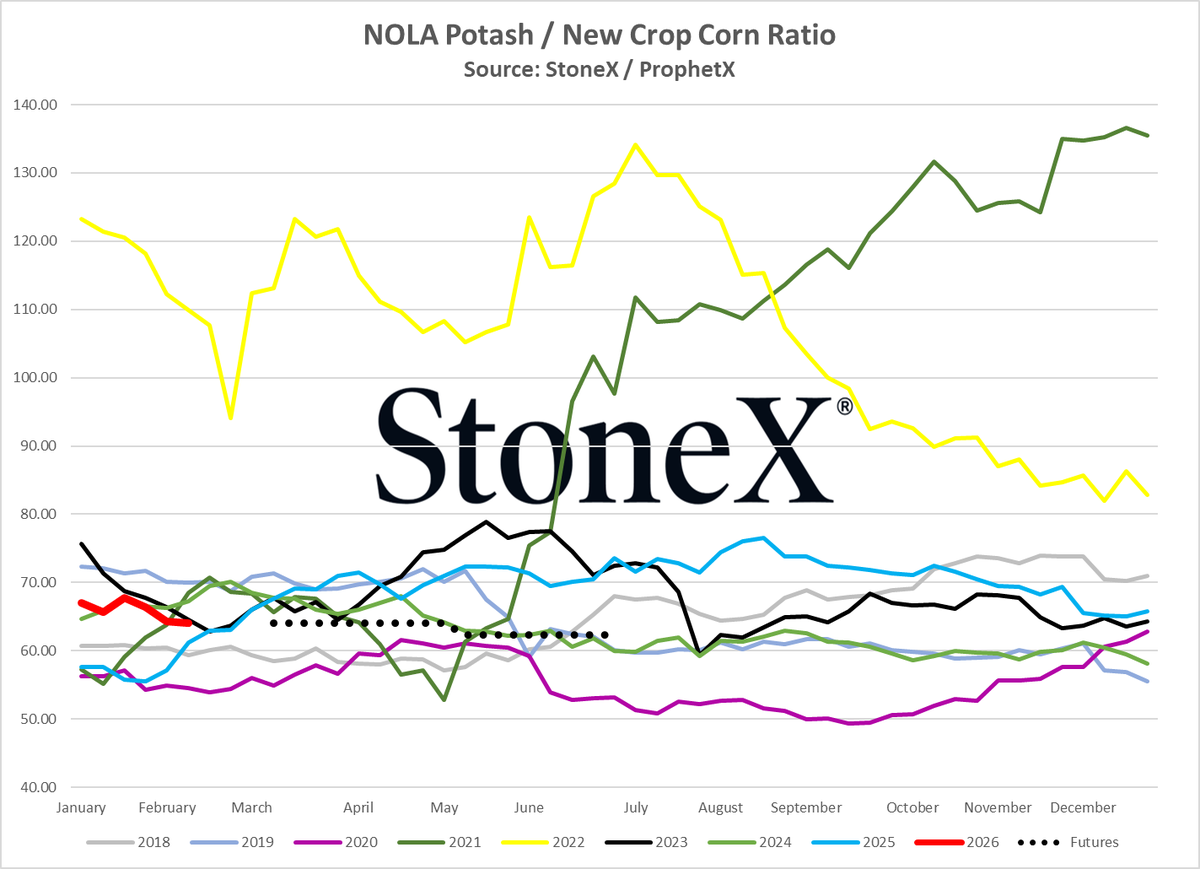
Fertilizer YoY comparisons (NOLA):
Urea - $60 or 15% higher
UAN - $60 or 23% higher
DAP - $30 or 5% higher
MAP - $70 or 12% higher
Potash - $7 or 3% higher
New crop corn is down 9-cents or 2% lower.
Beans are down 33-cents or 3% lower.
Wheat is down 55-cents or 9% lower.
5. At this point we are confronted with two possibilities for the 25/26 corn balance sheet. The first is that demand really is this strong and it may continue to surprise in future quarters. The second is that the 2025 US corn crop was over-estimated and this artificially boosted the estimate of first quarter usage. This is an age old bugaboo for the corn balance sheet and there is no good way to sort it out. In any event, this is something positive to put on your radar for the remainder of the 2025/26 corn marketing year.
China imported 12.9 million metric tons of #soybeans in September - none from the United States - equivalent to 56% of all of what it imported from us in the entire 2024-25 marketing year. #oatt
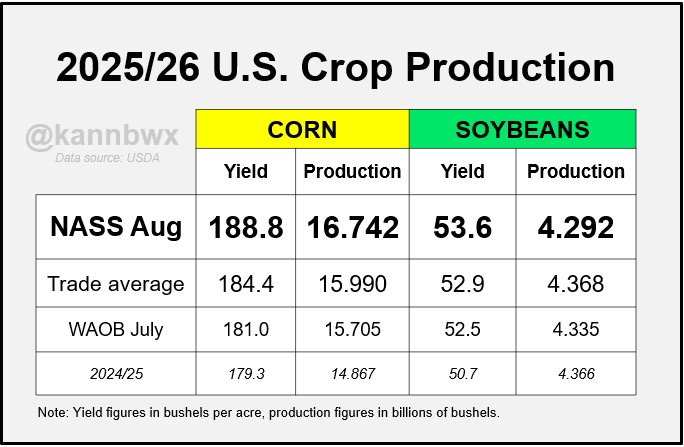
December corn is poised to finish August higher than it finished July after absorbing a record yield est from USDA & big acreage increase. But August has not been friendly to the crop's finish, and export demand is strong. #oatt#corn
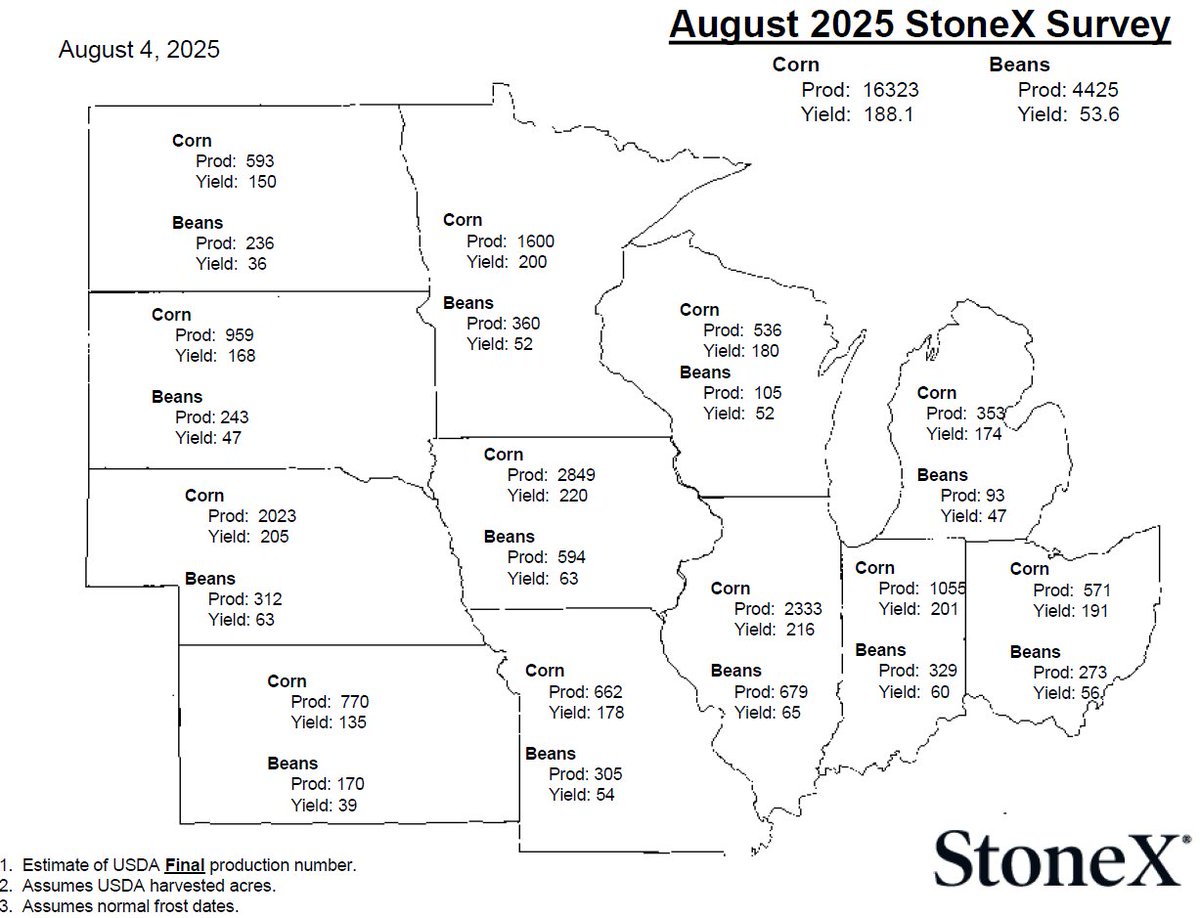
Pro Farmer crop scouts last week found a big U.S. corn crop but one that’s projected to average 182.7 bushels per acre – 6.1 bu. below USDA’s latest 188.8-bushel projection.
The 2025 growing season has seen disease crop up in many of the corn and soybean fields Pro Farmer scouts evaluated last week.
https://t.co/cXOXWr4oKj
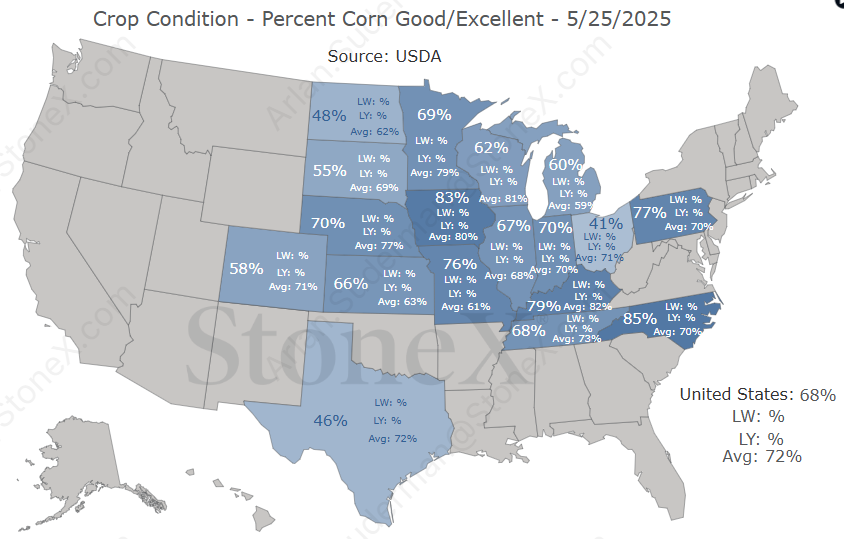
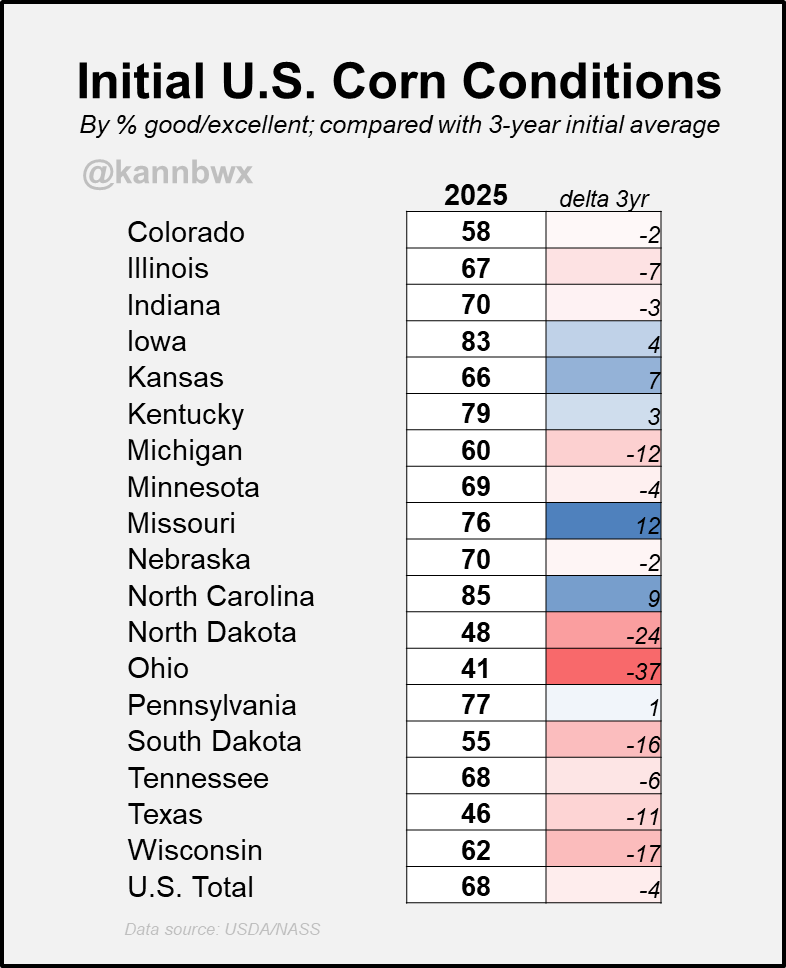
🌽68% good-to-excellent is the lowest initial U.S. #corn condition rating in six years. Here's how initial conditions by state for 2025 compare with the recent three-year average initial scores:
🌽Analysts expect USDA to rate 73% of the U.S. #corn crop as good-to-excellent, just about equal to the five-year average initial rating.
But #CropWatch25 corn conditions are starting at their worst in at least 5 years due to recent erratic weather:
https://t.co/EHKPP3mkG7
Even if soybean yield is +2 bpa higher than last year.. new crop carryout is projected to be down -15%
Old Crop Yield: 50.7
Old Crop Carryout: 348 mil bu
New Crop Yield: 52.5
New Crop Carryout: 297 mil bu
Last May, Nov-24 beans were trading around $12.00 meanwhile our new crop carryout was substantially higher than it is today
Today: 295 mil bu
Last May: 445 mil bu
Of course there are other factors at play such as Brazil
But on the surface feels like an argument to be made that soybeans could be undervalued in comparison based on the US situation..
***
Struggle knowing when to take risk off in grain marketing?
Try our updates & sell signals free 🌱
👉 https://t.co/JvQ1KIpXXU
The USDA’s first conditions rating for the U.S. #corn crop was reported at 68% good/excellent, below trade expectations for 73%. Below is a look at the USDA’s historical first ratings.
It makes little difference whether China's tariffs on U.S. grains are 10% or 34%. They were not flowing anyway, other than what Sinograin took for reserves. The change in tariff rate was more for show. It may though impact beef shipments. #oatt
List of countries wanting to negotiate lower tariffs is slowly growing. That was the stated intention of the reciprocal tariffs from the start. IF successful, lower tariffs could create economic growth. Markets are focused on the fear factor currently. #oatt
China is talking tough, but it has a problem. It cannot stimulate its way out of this economic challenge without taking on massive burdensome debt. Yet, it has to appear tough, thus the 34% tariff. #oatt