Bacteria have immune systems to defend against their viruses.
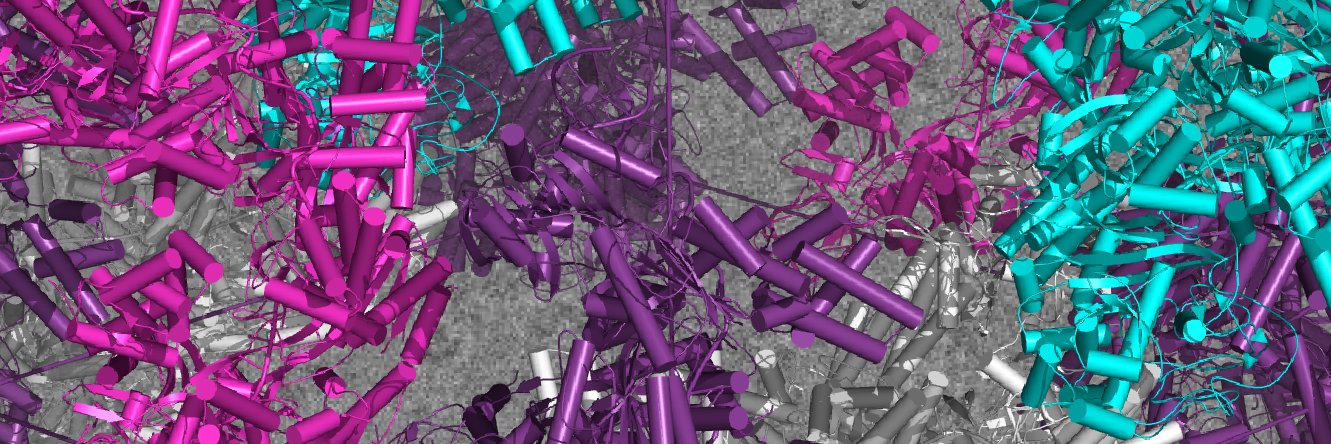
This animation shows the proposed mechanism of the Zorya defense system from our work with @NMITaylorLab: a proton-driven membrane complex related to the bacterial flagellar stator.
https://t.co/SNzxnbQZVS
Jennifer Doudna won the Nobel Prize for gene editing and went on Bloomberg to say the chatbots everyone is betting on cannot innovate at all. Every promise Silicon Valley is making about AI curing disease just hit the one person qualified to check it.
She has spent her whole career inside the actual frontier of curing disease.
So when she talks about what AI can and cannot do in biology, she is not guessing. She is reporting from inside the lab.
Her words were blunt. She is not seeing chatbots innovate. They summarize data. They write reports. They do not come up with a brand new idea nobody has ever had.
Then the interviewer pushed. So you're saying AI can't innovate?
Doudna did not flinch. She does not know if it can't. She just does not see it doing it right now.
This lands harder when you remember who is making the opposite case. Sam Altman says AI will eliminate disease within five years. Larry Ellison says AI will cure cancer in a 48 hour window.
An OpenAI executive even floated that the company should get a cut of sales on any drug discovered through ChatGPT. Doudna answered that in two words. Good luck.
Even the cancer specialists Altman is selling to keep warning that cancer is not one disease but hundreds, each needing its own cure, and that compute does not skip the years of lab work.
Her reason is simpler. Biology is hard. You cannot simulate your way to an understanding of the human body.
The people promising cures are the ones selling the tool.
The person who actually won a Nobel building them is telling you it has not happened yet.
Source: Bloomberg Originals
Watch the full video on their official channel.
Nice write-up of our recent results and how several groups are working together to test new cell-killing biotech.
RNA-Triggered Chromatin Shredding Hits Cancer’s Hardest Targets https://t.co/8zzY5B7Aex
@tjHallmark Comparison of Cas12a2 and Cas12a1 collateral activities shows that Cas12a2 linearizes supercoiled plasmid within the first minute, while Cas12a1 takes hours to move nicked DNA to the linear fraction. Thus, the collateral activity Cas12a2 makes dsDNA breaks, while Cas12a1 doesn't.
Congratulations to Sobita Kunwar and Thom Hallmark @tjHallmark! Our manuscript describing the collateral cleavage kinetics is out today on NAR: RNA-triggered CRISPR-Cas12a2 preferentially cleaves collateral DNA over RNA https://t.co/c239MhS4w7
@tjHallmark Although RNA is cleaved with greater Vmax, it also has a large Km. ssDNA is cleaved with a greater kcat/Km than ssRNA, thus ssDNA is preferably cleaved over ssDNA.
@benrzy Yep! Since Cas12a2 is programmable, like Cas9, it could potentially eliminate diseased cells, as all disease states carry some form of RNA distinct from that of healthy cells.
If you didn't catch our previous Nature paper showing how Cas12a2 can selectively kill cells: https://t.co/1GbXSN2D9N, you have another chance to see this CRISPR enzyme in action, with work we did in collaboration with the Jennifer Doudna Lab: https://t.co/oIKfpmZj7B
Happy to share that our work on Cas12a2 was published in Nature last week. USU Biochemists Show CRISPR Can Selectively Destroy Cells, a Cancer-Treatment Goal https://t.co/34Hp44w0Cf
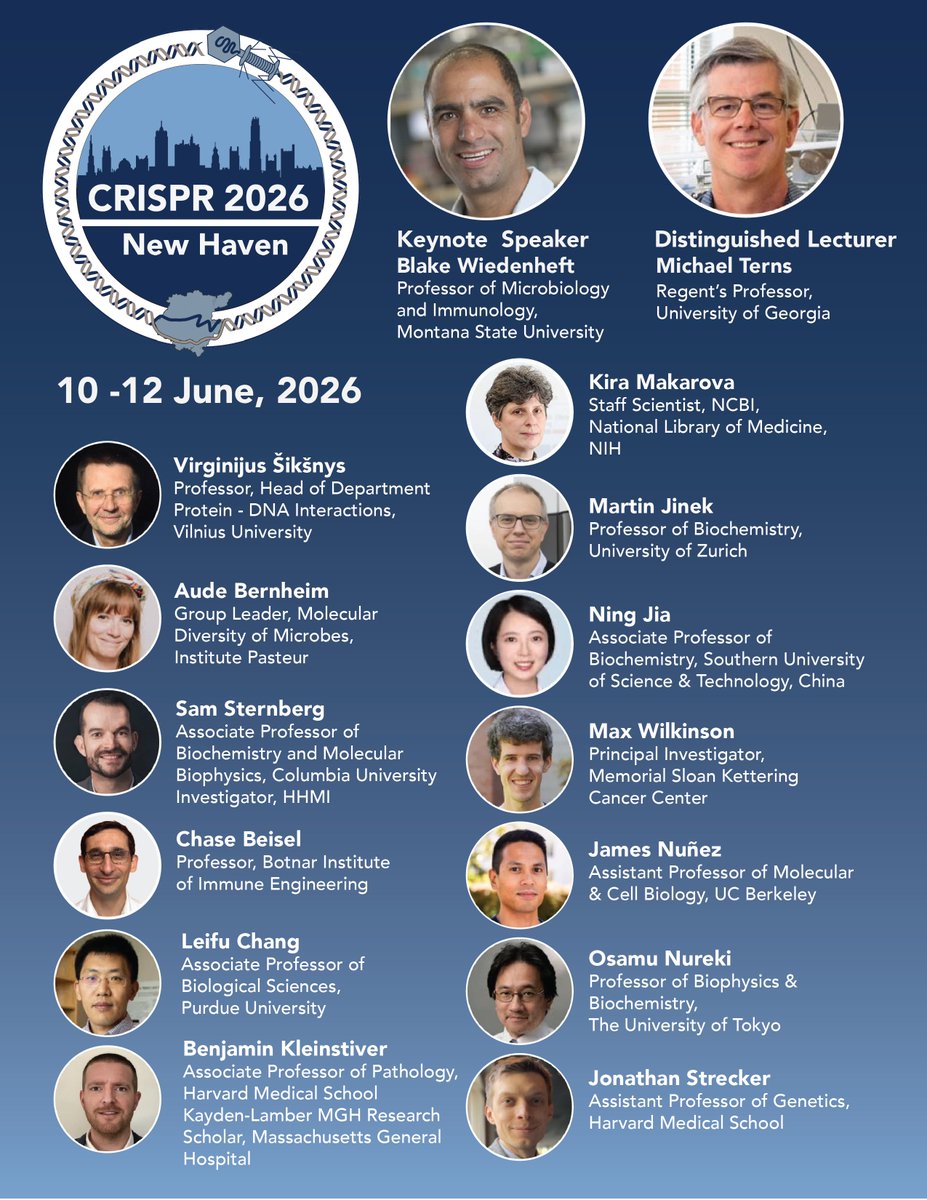
Early registration for the CRISPR 2026 meeting is extended until March 15, 2026. The Abstract deadline is March 31, 2026. Registration is required before submitting an abstract.
https://t.co/Df7HPUOHiU
Early-bird registration discounts for CRISPR 2026 expire Feb 28. CRISPR 2026, held at Yale University, June 10 - 12, is the continuation of the original CRISPR meeting established in 2008.
Register here: https://t.co/yQrXpXB6Pi.
Proud to report our collaborative work on a newly discovered CRISPR system, Cas12a3, published online in Nature today.
https://t.co/LF1bLBoEaQ
https://t.co/TnLBjUteyP
https://t.co/lg9RRFWDYO
Another HUGE cancer breakthrough! Daily low-dose aspirin cuts the risk of cancer spreading (metastasis) by ~55% overall, and by an incredible 74% for colorectal cancer! This study shows why: it leashes T-cells so the immune system fights it. Cheap, safe, could change cancer care!