career update 🎉
three weeks back, I joined @tryconviction (YC’25) as founding engineer
today we shipped options
20 days. zero to live. craziest month of 2026 and we’re just getting started 🚀
BREAKING NEWS🚨: Google has submitted its FIRST TPUv7 FP8 vLLM results to our Agentic Inference Benchmark and has demonstrated 1.67x better perf per dollar than even GB300 NVL72 FP4. 🚀
It is amazing to see Google go full steam ahead with externalizing the power of TPUs outside of Google.👇️ (1/4)🧵
BREAKING NEWS🚨: Google has submitted its FIRST TPUv7 FP8 vLLM results to our Agentic Inference Benchmark and has demonstrated 1.67x better perf per dollar than even GB300 NVL72 FP4. 🚀
It is amazing to see Google go full steam ahead with externalizing the power of TPUs outside of Google.👇️ (1/4)🧵
Music has always been an integral part of my life and yet it always seemed like there was an insurmountable barrier between consuming and producing it.
About 6 months ago I bumped into this video on YouTube and it made me realize that there are no longer excuses for not learning skills. So I bought a HiChord, connected it to Claude Code, and am using it to delve deeper into music theory/composition.
Im excited to see how the next wave of physical AI will transform education in the musical arts.
https://t.co/w2CQVQjd6I
Prediction Markets are now live on Conviction.
Conviction's AI agents can now:
1. Trade on Kalshi automatically.
2. Monitor event odds 24/7.
3. Use those odds as signals to automatically execute stock trades.
You can now trade on what the crowd thinks.
We'll be spending a lot more time trying to understand the outputs of language models. A few thoughts, tips & tricks:
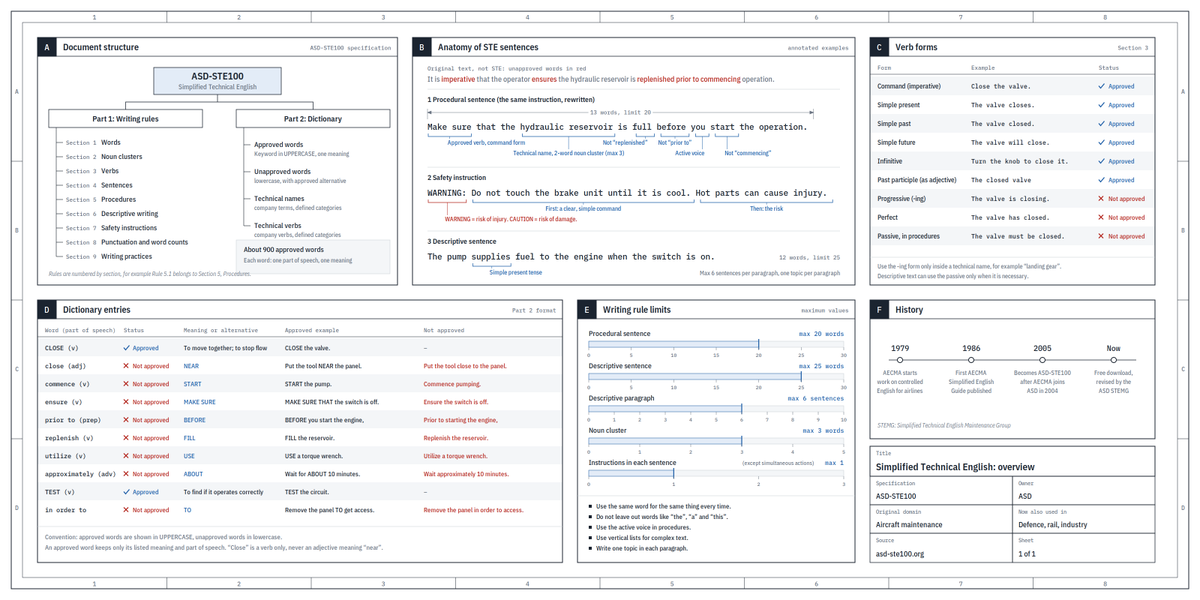
Writing. Something I've had success with: Ask your LLM to explain something in ASD-STE100, it's a controlled language specification originally developed for aerospace maintenance documentation. LLMs well-versed in this language and it comes with heavy constraints on clean writing style that I often find a lot more readable. Sometimes I've tried to soften it a bit e.g. ask for "80% of the way to ASD-STE100" because the spec is quite stringent. But even better:
Diagrams / images. Instead of writing, ask your LLM to create a diagram. These can be a lot easier to process, parse, and understand. But even better:
Web pages. Ask for output "in HTML" to get a beautiful, interactive webpage. LLMs are getting really good at frontend and can create beautiful experiences, animations, etc. But even better:
Explainer videos. The output format I am most bullish on is fully custom / bespoke explainer videos generated on any arbitrary topic. Experiment with things like "Create a 3b1b style video explainer on X. Use my ElevenLabs API key for audio narration". (you'd need an API key for the latter or you can ask your LLM to find you decent free alternatives that use your local compute). This is actually starting to work!
In summary:
- As LLMs get better, they will do more and more of the legwork autonomously, and a lot more of our work will rise up the abstractions into oversight and understanding.
- Luckily, LLMs can help here too because as intelligence and code are increasingly abundant, you can ask for large, custom, discardable software artifacts (e.g. web apps, video explainers) that would have never made sense to create before. Push the boundaries here and you'll be surprised.
"Almost any high demensional, dense continuous feature in recommendations-including complex user contextual states...can be quantized into a discrete token space"
https://t.co/He2ODmgZ9a
Great job here by the @YouTube team nominated for top paper in @ACMRecSys!!
@shaunmmaguire Not enough tech bros paint or play music.
White Rabbit (previously The Matrix, home of Jefferson Airplane) is now just a sweaty club.
Connecting with the arts would help us pop this monoculture and fuel creativity.
We need to connect SF back to its counterculture roots.
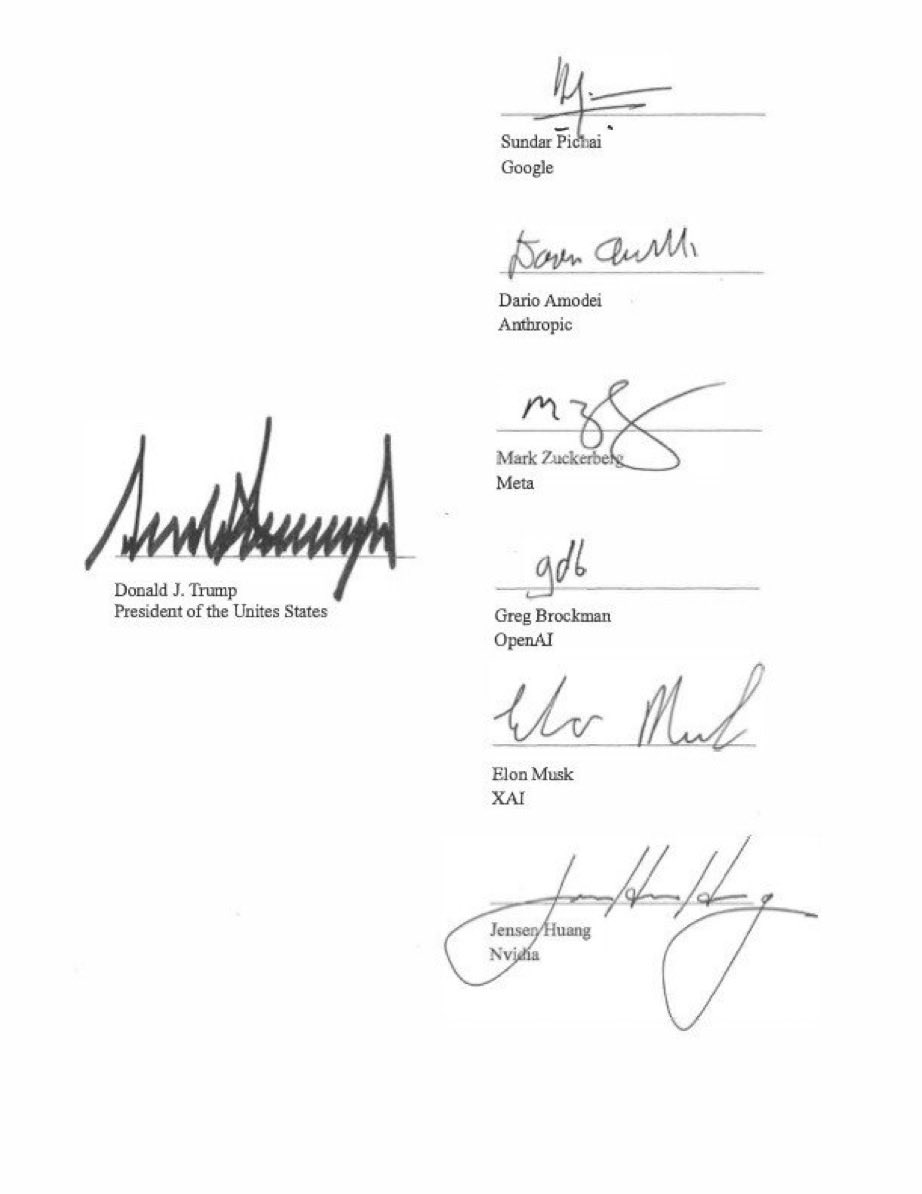
Great to meet today with @POTUS, @JDVance, @SpeakerJohnson and Administration + tech leaders. Important conversation and we signed today the White House Accord on Super Intelligence.
As I shared today, Google has invested hundreds of billions in the last two years alone, with more to come, across the entire stack, to deliver benefits for America and the world. We’re working to build products that deliver real value for people and businesses, invest in local communities, and build trust in the technology.
Industry also has to innovate responsibly. Google’s focused on building the right way, with appropriate testing, evaluations, red-teaming, and other safeguards against misuse and misalignment – and releasing models or products only after they’ve been thoroughly reviewed.
We are committed to working with other industry leaders to establish norms and build public confidence. The White House Accord and the Joint Commitment on Frontier Responsibilities signed today is a solid basis for moving forward - it contains real tangible steps to promote safe development, while delivering the economic and scientific benefits of this technology.