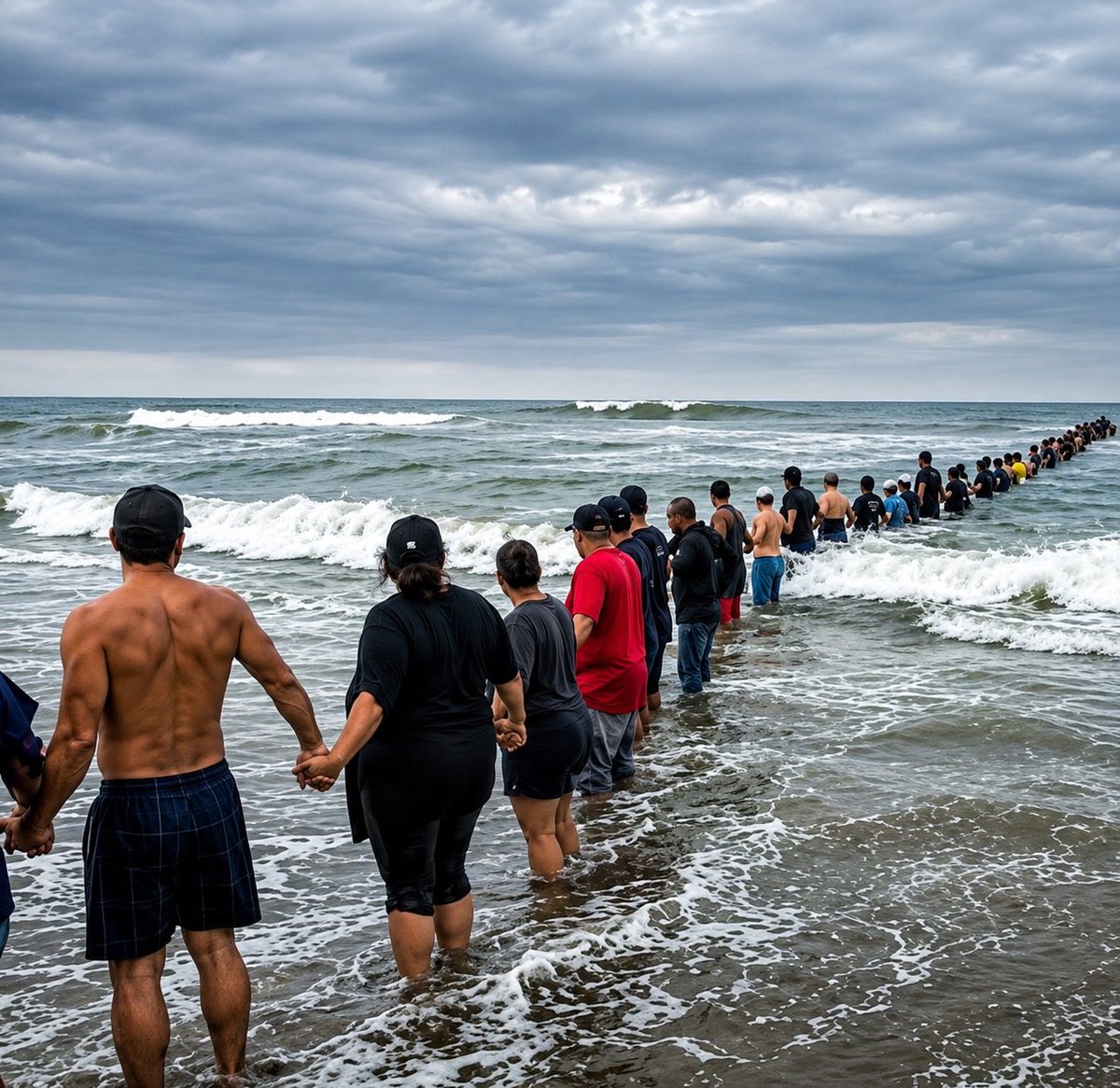
In 1996, an Italian born diver named Cristina Zenato was on a routine dive off the coast of the Bahamas when a shark approached her. It did not attack. Instead, it circled her, revealing a fishing hook lodged deep in its mouth.
Most people would have frozen. Cristina reached out and removed the hook.
The shark, later named Foggy Eye, returned to her afterward and kept showing up at her dives. Word seemed to travel through the reef. One by one, other injured sharks began approaching her, each carrying its own hook, its own quiet request for help.
Over the next 20 years, Cristina removed nearly 300 hooks from sharks. She did this despite heavy opposition from family and friends who feared for her safety. She was never harmed.
Today she is known as the Shark Whisperer, a title earned through patience, trust, and an unshakable belief that these creatures deserve to be understood rather than feared.
Fear yields to purpose when you master your instincts.
Our six-year-old handed us a note. His teacher had called my wife and I in for an emergency meeting. We asked our son if he had any idea why
and he said, "She didn't like a drawing I did."
We went in the next day.
His teacher pulled the drawing below out and said, "I asked him to draw his familv and he drew this. Would vou mind explaining?"
"Not at all." my wife said. "Family vacation. Snorkelling off the Bahamas. 😂
Her name is Payal Jangid.
She was eleven years old when she was told it was her turn to be married off. A child, handed to a stranger, her school and her childhood ended in a single day.
She looked at that future and said no. Then she made sure no other girl in her village would have to fight it after her.
She was born in Hinsla, a small village in Rajasthan, where marrying off young girls was normal, even celebrated. Girls were seen as a burden to be passed on as quickly as possible.
Educating them was considered a waste.
When Payal was eleven, her own marriage was being arranged. She refused. In a place where a child arguing with elders was unthinkable, she stood her ground, and with the help of a local children's group she stopped it.
Then she did something even harder. She stopped her own sister's child marriage too.
She did not stop there. She became the leader of the village children's parliament, a group of children fighting for their own rights.
She went from house to house. She held rallies. She painted messages on walls. She sat in front of angry elders who told her not to fill their children's heads with such ideas, and she kept going anyway.
Slowly, the village changed. Girls began staying in school. The child marriages stopped. In time, Hinsla became a village with no child marriage and no child labour at all.
In 2019, a girl from a village most people had never heard of stood on a stage in New York and became the first Indian ever to win the Changemaker Award from the Gates Foundation. She was seventeen.
The girl they tried to marry off at eleven had refused to disappear, and in doing so, she set a whole village free.
September 29, 1978.
A 15-year-old girl named Mary Vincent was hitchhiking from Northern California to visit her grandfather in Los Angeles.
A 50-year-old man named Lawrence Singleton offered her a ride.
Two other hitchhikers warned her not to get into the van.
She got in anyway.
Hours later, Singleton drove into a remote area, attacked her, raped her, and struck her unconscious.
Before dawn, he used a hatchet to sever both of her forearms.
Then he dragged her body into a drainage culvert and left her there to die.
What happened next sounds impossible.
Mary regained consciousness.
Alone.
Bleeding.
Without either arm.
She remembered something she had learned years earlier: pack the wounds with dirt to slow the bleeding.
So she did.
Then she climbed out of the ravine.
And started walking.
Nearly four miles.
A passing couple finally found her on Interstate 5 and rushed her to a hospital.
She survived.
Most people would understand if survival was the end of the story.
For Mary, it was only the beginning.
While recovering, she helped police create a detailed description of her attacker.
Singleton was arrested within days.
Six months later, Mary entered the courtroom wearing prosthetic arms and testified against the man who had tried to kill her.
He was convicted.
The sentence shocked the nation.
Just 14 years.
He served only 8 years and 4 months before being released.
Mary spent those years fighting battles nobody could see.
Depression.
Nightmares.
Poverty.
Homelessness.
The daily reality of learning how to navigate a world without hands.
She raised two sons.
She survived.
And then she discovered something unexpected.
Art.
Using prosthetics, she taught herself to create colorful portraits and sculptures.
She became a speaker, an advocate, and a voice for survivors of violent crime.
Then, in 1997, the phone rang.
Lawrence Singleton had been arrested again.
This time he was accused of murdering a woman named Roxanne Hayes.
Mary wasn't required to testify.
She chose to anyway.
She walked into another courtroom.
Faced him a second time.
And told the jury exactly who he was.
Singleton was convicted and sentenced to death.
He died of cancer in prison in 2001.
But Mary's story was never really about him.
It was about what happened after.
She helped inspire changes to sentencing laws.
She founded a support organization for victims.
She became a mother, an artist, a mentor, and a survivor.
Years after the attack, Mary said something that captures her entire life:
"I will never get over being attacked. I wake up every morning with a constant reminder. But I can move past it."
Not everyone gets a second chance.
Mary Vincent got one.
And spent the rest of her life making it count.
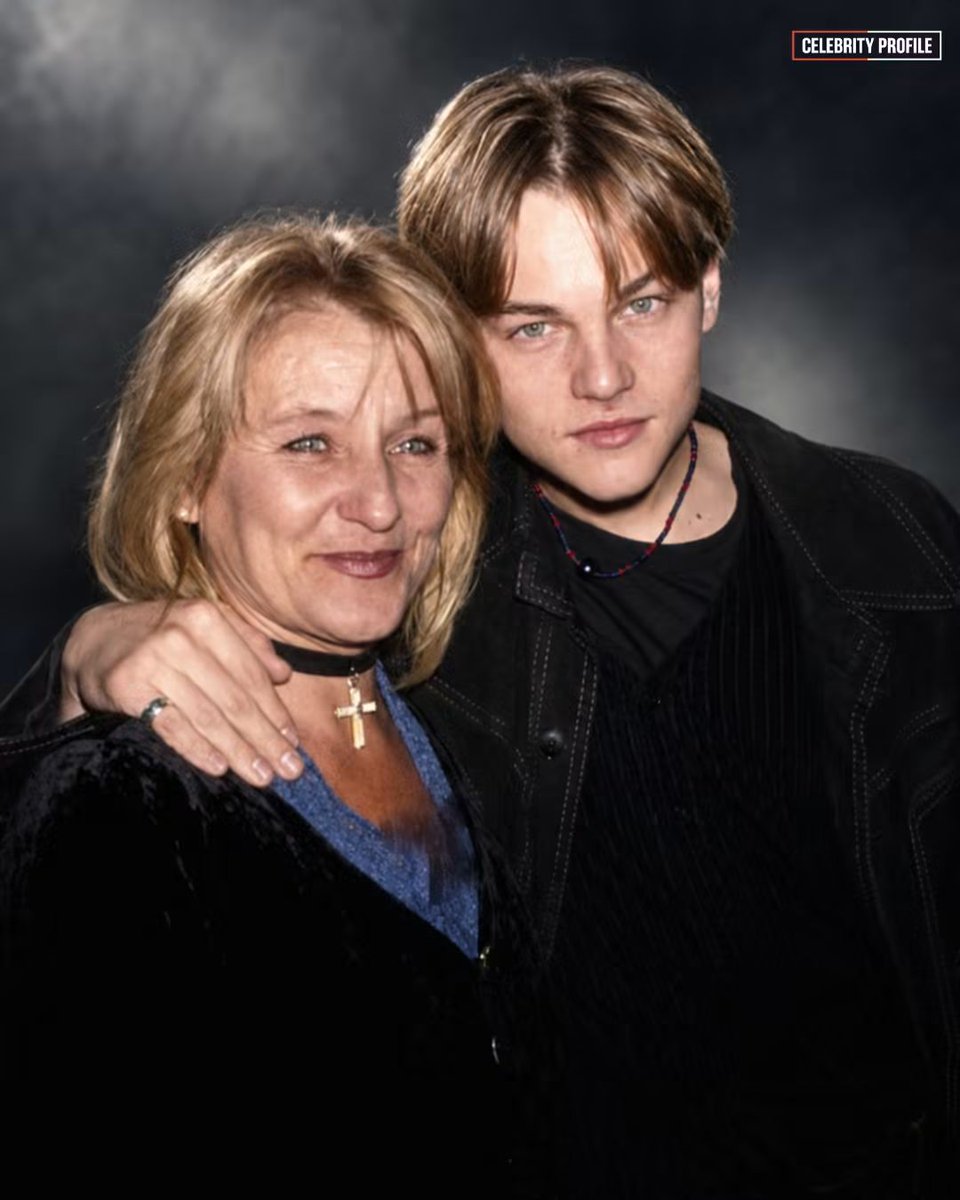
In 1974, Irmelin DiCaprio was homeless in Germany. Pregnant, alone, and running out of options. A stranger looked at her situation and handed her fifty dollars.
"Go to America," he told her. "Give your baby a chance."
It wasn't a large amount of money.
It wasn't a life-changing fortune.
At least, it didn't look like one.
But for Irmelin, it was enough.
She used the fifty dollars to buy a bus ticket. With almost nothing to her name, she crossed borders and eventually made her way to Los Angeles carrying little more than hope and the child she was about to bring into the world.
Life wasn't easy when she arrived.
She cleaned houses while heavily pregnant. She saved every dollar she could. Every expense mattered. Every opportunity mattered.
There was no safety net.
No guarantees.
When her son was born, it happened in a charity hospital that provided free care to families with no money.
That child was Leonardo DiCaprio.
As he grew up, Irmelin repeated one story again and again.
She reminded him that his life had changed because of a stranger's kindness. That one person had stopped, cared, and acted at exactly the right moment.
Fifty dollars had altered the course of their future.
She wanted him to remember that.
He did.
Today, Leonardo DiCaprio is one of the most successful actors in the world. His career has brought him global recognition, awards, and immense wealth.
Yet one thing never changed.
He takes his mother with him.
Red carpets.
Award ceremonies.
The most important rooms of his life.
Irmelin walks into them beside him.
He has also donated millions of dollars over the years, often without seeking attention for it. He has described it as a responsibility, a way of paying forward the kindness that helped create his opportunity.
A stranger in Germany made a simple decision in 1974.
He handed fifty dollars to a homeless pregnant woman and told her to go somewhere better.
He never knew what happened next.
But sometimes the true impact of generosity takes decades to reveal itself.
And sometimes fifty dollars becomes a legacy that lasts a lifetime.