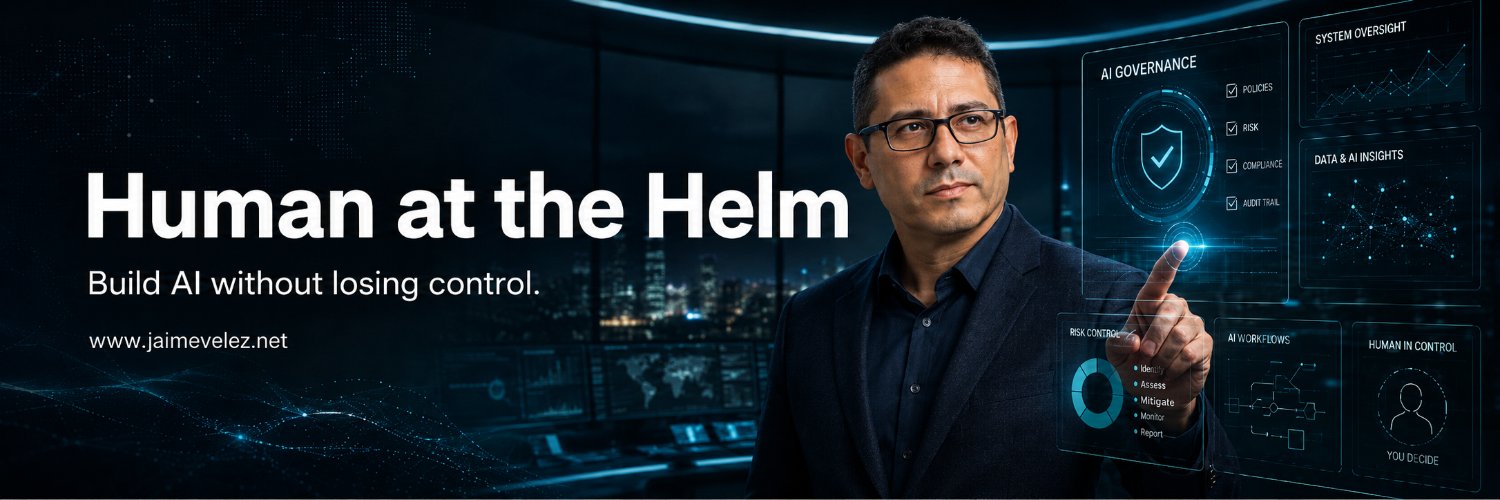
“Human in the loop” was fine when AI waited for approval.
That era is over.
Agents now act, chain tools, move data, and trigger outcomes before most humans ever review a thing.
We don’t need a human in the loop any longer.
We need a Human at the Helm.
Governance is not a checkpoint.
It’s command. One that belongs to the human.
I wrote about the 4 rules leaders need now:
👉 https://t.co/jeCrNKDKQ9
there is no catch and that scares me
Elon Musk posted an idea that hit 27 million views:
"stop building startups. buy boring internet real estate and let bots run it"
that's literally what Grok Bot does now. the whole setup costs $0 on top of the sub:
→ create a bot, name it Mogul
→ tell it to find one boring niche people search every day (it reads X and reddit complaints in real time, it's grok)
→ it builds a small directory site on its own computer and ships one useful page every night
→ it negotiates affiliate and referral deals itself, by email, in your name
→ publishing runs on a routine. telegram sends you the money reports
→ month one: traffic. month three: the first $217. it never stops after that
your laptop stays shut. the site grows anyway
every page is a tiny employee that works forever. it compounds like rent
some of them run 3 sites each and haven't opened a single one. they don't post about it, and now you know why
every month you wait, someone's bot ships another 30 pages into the niche you would've picked
full playbook below
bookmark this before someone takes your niche
Omarchy is blowing up. I've never been involved with anything in my career that has grown this fast. With Ruby on Rails, we had years to build solid institutions, teams, and relationships. With Omarchy, we've been forced to figure it all out in twelve days. It's exhausting, but also incredibly exciting.
It was never sustainable with just Ryan and me running everything. That's how it was, more or less, up until Quattro. Lots of other contributors, but all the responsibility was on us to make sure the ship stayed afloat, the servers didn't crash, and fixes got pushed out quickly.
Now it's time to build a proper institution. Durable, resilient, and competent. That's what we're doing here on Basecamp now. I'm spinning up teams for every facet of responsible distro management, and I'm getting an absolute outpouring of interest for all of them. Everyone wants to be part of this. We're winning hearts, minds, and volunteers at an astounding rate. Great! We need all of it to succeed.
Because make no mistake: There are many people who'd love to see this rocket blow up before it reaches the moon. Aggrieved Linux users who don't like the sudden attention their exclusive hobby has received. Competing Linux distributions that are seeing our numbers explode. Mac stans who've sunk their identity into an apple. And, of course, any of the haters I've picked up in my quarter-century career speaking bluntly on the internet.
They're not going to succeed. Because we've already become unstoppable. There's too much momentum, too much money, and too much support now backing this effort. We're living the Mandate From Heaven meme at the moment. And we are here to fulfill the prophecy: The Year of Linux on the Desktop!
That has been a joke for two decades. But by the end of the year, nobody at Apple or Microsoft is going to be laughing. They're going to be scrambling. Because neither of these proud organizations currently has any method to counter the speed, vision, or ambition with which we're going to accelerate into the future of personal computing.
This is the moment. This is the opening. This is our chance.
For thirty years, we've been subject to one OS overlord or another. Dictating how we compute. Choking off competitors through platform malfeasance. Tollboothing the distribution. That ends now. Because Linux is going to win. And Linux is free. As in beer, speech, and source.
But just because it's inevitable doesn't mean it's going to be easy. We have a lot of work in front of us if we actually want to make our mark. But there's never been a better time for this kind of delusional ambition. The age of agents is the unlocking factor. It sounds like a LinkedIn slogan, but it's true. Where the application of tokens goes, the innovation follows.
We can fix everything.
Let's do it together.
Let's go.
---
This is what I sent to the dozens of new volunteers who've signed up for teams within the new Omarchy organization yesterday. But we might as well broadcast our mission and intentions to the world too.
Someone should build GitHub for normies.
Now that anyone can build software with AI, millions of non technical people are making apps, but they have nowhere to store, share, or show off what they built.
GitHub was made for engineers and it feels like it.
You're starting to see personal software platforms emerge like Wabi, I think this only gets bigger.
The version built for regular people, dead simple, visual, no git commands, is going to be huge.
Elon Musk:
"in 6-12 months GrokBot will be #1 tool for building agentic systems. In a year 100% of code will be done by LLM's
at SpaceXAI, more than 70% of engineers already using GrokBot to build self-learning agentic systems"
In a 40-minute talk, Elon with SpaceXAI engineers discuss how the future of AI engineering will look like
worth more than 2 hours of Stanford lecture on AI engineering
watch today, then read the article below on building a self-learning agentic system with GrokBot
AX is the new UX.
Software was built for humans clicking, now it gets rebuilt for agents.
Stripe just paid $8B for OpenRouter betting the main user of the internet is an agent.
Rebuilding all that software is 1000+ new companies.
The most obvious opportunity in a long time!
🚨URGENTE🚨
Elon Musk advierte que el tiempo se acaba:
"Como maximo quedan 3 años en los que todavia podras ganar dinero vendiendo tu trabajo"
Despues la IA hace la mayoria de las tareas y pagarle a alguien por su tiempo deja de tener sentido
El trato de los ultimos 200 años, tu tiempo a cambio de un sueldo, se termina
Y va a mover mas dinero de manos que cualquier cosa en la historia moderna
Grok Bot just autonomously made me $10,000
Yesterday I gave Grok Bot access to my business email. I get tons of business inquiries and sponsorship requests there
The problem is I HATE reading email
I told Grok to respond to and negotiate with any legit companies that email me
Within 4 hours Grok closed it's first deal. A deal it 100% negotiated on its own.
Did market research, found appropriate rates, and negotiated a final price
Paid for 33 months of itself
We live in the greatest time ever to be a solopreneur
Prompt Engineering asks what we should tell the model.
Context Engineering asks what the model should know.
Harness Engineering asks what environment the agent needs to do the work.
The model was never the whole system.
https://t.co/46RhRPB4Io
A Chinese developer just explained the shift from Loop Engineering to Graph Engineering better than anyone.
most people are still building agents the way that's about to be obsolete.
> why single-agent loops break and go "goal blind"
> the 4 parts of a graph: nodes, edges, state, policy
> 3 topologies that run everything: diamond, supervisor, pipeline
> Anthropic's 5 official workflow patterns
the punchline: it's not how many agents you run. it's the determinism you build with verifiers, code fallbacks, and reality anchors.
I broke the same architecture down with Kimi K3. Full A-Z guide below.
The BEST prompt for AI agents I've heard over the last 12 months is ONLY 3 words, and it comes from someone who managed multi-billion dollar P&Ls in AI, led a 100 person org at AWS, and now runs a brilliant AI workforce of 34 agents:
1. Her best prompt is just "do smart things"
She gives the agents all her context first, her calendar, email, Stripe, goals, and transcripts, then lets them decide what's worth doing. She realized every task still started as a thought in her own head, which meant the company could only ever be as good as what she remembered to ask for.
2. Her human team talks to her agents in Slack. She has a channel where a teammate can ask "did that financial services client reply to Ali's email," and the agents answer directly, so people stop waiting hours for her to get back to them.
3. Since an AI agent costs almost nothing, she hired the person she'd never put on payroll.
One does nothing but ask how to make everything ten times better. Another just watches the other agents work and flags where they get stuck.
4. She avoids old job titles, because the second you call one your CMO, you've rebuilt a 2015 company with robots. Most of her sub-agents run on cheaper, smaller models and do the job fine.
5. Run an AI watchdog instead of a dashboard. Point one at your Slack to catch two people doing the same work, at your calendar to flag conflicts, at your analytics to tell you what to post tomorrow. Almost nobody does this yet.
6. She keeps a daily "brain dump" that feeds the agents.
At the end of each day she dictates what's in her head that isn't written down anywhere, the stuff that only lived in a meeting or a Slack thread, and it goes into a wiki the agents read. That's how they get the context that email and calendar miss.
7. She uses a "last 30 days" research skill to spin up on anything fast. Before running a workshop for 200 execs in an industry she doesn't know, she fans out agents to scan and synthesize the last month of news, then walks in sounding like she's followed it for years.
That's my convo with @alliekmiller on @startupideaspod . Pretty much her biggest tips for using AI agents.
Full episode below.
https://t.co/CukuBOXt9G
Happy building, I'm rooting for you.
I disappeared from The Cooper Logs for a few weeks because I was busy climbing the CISSP mountain.
Now I’m back with a new reflection on personal AI, human judgment, and why the human still needs to stay at the helm, especially when the robots start sounding very confident.
Read it here: https://t.co/Qpi5Cg440E
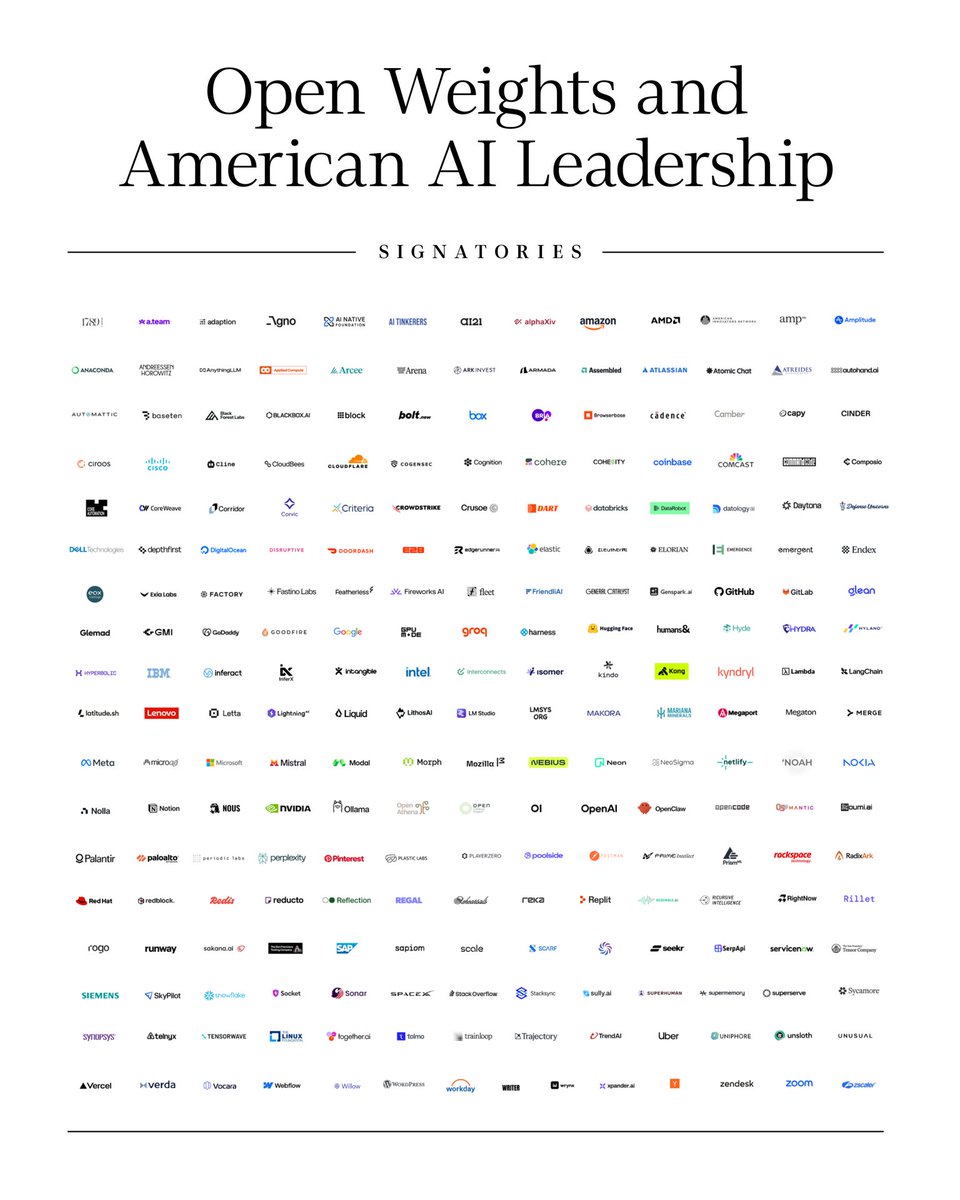
Since launching last week, more than 230 companies and organizations from across the tech sector have signed the "Open Weights and American AI Leadership" open letter. We want to thank these partners for standing up and publicly supporting broader access to AI innovation. A special thanks to @nvidia, @a16z, and @PalantirTech for working with @Microsoft on this effort.
These signatories understand that America’s AI leadership will not depend on the success of our frontier models alone, but on our ability to build a strong, secure, and open ecosystem that diffuses AI into every sector. We look forward to continuing to work with our partners and with policymakers to build that open ecosystem in a way that benefits American businesses, empowers American workers, and strengthens the American economy.
🚨 This is where things start to get really interesting…
@rabbit_hmi R1 🐇 + @NousResearch Hermes Agent 🪽
The future is bright.
The future is now.
Let’s get to work! 🤘🏻
⚕️ Just dropped a guide on how to set up a real grounded-research loop on @NousResearch Hermes Agent + @obsdmd + @NotebookLM.
Sources go in, grounded answers come out, every morning at 6:30am a @telegram briefing lands in my phone.
Bash, Python, two Hermes cron jobs.
Point your Hermes here:
🔗 https://t.co/vGNOSvS9bQ
It'll take care of the rest for you. 🤘
16 things that will be normal in 3 years and sound insane today
1. Somebody's entire job is making sure your agents don't do dumb things.
2. Kids grow up assuming any adult who types is old, the way we assume anyone who prints emails is old.
3. You get an itemized bill for what your agents bought last month and it reads like an expense report from a small company.
4. Someone you've never met sells you a business that runs itself, and you never learn what the code does.
5. Your doctor's first opinion comes from a model, and the human's job is deciding whether to trust it.
6. Job posts will say "must be able to manage agents" the same way they used to say "proficient in Excel."
7. The best-paid person at a company will be whoever's best at explaining the business to machines.
8. Your company has more agents than employees, and HR manages both.
9. Companies start hiding how few employees they have, because a lean team reads as fragile to enterprise buyers.
10. Your calendar fills with meetings you didn't schedule, because your agent and their agent worked it out.
11. The CV dies and gets replaced by a body of work an agent can verify in 4 seconds.
12. You interview an agent before you hire it. Give it a fake task, watch how it handles the weird cases, then decide.
13. Losing your job means losing your agents too, and it's kinda scary losing your best agents.
14. "Made by a person" becomes a label on products, and there's a certification body for it.
15. You'll have a folder of agents the way you have a folder of apps
16. Getting a human on the phone becomes a paid tier, and people gladly pay it.
There’s a lot of hype in the AI world around FDEs. This is such great breakdown and explanation of why this role is so crucial.
Thank you @gregisenberg and Vos! 🙌