When it comes to managing pain, feeling better, performing.
The most important question is...
What is your goal?
Is your goal to be able to sit at work for an hour without pain?
Is it your goal to be able to play 50 holes of golf on the weekend without the fear of soreness or pain from affecting you on Monday?
Is your goal to finish the 5k in three months that you've been training for and all the sudden you are noticing a "weird pain" in your heal and lower back?
Or is it your goal to be able to cook dinner and enjoy a show without having to take a rest?
To reach each goal it's going to take a personalized approach.
An approach that takes the time to understand you. Your history, what you've tried, what has and hasn't worked. Your past injuries and how they affect you now. An approach that looks at your activity, or lack thereof and works with you to reach your goal.
When it comes to personalized rehab & personalized strength training, the only thing that matters, is you, and whether or not who you are working with is helping you reach your goals.
I help you reach your goals.
Rick Rubin’s fishing metaphor:
This is the sign of a true professional. He doesn't sit around waiting for inspiration to come— he goes to the studio rigidly, every day, ready to work, knowing that it will be there for him when he calls on it.
“It's like fishing. You can go out and spend the whole day fishing and not catch any fish. You can work for a day or for a week and nothing good can happen. That happens. It's out of our control.”
You have to trust the process. You have to keep showing up.
.@ApolloAtomics builds the most compact nuclear reactors with the highest uptime and a deployment time of less than 24 months.
Apollo took the pressurized water reactor technology that already powers 80% of the world’s nuclear plants and flipped one part, the steam generator, to make the plant an order of magnitude smaller without compromising power.
Congrats on the launch, @AssilHalimi & Drew!
https://t.co/5lGDpZhmQ5
After staying at a @wander this past week and having an amazing experience I have come to the conclusion that a partnership with @maticrobots needs to happen.
@Renate_FE Exactly. These drops are great eye candy but we need associated data like speed, height, distance, instrumentation used, resolution settings, anything else related to the instrument, date, time of day, place.
Otherwise it’s a hole a mile wide within which skeptics can frolic.
Personal update: I've joined Anthropic. I think the next few years at the frontier of LLMs will be especially formative. I am very excited to join the team here and get back to R&D. I remain deeply passionate about education and plan to resume my work on it in time.
america uses 15x more water on its lawns than it does on all of its data centers
driving a gas car is 10x the per capita electricity consumption of all u.s. data centers
in defense of the data center on substack
This user posted an actual Monet, said it was AI, asked people to explain what made it inferior. They obliged 😂
Tracks with research showing people systematically downgrade their aesthetic assessments of art when told it’s AI-generated. See — https://t.co/odlrAQwiFB
Small modular turbines—like our 42MW Superpower unit—make it easy for datacenters to make their own power, so they don't need to pull from the grid and affect others' power costs.
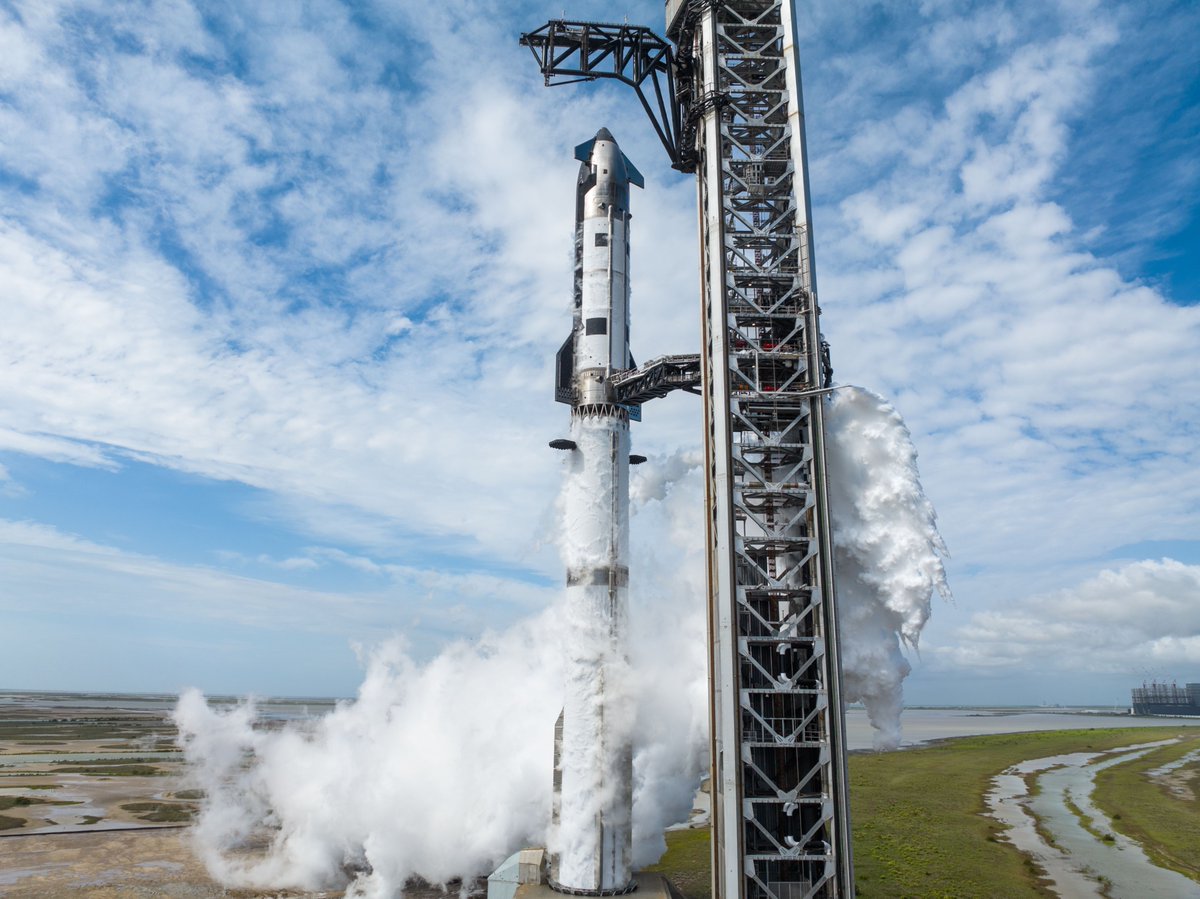
SpaceX has just released a massive new list of changes in Starship V3, which is now scheduled to launch on May 19th:
Super Heavy V3 Changes
Grid Fin Redesign:
• Reduced from 4 fins to 3
• Each fin is now: 50% larger, stronger, repositioned for better catching/lifting
• Lowered on booster to reduce heat exposure during hot staging
• Fin hardware moved inside fuel tank for protection
Integrated Hot Stage:
• Removes the old disposable interstage shield
• Booster dome now directly exposed to upper-stage engine ignition
• Tank pressure + steel shielding protect structure
• Interstage actuators retract after separation for protection
New Fuel Transfer System:
• Massive redesign of fuel transfer tube
• Roughly the size of a Falcon 9 first stage
• Allows: simultaneous startup of all 33 Raptors, faster and more reliable flip maneuvers
Engine Bay / Thermal Protection Changes:
• Engine shrouds removed entirely
• New shielding added between engines
• Propulsion + avionics more tightly integrated
• CO₂ fire suppression system removed
• Simpler and lighter aft section
Propellant Loading Improvements:
• Moved from 1 quick disconnect to 2 separate systems
• Adds redundancy
• Reduces complexity of pad interfaces
Starship V3 Changes
Completely Redesigned Propulsion System:
• Clean-sheet redesign
• Supports: new Raptor startup method, larger propellant volume and improved reaction control system
• Reduces trapped/leaked propellant risk
Aft Section Simplification:
• Fluid + electrical systems rerouted
• Engine shrouds deleted
• Large aft cavity removed
Flap Actuation Upgrade:
• Changed from: 2 actuators per flap to 1 actuator with 3 motors
• Improves:, redundancy, mass efficiency, cost
Faster Starlink Deployment:
• Upgraded PEZ dispenser
• Faster satellite deployment speeds
Long-Duration Spaceflight Capability:
• New systems added for: long orbital coasts, orbital refueling, cryogenic fluid management, vacuum, insulated header systems and high-voltage cryogenic recirculation
Ship-to-Ship Docking + Refueling:
• Added 4 docking drogues
• Added propellant transfer connections
• Directly supports in-space refueling architecture
Avionics Upgrades
Massive Electrical System Upgrade:
• ~60 custom avionics units
• Batteries/inverters/high-voltage systems integrated together
• ~9 MW peak power capability
Better Navigation + Redundancy:
• New multi-sensor navigation system
• Designed for precision autonomous flight
Propellant Monitoring in Space:
• New RF sensors measure propellant levels in microgravity
• Important for orbital refueling missions
Camera + Connectivity Upgrades:
• ~50 onboard camera views
• 480 Mbps Starlink connectivity onboard
• Low-latency redundant communications
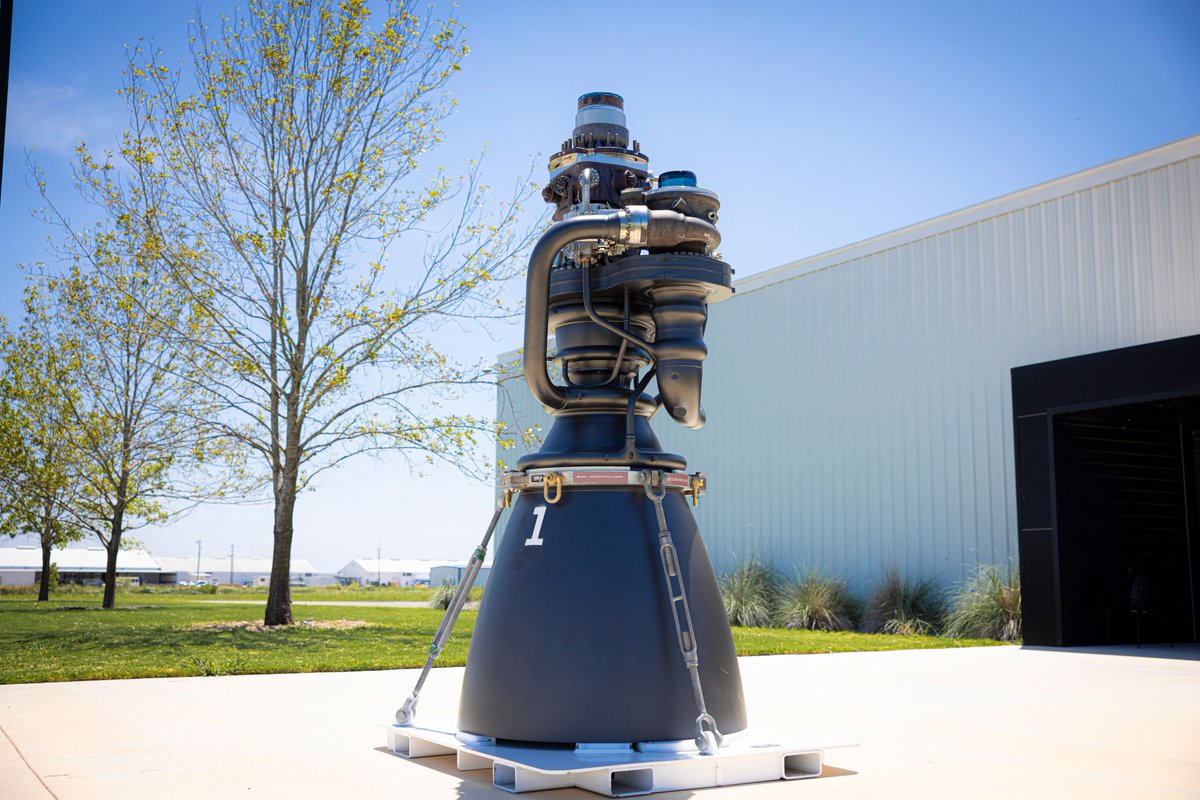
Raptor 3 Engine Changes
Higher Thrust:
• Sea-level Raptors:
• Increased from:
230 tf → 250 tf
507k lbf → 551k lbf
Vacuum Raptors:
Increased from:
258 tf → 275 tf
568k lbf → 606k lbf
Lower Mass:
• Sea-level engine mass reduced: 1630 kg → 1525 kg
Simpler Design:
• Sensors/controllers integrated into engine body
• Removes need for engine shrouds
• New ignition system for all variants
• Huge Vehicle-Level Weight Savings
• ~1 ton saved per engine across vehicle systems
Launch Pad 2 Upgrades (Starbase)
Faster Propellant Loading:
• Larger propellant farm
• More pumps
• Faster fueling operations
Chopstick Improvements:
• Shorter arms for faster movement
• Switched from hydraulic → electromechanical actuators
• Better reliability + redundancy
Stronger Quick Disconnect Arm:
• Reinforced and redesigned
• Swings farther away during launch
Launch Mount Redesign:
• Better load handling
• Improved launch protection
• Improved throwback reliability
New Flame Diverter System:
• Bidirectional flame diverter
• Designed to eliminate ablation/refurbishment after launch
Hardened Propellant Systems:
• Methane and oxygen systems separated
• Valves/filters moved into protected bunker
• Improves safety and reliability
SpaceX: "Together, these new elements are designed to enable a step-change in Starship capabilities and aim to unlock the vehicle’s core functions, including full and rapid reuse, in-space propellant transfer, deployment of Starlink satellites and orbital data centers, and the ability to send people and cargo to the Moon and Mars."
This is going to be an epic flight! 🚀
@grok The tweet claims data centers are basically a ‘carbon-free industrial facility’ that only uses electricity + water and produces heat as waste, so environmental panic is overblown. Can you break down how accurate this is, with a focus on water use? Specifically:
• How much water do they actually consume vs. return to local waterways?
• What happens to the ‘used’ cooling water (blowdown/wastewater)? Is it just dumped into rivers and streams, and what chemicals, temperature, or pollutants are in it?
• Are the concerns about negative effects on local streams, rivers, aquatic life, and drinking water founded or overblown? Include real-world examples, regulations (NPDES permits, etc.), and any mitigations or new tech that changes the picture. Be factual, cite sources where possible, and give both the industry side and the environmental/regulatory perspective.
I’ve always believed the No.1 application of AI should be to improve human health.
That work started with AlphaFold, and now at @IsomorphicLabs with the mission to reimagine drug discovery and one day solve all disease!
We are turbocharging that goal with $2.1B in new funding.
Every technology that seemed too expensive for the masses eventually became too cheap to notice. Electricity. Telephony. Computing. Internet. AI is next. The pattern never breaks.