I'm excited to announce the launch of my new blog/portfolio "A Geologist's Guide to the Galaxy", please check it out, any constructive criticism is also greatly appreciated
https://t.co/MR1eYdBufR
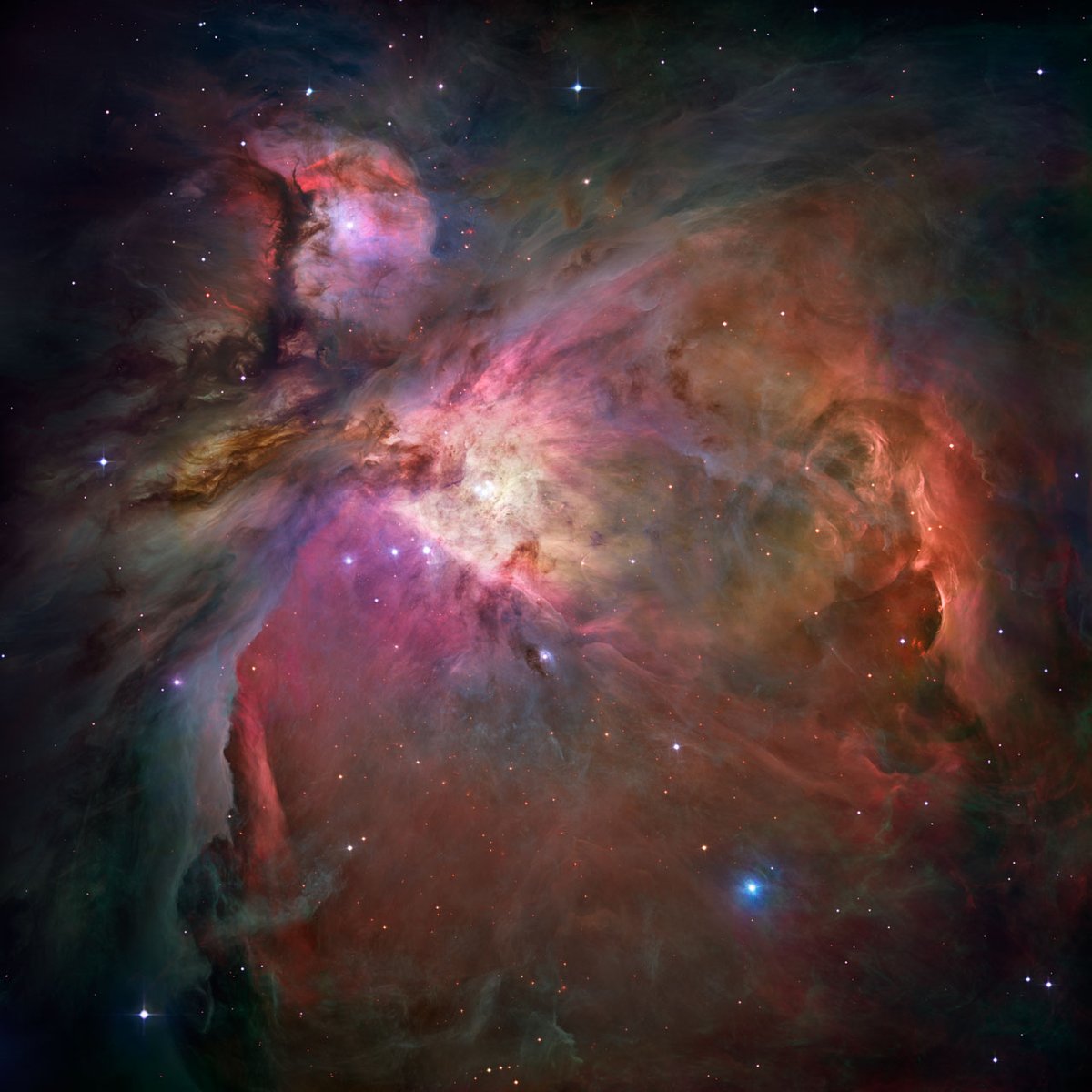
520 exposures. Over a billion pixels. One mind-blowing image!
This Hubble image shows the stunning Orion Nebula, which is the closest large star-forming region to Earth.
Discover more: https://t.co/ALXOqXB9bg
Discovery Alert!
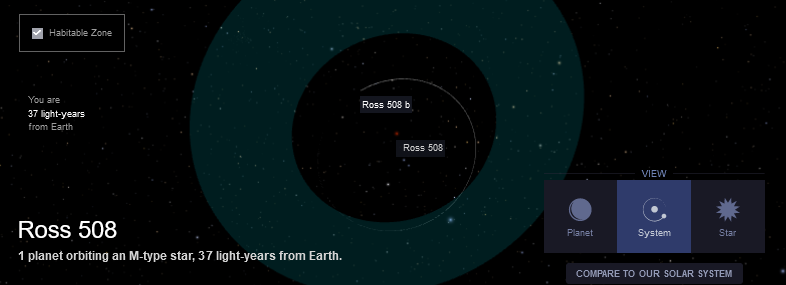
A recently discovered exoplanet skims in and out of its star's habitable zone. It's 37 light-years from Earth and about four times our planet's mass, making Ross 508b a super-Earth. A year there, one orbit, takes just 10.8 days! https://t.co/qmEDhIuS3A
Discovery Alert!📣
Just 33 light-years from Earth, two rocky super-Earths orbit a bright, red dwarf star. Astronomers found them using our TESS spacecraft and they seem to be ideal targets for followup by @NASAWebb! https://t.co/Gq0U00Hz1d
Behold! The first image of the supermassive black hole at the center of our galaxy from the Event Horizon Telescope!
Can we get a round of emoji applause for the EHT team? Well done. 👏👏👏
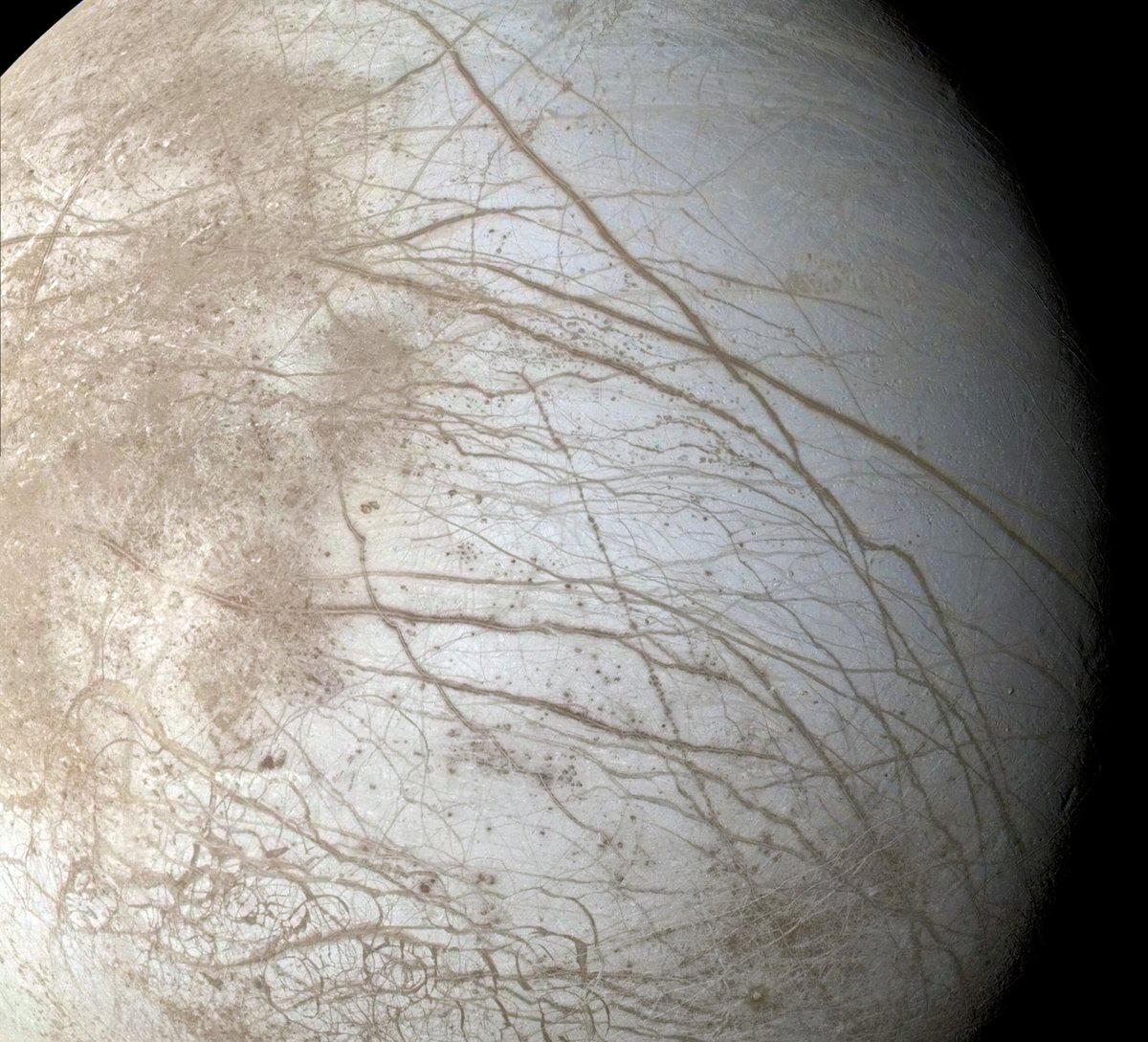
The subsurface saltwater ocean of Jupiter's moon Europa may have more than twice as much water than all of Earth's oceans combined, despite the moon itself being only about one-sixtieth of our planet's size by volume.
Happy 241st anniversary to Uranus, discovered by William Herschel on this day in 1781! This Hubble image shows the planet with faint rings and … what are those six white spots surrounding the planet? https://t.co/a9zsqNg88V
My first blogpost of 2022! With the #JWSTLaunch taking most of the spotlight recently this may have gone under the radar! "Hubble Discovers Exoplanet Protected by Magnetosphere" #NASA#Hubble#Exoplanets#Space https://t.co/oKFKo5wzTs
Merry Christmas and Happy Launch Day everyone!!!
Almost time for the historic launch of the James Webb Telescope! Launch is around t-minus 50mins!
#NASA#JamesWebb#JWSTLaunch
Examining points as to whether there is a case for recent volcanic activity on Venus in "Volcanism on Venus: Ancient History?" #Venus#Planets#Space#Geology https://t.co/B1BVCrGFpC
Incredible drone footage flying over a volcano and lava flows at night, captured by Iceland Aerials.
Source: https://t.co/noUJLwGi3x
via @wonderofscience
@seismeup That's always something to consider with these long missions, in any case looking at the evolution of the solar system is something that will take many different missions and datasets so regardless of where we are in 2033 the data will help strengthen or challenge any hypotheses