Makes you really wonder how many cycles of this Earth's human civilizations have already been through. I suspect a number of the UFOs are just long-lost cousins who escaped one of those prior cycles coming back to check on the current crop of those who got left behind...
“Are you saying the babies are having heart attacks in the womb [from the Covid Vaccines]?”—— YES!
The warning signs were there… it was ignored.
Medical experts tried to sound the alarm… they were censored.
Groups of moms on facebook tried to say something was very wrong… they were shut down.
There is no forgiveness to be had. There are no excuses to justify what they’ve done. I am pissed. I am angry. I am beyond talking to at this point. All of these MF’s need to be held accountable.
https://t.co/u3AKuEtJnT
Retd USAF General Blaine Holt, makes an important point, that there is a critical number of awakened people, that once reached, will mean the end of the globalist project. It's coming.
https://t.co/4KNjSxuePd
@the_irascible@MarkAttwood@DangerThinking#Trump#Fauci
so far western Washington state has yet to be attacked by the [DS] energy weapons.
so far we are safe from these fires.
@1HeidVandenberg and the doggos and i will be safe. i have evac routes planned should these bastards aim at us.
Thanks for all the concern.
The North Star (Polaris) is always at the top of the Earth's axis of rotation, but that doesn't mean it's always been above the Arctic.
When the Earth's geomagnetic field weakens, that indicates that the axis of rotation will flip so that Polaris switches from over the Arctic to over the Rift Valley in Africa. The consequences for human habitat are catastrophic, because the change in axis of rotation happens so fast (days) that the Earth's crust moves out from under the Earth's oceans. Low lying areas can become inundated with water for centuries, as the oceans adjust to the new rotation.
This switch happens every 6400-6500 years (or so).
How do we know?
The great monuments of mankind that date to a period more than 6400 years ago are all aligned to a Polaris above the Rift Valley. They point to the North Star as their builders observed it during their lifetimes -- over Africa, not the Arctic.
The next axis flip will be presaged by a rapid movement and weakening of the Earth's geomagnetic field, which is exactly what is observed right now.
Now you're probably saying "That's some tin foil hat BS that Seager probably picked up from the @KONCRETE podcast!"
But you didn't spend all day with @EthicalSkeptic quizzing him on his data, did you?
The 4th video in the ECDO Evidence series is up!
https://t.co/HhO2sqsYOU
This video looks at a remarkable feature of plate tectonics- many faults follow lines of differential oblateness between our current pole and ECDO S2. The 'hint' to look at this was @nobulart's "Groundtruth" article, which remains probably the most profound analysis I have seen in any discipline.
One to-do task off my list for this summer. A few more to go.
Anthony Peratt, the plasma-physicist turned petroglyph scholar, identifies the 'owl' as a common shape generated in computer simulations of plasma physics. He identifies many petroglyphs across the globe that he believes record the ancients seeing such a phenomenon. This is familiar territory under @SunWeatherMan's EDC theory.
One of the sites he identifies is Newgrange Ireland, a well-documented example of an Np' aligned site under @EthicalSkeptic's ECDO theory. It is much better aligned with Np' than it is with sunrise at the winter solstice, which is the traditional narrative.
If the 'owl' interpretation is correct, this gets interesting. Newgrange has elements that are familiar to both EDC and ECDO theories. Curious that.
Image credits:
Plasma 'owls': https://t.co/GxucP2PPDD
Newgrange spirals: Christopher Holt, Wiki
Newgrange alignment: @EthicalSkeptic
WOW! The $8 AI Machine!
Something extraordinary just happened and it changes what “local AI” can mean.
I am testing it tonight. Thus far it shows many possibilities…
So what it this $8 AI device?
A developer going by slvDev has forced a 28.9-million-parameter language model onto an ESP32-S3 microcontroller that costs roughly eight dollars.
Not a Raspberry Pi.
Not a Jetson.
An eight-dollar microcontroller.
The model runs completely offline, generates coherent short stories at about 9.5 tokens per second, and draws power measured in the same range as a small LED.
This is more than a hundred times larger than the previous record for the same class of chip (the earlier 260,000-parameter TinyStories experiments).
For perspective, the original ChatGPT sat at 117 million parameters. We are now running a model roughly a quarter of that size on silicon you can buy for the price of two coffees.
How the Impossible Became Possible
The ESP32-S3 has only 512 KB of fast SRAM, 8 MB of PSRAM, and 16 MB of flash. Conventional wisdom said a model of this size simply would not fit.
The breakthrough is architectural, not brute force.
Most of a language model’s parameters live in a giant embedding table a lookup table you mostly read from, not compute against.
Drawing directly from Google’s Per-Layer Embeddings technique (the same family of ideas used in the Gemma models), the developer moved the bulk of that table roughly 25 million parameters into flash memory and memory-mapped it.
The chip only needs to pull about six rows, roughly 450 bytes, for each new token. The remaining dense “thinking” core stays in the fast SRAM (around 560 K of active working memory). The model is stored at 4-bit quantization and occupies about 14.9 MB total.
The result is a system that feels almost free to run. The heavy parameters sit quietly in flash and are sampled sparingly. The little core does the real work. It is elegant engineering of the purest kind.
What I Am Doing With It Right Now
I have the boards on the bench in the garage lab. The first units are already talking short, coherent stories appearing on a tiny wired display, generated entirely on the chip with no Wi-Fi, no API key, no cloud round-trip. Latency is local. Privacy is absolute. Power draw is low enough that battery operation becomes interesting.
I am treating these as the first generation of true $8 AI machines. Early tests are focused on three practical directions.
- Embedding the model into simple nodes.
- Pairing it with local voice front-ends
- Exploring whether multiple of these chips can be networked as a lightweight swarm.
The model is deliberately limited. It was trained on the Microsoft TinyStories dataset and is excellent at coherent narrative, not at open-ended question answering or tool use.
That is a feature, not a bug. It forces us to design systems around what the silicon can actually deliver instead of pretending every edge device needs a frontier model.
Real Use Cases That Suddenly Become Practical
Once you accept that a capable language model can live for eight dollars and run without the cloud, a new class of devices becomes possible:
This is the opposite of the current trajectory that wants every intelligent act to travel through a remote server. It is the beginning of intelligence that is cheap enough, private enough, and local enough to become infrastructure rather than a service.
We have spent years watching model sizes explode upward. The more interesting frontier may be the opposite direction: how small, how cheap, and how local can useful intelligence become? An eight-dollar chip that can tell coherent stories is not a toy. It is a proof that the lower bound keeps moving.
The open repository is at https://t.co/a7gcHTR4ug
I will keep testing, measuring, and reporting what these little machines can and cannot do. The age of abundant local intelligence just got a little more real, and it arrived wearing an eight-dollar price tag.
CCleaner used to be the default way to keep a Windows machine fast.
Then it got bought, stuffed with ads and bundled crapware, and in 2017 one release was compromised and shipped malware to over 2 million people. Millions still install it every month because nothing else has really replaced it.
So, a team called AdventDev just built a free, open-source replacement.
It's called Kudu. Open the app and you get one dashboard for the whole machine.
> System cleaner for temp files, logs, caches, and crash dumps.
> Browser cleaner across every major browser.
> Gaming cleaner for launcher and shader caches.
> Registry cleaner for broken and orphaned entries.
> Startup manager that shows the actual boot impact of each program.
> Disk analyzer with an interactive treemap, so you can see where 40GB quietly disappeared to.
> Debloater that rips Windows bloatware out.
> Program uninstaller that also removes the leftovers other uninstallers leave behind.
Then it does the parts CCleaner never did.
A malware scanner with signature matching, heuristic analysis, and Windows Defender integration. A privacy shield that lets you flip 30+ Windows privacy settings from one screen: telemetry, ad ID, Cortana, tracking. Secure delete that overwrites files with random data before removing them, so nothing can recover them later.
There's a real-time performance monitor with per-core CPU, memory, disk, network, and S.M.A.R.T. drive health. A one-click restore point before every clean, so you can roll back. Scheduled scans. A CLI mode for people who don't want a GUI. Support for 30 languages.
Native app for Windows, macOS, and Linux. Intel and Apple Silicon builds. No ads, no upsells, no telemetry, no account.
The cleaning rules are plain JSON files, so if your favorite app isn't covered yet, you can add support for it without writing a line of code.
MIT license. 100% Open Source.
Repo: https://t.co/ctmxLjkgII
From @MethuselasMuse:
Video 1:
ECDO Evidence ep 1 - Monument Alignment, Chinese + Talmudic Flood myths
https://t.co/MhKdZyyux4
Video 2:
ECDO Evidence ep 2 - This is not the Pole Shift you are looking for
https://t.co/lo7eVvlnts
Video 3:
If the Earth actually flipped over, Hawaii would be volcanic | Cataclysm evidence ep. 03
https://t.co/JRTIXfNSMx
Video 4:
Fault Lines & Oscillatory Crack Propagation | ECDO evidence ep 04
https://t.co/2oF1SXMYLP
The NSA kept 1 lecture in a vault for 40 years. In 2024 they released it. It's Grace Hopper explaining the future of computing in 1982.
The channel that posted it: the National Security Agency's own YouTube.
Hopper stands at a podium in Navy uniform, a captain, and talks to a room of NSA staff for 90 minutes across 2 reels.
The title: "Future Possibilities: Data, Hardware, Software, and People."
She compares the computer industry to the early automotive one, all custom parts and no standards, and argues software will become the hard problem, not hardware. She was right by decades.
She invented the first compiler and gave COBOL its shape. She kept a clock that ran backwards on her wall to prove rules can be questioned.
The tapes were too degraded for normal release, so the agency restored them before posting.
40 years in an NSA archive. 90 minutes. Now free.
🚨 DR. WILLIAM MAKIS SAYS THIS IS THE MOST IMPORTANT IVERMECTIN DOSING GRAPH HE'S CREATED.
Not a new chemotherapy drug.
Not a breakthrough immunotherapy.
Not a billion-dollar cancer treatment.
Just one simple dosing strategy.
According to Dr. William Makis, this is the dosing framework he believes everyone researching repurposed medicines for cancer should understand first.
And it all starts with one number.
📌 1 mg/kg/day.
Before explaining why, here's the dosing framework Dr. Makis discusses.
📊 The Four Ivermectin Dosing Ranges
🟢 Low Dose: ≤0.5 mg/kg/day
Used for cancers in remission, strong family history, genetic predisposition, prophylaxis, and lower-dose protocols discussed in published case reports.
🟡 Medium Dose: 1.0 mg/kg/day
Dr. Makis' recommended starting dose for most cancers.
🔵 High Dose: 2.0 mg/kg/day
Discussed for very aggressive cancers, including leukaemia, pancreatic cancer, and some brain cancers.
🔴 Very High Dose: ≥2.5 mg/kg/day
Discussed in selected reported cases involving extensive metastatic disease or extremely poor prognosis, where temporary visual side effects have also been reported.
Now here's why Dr. Makis believes 1 mg/kg/day deserves the most attention.
After reviewing laboratory research, published studies, and numerous case reports, he says this is the starting dose he recommends for most cancers.
According to Dr. Makis, research has investigated Ivermectin across a surprisingly wide range of cancers, including:
• Breast cancer
• Colon cancer
• Lung cancer
• Pancreatic cancer
• Kidney (renal cell) cancer
• Gastric cancer
• Leukemia
One exception stood out.
Lymphoma.
Dr. Makis says he has found very little published research involving Ivermectin and lymphoma.
That doesn't mean it doesn't work.
It simply means the evidence is currently limited.
❓What does 1 mg/kg/day actually look like?
For someone weighing 60 kg (132 lbs)...
That's approximately 60 mg of Ivermectin every day.
Equivalent to:
💊 Five 12 mg tablets
OR
💧 About 6 mL of liquid Ivermectin, roughly one teaspoon.
According to Dr. Makis, that's where he recommends starting for many cancers.
Can lower doses still have an effect?
✅ He believes they can.
Dr. Makis discusses a published ovarian cancer case reported by Dr. Tess Lawrie.
The dosing chart lists the patient as receiving 12 mg of Ivermectin per day. During his discussion, Dr. Makis explains that this was approximately 0.2 mg/kg/day, placing it within the chart's Low Dose (≤0.5 mg/kg/day) range.
📉 According to the case report, the patient's CA125 tumor marker reportedly fell from 288 to 22 after two months.
That case is one reason Dr. Makis believes Ivermectin may have anticancer activity even at lower doses.
However...
He also believes the available evidence suggests the effect is dose dependent.
In other words...
Higher doses may produce greater effects, although more clinical research is needed.
What about the most aggressive cancers?
• Pancreatic cancer
• Leukemia
• Brain cancer
For cancers like these, Dr. Makis discusses doses around 2 mg/kg/day in selected situations.
He notes that Ivermectin crosses the blood-brain barrier, although not very efficiently, which is one reason he says higher doses may be considered for some brain cancers.
He also discusses a case reported by Dr. Allan Landrito.
According to Dr. Makis, a physician with terminal gallbladder cancer reportedly took 2 mg/kg/day for 14 months.
He says her cancer eventually disappeared.
She experienced temporary visual side effects that resolved after a few days.
❓How high have reported doses gone?
According to Dr. Makis, he has seen reported doses as high as 2.5 mg/kg/day.
He references patients treated by Dr. Shankara Chetty who reportedly used those doses without long-term side effects, although some experienced temporary visual disturbances that later resolved.
One point Dr. Makis returns to repeatedly...
Long-term use.
He references the Castro study involving children with leukemia who reportedly received Ivermectin for six months without long-term side effects.
He also discusses anecdotal reports of adults taking it daily for more than a year without long-term toxicity.
So why aren't there larger cancer trials?
Dr. Makis believes one of the biggest obstacles is economics.
Because Ivermectin is an off-patent generic medicine, he argues there is little financial incentive to fund large clinical trials.
Whether future research ultimately confirms or challenges these ideas remains to be seen.
But Dr. Makis' message is remarkably simple.
One graph.
One dosing strategy.
One starting point.
📌 1 mg/kg/day.
Because the conversation isn't just about Ivermectin anymore.
It's about whether repurposed drugs deserve the same level of scientific investigation as newer therapies.
🗨️ Do you think inexpensive repurposed medicines like Ivermectin deserve larger, well-designed clinical trials for cancer?
🔖 Save this post so you'll always have Dr. Makis' dosing framework handy, and repost it to help others discover the ongoing research into repurposed medicines.
#Ivermectin #CancerResearch #RepurposedDrugs #Oncology #CancerCare #MedicalResearch #PancreaticCancer #MakisMD #RxMeds
Palantir sells governments a war room that costs millions a year.
So, a guy named Elie just rebuilt it, put it on GitHub, and gave it away.
It's called World Monitor.
Open it and you get a live 3D globe with 500+ news feeds pouring in across 15 categories, all summarized by AI as they land.
> Military movements.
> Economic shocks.
> Natural disasters.
> Cyber incidents.
> Flight paths.
> Shipping lanes.
+ 56 different map layers you can stack on top of each other.
It scores 31 countries on a stress index and updates the number as things happen.
It watches 29 stock exchanges, commodities, and crypto in one panel.
It runs local AI through Ollama, so you can use the whole thing without a single API key.
Native desktop app for Windows, macOS, and Linux. 25 languages. Works out of the box after one clone.
YOUR PHONE BECOMES ALMOST USELESS THE MOMENT THE INTERNET DISAPPEARS.
These 10 free apps keep maps, messaging, file transfers, medical guides, and passwords working offline.
Build this kit before you need it.
1. Kiwix / https://t.co/QR0k8u782r
The whole of Wikipedia, offline, in your pocket. Download it once and you carry the sum of human knowledge with no signal. It also has a full offline medical guide and a disaster-prep library built in. A nonprofit runs it, it's free, and it shows no ads and collects nothing.
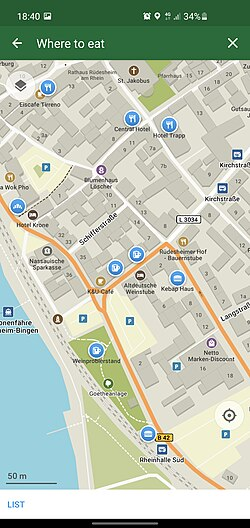
2. Organic Maps / https://t.co/XWbiTcmVYs
Full maps of any country, downloaded to your phone, with turn-by-turn navigation that works with zero signal using just GPS. No account, no tracking, no data drain. When Google Maps spins forever, this one already knows where you are and how to get home.
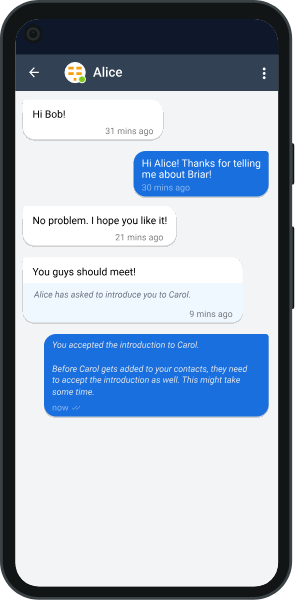
3. Briar / https://t.co/zY49h20o5s
A messaging app that works with no internet at all. It can send messages phone-to-phone over Bluetooth or wifi when the towers are down. Built for journalists and activists in blackouts, encrypted end to end. The one that still works when nothing else does.
4. LocalSend / https://t.co/dluWSRktlA
Move photos, documents, and whole folders between phones and laptops over a local connection, no internet, no account, no cloud. When you can't email yourself a file because there's no signal, this sends it straight across the room. Works on every device.
5. KeePassDX / https://t.co/Q8xSTQeplx
Your passwords, stored encrypted on your own phone, not in someone's cloud. When the login page won't load and the password manager needs a connection, this one opens instantly offline. Your keys stay with you, not on a server that could be down.
6. WikiMed by Kiwix / https://t.co/QR0k8u782r
A complete medical encyclopedia, offline. Symptoms, first aid, what to do when you can't reach a doctor or the emergency line won't connect. The kind of information you never think about until the moment you desperately need it and there's no signal to search.
7. AntennaPod / https://t.co/rFB9gMXd8x
Download podcasts, audiobooks, and shows ahead of time and play them with no connection. On a long blackout or a dead-zone trip, hours of things to listen to that you saved while you still had signal. Free and open, no subscription.
8. Aegis Authenticator / https://t.co/huGq20Kn4p
Your two-factor login codes, generated entirely on your phone with no internet needed. When you're locked out of an account because the code won't arrive, Aegis already has it. Encrypted, offline, and free. The backup nobody sets up until it's too late.
9. Offline Translator (translateLocally / RTranslator)
Translate between languages with the whole model living on your phone, no connection required. Stuck somewhere you don't speak the language and there's no signal? It still works. The gap between lost and understood, closed offline.
10. FBReader or KOReader / https://t.co/yvD8yNJVdE
Your entire library, offline. Load it with survival guides, manuals, and every book you meant to read, and it all opens with no signal. When the screen is the only thing with power left, this keeps it worth something.
The internet feels permanent right up until it isn't. Storms, blackouts, dead zones, travel. The people who prepared don't panic. They just open the kit.
Build it now. You won't get to download it when you actually need it.