Why does Britain have some of the highest house prices and rents in the world?
The answer is the scarcity premium – the gap between sale prices and build costs.
A new @yimbyalliance site maps out the scarcity premium & compares it to where new homes get built.
Today the Milburn NEETs report is published.
It's a long report (278 pages!), but I've looked into it and here is my quick take:
The report treats youth inactivity largely as a problem with the benefits system, rather than with the employment costs placed on employers, which are stopping them from hiring young people.
This is a huge gap, and it means that recommendations fail to address one of the main reasons that young people are struggling to get into work.
Benefits reform is needed, but the impact of increased costs on hiring, particularly following increases in interest rates in the last few years, is making it much harder for younger workers to enter the labour market.
Employers are hiring fewer people, but young people are hit particularly hard because they are the least likely to have jobs already.
The share of young people neither in work nor in education rose in every age band, including 25–29.
The result is that we end up subsidising demand to offset employment costs. This is unlikely to be effective, and fails to deal with the underlying issue.
Cutting health benefits will force more young people into job search, but they will only find work if employers can recover the cost of employment through higher revenue.
The report acknowledges this to some extent, but leans towards using subsidies and targeted support to address it. This is not only fiscally expensive, but also unlikely to meet the magnitude of the challenge.
Instead, we need a stronger stance on the cost of hiring to minimise the potential for planned increases over the coming years, to ensure that young people are not left stranded in a labour market that will struggle to find them jobs.
https://t.co/bDLB2Wdtgr
https://t.co/jH3jX6lqgq
We completely agree that the UK market has an unduly high reliance on a small number of large speculative housebuilders. That reliance is a result of England’s planning system. It is why we promote reforms, proven to work in other countries, to deliver more homes from small and medium-sized builders with the support of local communities.
>be the UK government
>heap restrictions and costs on housebuilding
>"the simple fact is that the private market as it is currently constituted will not, on its own initiative, produce sufficient housing to meet overall housing need"
Austin, Texas, is an excellent example of how this plays out in practice.
Demand for housing in Austin surged in 2020, and as a result rents soared. Developers responded to the opportunity to make a profit by building tens of thousands of homes.
In fact, Austin added 120,000 homes between 2015 and 2024, increasing its housing stock by 30%.
The resulting increase in supply helped drive rents down by 16% from their late-2021 peak.
Developers weren't out to make housing cheaper but each builder was responding rationally to an chance to make a profit.
But collectively, all that building increased supply and lowered rents.
That's competition. Firms pursue their individual interests and can produce outcomes that benefit consumers, even when those outcomes run against their industry's collective interests.
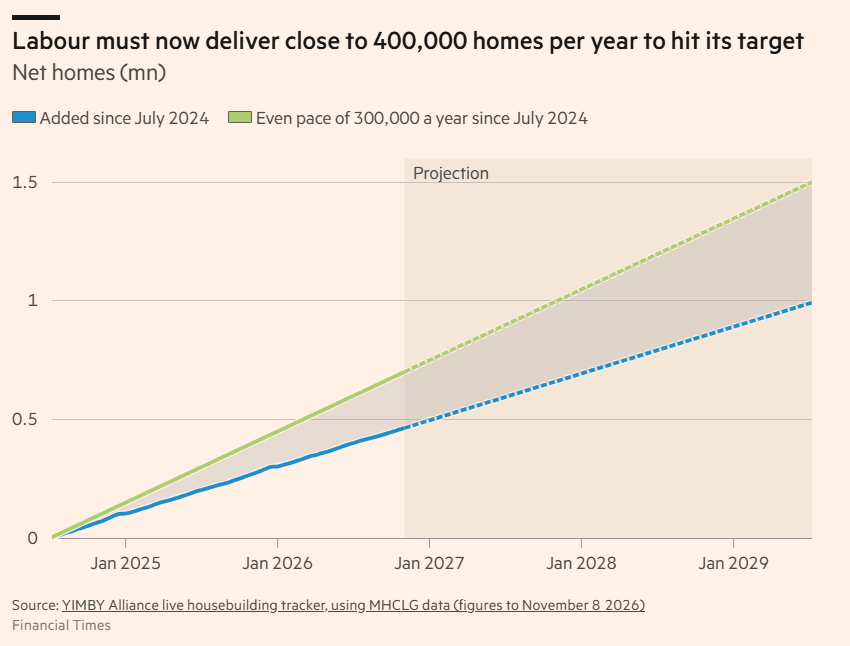
THREAD (1/5) Britain's Labour Party are on course to miss its manifesto pledge to build 1.5mn homes by 2029. How they have fallen so far behind illustrates a familiar vicious circle in UK governance...
My latest column for @FT. Chart via @yimbyalliance
https://t.co/bhDQ8xvuxi
Britain’s self-inflicted housebuilding crunch.
My latest column for @FT. The government blocks construction with tax & regulation, then commits public funds to offset the damage: https://t.co/LJWdcGPz4h
With insights from @Ben_A_Hopkinson and Edward Donovan @CPSThinkTank
ICYMI 🚨 New housing data visualisation.
Take a look at https://t.co/YWdFThteCq to see how housing delivery compares to the 'scarcity premium' – the gap between how much a home costs to build and how much it sells for.
London’s protected skyline rules are up for review — so what’s your view?
(link to article in reply below)
Views of St Paul’s Cathedral, Parliament and the Tower of London could gain extra protection under the first review of the capital’s planning framework since 201
Why does Britain have some of the highest house prices and rents in the world?
The answer is the scarcity premium – the gap between sale prices and build costs.
A new @yimbyalliance site maps out the scarcity premium & compares it to where new homes get built.
The opposite also holds here.
Where housing demand is weaker, existing homes can cost less to buy than they would cost to build.
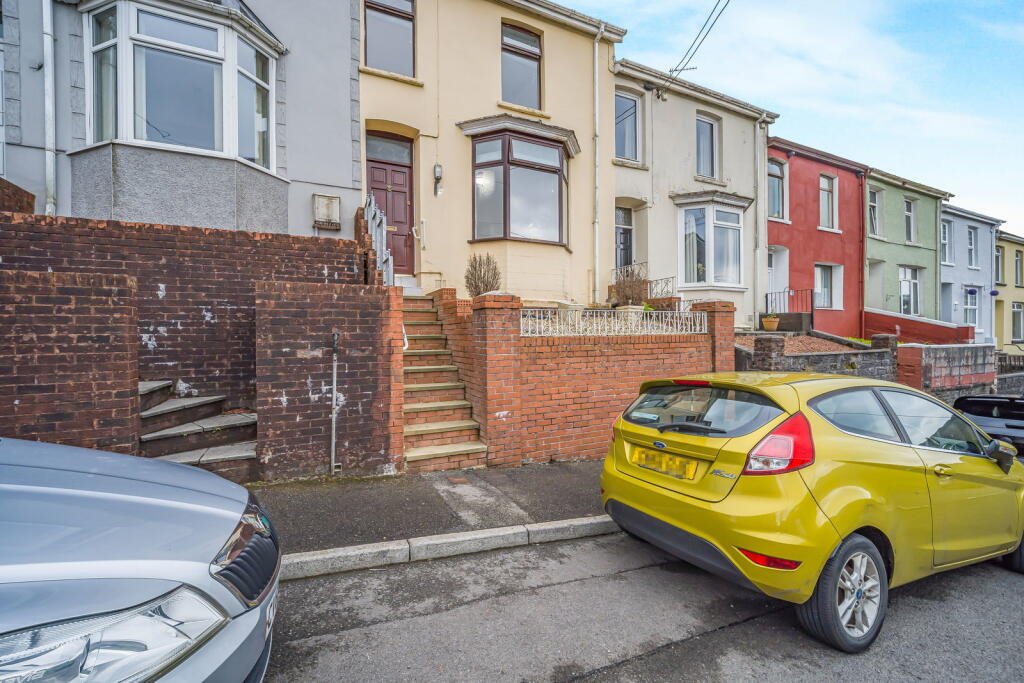
Look at this nice terraced home in South Wales.
It's 90m² for £100k.
If you were building from scratch it'd cost around £126k for the bare construction (2024 BCIS median in region).
But you also need to add in land + design + policy costs + external works.
@davidwardsays@Layo_FH@yimbyalliance Definitely agree that inflation has made the overall picture more difficult, & that those policy costs are impacting viability.
But I also think that a big part of the problem is that many high demand areas are not the target for new homes, pushing up the scarcity premium