This week at ASCO, we will present clinical validation pf prognostic+predictive capabilities of Ataraxis Breast: recurrence risk, adjuvant chemotherapy benefit, and neoadjuvant therapy response.
This is also the first data from Phase III RCTs (and certainly not the last!)
Ataraxis is heading to ASCO 2026 with new predictive data supporting our first-in-class tools.
For the first time, we're presenting clinical evidence that AI can predict treatment benefits of adjuvant and neoadjuvant therapies in breast cancer on an individual basis, rather than relying on population averages and overall cancer aggressiveness. We will present our first clinical validation in a Phase III randomized controlled trial and results of a prospective trial of Ataraxis Breast.
- Estimating Individual Benefit from Adjuvant Chemotherapy in Hormone Receptor-Positive Breast Cancer Using Causal Multimodal Artificial Intelligence (Dr. Frederick Howard, UChicago Medicine)
- Evaluating Performance of an AI-Based Recurrence Score in Early Breast Cancer Patients Treated with Chemoendocrine Therapy: A Secondary Analysis of the UNIRAD Trial (Dr. Thomas Bachelot, Centre Léon Bérard)
- Real-World Deployment of a Multimodal AI Model for Predicting Response to Neoadjuvant Therapy in Early Breast Cancer (Dr. Bareket Daniel, PhD, Shaare Zedek Medical Center)
- Evaluating the Prognostic Performance of an AI-Based Model in Clinically Low-Risk HR+/HER2- Early Breast Cancer (Dr. Dhruva Biswas MD PhD, Ataraxis AI)
We look forward to sharing how AI is transforming breast cancer care. See you in Chicago!
This will be the main way we build predictive tools at Ataraxis. Tau enables learning treatment response from real-world data and then predicting its benefit on individual basis, so you don't have to rely on just classifying patients as low/high risk
Today, we announced the launch of Ataraxis Breast CTX, individualized chemotherapy benefit prediction test, and Ataraxis Tau, a causal inference platform.
Ataraxis Breast CTX is the first predictive test for HR+/HER2- breast cancer that does not rely on recurrence risk categories to identify adjuvant chemotherapy benefit. CTX estimates recurrence risk reduction for each patient, and helps find patients who benefit, but also who might still have significant residual risk.
CTX was developed using Ataraxis Tau, our causal inference platform. Ataraxis Tau allows AI models to recover treatment effects from real-world, multi-institutional, observational data. Tau is Ataraxis’s AI engine to develop and validate predictive tests across all cancer types.
Ataraxis Breast CTX has already been clinically and analytically validated in observational and clinical trial data, and is now available for breast cancer patients as part of Ataraxis Breast suite.
Read the full press release: https://t.co/RMKqOjZi7b
Just in the last few days, we've seen:
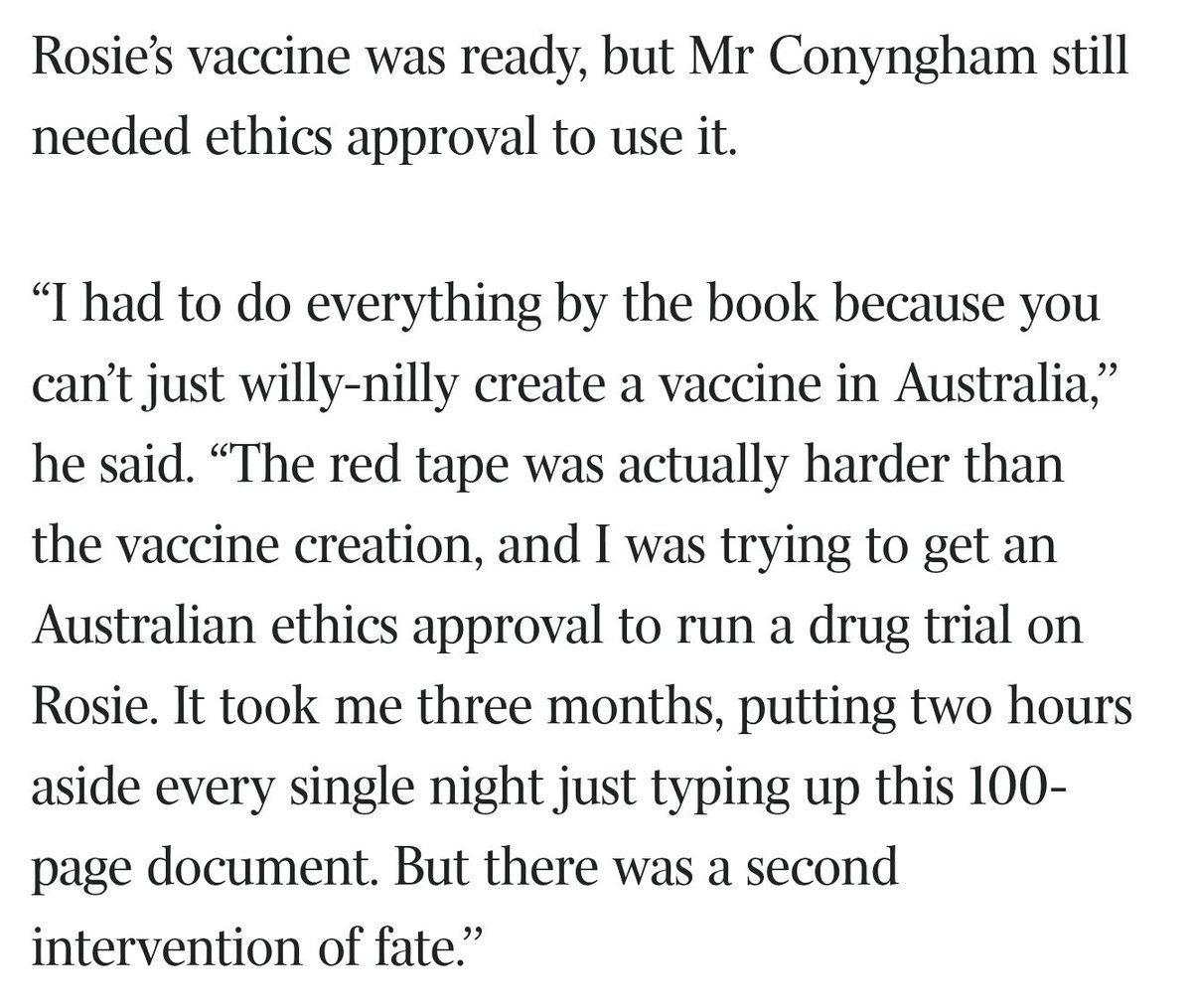
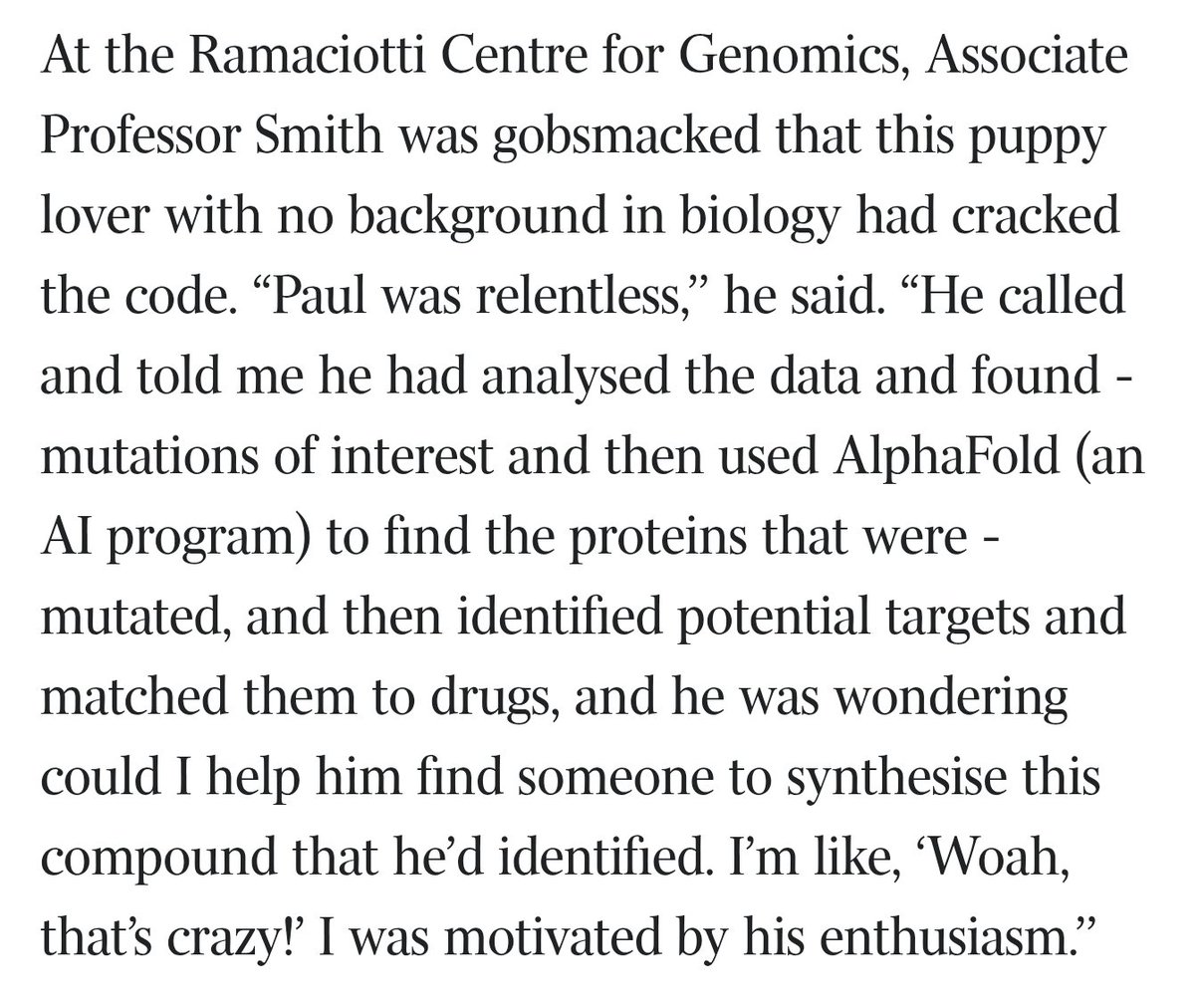
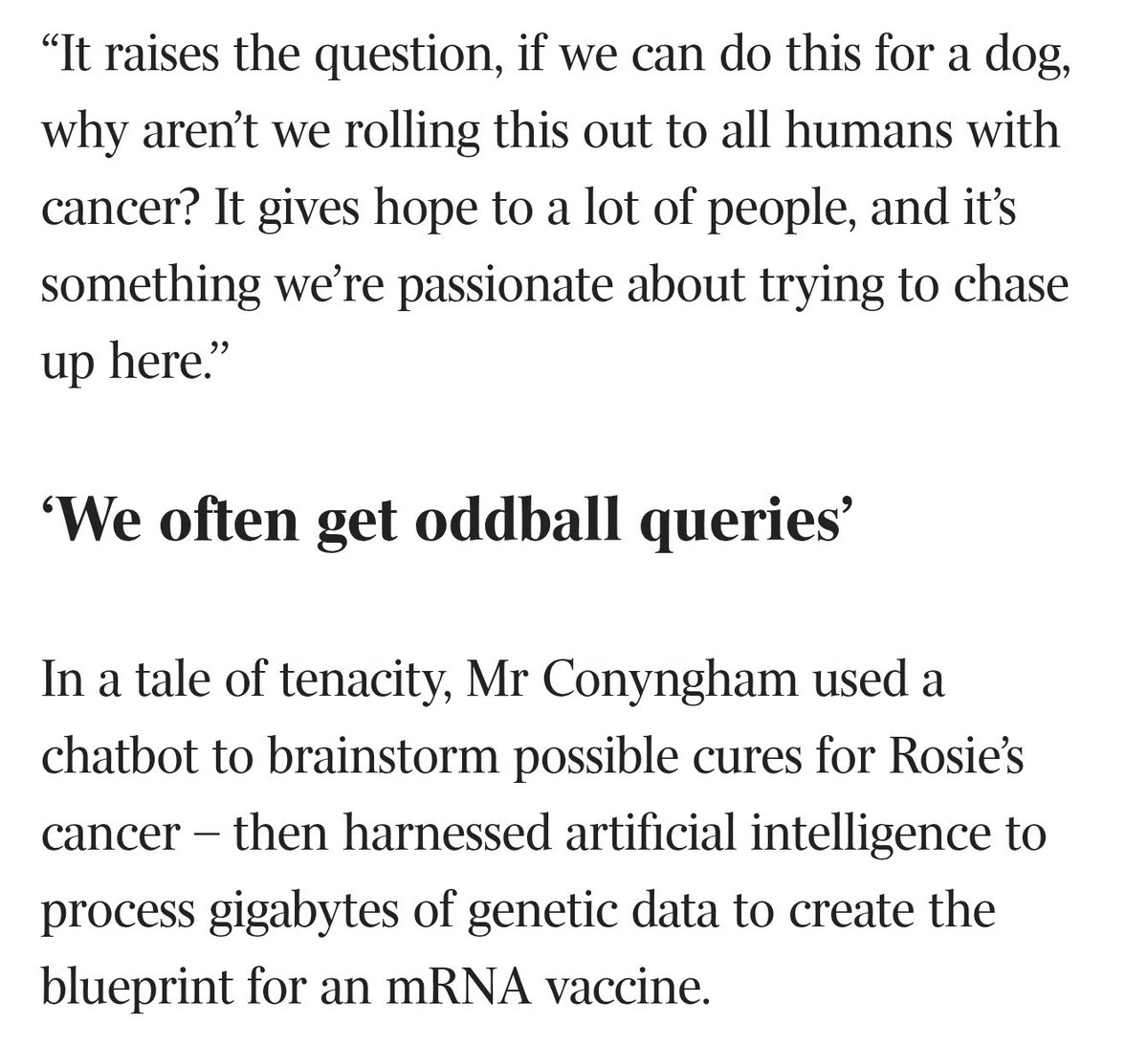
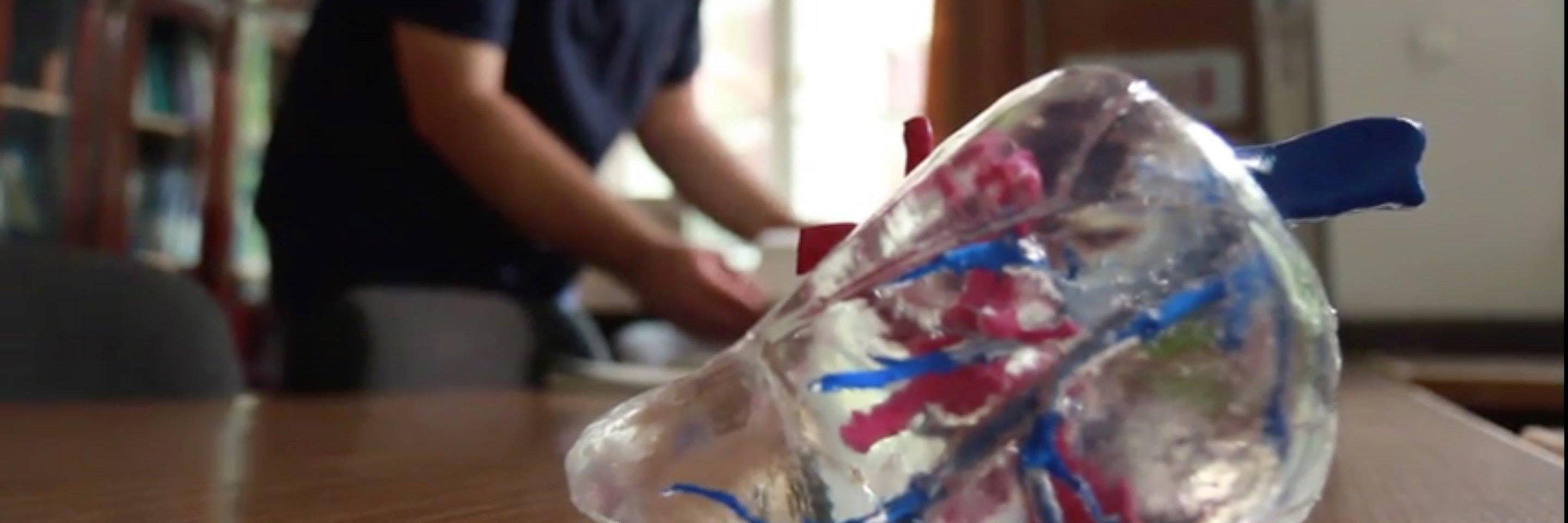
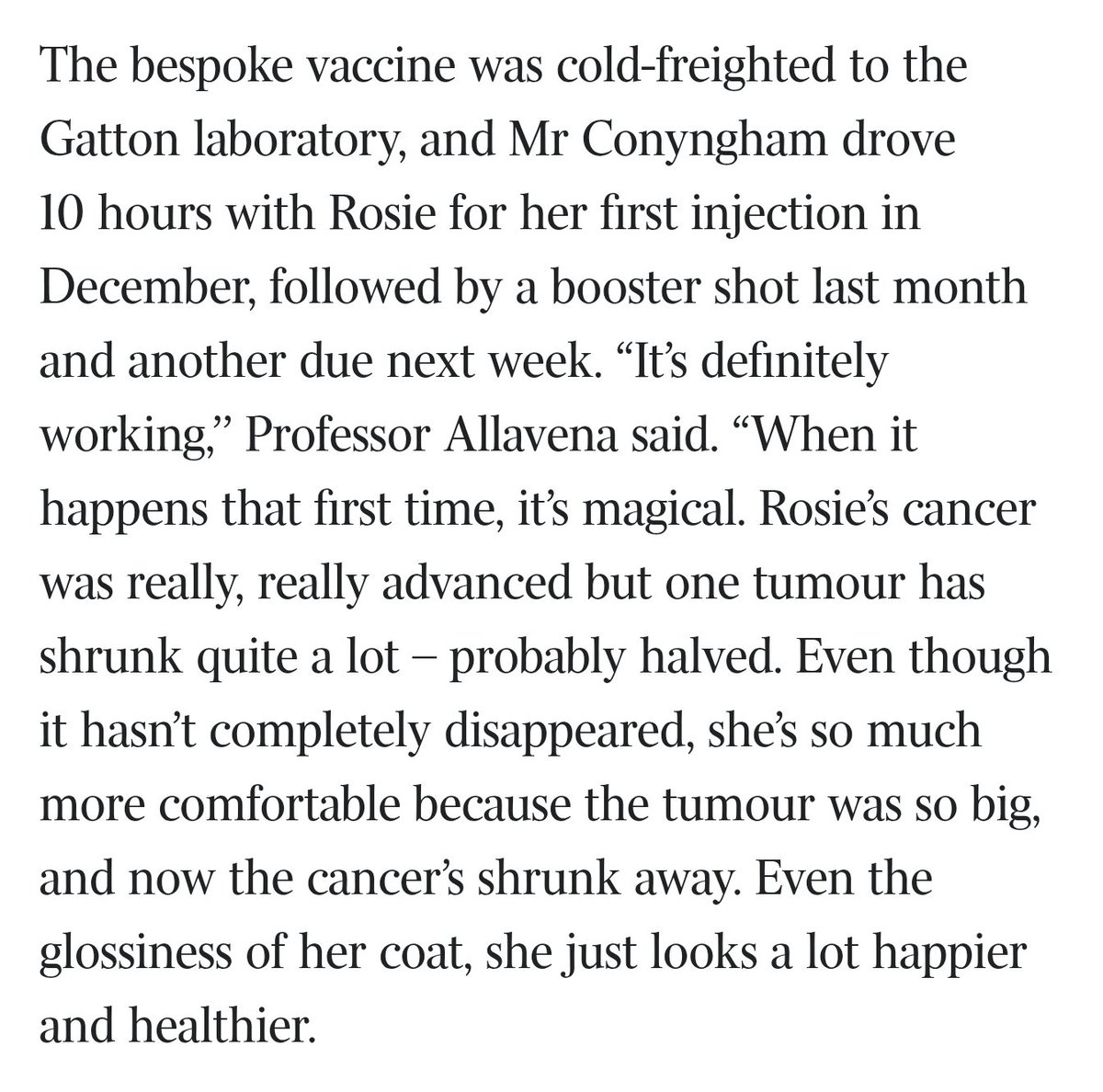
- A guy in Australian using AI to design a custom mRNA vaccine
- Microsoft+Providence building AI models predicting spatial proteomics from pathology slides
We are so close to making cancer fully, truly personalized. Most patients would be surprised how much more we can do to select the right treatment.
Even in cancer, drugs are usually given on a basis of "well, it works on average with patients of your [age/tumor size/other general characteristic]", instead of predicting if someone will benefit from the drug or not.
This problem requires superhuman skills, which is why the medical world hasn't solved it yet.
With AI, we are reaching the point where you can (1) predict response to all available cancer therapies, (2) do it on an individual patient level, not population level.
What you're seeing in the news with these examples are still mostly research applications. Productizing this and bringing it to the clinic requires clinical validation and regulatory approvals. Good news is that there are already first tools used being used.
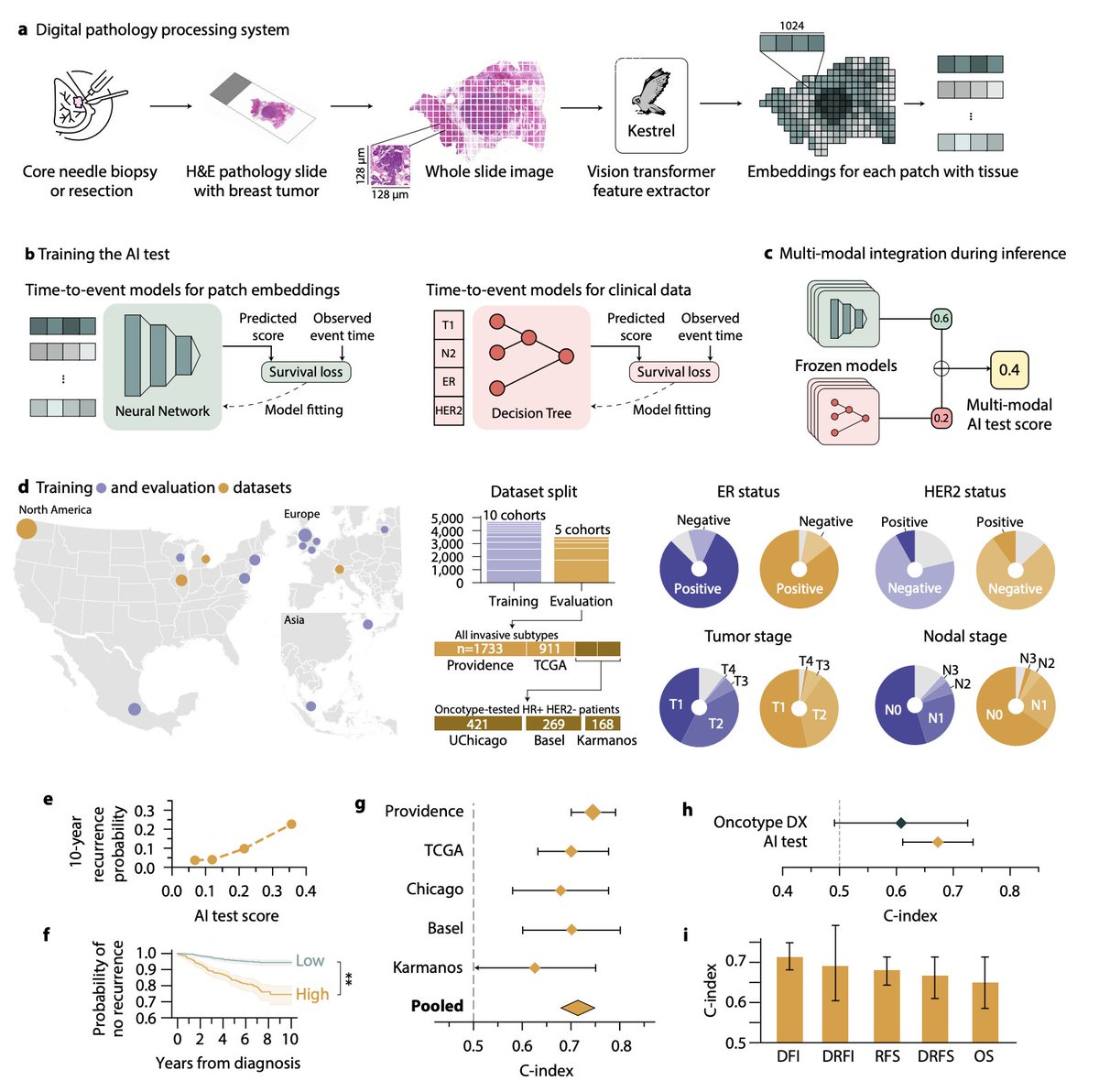
Our AI research lab @Ataraxis_AI has built tools like that for breast cancer and they are actually used by oncologists and other physicians. Similar to the Microsoft/Providence story, these tools use very standard, widely available information, primarily pathology slide imaging.
This shift takes more time than we'd all like, because new technology, whether it's a new drug, medical device, or an AI tool, requires a lot of physician and patient trust. Luckily, just like in other areas of AI applications, it has been accelerating. You'll start seeing a lot of this for all cancers, and ultimately, all diseases.
The Providence team has been doing fantastic AI+pathology work for many years now.
If you liked this, at @Ataraxis_AI we've built tools for breast cancer that are used every day to predict treatment response and distinguish low/high risk tumors.
We’ve trained a multimodal AI model to turn routine pathology slides into spatial proteomics, with the potential to reduce time and cost while expanding access to cancer care.
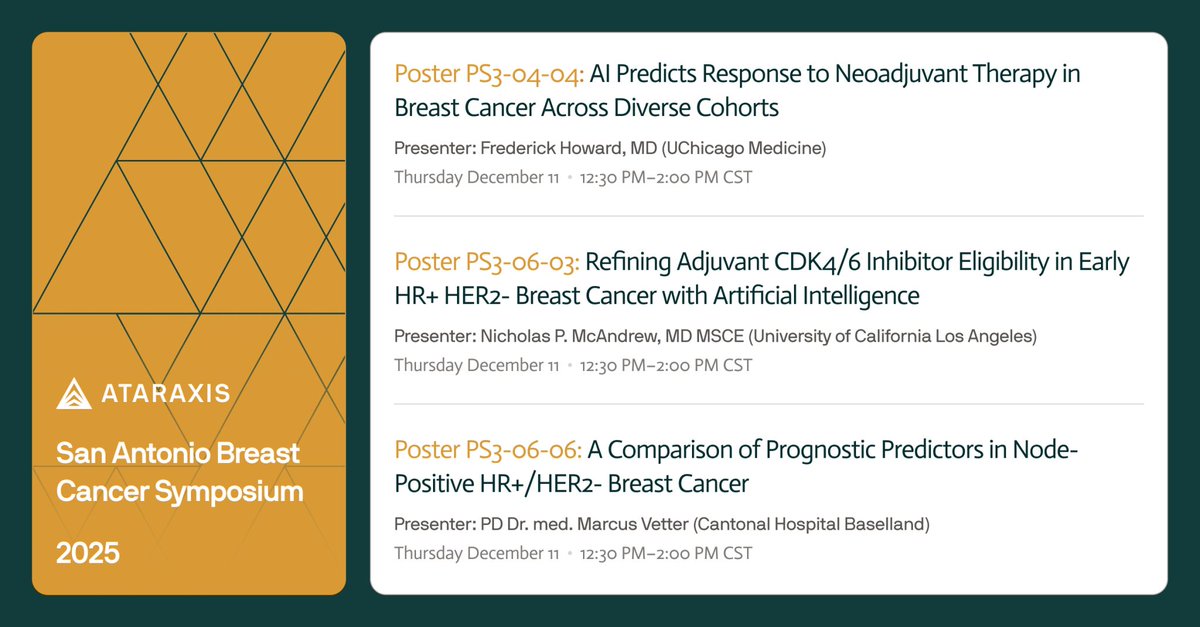
Most prognostic/predictive tools in breast cancer were built 20+ y ago, never improved, and now limit the clinical utility. We don’t need to rely on modestly prognostic tests restricted to postmenopausal eBC ER+HER2- IDC anymore. Can't wait to share our AI tools results #SABCS25
Ataraxis will continue to show evidence that our AI-native tools for oncology are not just more accurate than the standard of care, but that we can answer the most difficult problems in treatment selection
Today, we announce a strategic research collaboration between Ataraxis AI and MEDSIR (@wearemedsir), a global leader in oncology research.
The partnership will evaluate the Ataraxis Breast platform in several international randomized controlled trials. Together, we aim to generate robust clinical evidence on the role of artificial intelligence in predicting outcomes and treatment effects in early-stage and metastatic breast cancer. The analyses will especially focus on novel therapies investigated in MEDSIR's groundbreaking trials, including CDK4/6 inhibitors and antibody-drug conjugates (ADCs).
This is one of many ongoing partnerships at Ataraxis working on developing a robust evidence base supporting the accuracy and utility of Ataraxis AI-native tools, and moving AI precision oncology closer to becoming the standard of care.
Read the full announcement here: https://t.co/vFAG0BYhrn
Grok 4 (Heavy and base) has been a disappointment--mostly the product, not model. Somehow it fails to maintain context even after 2-3 messages, fails to work consistently with files, randomly decides to searches the web even with the option disabled.. o3(-pro) still wins so far.
🏆 Ataraxis won 1st place at the Nebius AI Discovery Awards!
Out of 250+ global contenders innovating at the intersection of AI and life sciences, our team was honored to receive the top prize in the biotech category — and a $100,000 award — at the @nebiusai AI Discovery 2025 ceremony today!
This recognition as a frontrunner in AI-driven precision medicine is a meaningful milestone, especially as we shared the stage with so many trailblazing startups redefining the future of healthcare.
Thank you for this recognition of our work, our Ataraxis Breast AI tests, and Ataraxis research that helps personalize treatment for cancer patients worldwide.
We are at #ASCO25 this weekend! @JanWitowski will be presenting the results from our Ataraxis Breast clinical validation study--stop by to learn how our multi-modal AI and foundation models help personalize breast cancer treatment.
We are looking for a biostatistician to join us:
https://t.co/kgulG7NpLF
This an amazing position for someone with strong skills in biostatistics, interested in optimizing cancer treatment with AI.
Please help me spread the word!
Big personal update! As of 3/1, I’ve joined @Ataraxis_AI — a startup I co-founded in 2022 — full-time as Chief Scientific Officer.
We recently raised a $20.4M Series A, and are now building a frontier AI lab to push the boundaries of personalized oncology treatment. 1/
Ataraxis has a really unique combination of world-class AI researchers and medical/commercial leaders who brought to market new products used by millions of patients every year. We have only a few more open roles left:
We are hiring for multiple engineering & research roles at Ataraxis AI! We recently raised a $20.4m Series A from top investors (AIX Ventures, Peter Thiel) and are quickly growing to help millions of cancer patients worldwide. Apply now at: https://t.co/VH4N3CwOV3
@ALACIsabel@PTarantinoMD@Ataraxis_AI Breast test, we integrate key clinical/anatomical/molecular features with tumor morphology (see preprint: https://t.co/JKHd1GDjoo)