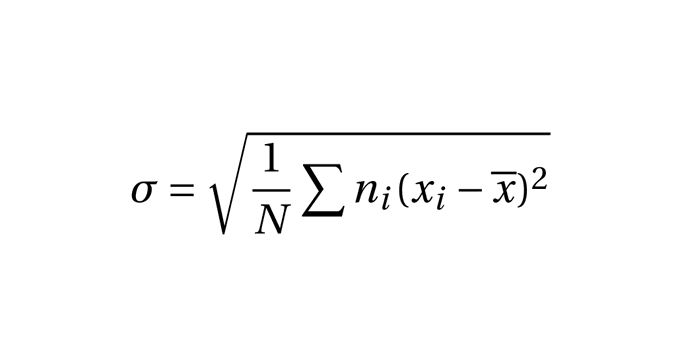
The idea of measuring how spread out numbers are in a dataset was first developed by Abraham de Moivre. Later, in 1893, Karl Pearson made it easier to understand and use by introducing the term “standard deviation” and representing it with the Greek letter σ (sigma).
A gyroscope is probably one of the most fascinating physics toys and one of the most useful applications of conservation of angular momentum in several branches of science and technology.
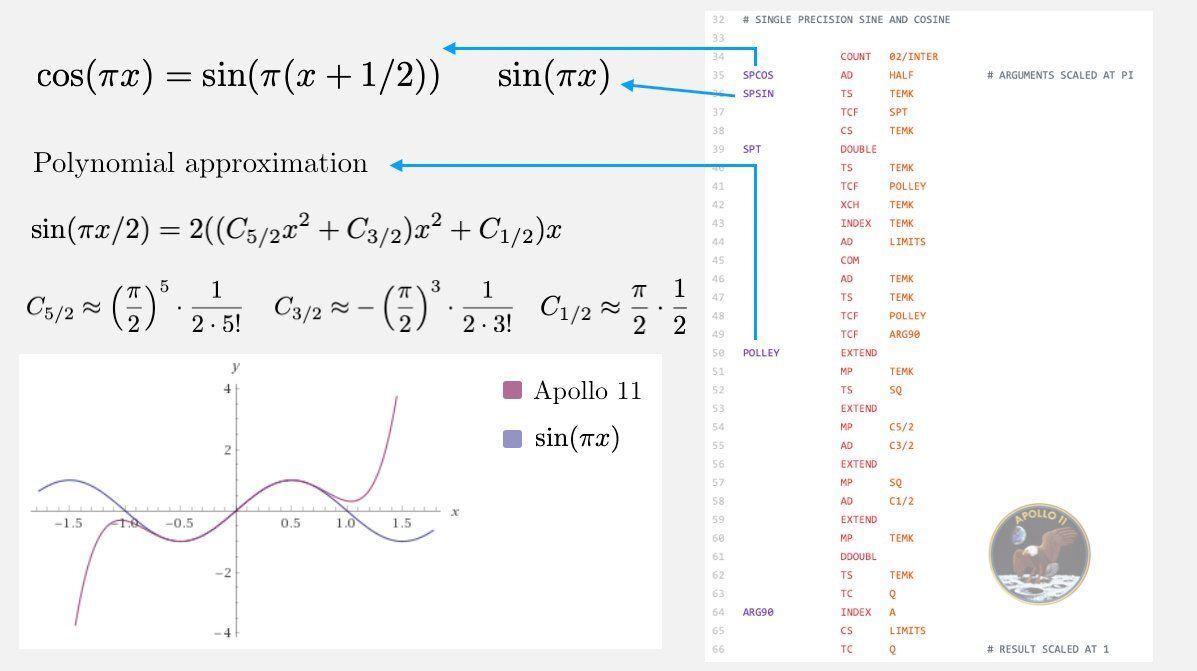
In 1969 Apollo 11, the spaceflight that first landed humans on the Moon, used these 30 lines of code to calculate transcendental functions like sine and cosine essential for navigation.
Annotated code here: https://t.co/5cOQHlATbB
Carl Friedrich Gauss once noticed that when he counted his steps to school, the number was never exactly the same. Just a little off each time.
That small difference made him wonder: maybe nothing we measure is ever perfectly exact. No matter how careful we are, there’s always a tiny bit of error.
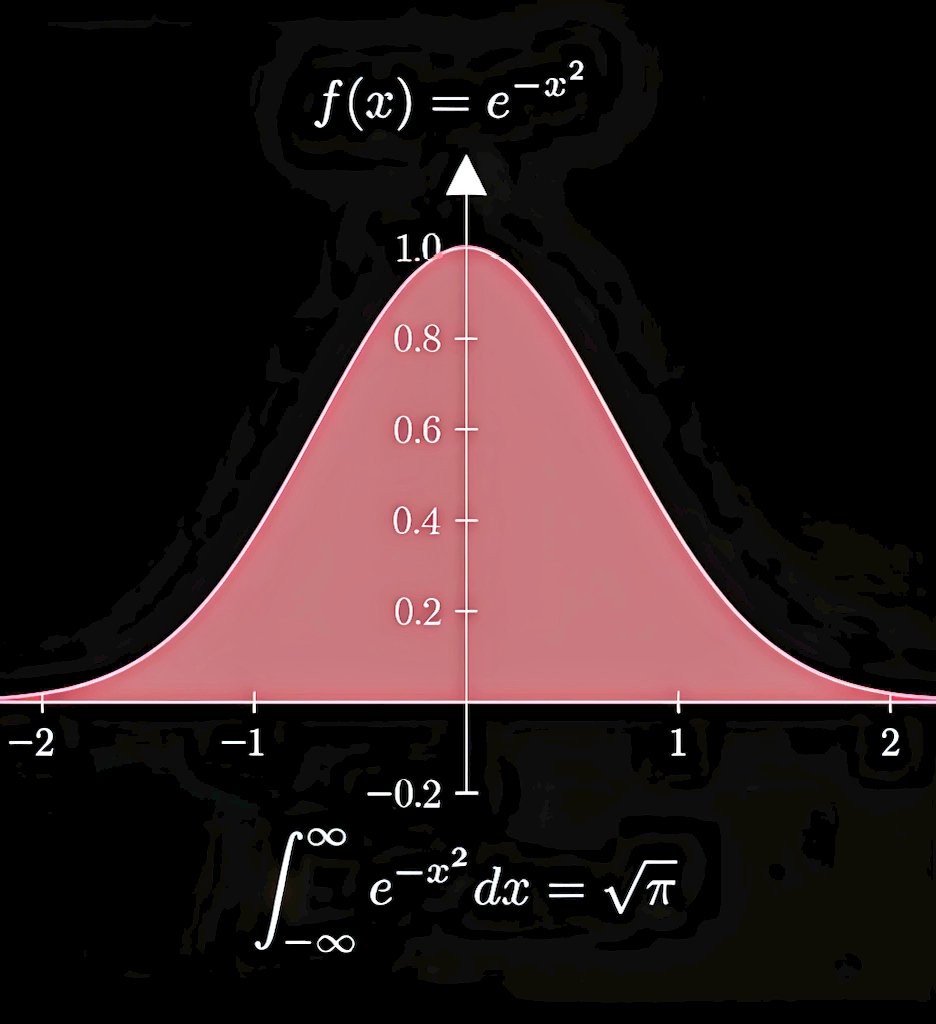
From that simple thought came a powerful idea—the normal (Gaussian) distribution, showing how most results gather around an average.
Newton, Leibniz, and Jakob Bernoulli all tried to solve this series.
They couldn’t.
Then in 1734, a 27-year-old Leonhard Euler stepped in and did something remarkable.
He showed that
1 + 1/4 + 1/9 + 1/16 + 1/25 + …
adds up to
π² / 6.
A problem about adding fractions unexpectedly revealed the number that governs circles.
One of the most beautiful surprises in mathematics.
In 1798, a scientist effectively “weighed” the Earth — without leaving his laboratory.
The English scientist Henry Cavendish designed an incredibly sensitive experiment.
Inside a quiet wooden shed, he hung a horizontal rod from a very thin wire. Two small lead spheres were attached to the ends of the rod.
Nearby, he placed two much larger lead balls.
Because of gravity, the large spheres slightly pulled the smaller ones. The force was extremely tiny — so small that the rod twisted by only a minute fraction of a degree.
Yet that tiny twist held a big secret.
By carefully measuring this small movement, Cavendish determined the strength of the gravitational attraction between objects.
From this, scientists could calculate the mass of the entire Earth.
His estimate was remarkably close.
Cavendish calculated Earth’s mass to be about 6 × 10²⁴ kilograms, while modern measurements give 5.97 × 10²⁴ kilograms.
Sometimes the biggest discoveries come from measuring the smallest forces.
Mathematics. Geometry.
Oscillatory Decent and rebirth. Cycling behavior.
n = 82; φ = 1.58
Graph created with the Graphing Calculator, used with permission from Desmos Studio PBC, https://t.co/sHQkB4kdyW
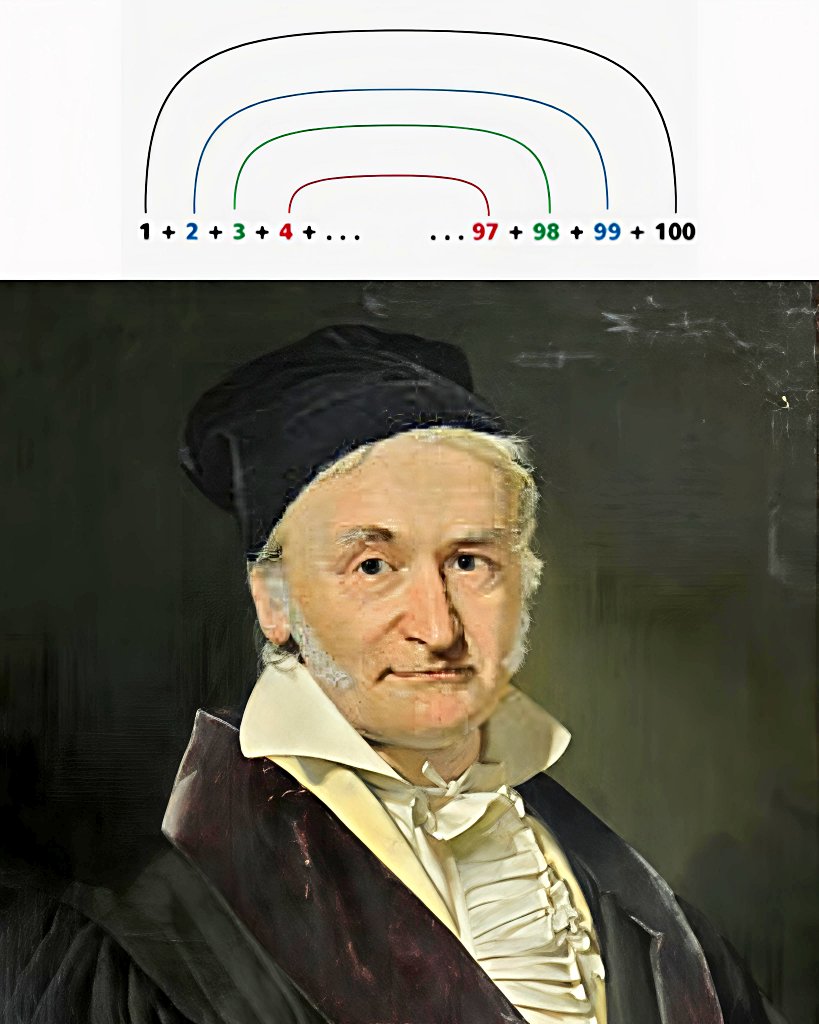
When Gauss was 10 years old and attending elementary school, his teacher asked the class to add all the numbers from 1 to 100.
A few moments later, young Gauss raised his hand and shouted out the answer, while the other students began tediously adding the numbers one by one.
How did he come up with the answer so fast?
Young Gauss realized that the sequence could be divided into pairs: the first number, 1, with the last number, 100; the second number, 2, with the second-to-last number, 99; and so on.
Each pair would sum to 101. Recognizing that there were 50 pairs in total, Gauss multiplied 50 by 101 to obtain the sum of the sequence. The result, 5050, popped into his head almost instantly.
At the turn of the 18th century, mathematics was exploding with new ideas.
Calculus had just been invented.
Guillaume de l’Hôpital was a wealthy French nobleman passionate about math, but not exactly a genius.
He hired one of the brightest young mathematicians of the time, Johann Bernoulli, as a personal tutor. Bernoulli was so talented that L’Hôpital made him an incredible offer: a yearly salary of 300 francs in exchange for every new discovery he made.
Yes, L’Hôpital bought theorems. Whenever Bernoulli found something new, he sent it to his employer.
In 1696, L’Hôpital published the first calculus textbook, Analyse des Infiniment Petits.
It introduced the famous L’Hôpital’s Rule, how to handle indeterminate limits like 0/0.
But here’s the twist: the rule, and much of the book, were actually written by Bernoulli. After L’Hôpital’s death, Bernoulli revealed the truth and showed the letters proving the arrangement.
Still, L’Hôpital’s name stayed attached to the rule—a reminder that sometimes in science, money buys fame.
Today, every calculus student learns L’Hôpital’s Rule, even if the real author was Johann Bernoulli.
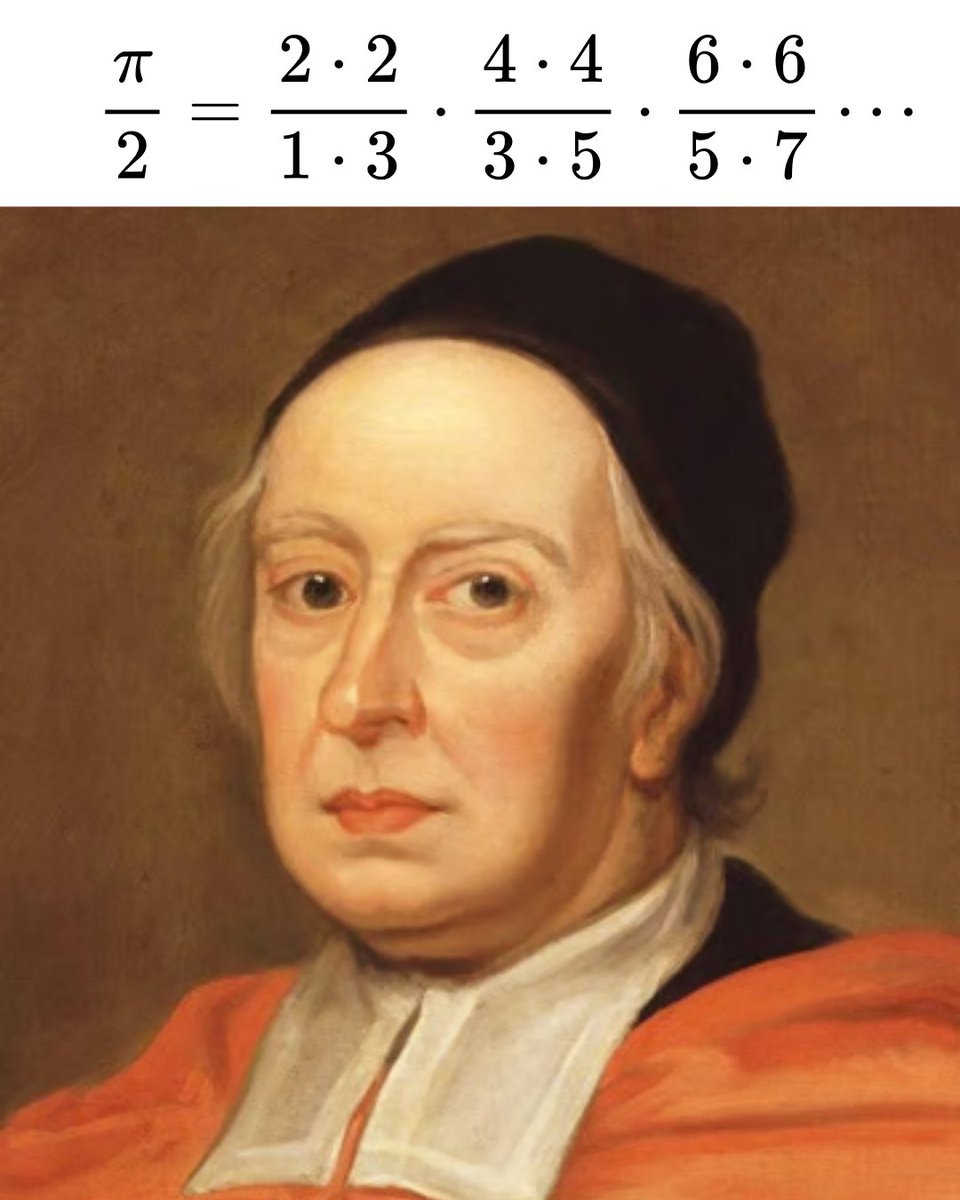
In 1655, the English mathematician John Wallis discovered a beautiful formula for π.
He showed that π can be written as an infinite product—a never-ending multiplication—of even numbers squared, each divided by the two odd numbers next to it.
This elegant pattern was one of the first times π was expressed using an infinite product, and it amazed mathematicians of his time.
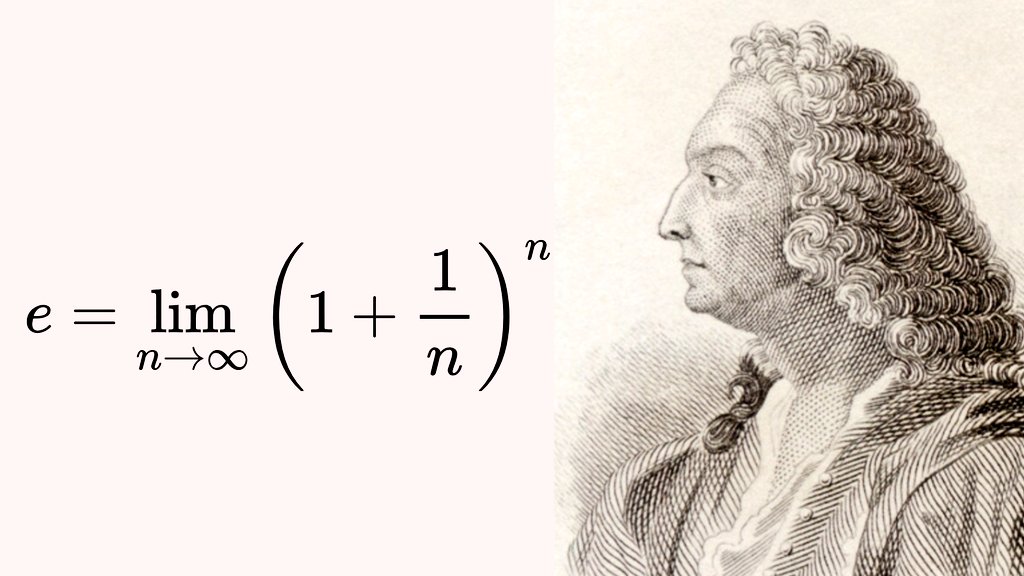
In 1683, Jacob Bernoulli discovered the constant e by studying a question about compound interest which required him to find the value of the following expression (which is in fact e):