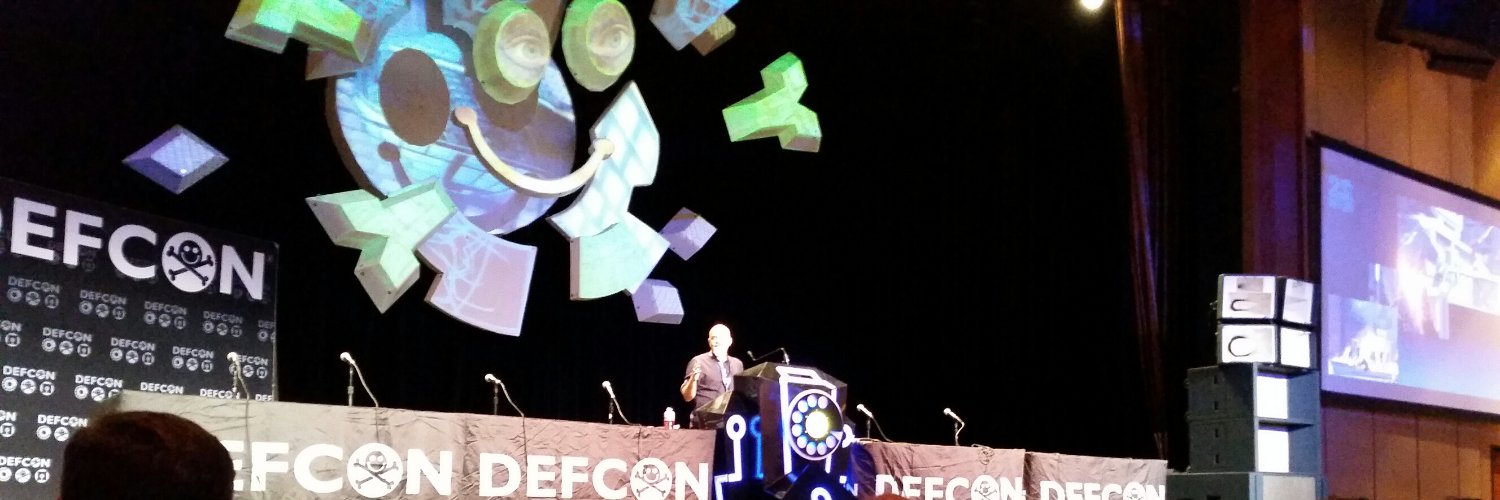
Is defense winning? How would we know if we are shifting advantages away from cyber adversaries to defenders?
This talk summarizes an initial framework and indicators to start answering the question.
https://t.co/o6YGTaQNFP
@philvenables In addition to SIPA's earlier work, with Trish Mosser and Katheryn Rosen, applying it to examine amplifiers and dampeners of cyber risk to financial stability!
https://t.co/wBLVDNyZpF
@philvenables Your recommendation to read Gall, back for the first NYCTF, stuck with me ... most recently leading to my applying the lessons of control theory to cyber escalation
https://t.co/Dpufxp4BtE
And that's a wrap! Congratulations to the Austin, TX, #Cyber912 winners Devil's Data Decryptors from @DukeU, runners up Cyber Super Girls from @Stanford, and 3rd place finishers Binary Bandits from @HQAirUniversity!
@C_Painter@jcanfil Glad you all connected here! Justin's research always struck me as more focused on the practice and results of actual diplomacy than broader IR...
Compete in #Cyber912 from anywhere in the world at our flagship competition in Washington DC! Last year a virtual team, Cornfidential 🌽 from @UofIllinois placed third after a challenging final round.
As crises and conflicts between cyber powers become more frequent, offensive cyber operations will continue to be used in surprising ways.
https://t.co/tKuXXJJnAe
My new piece @WarOnTheRocks - a framework to categorize and better understand the why, where, when of offensive cyber in warfare
https://t.co/N66jzr9JXU
The framework also highlights how much warfare drives innovation in cyber operations. When this research began in 2019, prior to Russia’s invasion, most of these cells would have been blank, just theoretical. No longer...
The venerable Summer Workshop on the Analysis of Military Operations and Strategy (SWAMOS), convened by @SIWPSColumbia, is now accepting applications for 2025. Further details in flyer
Inward-facing drivers of disharmony are internal to each regulator (like unique authorities or precedent).
Outward-facing more about the environment (such as tailoring risks to specific companies or sectors)
The inward-facing drivers pretty much always are negative, causing duplication & hurting security outcomes
Outward-facing often beneficial, leading to tailoring of controls to specific companies or sectors, or shifting risks