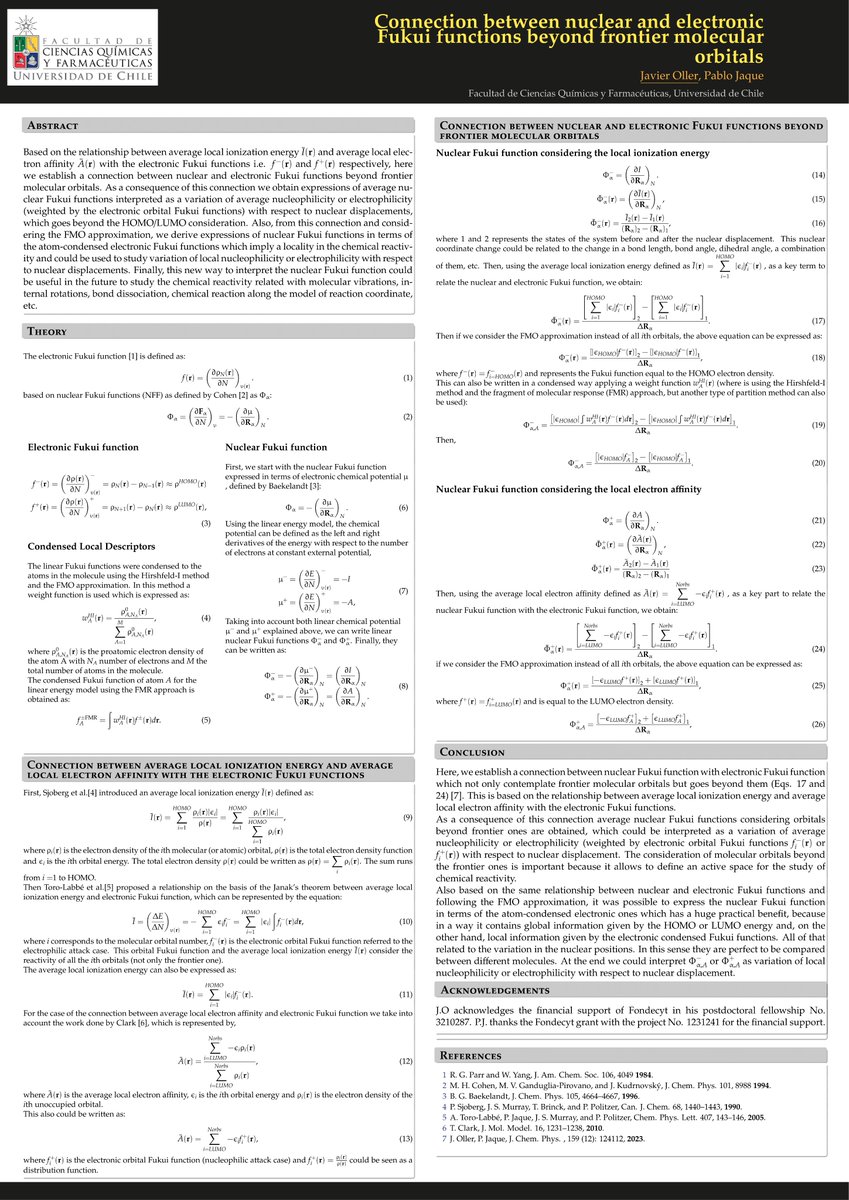
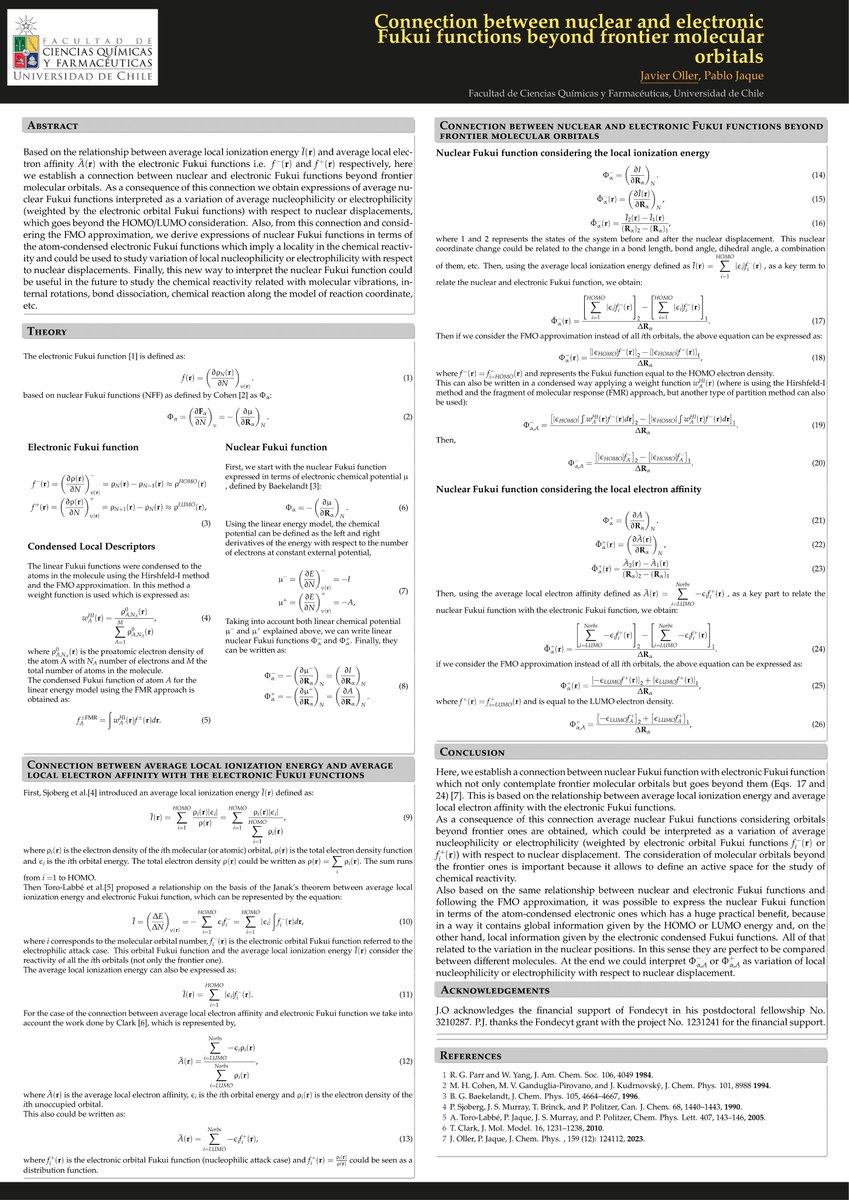
A statistical theory of reactivity based on molecular orbitals participation and its application to organic reactions - now published in Physical Chemistry Chemical Physics https://t.co/oYOCElYzi4 #compchem#chemistry#Science
A statistical theory of reactivity based on molecular orbitals participation and its application to organic reactions - now published in Physical Chemistry Chemical Physics https://t.co/oYOCElYzi4 #compchem#chemistry#Science
@henry_gonzalezr@LatinXChem@digital_rsc@PCCP@ChemRxiv@LufacIDT Gracias. Se consideran los núcleos con posiciones definidas. A partir de esta posición del núcleo/átomo (Ejemplo coordenada x,y,z ) se realiza un desplazamiento nuclear para obtener una nueva posición nuclear. Al final contemplo un estado antes y otro después del desplazamiento.
@lrincon66@LatinXChem@digital_rsc@PCCP@ChemRxiv@LufacIDT Thanks. For the Eqs. 20 and 26, you just need the LUMO or HOMO energies and the atom condensed Fukui functions. All of that considering a nuclear displacement (delta R) that could be for example related to a molecular vibration.
@GustavMondragon@LatinXChem@digital_rsc@PCCP@ChemRxiv@LufacIDT Thanks. We consider electronic orbital Fukui functions which are based on electron density. In the FMO case, they are equal to the HOMO or LUMO electron density. The basis set dependence could be present in the Eq. (24) due to the unnocupied molecular orbitals.
@Trujillo_Group @LatinXChem@digital_rsc@PCCP@ChemRxiv@LufacIDT Thanks . The evaluation of the nuclear Fukui functions depend on the orbitals energies and the electronic orbital Fukui functions from the system of study. And these properties depend on the position of the nucleus/atom considering the delta R.
Also could check the reference 7
@DptoExtranjeria Hola, me comunico con ustedes debido a que hace mas de 6 meses realice el pago de mi visa y hasta la fecha no he podido descargar el estampado electronico. Podrian ayudarme al respecto. Gracias.
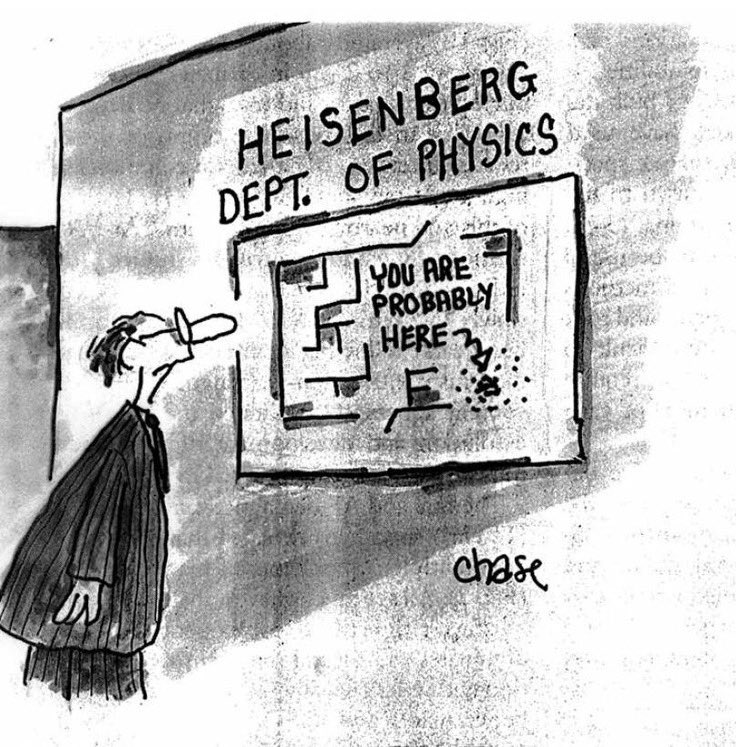
Rick Heller, my former colleague @HarvardCCB used to have this as Heller’s rule #1. “Most papers have no new good ideas. If you have more than one good new idea never stick them in a single paper, as people will never remember the paper for more than one of them” (paraphrasing)
Atom-Condensed Fukui Function in Condensed Phases and Biological Systems and Its Application to Enzymatic Fixation of Carbon Dioxide https://t.co/2lYhf2CVKA
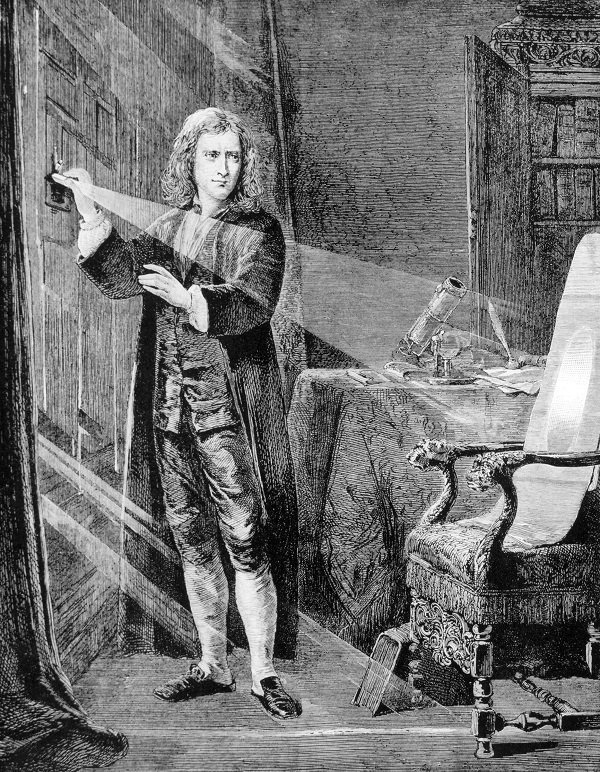
Happy Birthday to Sir Isaac Newton, born #onthisday (according to the Gregorian calendar) in 1643. Newton discovered the law of universal gravitation, the three laws of motion, is credited for co-developing calculus, and invented the first working reflecting telescope.
#OnThisDay in 1901, the first transatlantic wireless transmission, the letter 'S' in Morse code, is received by Guglielmo Marconi: https://t.co/Y4kjZ0n2yi
#OnThisDay in 1922, Albert Einstein was named the winner of the 1921 Nobel Prize in Physics. He won the prize 'for his services to theoretical physics, and especially for his discovery of the law of the photoelectric effect': https://t.co/HCC12qAY57