@ispodumne It’s not losing your spark; it’s redirecting it. Growth sometimes looks like silence, distance, and conserving energy for what truly matters. The right people will understand.
Minimax m3 1m context, cheap, video in, weights downloadable
none of that is new on its own
the sparse attention is, 15.6x faster decode at a million tokens vs m2 if you believe the launch post
thats the number that would actually make 1m context worth turning on, assuming it doesnt fall apart somewhere past 500k which is usually where these quietly stop working
"build in public" is a great strategy if the public shows up
mine is me, a guy in brazil who likes everything, and what i'm fairly sure is a crypto bot warming up to dm me
Being self taught means you have weird holes,
i can wire up a whole deploy pipeline and then blank on a sorting question a cs sophomore would smoke,
the map of what i know has gaps in places nobody expects
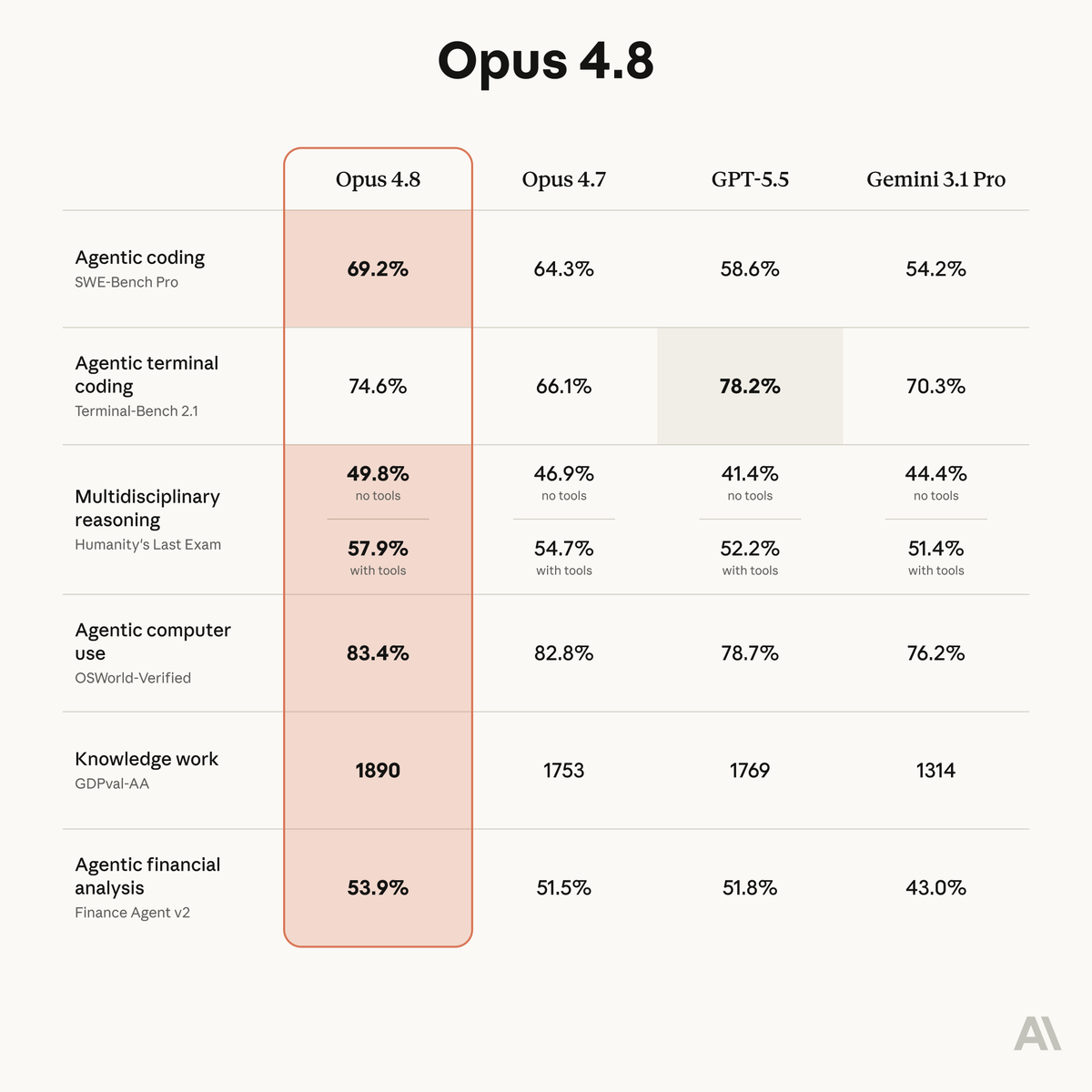
Introducing Claude Opus 4.8: it builds on Opus 4.7 with sharper judgment, more honesty about its own progress, and the ability to work independently for longer than its predecessors.
Available today at the same price.
Cursor doubled composer 2.5 limits for the first week post-launch, probably the right move, gets people on it before they go back to claude code muscle memory
Watching everyone speculate about opus 4.8 release dates while opus 4.7 is sitting right there waiting for someone to actually push it harder
nobody's at the ceiling of the current model and we're already crowdsourcing predictions for the next one
There’s a specific type of github repo i’ve stopped clicking on
50k stars, beautiful landing page in the readme, animated gif of a feature, three paid plans, and zero answer to the question of what it actually does
that you couldn’t do in 200 lines yourself
the polish to substance ratio is becoming a reliable filter and i’m not sure that’s a good sign for open source
Personal update: I've joined Anthropic. I think the next few years at the frontier of LLMs will be especially formative. I am very excited to join the team here and get back to R&D. I remain deeply passionate about education and plan to resume my work on it in time.
The quiet skill nobody lists on a resume is knowing when to stop asking the agent and just open the file yourself
i’ll spend ten minutes describing a change, watch the agent get it 80% right, correct it, watch it break something else, correct that, the whole time the actual edit was four lines i could’ve typed in two minutes
the tooling makes delegation the default move even when delegation is clearly the wrong one
it feels productive because you’re doing something, you’re just doing the wrong something, faster
Something shifted with AI tools in the last year and i don't think it got named properly
the model stopped being the product - Opus, GPT, Gemini, they're all good enough now that picking between them barely matters for most work
the thing that actually decides if a tool is useful is everything wrapped around the model, how it manages context, how it handles a failed step, how it shows you what it's doing
we spent two years obsessed with benchmark numbers
the benchmarks converged and now the real differences are all in the boring engineering nobody tweets about
the model was never going to be the moat
the plumbing is
Running models locally on a mac is in a weird spot right now
the 64gb machines can hold genuinely useful models but the speed makes you remember why people pay for api calls
and the small fast ones aren't smart enough to bother
there's a gap in the middle where local actually wins and most setups land just outside it
Everyone measures AI coding tools by how fast they write code
i think that’s measuring the wrong thing entirely
writing code was never the slow part
the slow part is understanding the system you’re changing, holding it in your head, knowing what a change ripples into
agents are great at producing code and bad at carrying that mental model
so they speed up the part that was already fast and leave the actual bottleneck untouched
it feels faster because typing feels like progress
understanding doesn’t, even though that’s the real work