@MartynovT1424 @KyleColeman@Outdoctrination Sunflower oil is vegetable oil is canola oil is rapeseed oil, all the same brand just called different things, America didn’t like the word rape-seed. UK based myself and sunflower oil wrecks my stomach same as any processed oil, cold pressed is the only way forward.
WHAT DOES THIS PAPER ON SUN & CANCER SHOW?
Oh nothing much except....
1. "regular sunlight/vitamin D "intake" inhibits growth of breast and colon cancer cells and is associated with substantial decreases in death rates from these cancers"
2. "sunlight has a paradoxical relationship with melanoma, in that severe sunburning initiates melanoma whereas long-term regular sun exposure inhibits melanoma"
3. "metabolites of vitamin D have induced leukemia and lymphoma cells to differentiate...and produced complete and partial clinical responses in lymphoma patients having high vitamin D metabolite receptor levels in tumor tissue"
4. "frequent regular sun exposure acts to cause cancers that have a 0.3% death rate with 2,000 U.S. fatalities per year and acts to prevent cancers that have death rates from 20-65% with 138,000 U.S. fatalities per year"
5. "the 17% increase in breast cancer incidence during the 1991-1992 year may be the result of the past decade of pervasive anti-sun advisories from respected authorities, coinciding with effective sunscreen availability"
6. "trends in the epidemiological literature suggest that approximately 30,000 U.S. cancer deaths yearly would be averted by the widespread public adoption of regular, moderate sunning"
And more but I'll stop now......
@vickanddave72 The bins are collected by @VeoliaUK, your ‘council’ has a contract with them, your ‘council’ receives money from them to collect your bins and recycling, which all goes to the same place and then burned and turned into green energy, and then sold back to the grid.
Fraud.
Salt
This is the most comprehensive Salt thread that has ever been published on this app.
This "Bible" has been crafted with days of work to explain all things salt, its many uses for humans, doctor's salt shortcomings, and so much more.
As promised:
🧂📖The Bible of Salt 📖🧂
(Bookmark this one)
⛏️🪨🧂
Table of Contents
Because of the length and complexity of this post, I am going to start with a table of contents so you know what you are getting into and, when you come back to reference the Bible of Salt, you can know how to jump to certain parts.
What is Salt?
The History of Salt
What Salt Does for the Human Body
What Doctors Have Wrong
Where Does Salt Come From?
The Different Types of Salt
What Salts are Best for What Uses?
Salt Brands Doing it Right
Concluding Thoughts
⛏️🪨🧂
What is Salt?
Salt, in its most basic form, is a mineral made up of primarily sodium chloride, but also contains many other minerals. In its natural form, it is known as halite or rock salt.
Asking what salt is is a bit of a loaded question. Throughout history, salt has been something to season food with, an agent to store food for an extended period of time, a currency, a natural skincare product, something to put on frozen roads, and far more. It is clear that salt is not just any single thing, so let’s dive into salt, because there is a lot to discuss.
⛏️🪨🧂
The History of Salt
Solnitsata translates to “salt works”
Solnitsata is known as the first city in Europe. It sat directly on a salt mine and provided the Balkans with salt since before 5400 BC. While many great European cities were built on ports or rivers to trade, being located on salt was even more important to the beginning of European civilization as we know it. Salt was essential to the start of modern Europe, but Europe is far from the beginning of salt.
We have found evidence that in 6050 BC Romania, the Neolithic people were boiling salt-laden spring water to extract the salt from it. You be the judge of whether it is correlation or causation, but I will just tell you that the Neolithic population boomed shortly after this production of salt began. Salt is a key to life and, with it, a larger population can thrive.
In ancient times, we hunted. Meat is higher in salt than food from plants, so as people began to rely more on agriculture after the agricultural revolution, it became essential to season foods with salt so that they could get the sodium in their body that their ancestors were used to getting from the meat they ate.
Not only was salt essential for those that struggled to get enough meat, but it also was essential for the carnivores. Before salt production was widespread, it was far harder to preserve meat, especially in warmer climates. People would have to feast on what they hunted because there wasn’t a great way to preserve that meat for later.
When salt was introduced, that all changed. Salt reduces the water activity of foods. We will get into this a little bit later, but water likes to move across cellular membranes to places of higher salt concentration because it wants to be in equilibrium. When meat is covered in salt, the water is drawn to the salt. Why is this important? Most microbial growth happens in places of unbound water so drawing the water out of the meat and into the salt allows the meat to stay more pure of this microbial growth.
This allowed meat to last far longer, leading to less waste, and less time hunting overall. Less time hunting meant more time to advance other areas of life. Salt was an unsung hero in our advancement.
Salt’s value became a worldwide phenomenon. From sealing agreements, to religious ceremonies, to “salting the earth” after a battle or when moving into a new place, salt’s uses were far and wide. It became so valuable that there is belief that many of Rome’s great roads were built so that they could import salt from foreign lands.
Many parts of the world started to see salt as so valuable that they even used it as literal currency. Instead of pulling coins or cash out of their pockets, it would be a bag of salt or coins made of salt.
In the Sahara from the 7th to the 14th century, there was a massive trade network that was primarily conducted for trading salt and gold. Sub-Saharan rulers, who had gold, valued salt so highly that they were willing to trade their gold for it. So, Mediterraneans decided that it would be worthwhile to give up their salt for this gold. Stop and think about that for a moment. Salt and gold holding similar value being the main drivers of a cross-continental trade network.
Salt and money were so similar at a time that even the word “salary” comes from the Latin word for salt.
Wars were fought over salt. Castles built for it. Many even say that Christopher Columbus’s voyage to the Americas was funded by salt production in Southern Spain.
Mahatma Ghandi even led roughly 100,000 protestors to make their own salt from the sea as a demonstration of their opposition to the colonial salt tax.
It is clear that salt has had many uses over the years and is intertwined closely with the world’s history but why? What does salt actually do for the human body that is so essential? 👇👇👇
⛏️🪨🧂
What Salt Does for the Human Body?
Short answer, almost everything. Long answer… well, here we go.
Most know that our body is made up mostly of water. If we don’t have enough water, we are dehydrated. And if we are dehydrated, nothing in our body works right. However, not everyone knows that salt is almost as important to our hydration as water. A diet of too much water and no salt will drown us. Salt regulation is essential.
When we go throughout our day, we lose water in various ways. In that water is not only water. We also lose salt and minerals. You can replace the water as much as you want but, unless you also replace the salt and minerals, you will not hydrate properly.
So what does our body actually do with the salt and minerals we take in? A lot of things.
When we exert energy in the form of walking, talking, jumping, lifting heavy things, or wrestling on the beach, we are primarily using glucose (sugars) to make our muscles fire. However, without sodium, this would not be possible. It is actually salt that facilitates the transfer of glucose into the muscles, allowing them to fire. Without salt, glucose loses much of its function.
Next is the nervous system. Sodium is essential for making sure our nerves are firing correctly. Without sodium, our nerves do not work how they should, resulting in deficiencies in strength and athleticism. This affects all nerves including our biggest neural network: the brain. Without salt, our body doesn’t function properly and neither does our mind.
The body also uses sodium to maintain fluid levels. The heart, liver, and kidneys need optimal fluid levels to function correctly. If there isn’t enough salt in the human body, these organs, and many others, start to lose their ability to function at an optimal level and at all because it is harder for your body to regulate the fluid levels in them.
While these are the main functions of salt in the human body, this is not an exhaustive list. The body also needs salt for many other reasons and, if there isn’t enough, we may experience:
-A blockage in the small intestine
-Diarrhea and vomiting
-An under-active thyroid
-Heart failure
-Drinking too much water
-Burns
-Brain activity reducing
-Muscular twitches
-Seizures
-Death
It is clear that salt is essential to our survival and performance, so why is it that doctors love to prescribe a low sodium diet?
⛏️🪨🧂
What Doctors Have Wrong?
Let me premise this by telling you that this is not medical advice and I am not telling you to ignore your doctor.
Too much salt has been linked to health problems such as osteoporosis, kidney disease, and hypertension, which can lead to stroke and death. (I am not quite sure if this is correlation or causation and some actually believe that eating more salt can help with hypertension. Once again, I am not a doctor and this is not medical advice.)
For this reason, many modern doctors have been taught to prescribe their patients a low-sodium diet. This may reduce the likelihood of this catastrophic even, but it is not the best way to do so, in my opinion.
As we learned last section, lowering your sodium will result decreased muscular performance, decreased nerve firing, possible fluid issues, and a variety of other possible issues. But too high of sodium levels are also a risk of death, among other things.
So what is the solution? The solution, in my mind, as it is with almost everything else in life, is to listen to your body. Our body is built to regulate the amount of sodium that it contains. If levels are too high, our body gets signals that we are thirsty and we drink water. The kidneys also will start to process getting rid of the excess salt and minerals.
This is a magical system that is set up to keep the salt contents in our body in an equilibrium and keep us functioning at the highest level possible.
Salt and water are a balance in our body. Eat naturally and listen to your body. It will tell you which way you are imbalanced and how to change that imbalance. Either eat salt or drink water, one of the two should fix it.
Now this is getting to theorizing but my personal belief is that those with high sodium have it because of processed foods. If sodium comes in very complex processed forms that our body is not used to (ie cold cuts, chips, crackers, basically anything processed that is high in sodium), I believe that it is harder for our body to recognize that sodium. Therefore, it is harder for our body to tell our brain that we need more water and need to flush that sodium out of our system.
So the way I see it, we have two different choices.
1. We can take our health into our own hands and, while we are still young, eat a diet that has real foods that our body knows how to handle, exercise sufficiently to get out excess sodium through sweat and muscular firing, and consume very high quality salt. This will allow our body to get the sodium it needs without confusing it into having too much sodium and not giving it a way to get it out.
2. We can eat processed garbage and not exercise while we are young and then, when we get old, we have almost no choice but to listen to the doctor (who is doing their best to help us), and reduce our sodium intake and, therefore, our athleticism, strength, and neural functioning.
I believe that salt regulation could have a significant amount to do with how we age and how our body ages along with us. Doctors often do a great job of managing symptoms later in life but let’s do our best to not get to the point of having those symptoms in the first place.
⛏️🪨🧂
Common Problems with Modern Salt
Microplastics
One of the main problems with Salt in modern times is that much of it is contaminated with microplastics.
Because of the processing that goes on with salt production, where the salt comes from, and the packaging that salt comes in, there are a lot of parts of the chain of salt production that can result in a significant portion of microplastics.
Research from South Korea has recently come out saying that about 90% of sea salt has microplastics in it. There are, however, some strategies to avoid salts with microplastics that I will touch on next section, which is about the different types of salt.
Heavy Metals
The next problem with many modern salts is the significant amount of heavy metals involved. In a recent a by Mamavation, there were 23 salt brands sent to an EPA certified laboratory to test for heavy metals.
-Aluminum was found in 78%
-Arsenic was found in 100%
-Cadmium was found in 70%
-Lead was found in 96%
This is all significant and concerning because we do not want large amounts of these heavy metals in our body. The type of salt does not seem to matter as much as the brand does when trying to reduce heavy metals, so I will touch on this more later.
Overprocessing
The final very prevalent issue with salt in our modern time is overprocessing. Some brands try to remove the good minerals that salt naturally has and our body needs. This one is again, avoidable, depending on the brand.
⛏️🪨🧂
What are the Different Ways to Produce Salt?
There are two main traditional methods used to produce salt, and different types of salt that come along with them.
Solar Evaporation Method
This is the oldest method of salt production. Likely how salt was first noticed was by people who saw it trapped in pools of water off of the ocean or salt water streams and lakes. This water then evaporated by the sun over time to reveal the salt that was left over.
This works best in climates that do not rain too much and are dry with some winds. This salt was traditionally harvested by hand with tools to spread it, shovels, and buckets. Now, most big companies use mechanical machinery to extract the salt from the dried up pools, often using other machinery with filters to remove impurities.
This process used to work perfectly with sea water, but now a lot of sea water is polluted with microplastics, among other things. To get near-perfect salt from this method, you need remote sea water or water from untouched springs. Some companies have also capitalized on finding sea beds that have previously dried up before microplastic pollution became a problem. They are then able to gather that microplastic-free salt which should, in theory, not be contaminated.
The other way to avoid the microplastics of the sea would be to use salt harvested from mining rock.
Rock Mining Method
Mining for salt is similar to coal due to it appearing in veins. Miners go into the earth and use tools to extract the salt from the mine. This process is about as simple as it seems, though, as time has gone on, machinery has started to play a bigger role in rock mining.
Studies have claimed that rock salt is more nutrient dense, but studies have also claimed that rock salt is higher in heavy metals. When you see the colorful salts, they often have some sort of metal in it making it colored that way. For example, pink Himalayan salt gets its color from traces of magnesium, iron, potassium and zinc.
One other potential problem with rock salt is that it is slightly harder to digest due to its harder, denser nature. I think of sea or spring salt as light and fluffy because of the way that it is extracted. However, rock salts are often denser because they are compressed underground for thousands of years before being extracted. This density makes it harder to dissolve and, therefore, takes a little longer to digest.
I will get into what brands of salts I believe are best towards the end.
⛏️🪨🧂
What Salts are Best for What Uses?
Table Salt
Table salt is exactly what it sounds like. Nothing special, gets the job done alright as long as it comes from a relatively clean source. Has iodide added for thyroid reasons which I did some research on and does not seem to have any harmful effects. Good for brain and bone growth during pregnancy and infancy. With that said, it is relatively stripped down compared to other salts that have a full mineral profile.
Kosher Salt
Kosher is the most versatile salt for cooking. It has a little bit less salty of a taste than table salt and has larger flakes. Because of this lighter and flakier nature, they dissolve a little bit faster so you will taste it a little bit sooner. If you are cooking with a heavier Kosher salt like Morton’s, give it a minute to dissolve in when tasting for saltiness because it takes longer to dissolve than the lighter flakey variety.
Sea Salt
Sea salt comes from evaporated sea water and, for that reason, contains 60+ different trace minerals that are quite good for us. However, because it comes from the ocean, there is sometimes significant microplastic pollution so that is something to watch out for.
Sea salt can come for a large variety of different salts so I will break down a few of them for you.
-Fleur De Sel: Originating off the coast of France where it is harvested from saltwater ponds, this is not your typical cooking salt. It is of the flakier variety with a nice crunch and can often be used as a finishing salt for salads or baked goods.
-Sel Gris: Sel gris, or Celtic sea salt, is greyish and fluffier but, instead of coming from sea water, it comes from sea foam. This gives it a light and fluffy taste. It’s naturally balanced minerals and chunky nature make it great for seasoning meats and pickling.
Pink Salt
Pink salt is not a sea salt but is, instead, a mined salt that comes from the Himalayas. It is pink in nature due to the content of iron and zinc and has a strong flavor. Because it is mined, it is denser than most sea salt so it packs a punch and not as much is necessary. The big appeal here is the beauty in the pink.
Black Salt
Black salt is also from the Himalayas, usually Pakistan. It is rich in iron, magnesium, calcium, and other trace elements. It has more of a pungent taste and is popular in stronger dishes like curry.
Red Salt
Red salt is made from ground up volcanic clay in Hawaii and is rich in iron oxide among many other minerals. It has a mild and delicate flavor that is great for preserving meats and fish and also adds a pop of color to finish any sort of dish.
Black Lava Salt
Black lava salt is from both Hawaii and Cyprus where it is combined with activated charcoal (Activated charcoal has many benefits which I will touch on in a later post). This salt is great for digestion and drizzling on foods and has uses for flavoring and decoration.
⛏️🪨🧂
Salt Brands Doing it Best
Vera Salt (@VeraSaltCo)
Vera Salt, made by @JulianaLung, is one of the best salt brands on the market, in my opinion. Juliana and Rob worked hard to find one of the purest sources of salt in the world and ended up using a Spanish spring, harvesting their salt using traditional methods. This spring is incredibly pure and Vera can proudly claim some of the cleanest salt in the world without microplastic pollution. This stuff tastes absolutely delicious on meat or whatever else you may want it on.
Redmond Real Salt (@redmondrealsalt)
Redmond’s ancient sea salt is exactly that. Salt from an ancient, dried up, underground sea, Redmond’s salt is completely unrefined. The “ancient” aspect of the sea has prevented it from getting polluted with microplastics of the modern ocean. It is filled with all the minerals that we need, is beautiful looking, and even has a little sweet hint of taste that I have yet to find in other salts.
As of now, these are the only two products that I can endorse and put my word out there behind. I am certain that there are other salts out there that are up to my standards, but I have not tried and read up enough on other brands to recommend them.
In general, just make sure you are doing the research on the salts that you are trying and know that they have a great mineral profile and are microplastic free. I am always looking to learn so please let me know in the comments or DM me if you have other favorite salt brands that you trust.
⛏️🪨🧂
Concluding Thoughts
In the end, there is a lot to digest about salt. Salt is a necessity for life, a beautiful rock, a simple mineral, and so much more. I recommend finding very high quality salt to consume and trying to get most of your sodium from real salt and not processed foods.
I hope that this Salt Bible was able to provide significant value to you and, if you have any questions or anything that I may have missed, feel free to comment or DM me to let me know.
I appreciate all of you who read to this point (and even those of you who didn’t) and it would mean the world to me if you reposted this and shared it with your friends to learn about this essential mineral.
If you enjoyed, following along @realpungao would help me immensely to continue building this community!
Thank you to everyone and I hope you now feel like you have a grasp on salt!
(this is not medical advice and I am not a doctor)
⛏️🪨🧂
@MattGubba The bins are all done via the company @VeoliaUK who has a contract with your local ‘council’ who then actually makes profit from selling your waste to them(do a foi request) it then gets burned and turned into energy and sold back to the grid.
It’s called fraud.
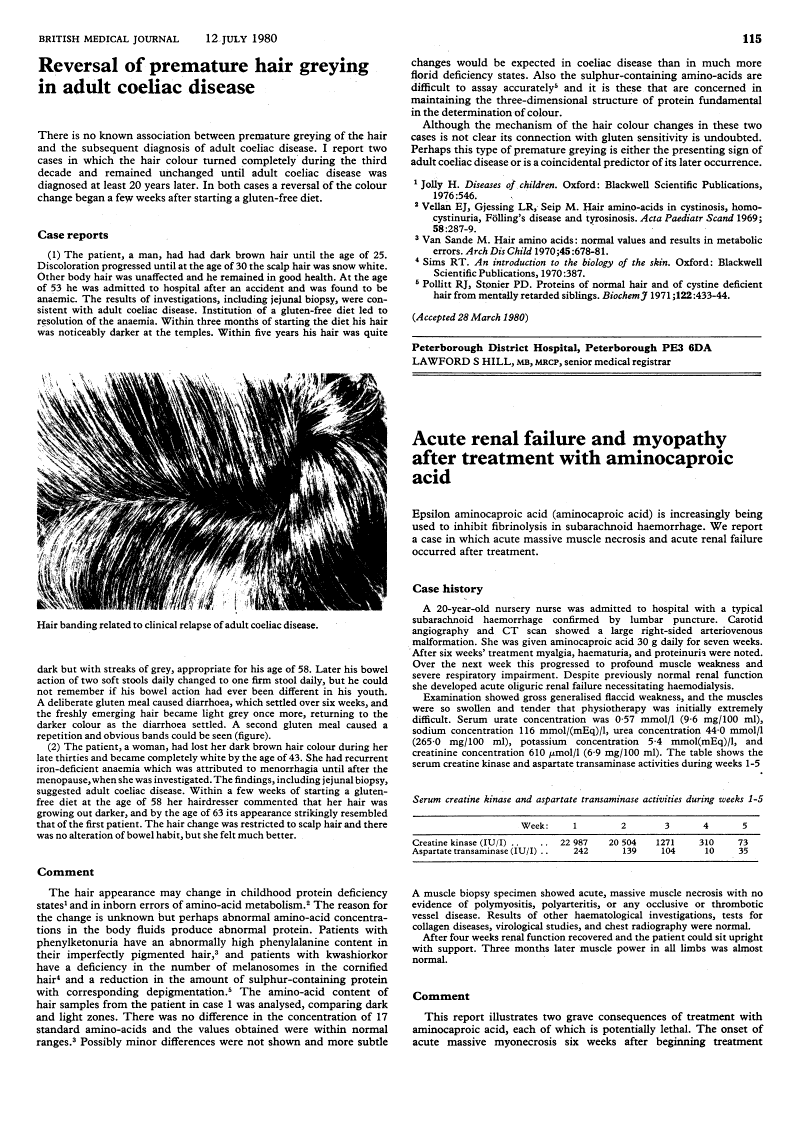
If you have premature grey hair, chronic migraines, fatigue, joint pain: I would look into "gluten/grains" as a root cause.
As many case reports show: a complete reversal to natural hair color was achieved once gluten removed.