Most people never get to see inside this church. St Mary the Virgin, Marholm is usually locked, but its stunning medieval interior is well worth discovering.
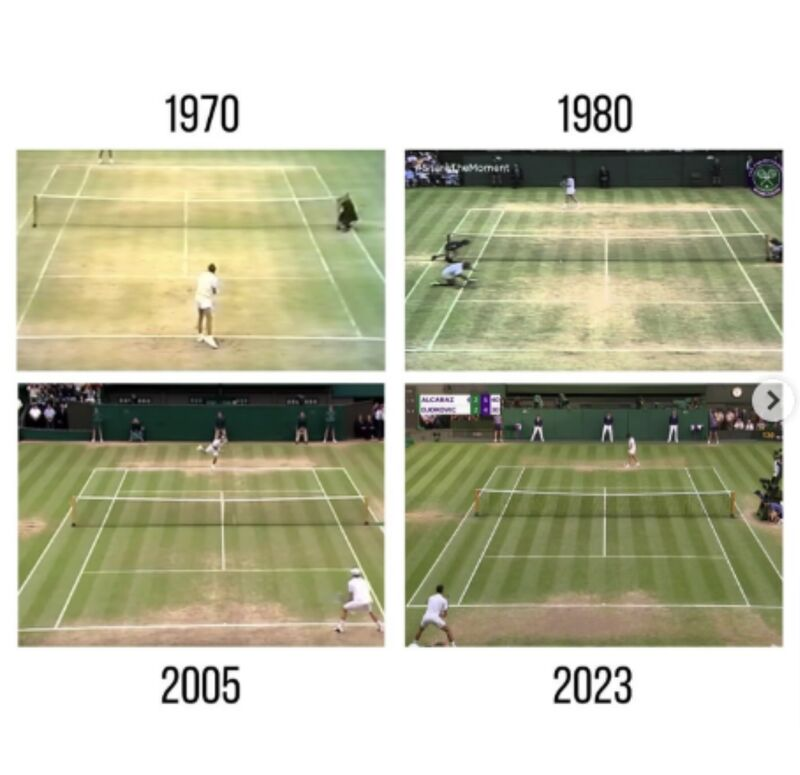
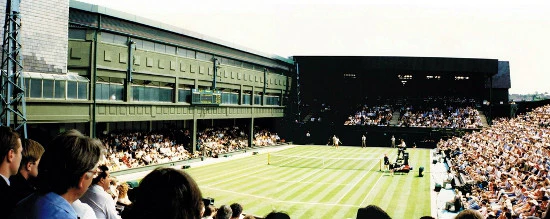
The grass on Center Court at Wimbledon over the decades shows a change in the wear patterns. This transformation is not the result of new, more resilient turf or grounds keeping technologies, but due to changing racket technology.
In the era of wooden rackets, the heavy weight of the racket resulted in a "serve and volley" game. Given the impossibility of finishing a point from the back of the court, players resorted to volleying to win points at the net.
With the shift from wooden rackets to modern materials, the game moved towards powerful baseline play. Today's players are taller, hit hard from both sides, serve aggressively, and finish points predominantly from the back of the court.
Dec. 25, 1776.
The American Revolution was on life support.
Six days before Washington crossed the Delaware, he wrote his brother a private letter.
"I think the game is pretty near up."
His army had shrunk from 16,000 men to under 3,000. Soldiers were deserting by the day. Enlistments expired January 1st. Congress had already fled Philadelphia.
The commander of the Continental Army wrote that the Revolution was finished.
Six days later he crossed an ice-choked river in a nor'easter with 3,000 exhausted men, marched nine miles through the storm, and attacked the most feared soldiers in the world before dawn.
At least two of his men died from exposure before they ever reached the battle. A cemetery near the crossing site still marks where they rest.
The plaque doesn't give their names, just "sickness and exposure." America's first unknown soldiers, 161 years before Arlington got its guard.
Washington chose a password for that night that said it all: "Victory or Death."
Our first president's tenacity built the country. It's still the most American thing there is.
Follow us on X: @Pastpassport
Substack: https://t.co/kGKdHJtOX4
Full story:
https://t.co/J7YRIJtJUl
In September of 1814, America was once again in trouble.
The young republic was only thirty-eight years old. The War of 1812 had gone badly. British troops had marched into Washington, burned the Capitol, set the White House ablaze, and now turned their sights toward Baltimore. If Fort McHenry fell, the harbor would be open, the city would likely follow, and another devastating blow would be dealt to the fragile nation.
Amid this uncertainty, a young American lawyer named Francis Scott Key sailed under a flag of truce to the British fleet. He had come to negotiate the release of a friend, a physician the British had captured.
He succeeded.
The British agreed to free the doctor.
But there was a catch.
Because Key and his companions had seen too much of the British fleet and learned too much about its plans, they were not allowed to return to shore. Instead, they were detained aboard a ship in the harbor and forced to watch the coming battle from behind enemy lines.
On the morning of September 13, the bombardment began.
For the next twenty-five hours, British warships unleashed somewhere between 1,500 and 1,800 bombs and rockets upon Fort McHenry. These were the “bombs bursting in air” and the “rockets’ red glare” of the song—not poetic embellishments, but terrible realities.
Key stood on the deck through the endless day and the long, terrifying night. Every explosion lit the darkness for a fleeting instant before the smoke swallowed everything again. Somewhere beyond that wall of fire stood the fort. Somewhere beyond it flew an American flag if it still flew at all.
He could not see.
He could only listen.
As long as the guns continued firing, there was reason to hope. The British would not waste ammunition on a fort that had already surrendered.
Then, just before dawn…
The guns fell silent.
For the first time all night, there was only stillness.
It was the most frightening sound of all.
Had the fort finally fallen? Had the defenders surrendered? Had the flag been torn down in the darkness while no one could see?
There was nothing to do but wait.
As the first light of September 14 slowly pushed back the smoke, Francis Scott Key strained his eyes toward the distant fort.
Then he saw it. Not a British flag.
The American flag. Still there. Still flying.
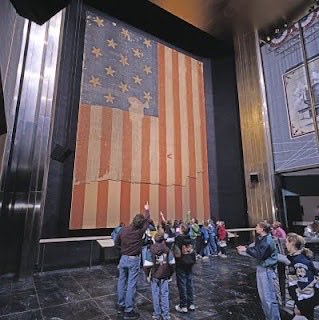
That flag was no ordinary banner. Months earlier, the fort’s commander had commissioned a Baltimore flagmaker, Mary Pickersgill, to sew a flag so enormous “that the British would have no difficulty seeing it from a distance.” It measured roughly thirty by forty-two feet, carried fifteen stars and fifteen stripes, and was so large it had to be assembled on the floor of a brewery because no ordinary room could contain it.
That was the Star-Spangled Banner.
The very flag Key saw through the morning mist.
The very flag that still survives today in the Smithsonian.
Overcome by what he had witnessed, Key reached into his pocket, pulled out an envelope, and began writing. The words came from a heart that had spent an entire night fearing his country might disappear with the dawn.
He first titled the poem Defence of Fort M’Henry.
Within days it was printed and circulating throughout the country. Before long, people began singing it to a melody they already knew—an old British tune called “To Anacreon in Heaven,” originally written for a London social club. There is something beautifully ironic in that: America’s most beloved patriotic song borrowed the melody of the very nation it had just survived. It also explains why the anthem is so notoriously difficult to sing. It was never written for ordinary voices gathered in stadiums or school assemblies.
The song spread quickly and became one of America’s favorite patriotic hymns, but it would wait more than a century before receiving official recognition. Not until 1931 did Congress declare “The Star-Spangled Banner” the national anthem of the United States.
A look at the old No. 1 Court at Wimbledon
It was attached to the west side of Center Court. Built in 1924, it was used in 67 Wimbledon Championships.
It was replaced by the current No. 1 Court in 1997.
Full Claude Course
Master Claude to automate repetitive tasks, build apps without coding, create real portfolio projects, and become more valuable at work.
WARNING: once your culture is gone, it's gone forever.
That's why we started a book club dedicated to the greatest texts ever produced by Western Civilization.
Every month, we study a new great work from the Western canon. So far, we've covered works like Augustine's Confessions, Dante's Inferno, The Count of Monte Cristo, Don Quixote, etc...
Western Civilization has given us the greatest books ever written, but it takes effort to read them, and even more to read them well. Thats what we're doing here, slowly, in dialogue with each other.
If you'd like to be part of this, join our reading group. We meet biweekly via Zoom/S*bstack.
We're about to finish Aristotle's Nicomachean Ethics and will be voting on the next book very soon.
To support us, please consider a paid subscription. It makes a HUGE difference to the time and resources we can dedicate to this project.
You'll get:
- Live book club discussions (biweekly)
- Access to our incredible community chat
- Essays to guide you through the Great Books
- All past recordings, essays, and podcasts
- Ability to vote on what we read next...
https://t.co/efQaicNvay
Welcome!
Renoir painted happiness... in the middle of war, hunger and chaos.
In 1870, the Franco-Prussian War began.
Renoir was called up to serve in the French Army.
In 1871, Paris descended into the Bloody Week.
Around 20,000 people were killed.
Food was scarce. The city was left in ruins.
So what did Renoir do?
He kept painting.
While many artists turned to scenes of suffering, he chose to paint life.
Dancing. Friends. Gardens.
Long lunches outdoors.
Not because he ignored reality.
But because he believed the world already had enough unpleasant things.
He once said:
"Why shouldn't art be pretty? There are enough unpleasant things in the world."
His paintings weren't an escape from reality.
They were a reminder that, even in the darkest times, there were still reasons to enjoy life.
The joy of living.
Were his critics right to call his work superficial?
Or were his admirers right to celebrate his joy of living?
Or does each of us simply choose how we respond to the world around us?
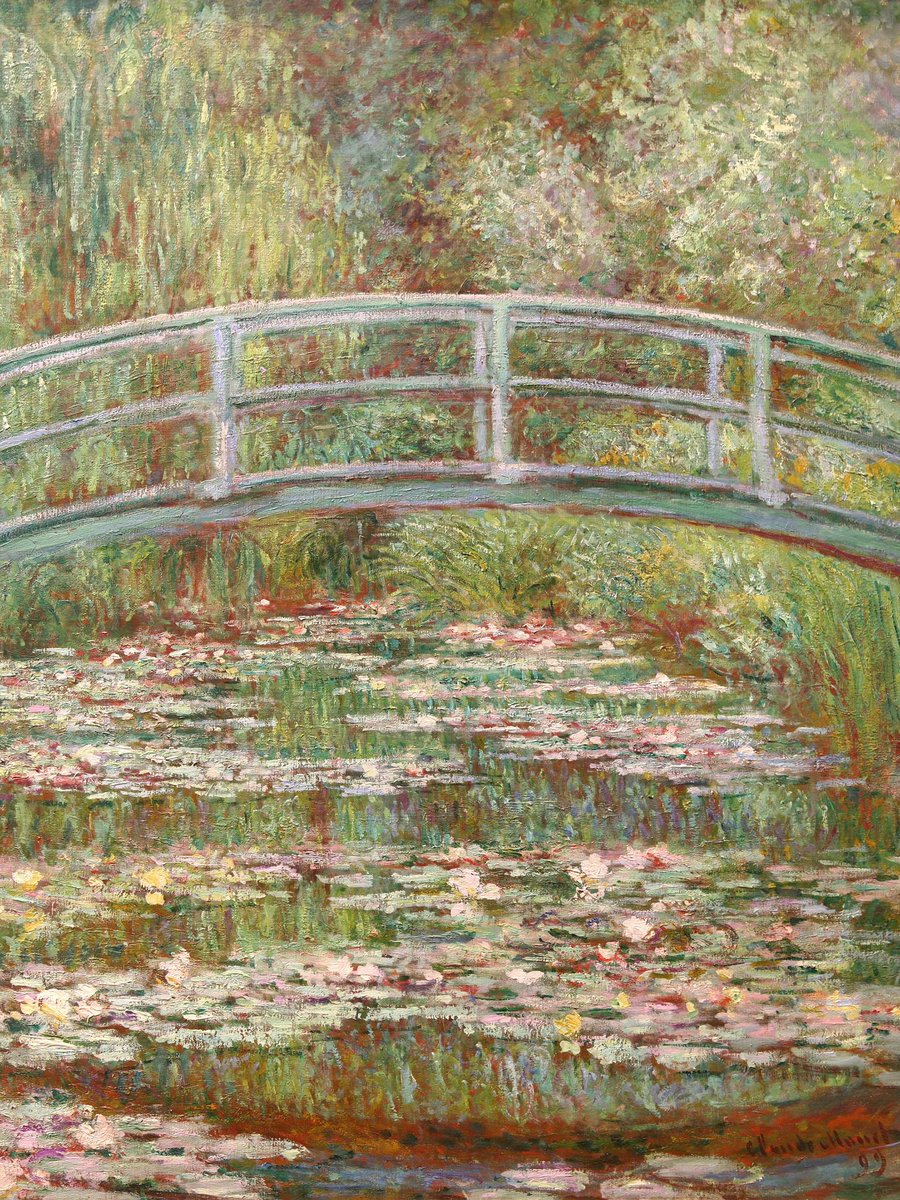
There are few places more peaceful than an English river in summer.
Willows trail their branches through slow water. Dragonflies skim the surface. Swallows dip low while trout wait beneath ribbons of waving weed.
Walk a little further and the river changes again.
Kingfishers flash past like blue sparks. Moorhens guide their chicks through the reeds. Centuries-old stone bridges overlook these timeless scenes, just as they have for generations.
These rivers have always been more than water.
They sustained farms and villages, shaped settlements, and were once honoured as sacred places where gifts were left for the gods.
Which makes it heartbreaking that so many are now polluted by sewage, agricultural run-off and neglect.
England’s rivers deserve better.
Follow @oaksandlions for more posts about England's landscapes and wildlife.
#England #EnglishCountryside #Rivers #Nature #EnglishWildlife
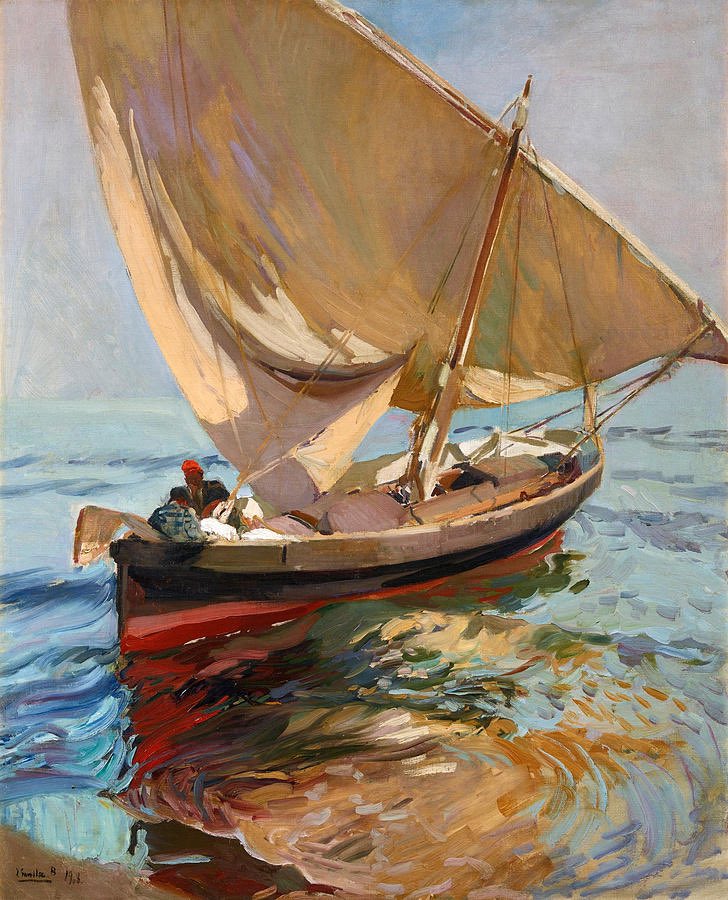
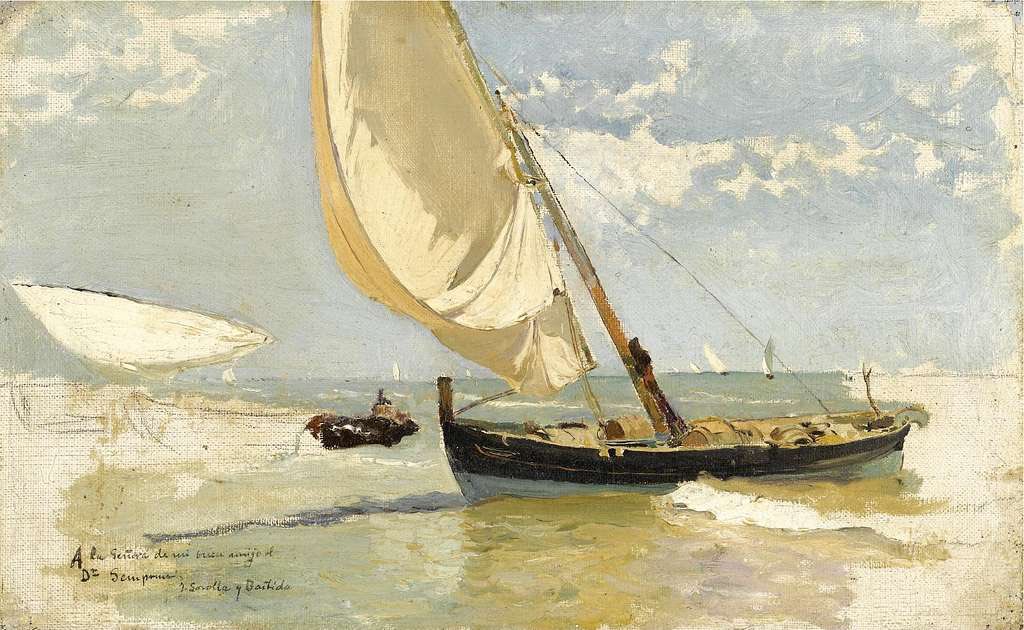
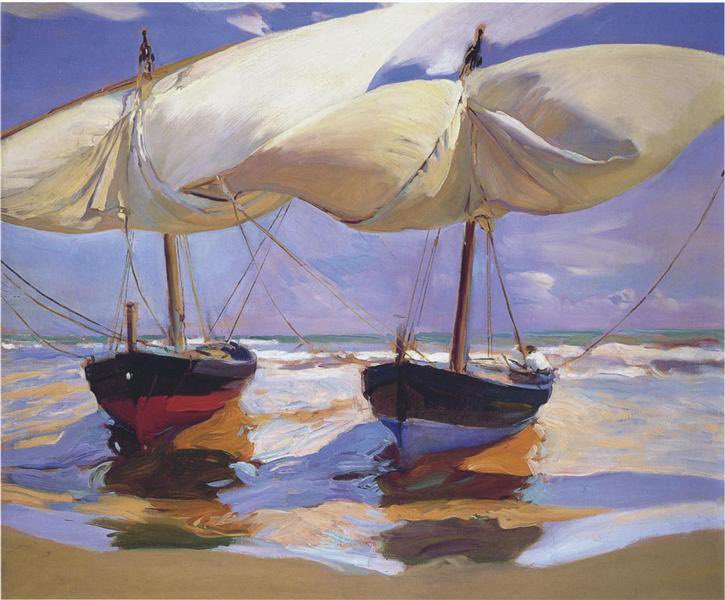
Je suis tout simplement fou des peintures de Sorolla, plus précisément celles de ses voiliers près de la plage. Un rêve d’évasion presque atteint et devenu réalité.
C’est le pic de ce que l’impression peut avoir comme impact sur moi. Le rêve et la passion.
The English word "window" literally means "wind eye."
It comes from the Old Norse word "vindauga":
vind = wind.
auga = eye.
In other words, a window is simply an eye for the wind.
The word arrived in England with the Vikings during the 9th and 10th centuries and gradually replaced the Old English word ēagþyrel, literally meaning "eye-hole."
Follow @oaksandlions for your daily dose of England's hidden gems.
#EnglishLanguage #EnglishHistory #OldEnglish #Vikings #DidYouKnow
This church tells the story of the rise and fall of the Black Douglases.
Built in the 14th century as their mausoleum, St Bride's Church still holds some of Scotland's finest medieval tombs.
The church you see is Victorian. The history beneath it is over 1,500 years old.
Luss Parish Church has been a place of Christian worship since the time of St Kessog, making it one of Scotland's oldest continuously sacred sites.
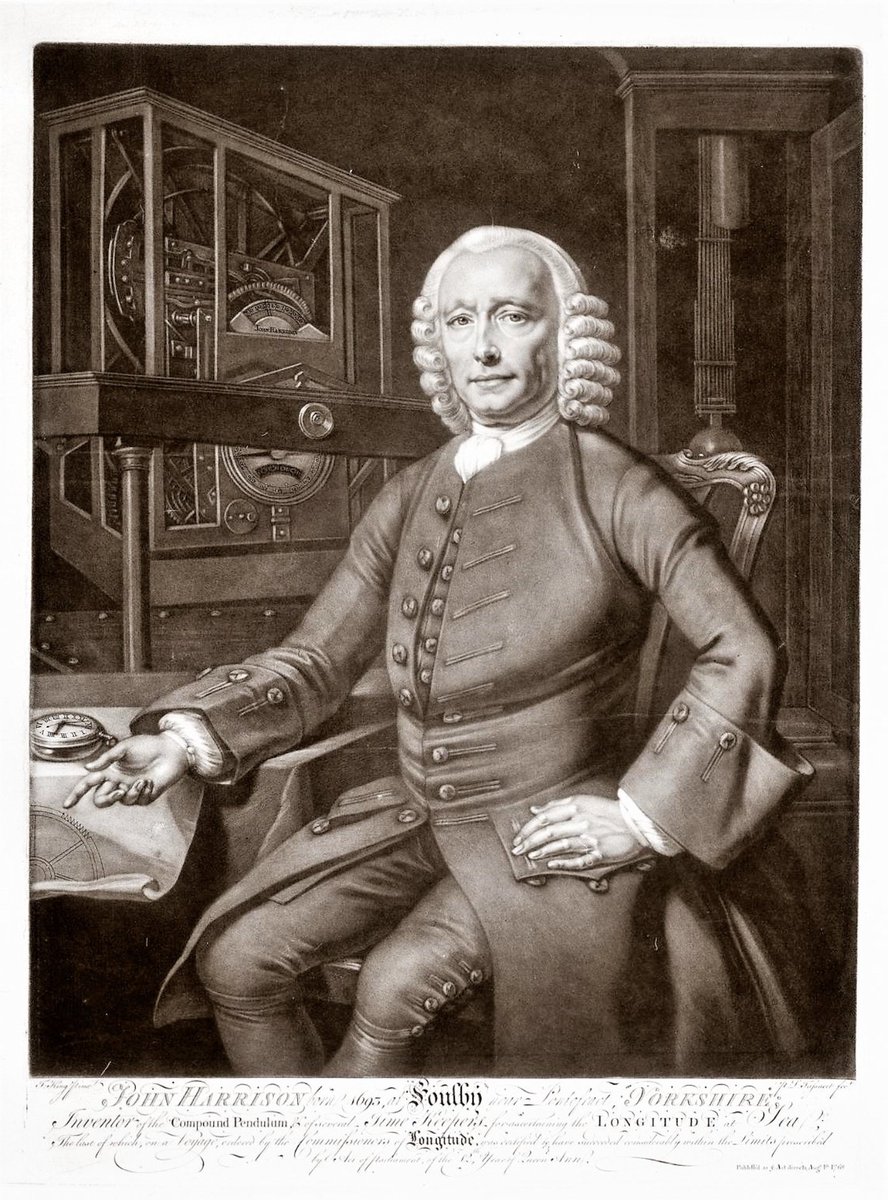
One of the greatest scientific breakthroughs in history came from an English carpenter who hardly anyone remembers.
For centuries, sailors could calculate their latitude, but accurately determining longitude at sea remained one of navigation's greatest unsolved problems.
Without knowing their longitude, captains often had no idea how far east or west they really were, leaving ships vulnerable to wrecks, starvation and disaster.
In 1714, Parliament passed the Longitude Act, offering a prize of up to £20,000 (worth several million pounds today) to anyone who could solve it.
The man who did wasn't a university professor or an astronomer.
He was John Harrison, a self-taught carpenter from Yorkshire.
After decades of work, Harrison's H4 marine timekeeper, completed in 1761, finally solved the longitude problem.
His invention transformed navigation, made ocean voyages far safer, strengthened global trade and helped the Royal Navy navigate with far greater confidence.
Today, John Harrison remains one of England's forgotten geniuses, yet his invention changed the world.
Had you heard of John Harrison and his extraordinary invention?
Follow @oaksandlions for more interesting posts like this.
#England #EnglishHistory #EnglishHeritage #Science