“If you bet on God and open yourself to his love, you lose nothing, even if you’re wrong. But if instead you bet there is no God, then you can lose it all, in this life and the life to come”- Pascal’s Wager
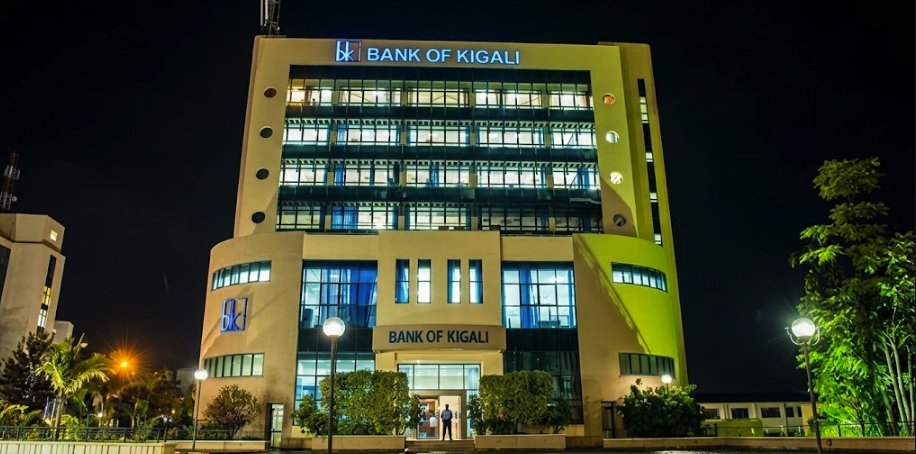
Bank of Kigali, Rwanda’s largest commercial bank, just became the first Rwandan lender to join China’s Cross-border Interbank Payment System (CIPS). With the move, the bank can settle transactions directly in yuan, reducing reliance on the US dollar for trade with China. OVER 67 African banks spanning 38 countries have joined the CIPS network through varying levels of participation.
CIPS completes cross-border yuan settlements in 300 milliseconds to 10 seconds, vastly outperforming SWIFT's 1 to 5 business days. Furthermore, its direct real-time clearing bypasses intermediate dollar conversions, cutting transaction costs by 95% to 98%.
I’m really jealous of our Rwandan neighbours. Everytime we seem like we are catching up with them, they do some wild stuff & jump straight back into a massive lead.
Now they’re revolutionizing their education by cutting classroom time by 2 whole hours each day. Originally, classes started at 8:30am and ran till 5:00pm. Now they’ll start at 8:30am and run till 3:30pm.
The goal is to reduce student fatigue & enable learners have time for sports, clubs, digital education, arts, music, community activities & other extracurricular programs that support holistic development.
From 8:30am to 3:30pm they’ll be in class and then after that they’ll focus on other disciplines till 5pm after which they’ll go home. On Friday, learners will go home at 3:30pm so that teachers can have time to plan for the next week’s programs.
Colleagues, I have to admit that our friends in 250 are doing something right. I’m officially jealous.
Minister @nsanzimanasabin and Minister @MusoniPaula hosted @BillGates at Rwanda’s National Health Intelligence Center (NHIC) to showcase how centralized, real-time data is transforming healthcare delivery across the country.
Since its launch, NHIC has unified national health data to shift public policy from reactive to proactive—delivering concrete impact across the entire care continuum by:
⏱️ Reducing patient wait times at health facilities;
🚑 Streamlining emergency dispatch and ambulance response times;
🛡️ Elevating disease surveillance and containment;
🎯 Optimizing targeted resource allocation.
Looking ahead, partnership with the @GatesFoundation will enable NHIC to scale its operations—expanding capabilities toward predictive health intelligence to anticipate outbreaks, issue intelligent early-warning alerts, and prevent health threats before they escalate.
By leveraging modern technologies and consolidating national health data, Rwanda continues to strengthen its ability to deliver high-quality, efficient, and responsive care for all.
Kigali - the cleanest city in the world - inspiring us all!
There is no city like Kigali, the capital of Rwanda 🇷🇼.
During my visit this week I didnt see one piece of garbage in the streets. Not the tiniest plastic product!!!!
Every single person riding a motorbike, even all passengers, wear helmet. We traveled fours hours by car to northeast Rwanda. There was not one pothole. Streets in Kigali have pavements.
This is what we may be used to expect in East Asia. But in Africa? A city of two million which is clean as a pristine mountain creek?
Added a city which its completely safe. A girl can walk any street at night without fear.
How did this miracle happen? Coming out of the horrible genocide of 1994, a new Rwanda was created. There is no rocket science. It’s about the brilliant leadership of President Paul Kagame and about the hard work and the discipline of the Rwandan people.
What is inspiring is this: If Rwanda can, all of Africa can.
If Rwanda can, all of the Global South can.
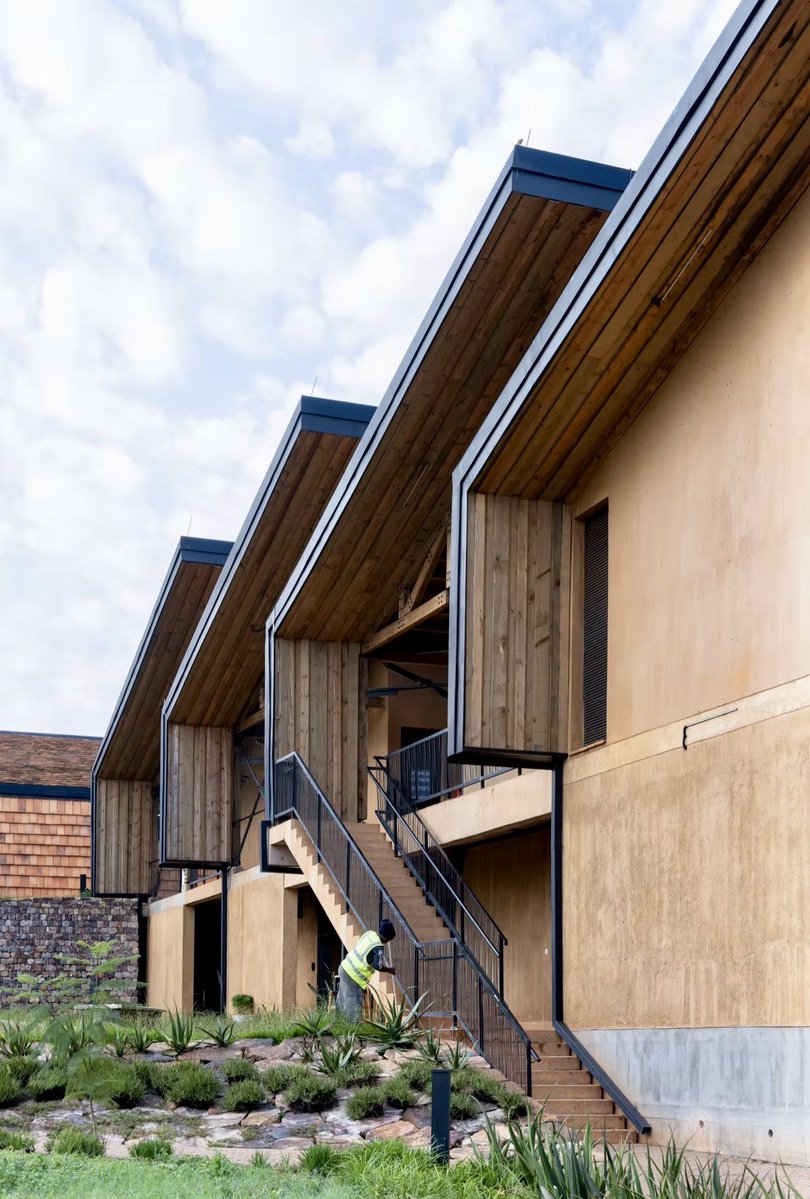
Six years ago, rammed earth was illegal to build with in Rwanda. Today it’s the primary material of a 69-building university campus built almost entirely by local hands.
96% of all construction materials sourced within Rwanda. Rammed earth, compressed earth blocks, locally quarried stone, terracotta roof tiles made from on-site soil and clay. The buildings were literally harvested from the ground they sit on.
One cooperative formed by workers trained in rammed-earth techniques during construction now carries that expertise to projects across Rwanda. The building didn’t just train students, it trained builders and changed the local construction economy.
Embodied carbon 60% below the global average for institutional buildings. Fully off-grid, powered by a 1.5MW solar array. Projected to become fully climate-positive by 2040, removing more carbon than was produced during its construction.
Earth blocks were actually illegal in Rwanda until 2019. MASS worked with the Government of Rwanda to write new standards and guidelines to legalize their use. They didn’t just build a campus, they changed national building policy.
This is what it looks like when architecture takes its responsibility seriously.
RICA, Rwanda Institute for Conservation Agriculture, Gashora, Rwanda by MASS Design Group.
📷 Iwan Baan
@NelsonGashagaza From what I understood,he did not said that the genocide was part of God’s plan.While God knows all things He may have foreseen that the genocide wld happen, but that does not mean He intended it. God does not desire harm for His;rather,such tragedies result from human choices.
I remember April 1994 as if it were yesterday.
This short testimony goes to the youth, but especially to those who dare to speak of a “double genocide.”
I was not hunted.
But I remember how Tutsis were hunted.
I remember conversations with my Tutsi peers.
Fear in their eyes.
Total despair.
Wondering where to hide.
I remember Tutsi neighbours trying to return to their places of origin, hoping to find safety, and never making it.
Some were killed on the way.
Others were killed when they arrived, in places they believed would protect them.
I remember churches becoming places of animosity.
Places of slaughter.
And I remember not understanding how people could suddenly become so cruel.
There was a roadblock near our home.
People were stopped and asked to present their IDs.
If your ID said Tutsi, you were to die.
If you had children, they were to die, no matter their age.
If you were pregnant, the unborn child was to die first.
The unspeakable had become normal.
There was a nearby forest.
Killers had given it a name, CND.
And we would hear them say they had taken people to CND.
That is how death was spoken about.
Casually. As if it meant nothing.
No one questioned it.
Those who could ask were the same ones killing or giving the orders.
At no point during the Genocide against the Tutsi did I hear of Hutus being hunted for being Hutu.
Tutsis were hunted. Systematically. Ruthlessly.
Yes, some Hutus were killed because they were mistaken for Tutsi.
Yes, some Hutus were killed because they refused to kill, or because they chose to hide and protect Tutsis.
Yes, many Hutus died on the way to exile, mostly from cholera.
But they were never hunted to death for being Hutu.
Let us not distort history.
Let us not equalise what was never equal.
To the youth, Rwanda was once dead.
What you see today did not exist.
And yet, we rose.
We rebuilt.
We chose unity over division.
Today, Rwanda stands strong, among the fast-developing nations, guided by visionary leadership under H.E. Paul Kagame.
Under Inkotanyi, who stopped the genocide when the international community failed to act.
Our dignity was restored.
Today, amahanga aratwubaha.
This is not something we can ever take for granted.
We must stand together to protect our country and our leadership.
We must stand together to fight any harm against Rwanda.
We must stand together against any form of genocide ideology.
We must stand together against denial, so that “Never Again” becomes a reality.
Today and forever.
As our President said, Rwanda cannot die twice.
#Kwibuka32
Why many businesses in Kigali open with promise but close too soon, the working capital problem!
There is an increasing a pattern in the business environment in Rwanda that deserves serious reflection. It is not uncommon to visit a restaurant in Kigali today and then return a few months later only to discover that it no longer exists. The same experience happens in other sectors. One may visit a shop at Kigali Heights, find it operating well at first, but after some time the business has closed or been replaced by another tenant. The same situation can also be seen in places like the Car Free Zone in Kisementi, where businesses open with excitement and promise but disappear after a relatively short period of time.
One of the biggest underlying challenges behind this pattern is the misunderstanding between investment capital and working capital. Many entrepreneurs succeed in mobilizing significant resources to start a business, but very little attention is given to the capital required to sustain operations during the first months or even years.
It is not uncommon to find someone who has saved or mobilized Rwf100 million to start a business but fails to reserve even Rwf50 million to run it. Most of the available funds are spent on renovations, furniture, branding, equipment, and creating an attractive appearance for the business. By the time the doors open, a large portion of the capital has already been consumed. What remains is very little liquidity to sustain daily operations.
Yet working capital is what keeps a business alive. A business needs continuous cash flow to pay salaries, replenish stock, cover rent, settle electricity and water bills, manage logistics, and deal with unforeseen operational expenses. Without this financial buffer, even a promising business can begin to struggle within a few months.
Take the example of someone opening a restaurant in Kigali. A large portion of the capital may go into interior decoration, kitchen equipment, furniture, and branding to create an appealing environment for customers. It is possible for Rwf70–80 million to be spent on the physical setup alone. However, if at least Rwf20–30 million is not reserved for working capital, challenges quickly emerge. The business begins struggling to purchase fresh ingredients, pay employees at the end of the month, maintain marketing activities, or handle routine operational costs.
This situation partly explains a pattern that has become common in the hospitality sector. Many restaurants, bars, and hotels request 30 days or even longer to pay their suppliers. In many cases, this arrangement is not part of a structured financial strategy but rather a reflection of limited working capital. As a result, suppliers end up indirectly financing the operations of these businesses.
Let look at this example, a supplier delivering meat, vegetables, beverages, or imported products may supply goods today but only receive payment after a month. If the restaurant itself is struggling with cash flow, payments can be delayed even further. Over time this creates a chain reaction where suppliers also begin facing financial pressure because their own cash cycles become disrupted. Eventually the entire business ecosystem becomes strained.
Retail businesses face similar challenges. An entrepreneur may invest heavily in setting up a beautiful shop in a prime commercial location. The shop may look impressive on opening day, with well-designed shelves, lighting, and branding. However, after the first round of sales, the business may lack the cash required to replenish stock. Shelves begin to empty, product variety declines, and customers gradually stop coming because they cannot find what they need.
Agriculture also presents similar situations. A young agripreneur may invest significant resources in acquiring land, irrigation equipment, and farm tools but forget to reserve funds for seeds, fertilizers, labor, transportation, and post-harvest handling. The farm may appear well prepared, yet it struggles to operate efficiently because operational cash is missing.
In simple terms, investment capital builds the business, but working capital sustains it. Without adequate working capital, a business may look impressive on opening day but begin collapsing quietly behind the scenes due to operational pressures.
Another challenge observed among entrepreneurs is the difficulty of pooling resources and building equity partnerships. Many individuals prefer to operate alone, even when the scale of the project requires stronger financial backing. There is often a preference to start and own a business individually rather than bringing together partners and investors.
In many other economies, entrepreneurs combine resources. Three or four partners may pool their savings to create a stronger capital base and build a business that is better financed and more resilient. In the local context, however, the culture of equity collaboration remains limited. Each person attempts to start a small venture individually, which often results in undercapitalized businesses struggling from the beginning.
Another issue that deserves attention is the lack of specialization and focus among many entrepreneurs. It is common to find someone running several small ventures simultaneously using the same limited capital. A person may operate a small shop, start a printing business, and at the same time attempt to invest in farming or transportation. Instead of strengthening one business until it becomes stable and profitable, the limited capital becomes fragmented across several ventures. This fragmentation weakens all the businesses involved.
Closely related to this challenge is the limited level of innovation in the entrepreneurial ecosystem. Many businesses tend to copy what others are already doing rather than identifying new opportunities or developing differentiated services. As a result, clusters of identical businesses emerge in the same neighborhoods. One street may suddenly have numerous cafés, several pharmacies, multiple liquor stores, restaurants, bars, or nursery schools all attempting to serve the same market.
This copy and paste approach to entrepreneurship creates oversupply and intense competition for the same customers. Instead of expanding the market, businesses end up dividing an already limited customer base. When revenues fall below expectations, many of these businesses struggle to survive.
When some of these ventures eventually collapse, the immediate reaction is often to blame the government. However, the government is not a parent to entrepreneurs. While it has a responsibility to create an enabling environment for business, the discipline of planning, managing capital properly, and making sound business decisions ultimately rests with business owners themselves.
What may be needed more within the business community is openness and a willingness to share experiences. Many entrepreneurs face similar challenges, yet very few openly discuss their failures or the lessons learned from them. The culture of silence and secrecy prevents others from learning from those experiences.
Greater openness about what works and what does not work in business could help avoid repeating the same mistakes. Societies progress not only through success stories but also through honest reflection about failures.
Improving financial literacy, encouraging partnerships, promoting specialization, and nurturing innovation could significantly strengthen the survival and growth of businesses across Rwanda. In many cases, success comes not from doing many things at once or copying what others are doing, but from focusing on one idea, managing capital with discipline, collaborating with others, and continuously learning from both successes and failures.
https://t.co/QunRPM87Tf
@Muzungu4 I heard that Senegal has at least 200 youths at European clubs and academies, plus many legends have established academies in their home villages. Also they have a process of developing and promoting coaches. Rwanda should start there.
Citer le Rwanda est devenu comme une pathologie collective. C'est même devenu une gangrène mentale qui ronge les esprits depuis la résurgence du M23 en 2021, sans même que beaucoup ne s'en rendent compte. Il faut le faire à tout prix, pour être adoubé "vrai patriote".
Les USA ont supprimé le programme de DV Lottery pour l'ensemble des pays, sans distinction (https://t.co/JVcfQmKhUG), mais notre ami @michombero a fait le choix de ne citer que le Rwanda. Ceci n'est plus du patriotisme. C'est de la paresse intellectuelle élevée au rang d'idéologie.
Thank you, Kabey! I just want to express how deeply this situation has affected many of us, even if most people will never say it publicly. I know many in our community either choose to stay silent or are simply not in a position to respond, but the hurt is real.
As someone who has always appreciated President Kagame’s leadership and what he has done for our country, it was painful to hear the recent comments about the Church and about people from our region. Hearing an entire community described in such negative terms, without distinction, felt very heavy.
Many of us who attend church do so out of sincere faith, not ignorance. We respect our leaders, we work hard for our country, and we simply want the freedom to believe, pray, and worship without being portrayed as misled or foolish.
I wish the Church community had a safe and respectful platform to express how these words made us feel. Not to attack anyone, but simply to be heard as citizens who love their country and also value their faith.
No person or institution is perfect — including the Church — but the dignity of believers deserves recognition too. That is all many of us hope for.
Ethics: The missing link in service delivery and nation building
Today, as the world marks the International Day of Ethics, we are invited to reflect on a simple but powerful truth: no nation can rise above the moral values of its people. In Rwanda, we often complain about poor service delivery whether in public offices, schools, hospitals, or private businesses. Yet, when we look closely, the real problem is not infrastructure or lack of resources. It is the erosion of ethics and work discipline.
When ethics are absent, even the best systems fail. I once had a senior staff member well-paid and trusted who left work early, claiming to have an emergency. Later, I discovered he had gone to do consultancy elsewhere, without requesting leave or informing anyone. Ironically, someone who knew me personally saw him and said, you can’t behave like this while working with Joseph. That one incident spoke volumes not just about one person’s dishonesty, but about how far we’ve drifted from ethical conduct.
Another staff member requested a sick leave, only for us to see photos the next day of them relaxing at the beach. It was disappointing not simply because of the act, but because of what it revealed: deceit no longer shocks us. Many people now treat dishonesty and irresponsibility as cleverness. Sadly, this mindset is spreading fast, even among those who should model integrity.
Last year, a respected family friend a woman in her 60s whom I admired deeply engaged me in what seemed a community initiative. With time, I realized she only wanted to use the project to pay off her personal loans. I withdrew quietly, but the experience left me with a heavy question: how do we build a generation of ethical young people when even elders compromise values for convenience?
This decline in ethics is not just hurting institutions; it’s also strangling Rwanda’s young entrepreneurs. Many small business owners are being forced to close their doors, not because their ideas failed, but because those they supplied have refused to pay. In some cases, the debtors even sold the goods, made profits, and still ignored their obligations. This is not just bad business it’s unethical, and it’s destroying trust in our growing entrepreneurial ecosystem. How do we expect innovation to thrive when honesty and responsibility are treated as optional?
Across the country, we can observe similar patterns. Some teachers sell exam papers to students, undermining education. In hospitals, patients sometimes wait long hours because health workers are distracted by personal errands. In offices, citizens face delays not because of workload, but because some employees have lost the sense of duty. Even in churches and civil society organizations, people preach values they rarely practice. When a society normalizes such behavior, progress slows down no matter how many policies or reforms are in place.
Ethics is not merely about avoiding corruption or theft. It is about doing the right thing even when no one is watching. It means being faithful to your word, respecting time, honoring commitments, and taking pride in work well done. Ethics turns a job into a service, a transaction into trust, and a country into a community. Rwanda’s progress over the past three decades has been built on discipline, unity, and a shared vision. To sustain it, we must now nurture a new culture one rooted in integrity and moral courage.
Let us teach ethics at home, practice it at work, and celebrate those who live by it. The foundation of any great nation is not just strong infrastructure or policies, but a collective conscience that values truth, fairness, and accountability. As we mark this International Day of Ethics, let’s remember infrastructure builds cities, but ethics build nations. If we get ethics right, our complaints will no longer be about poor service delivery they will be about how to innovate and serve even better. The future of Rwanda depends not only on what we build, but on how honestly, we build it.