This went live today, on Thanksgiving, which feels quietly special.
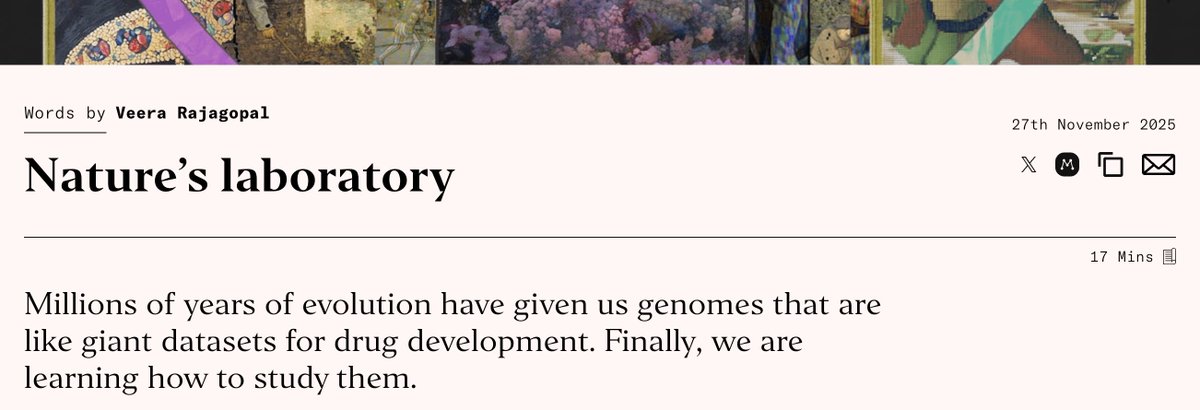
This article is about one of my favorite topics: how human genetics is being used to shape drug development. It’s a synthesis of ideas and lessons that have emerged over many years, brought together into a single narrative.
I’m grateful for the opportunity to give structure to these thoughts — and excited about where human genetics–driven drug development is headed next. The future here feels genuinely promising.
Many thanks to the editors at @WorksInProgMag — @bswud and @salonium — for the opportunity and for helping edit this article into its best possible version.
Hope you enjoy this light read on Thanksgiving Day :)
🧬 Nature’s laboratory
https://t.co/X9Z2joGLgv
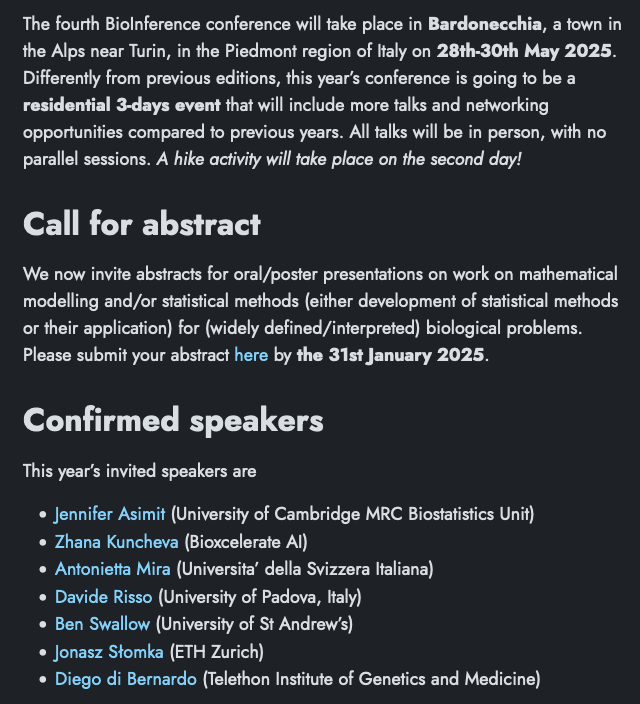
Looking forward to the BioInference conference in Bardonecchia, Italy on May 28-30, 2025.
It will be three exciting days of talks and networking!
Abstract submission deadline for oral/poster presentations is January 31, 2025.
See details here: https://t.co/6mK1iBiUPt
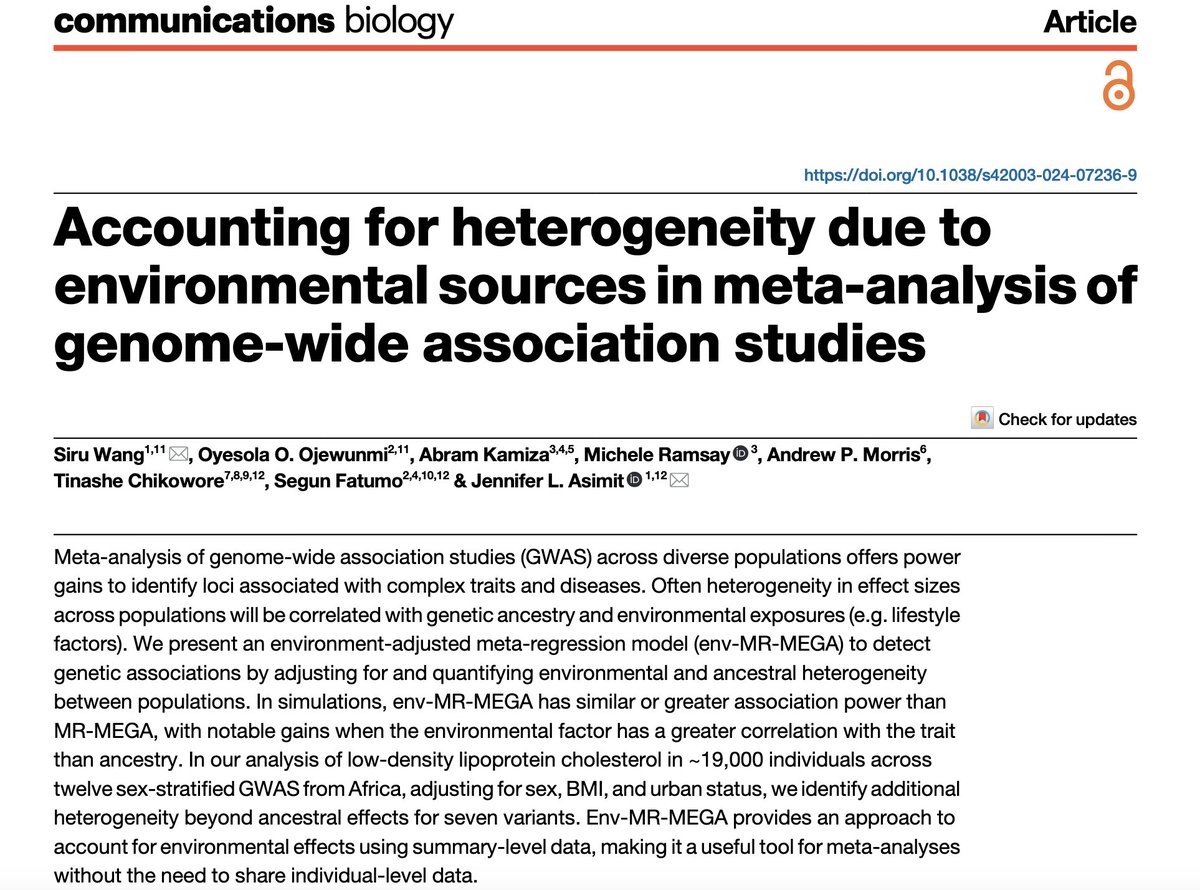
Adjusting for and quantifying environmental heterogeneity in the meta-analysis of genome-wide association studies of diverse populations identifies additional heterogeneity beyond ancestral effects. https://t.co/HvQ0dWhk1p
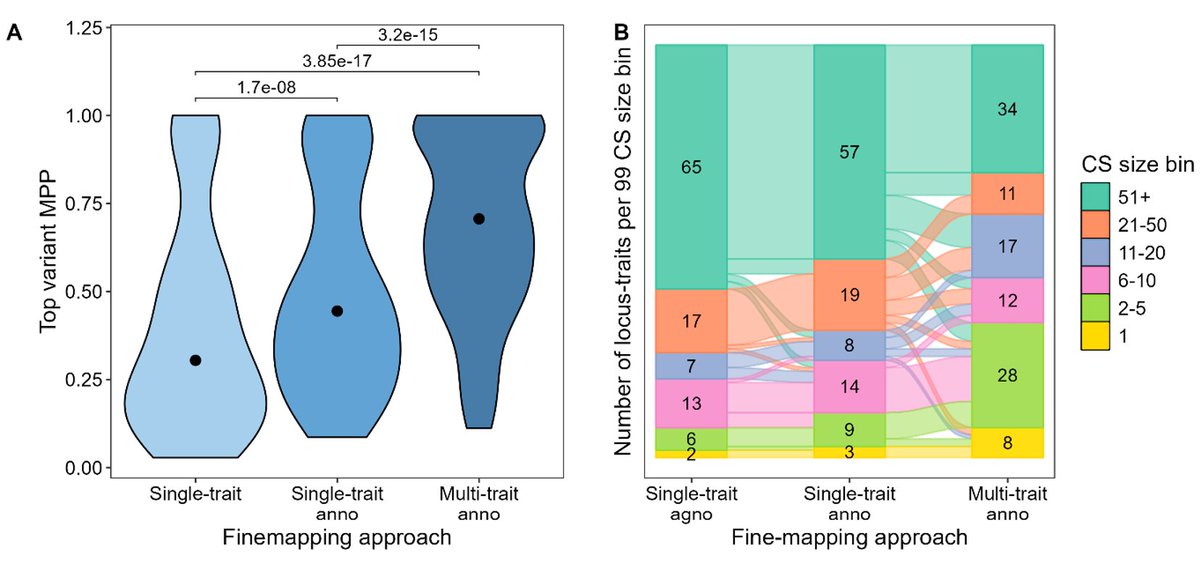
The number of variants prioritised for having high marginal posterior probability (MPP) of causality significantly increased by including annotations, with further gains by combining annotations with multi-trait fine-mapping
Resolution followed this same improvement pattern
New preprint - for #GWAS loci associated with >1 glycaemic traits, multi-trait #finemapping (flashfm) + functional annotations improved resolution
@JanaSoenksen, Ji Chen, Arushi Varshney, Susan Martin, MAGIC
@InesBarroso4, Andrew Morris, Stephen Parker
https://t.co/GxJDrghRXL
Try our env.MRmega R package at https://t.co/UApO3elKUP.
For input, only need GWAS summary statistics and study-level covariates, e.g. mean BMI, urban proportion.
New preprint - genetic analyses of latent factors from high-dimensional traits give enhanced power for #GWAS discovery and #finemapping
Highest gains are through multi-trait fine-mapping of latent factors - we introduce flashfmZero
@FZ_Cambridge, @WilliamAstle, @aidanbutty
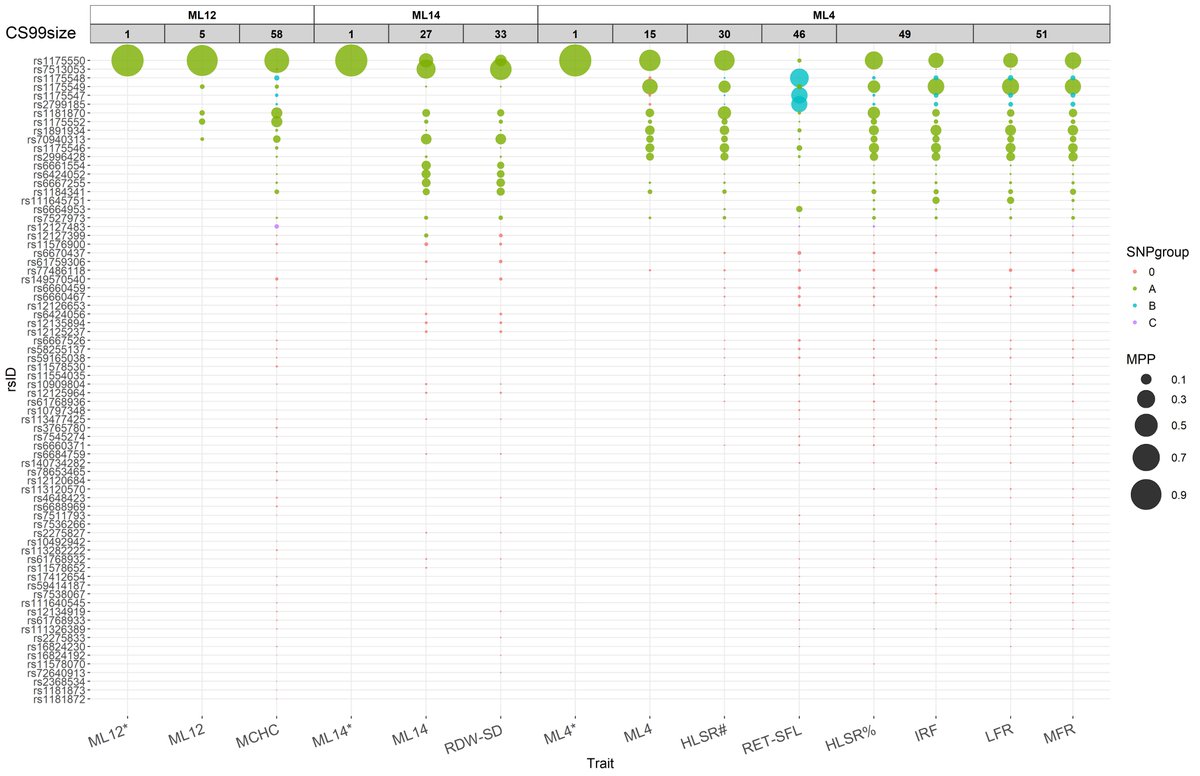
In SMIM1, flashfmZero produces single-variant 99% credible sets (CS99) - rs1175550 - for each of three latent factors related to red blood cell traits
CS99 for latent factors were 5-27 variants
CS99 for red blood cell traits were 30-58 variants
"My time at the BSU was incredible. I learnt so much and have a newfound appreciation for the integral role of statistics in medical research."
Such a privilege to host work experience students this summer 🤩
Read more 👇
https://t.co/qEF7ZfNKKH
#GetIntoSTEM@Cambridge_Uni
I'm often asked about the latest GWAS datasets for different cardiovascular traits🧬
🔗This is my list with links to the most recent and largest publicly available GWAS summary statistics for cardiometabolic traits❗️
https://t.co/Yy5lLBXojU
Try our env.MRmega R package at https://t.co/UApO3elKUP.
For input only need GWAS summary statistics and study-level covariates, e.g. mean BMI, urban proportion.
Happy to share env-MR-MEGA - first in our suite of environment-adjusted #GWAS methods
Use summary-level data to quantify environmental and ancestral heterogeneity
Amazing teamwork with @SiruRooney, @SolaOjewunmi, @ab_kamiza, Michele Ramsay, Andrew Morris, @tchikowore1, @SFatumo
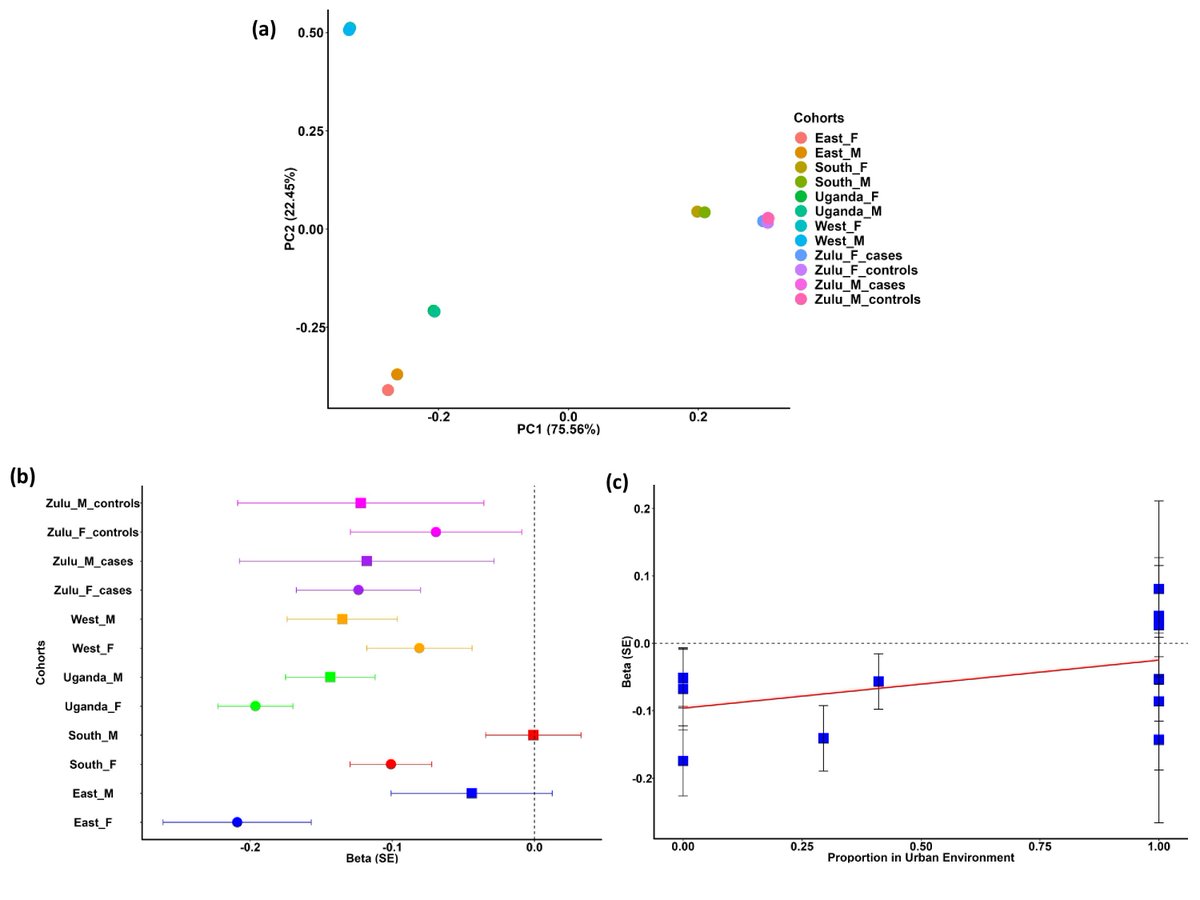
In our analysis of LDL in 12 sex-stratified African GWAS of ~19k individuals, adjusting for sex, BMI, and urban status, we identified additional heterogeneity beyond ancestral effects for nine variants - examples for sex (b) and urban status (c) below