⚠️ Period pain in female athletes 🏃♀️
A call to action - time to fill the evidence gap and develop tailored management pathways 📄
NEW #Editorial ➡️ https://t.co/4hJKBNVdwK
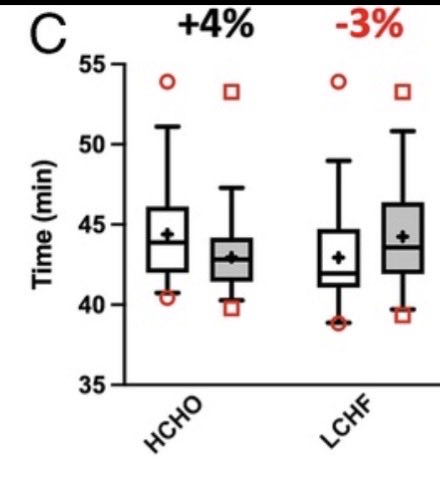
@mackinprof To maintain CHO dependency and promote economy during running, ingestion rates need to be >90 g/h. We also have similar data in elite female runners in review
https://t.co/iPXcvJvZnk
Have you read the best practice recommendations for body composition considerations in sport to reduce health and performance risks #REDS 🏃♀️🏋️♀️
IOC consensus subgroup on Relative Energy Deficiency in Sport 📄
BJSM #OpenAccess 🔓
Read 👉 https://t.co/EyLEeXU9KS
Why the carb rant and why now? First the papers are out. Burke vs. Noakes... you decide. But there's an inside story to how this came about that's a tale of genuine disingenuous behaviour that I refuse to divulge, but am getting too old to not mention. This bullsh*t debate is really dead, it died when it happened in MSSE. It's died in AJCN (again). Hell it died in 1920. It's not science any more. It's a Hoffferian True Believer scenario. Let's stop platforming this as if it's a real debate.
I'll start with ten, and you can find more if you like.
Sarcoplasmic reticulum calcium handling and excitation-contraction coupling
Ørtenblad N, Nielsen J, Saltin B, Holmberg HC. Role of glycogen availability in sarcoplasmic reticulum Ca2+ kinetics in human skeletal muscle. J Physiol. 2011;589(3):711-25. PMID: 21135051 DOI: 10.1113/jphysiol.2010.195982 Directly shows that depleted muscle glycogen reduces SR Ca2+ release rate independent of ATP status.
Ørtenblad N, Westerblad H, Nielsen J. Muscle glycogen stores and fatigue. J Physiol. 2013;591(18):4405-13. PMID: 23652590 DOI: 10.1113/jphysiol.2013.251629 Review by Westerblad's group explicitly arguing that the glycogen-fatigue link operates via E-C coupling, not energy crisis.
Gejl KD, Hvid LG, Frandsen U, Jensen K, Sahlin K, Ørtenblad N. Muscle glycogen content modifies SR Ca2+ release rate in elite endurance athletes. Med Sci Sports Exerc. 2014;46(3):496-505. PMID: 24091991 DOI: 10.1249/MSS.0b013e3182a7a435 Demonstrates in elite athletes that lower glycogen reduces calcium release rate, which is a fatigue mechanism independent of ATP.
Subcellular glycogen pool localization
Jensen R, Ørtenblad N, Stausholm MLH, et al. Heterogeneity in subcellular muscle glycogen utilisation during exercise impacts endurance capacity in men. J Physiol. 2020;598(19):4271-92. PMID: 32686845 DOI: 10.1113/JP280247 Shows intramyofibrillar glycogen depletion specifically predicts fatigue, again pointing to a localized E-C coupling mechanism rather than whole-cell ATP failure.
Comprehensive reviews of the mechanisms
Allen DG, Lamb GD, Westerblad H. Skeletal muscle fatigue: cellular mechanisms. Physiol Rev. 2008;88(1):287-332. PMID: 18195089 DOI: 10.1152/physrev.00015.2007 The foundational Physiological Reviews article on muscle fatigue mechanisms. Lays out the multiple peripheral mechanisms (Ca2+ release, Pi accumulation, ion handling) without invoking ATP-to-rigor.
Vigh-Larsen JF, Ørtenblad N, Spriet LL, Overgaard K, Mohr M. Muscle glycogen metabolism and high-intensity exercise performance: a narrative review. Sports Med. 2021;51(9):1855-74. PMID: 33900579 DOI: 10.1007/s40279-021-01475-0 Modern review specifically on glycogen and performance, summarizing both direct (calcium kinetics, excitability) and indirect mechanisms.
Vigh-Larsen JF, Ørtenblad N, Nielsen J, Andersen OE, Overgaard K, Mohr M. The role of muscle glycogen content and localization in high-intensity exercise performance: a placebo-controlled trial. Med Sci Sports Exerc. 2022;54(12):2073-86. PMID: 35868015 DOI: 10.1249/MSS.0000000000002967 Placebo-controlled trial showing glycogen content and localization matter for performance.
Economy and substrate-pathway mechanisms
Stellingwerff T, Spriet LL, Watt MJ, et al. Decreased PDH activation and glycogenolysis during exercise following fat adaptation with carbohydrate restoration. Am J Physiol Endocrinol Metab. 2006;290(2):E380-8. PMID: 16188909 DOI: 10.1152/ajpendo.00268.2005 Shows fat-adapted muscle has downregulated PDH and glycogenolysis, which impairs the capacity to oxidize CHO at high intensity. This is the metabolic-flexibility cost of LCHF that has nothing to do with rigor.
Burke LM, Ross ML, Garvican-Lewis LA, et al. Low carbohydrate, high fat diet impairs exercise economy and negates the performance benefit from intensified training in elite race walkers. J Physiol. 2017;595(9):2785-807. PMID: 28012184 DOI: 10.1113/JP273230 The original Supernova study. Performance impairment in elite athletes via loss of exercise economy, not via energy depletion.
Burke LM, Whitfield J, Heikura IA, et al. Adaptation to a low carbohydrate high fat diet is rapid but impairs endurance exercise metabolism and performance despite enhanced glycogen availability. J Physiol. 2021;599(3):771-90. PMID: 32697366 DOI: 10.1113/JP280221 Crucially shows that even when glycogen is restored, the fat-adaptation impairment in CHO oxidation machinery persists. Again, an E-C coupling and economy story, not an ATP-rigor story.
These references collectively establish the modern mechanistic picture: low muscle glycogen impairs performance through sarcoplasmic reticulum calcium release rate, excitation-contraction coupling at the subcellular level, downregulation of the PDH complex and glycogenolytic enzymes, and loss of exercise economy. None of them invokes ATP falling to rigor levels, because no serious researcher in this space has ever claimed it does. Noakes' attack on TAT is an attack on a position the field abandoned decades ago.
When 14 of the world's most prominent muscle scientists like @mackinprof@BradSchoenfeld and @AbigailMackey1 gather to present their findings… I think it’s worth writing about what they shared.
Two people walk into the same gym. They follow the same program, lift the same weights with the same intensity, eat about the same amount of protein, and sleep about the same number of hours. Six months later, one has added meaningful muscle, and the other has barely moved the needle. Why?
Do Z lines split? How do muscles grow?
How many sets do I need?
How much should I rest?
How often should I work out?
This consensus report gives us solid guidance on why adaptations occur and how we should train to maximize them.
Link in reply...
This podcast is definitely going to be part of my regular listening queue.
Congrats on the launch @mackinprof and @gibalam!
Both are previous guests on the FoundMyFitness pod. I've learned so much from both.
What can elite ultrarunners, rowers, and race walkers reveal about the limits of human performance?
At #ACSM2026, Wu Tsai Human Performance Alliance members share what years of research with world-class athletes has uncovered.
https://t.co/G6BLlR7yCS
For years, my colleague, Prof. Martin Gibala, and I have appeared on literally hundreds of podcasts. Today, we dropped our own podcast! As lifetime faculty members of the McMaster Department of Kinesiology, we thought it was time for our take on reality in the world of exercise, nutrition, health, and more.
The Podcast is Real Exercise Science, and you can pick it up on all your favourite platforms.
The goal? Real science, not hype. Not fluff, not the latest paper, but evidence, with scientific humility. But reality means disappointment sometimes. That stuff you heard about protein, lifting, Zone 2, peptides, GLP-1... It's often more than the data shows, extrapolation, overstatement, or downright wrong.
Hard facts, no hype!
Episode 1 dropped today https://t.co/ekPprWMkYn and featured a chat about the updated American College of Sports Medicine position stand in honour of day 1 of the ACSM annual meeting in Salt Lake City!
I'm in Salt Lake City with Marty, and you can hear an amazing update on the position stand https://t.co/uG9pWYdQf9
Wednesday, May 27, 3:15-4:45 MDT - see you there.
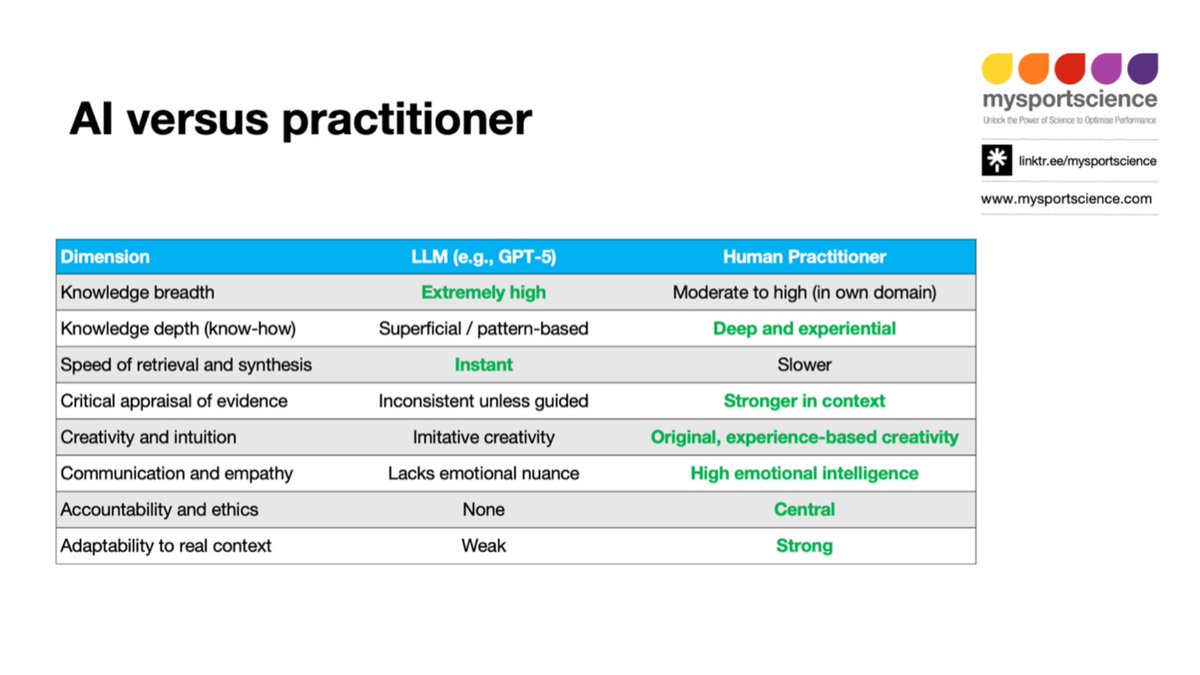
Will AI replace sports practitioners? When software can automatically generate fuelling plans, detect performance trends in seconds, it becomes natural to wonder where the human expert fits in. In this blog we discuss what AI does exceptionally well, and what it fundamentally cannot do: https://t.co/AhywMbFJRt
These aren’t the highest rates of fat oxidation ever measured in a human - elite racewalkers who adapted to a keto diet for 6 days or 3.5 weeks showed higher rates - some at 2 g/min. But they raced at a slower speed when asked to perform in a real life race. You can’t outrun the stoichiometry of fuel production. Carbs produce more ATP per litre of oxygen than fat.
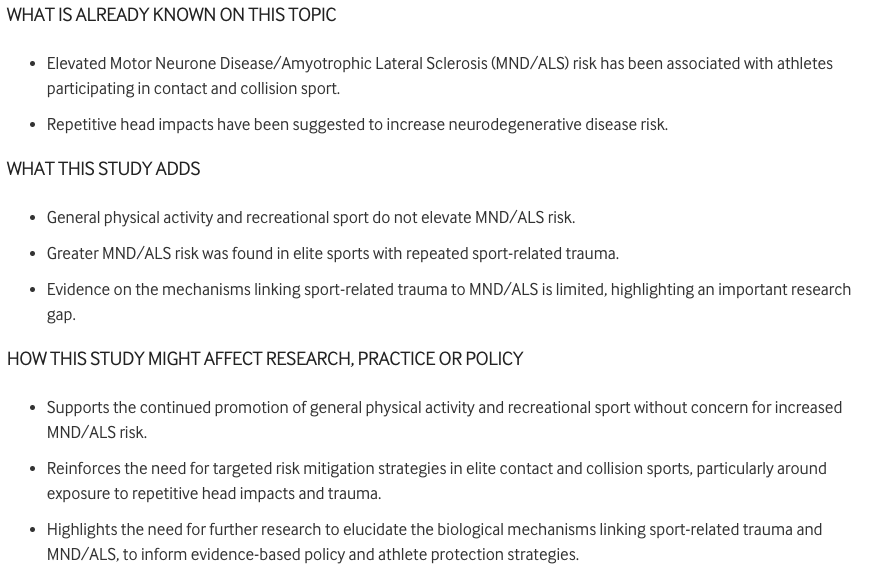
⚠️ Sport-related trauma and motor neurone disease 🧠 💪
NEW scoping review of epidemiology, mechanisms and future directions 📄
See the #TakeHomeMessages👇
Find out more ➡️ https://t.co/6FiV42QTVK
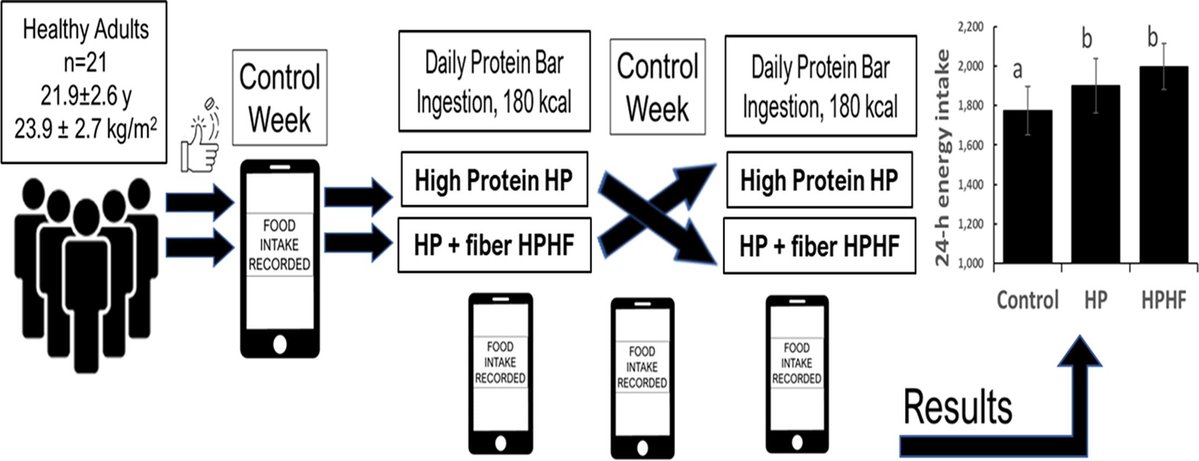
A crossover trial on protein-rich bars—an iconic UPF marketed for weight loss, with a global market nearing US$5 billion—found that adding one bar (180 kcal) to the usual diet for 7 days increased daily energy intake (by 10%) and body fat (3% in 7 days)🙀.
https://t.co/27T164tf4D
Experts reach consensus to rename polycystic ovary syndrome (PCOS), better reflecting the condition’s full health impacts.
Find out more 👉 https://t.co/Azue7YDFcn @ESEndocrinology#ECE2026
How much “muscle” are people actually losing on Ozempic and other GLP-1 drugs?
The first thing to understand:
Lean mass is not the same thing as skeletal muscle mass.
That distinction matters.