At what point did Witkoff and Kushner decide that handing more Ukrainians over to the very country invading Ukraine, torturing and executing its people, was a viable peace plan?
🧵The Hasholme Logboat is Britain's largest surviving Iron Age vessel, carved from a single massive oak around 300 BC. Discovered in 1984 near Holme-on-Spalding-Moor, East Yorkshire, it was found waterlogged in an ancient inlet of the Humber estuary, the River Foulness. Measuring
Zelenskyy: Russia does not count how many people it loses each month. Last month it was 52,000.
Can you imagine what is going on in the head of the leader of that nation, if he accepts losing 52,000 in October? 1/
When the War is over and the sword at last we sheathe,
I'm going to keep a jelly-fish and listen to it breathe.
When the War is over and we've finished up the show,
I'm going to plant a lemon-pip and listen to it grow. ~A.A.Milne #RemembranceSunday
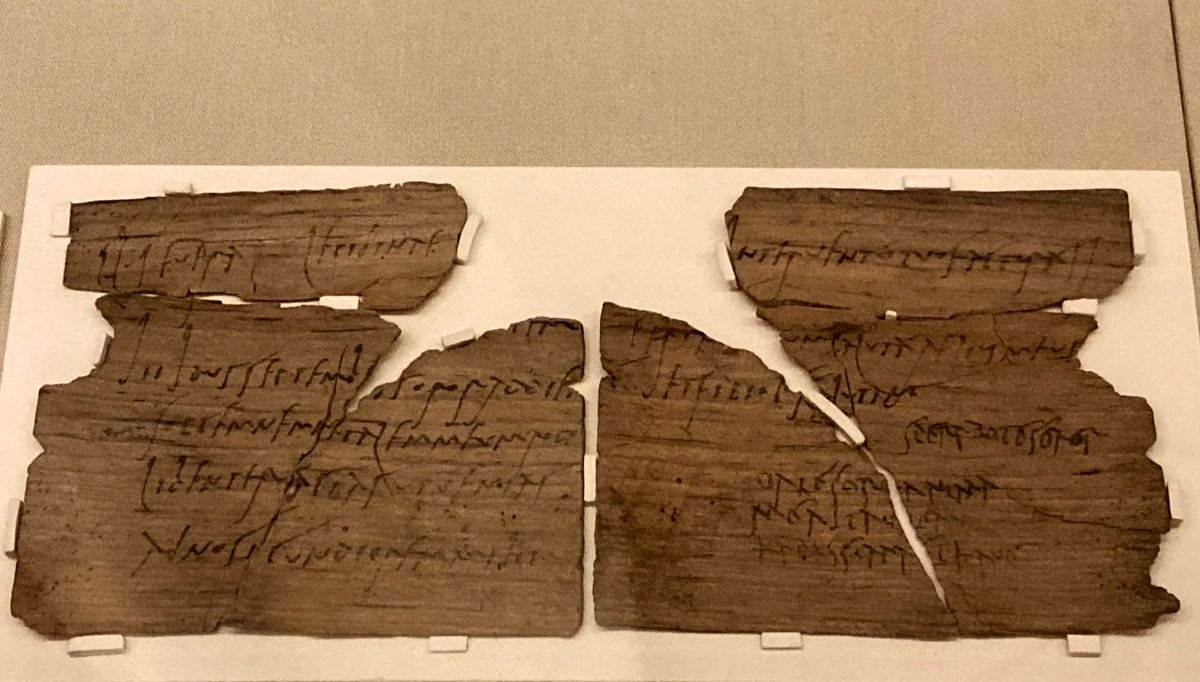
In 1973 an archaeologist digging at Vindolanda, a Roman fort in northern England, found something that wasn't supposed to survive. It was a pile of thin wooden slivers, about the size of a postcard, covered in faded ink.
They turned out to be letters. Hundreds of them, written by Roman soldiers and their families around 100 AD, before Hadrian's Wall was even built. They survived 1,900 years because they'd been dumped in wet, airless ground where nothing could rot them.
What do Roman soldiers on the edge of the empire write about? The same stuff soldiers have always written about.
One soldier gets a care package and a note telling him it includes socks, two pairs of sandals, and two pairs of underpants. Somebody back home was worried he was cold. Northern England will do that to you.
A cavalry officer named Masclus writes to his commander asking for orders for the next day. Then he adds a P.S.: his men have run out of beer, and could the commander please send some.
A supply contractor complains that the roads are so bad he doesn't want to risk his animals on them, and he's waiting on money he's owed. Logistics have always been a nightmare.
One report sizes up the locals. The writer notes the Britons have no armor, that they have lots of cavalry, and that they don't mount up to throw javelins. Then he calls them "Brittunculi." Roughly "little Brits." It's a Roman insult, and it's the only time that word has ever been found anywhere.
But the most famous one is a birthday invitation.
A woman named Claudia Severa writes to her friend Sulpicia Lepidina, the commander's wife at Vindolanda, inviting her to her birthday party on September 11. A scribe wrote most of it. At the bottom, Claudia added a few lines in her own hand, telling her friend she'll be waiting for her and calling her "my dearest soul."
That scrawl at the bottom is believed to be the oldest surviving example of handwriting by a woman in Latin.
Two officers' wives at the end of the known world, a long way from Rome, trying to get together for a birthday.
The tablets are now at the British Museum. In 2003 the British public voted them the country's top treasure.
Imagine this deer trying to explain this experience to other deer. That deer's friends are NEVER going to believe him about the magic noise fairy he spotted.
On November 7, 1920, in the strictest secrecy, the bodies of four unidentified British soldiers were exhumed from temporary cemeteries in Ypres, Arras, the Aisne, and the Somme. None of the soldiers who dug up the bodies were told why. The remains were taken to military headquarters at Saint-Pol-sur-Ternoise, France.
There, the bodies were covered with Union Jack flags. A guard was posted, and Brigadier General Wyatt and Colonel Gell randomly selected one of the four fallen soldiers.
The other three bodies were reburied. A French guard of honour was appointed to stand beside the coffin of the chosen soldier throughout the night.
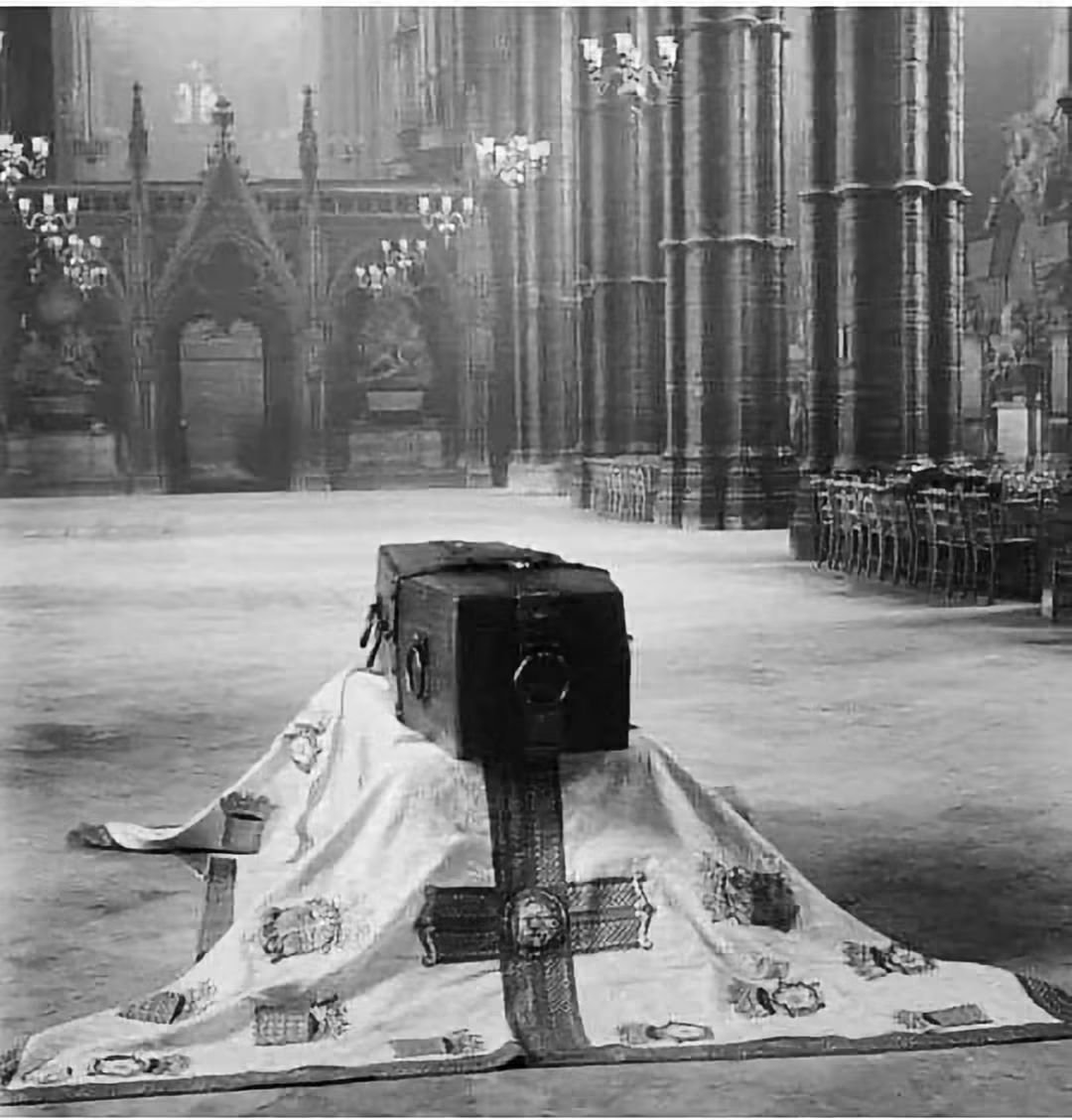
On the morning of November 8, a specially designed oak coffin arrived, made from timber grown in the grounds of Hampton Court Palace. The remains of the Unknown Warrior were placed inside.
A Crusader's sword was mounted on top, along with a shield bearing the inscription:
"A British Warrior who fell in the GREAT WAR 1914–1918 for King and Country."
On November 9, the Unknown Warrior, accompanied by a guard of honour, was transported on a horse-drawn carriage. He was received by Marshal Ferdinand Foch before being taken aboard HMS Verdun for the journey to Dover.
The coffin rested on the deck, covered with wreaths and surrounded by a French guard of honour.
Upon arrival in Dover, the Unknown Warrior was greeted with a nineteen-gun salute — an honour normally reserved for field marshals.
A special train then carried the coffin to Victoria Station in London, where it remained overnight.
On the morning of November 11, 1920, exactly two years after the guns fell silent on the Western Front, the Unknown Warrior was finally taken to Westminster Abbey.
The idea of honouring an unidentified fallen soldier came from a British Army chaplain named David Railton, who had served on the front lines during the Great War.
The Union Jack he had used as an altar cloth during the war was the same flag that covered the coffin.
Railton wanted the families of the hundreds of thousands of servicemen whose remains had never been identified to believe that the Unknown Warrior might be their own lost husband, father, brother, or son.
A man without a name became a symbol of every soldier who never returned home.
A single grave became a place where an entire nation could mourn.
Every year on November 11, Britain remembers the Unknown Warrior and all those who gave their lives in war.
They had names. They had families. They had dreams. They had futures that war took away.
We may never know who lies beneath that stone.
But we know what he represents.
Lest we forget. 🌹
P.S. I'm moving from Twitter/X to Substack. Join me there and follow my work.
https://t.co/CRmAgIp5CW
@_hyzenthlayrah Goodness, where are you getting your information from? There are always exceptions, everywhere, however, Canada has some top rate hospitals and doctors. Toronto General 2nd best in the world.
Trump has apparently been sitting down with Putin’s envoy to discuss a magnificent agreement that could reshape the future of Ukraine and all of Europe.
How terribly exciting. There is just one rather enormous problem.
Europe belongs to Europeans. Ukraine belongs to Ukrainians. Neither is available for negotiation between two gentlemen in Washington.
If Trump and Putin genuinely believe they can sit around a table dividing Europe into convenient little spheres of influence without European consent, they are wasting their time. Europe will never agree to it.
This is not 1945. There will be no new Yalta, no carving up sovereign nations, and certainly no Russian veto over Europe’s future.
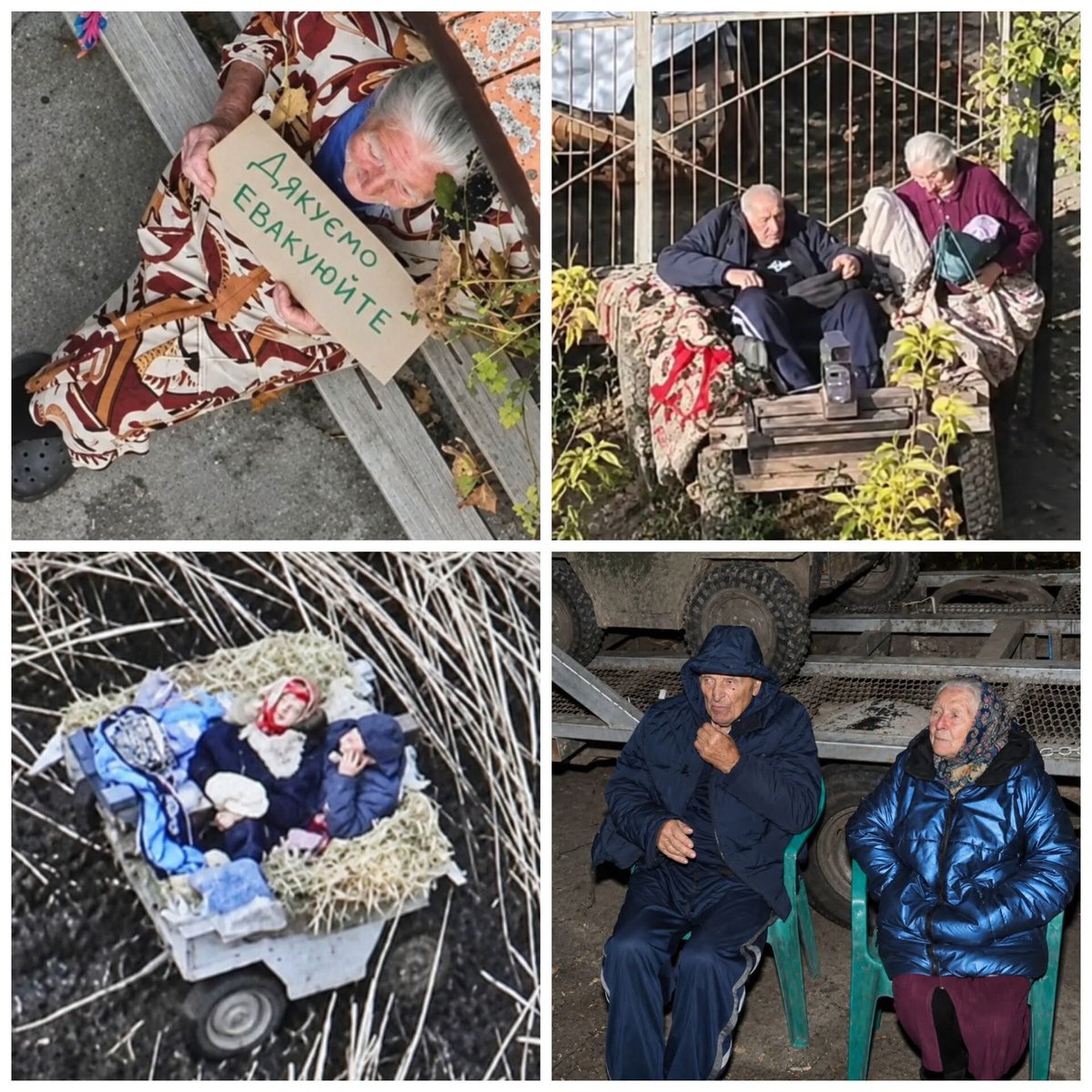
Вона написала на картонці лише два слова - і це врятувало їм життя.
Коли російський дрон завис над подвір'ям у зруйнованому Оріхові, 80-річна Валентина не сховалась у підвал.
Вона вийшла на подвір'я, підняла картонку - і чекала. На ній було написано:
"Дякуємо, евакуюйте".
За кілька днів до того на лаві біля того ж будинку аеророзвідники 65-ї бригади знайшли записку:
"Мені боляче" - і список ліків.
Посеред руїн, де не залишилось нічого живого, двоє старих людей доживали свій вік самі.
Їхню онуку Анжеліку війна закинула до Польщі. Саме вона й написала військовим:
"Перевірте, чи мої дідусь і бабуся ще живі".
Ті приїхали. Спочатку важкий гексакоптер спустив їм пакунок із ліками та харчами.
А згодом до воріт підкотив наземний робот. На нього ледве зміг видертися 90-річний Геніслав - він майже не ходить, тримається на милицях.
Валентина склала біля нього клунок із речами, зачинила хату... і поклала ключі під килимок. Ну, як звичайна бабуся.
Попереду було майже десять годин полями та ґрунтовками - повз ворожі FPV-дрони, які кружляли над сірою зоною.
Оператор на псевдо Робі вів машину з пульта, а на пункті управління всі затамовували подих щоразу, коли робот під'їжджав до небезпечної ділянки.
"Якщо вони нас побачать - битимуть до останнього", - казали військові.
Робота ховали під деревами, а старий Геніслав лише міцніше тримався.
До точки евакуації дістались уже затемна. Стареньких обережно пересадили до автівки.
І тільки тоді, коли Робі підійшов до них, щоб вибачитись за незручну дорогу, Валентина заплакала:
"Та за що ви вибачаєтесь? Це ми повинні вибачатись".
А коли дізналась, хто організував їхній порятунок, - не стрималась:
"Анжелочко, ми живі, здорові. Ми дуже вдячні вам".
Це вже друге подружжя, яке 65-та бригада вивезла з Оріхова наземним дроном.
Але в місті, яке росіяни рівняють із землею щодня, досі залишається понад сто людей.
І серед них - ті, хто так само чекає на свою картонку з двома словами.
President Zelenskyy:
Russians have taken thousands of Ukrainian children from our land. Now, we see something even worse.
Russia has already started sending some of these children, children they stole from us, who have grown up during this war, grown up over these years, into the Russian army. And this is horrible, and it must stop.
@strategywoman I'm glad to hear your water and electricity returned for the moment. I do hope that you can get some uninterrupted sleep.
Also watching US election results here in Canada.
💙💛🫂