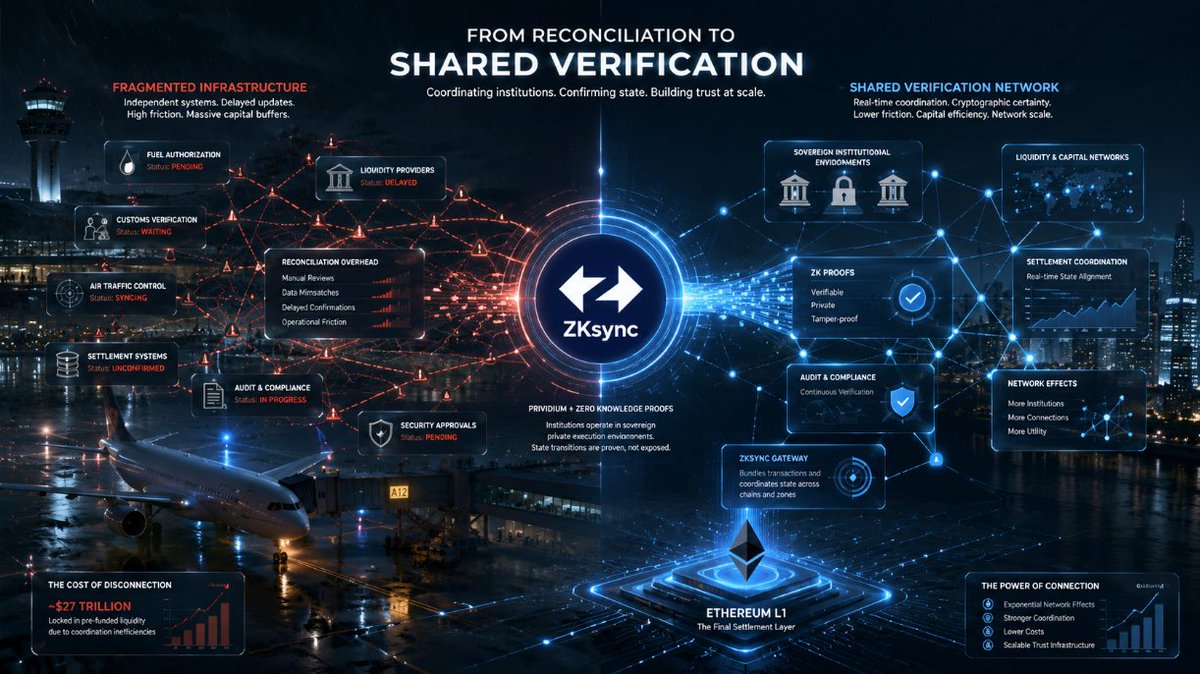
An international flight can be fully cleared for departure and still remain stuck at the gate because one fuel authorization update has not synchronized across airport systems yet.
Passengers see a delay.
What operators see is a coordination problem between independent infrastructure layers trying to confirm the same operational state before movement is approved.
Global finance works in remarkably similar ways.
More than $3.7 quadrillion in annual transaction volume moves through institutions constantly synchronizing settlement conditions, exposure calculations, liquidity obligations, and audit records across fragmented systems.
To reduce uncertainty, the system relies on buffers.
Correspondent banking alone still requires roughly $27 trillion in pre-funded liquidity because institutions cannot always coordinate around shared settlement verification in real time.
That is why institutional infrastructure choices matter.
When networks connected through SWIFT expanded from hundreds of banks to more than 11,000 institutions, the value of participation compounded because every new participant increased the number of possible coordination pathways across the system.
What stands out with @zksync is that the network architecture is designed around that same coordination principle.
Prividium allows institutions to operate inside sovereign private execution environments.
The resulting state transitions generate zero-knowledge proofs finalized through Ethereum L1.
So institutions coordinate around cryptographically verified outcomes without exposing sensitive operational data publicly.
That changes how institutional systems scale.
In fragmented infrastructure, every new participant increases reconciliation overhead.
In shared verification networks, every new institution increases the utility of the network itself.
That is where $ZK fits structurally.
$ZK is the only native asset of the ZKsync network.
Today it serves as:
• the governance token for protocol-level decisions
• the native gas token for ZKsync Gateway
• the native asset used within coordination and settlement flows across ZKsync chains and Prividium zones before finalization on Ethereum.
The deeper implication may be that financial infrastructure stops growing through larger trust buffers and starts compounding through continuously shared verification instead.
The creator economy split in half before most people noticed
One side still treats content like a gamble for future rewards
The other already figured out how to turn the same skill into stablecoin payouts
Same research
Same effort
Same hours spent refining ideas
One post disappears after a few impressions
The other enters @RallyOnChain
New paid campaigns keep opening
Sharper posts rise faster
Winning creators collect stablecoins onchain
That’s the part people still underestimate
The value of attention changed quietly
Right now the difference is not talent
It’s who adapted first
Some creators already turned content into a compounding advantage
Others are still giving away their best work for “visibility”
Every campaign is building someone else’s lead
Most people wait until a network gets crowded before they explore it.
By then, they’re usually late.
The better approach is testing the ecosystem while it’s still growing.
That’s where the @Autheo_Network Testnet Faucet comes in.
It gives users free testnet tokens so they can interact with the network before mainnet activity becomes competitive.
Why does that matter?
Because testnet participation is where you actually learn how a system works.
With Autheo testnet tokens, you can:
→ Send transactions
→ Test wallet activity
→ Explore ecosystem features
→ Understand network flow firsthand
Getting started is simple:
1/ Visit the faucet
https://t.co/OVPf18D1Lo
2/ Connect your wallet
3/ Request testnet tokens
4/ Start interacting with the network
No cost. Just participation.
A lot of people underestimate testnets because the tokens have no market value.
But the experience does.
Early users usually understand ecosystems faster than everyone else later on.
That advantage compounds over time.
#Autheo #Web3 #THEO
A lot of people confuse being early with just being active
Refreshing dashboards
Jumping into every new app
That doesn’t always mean progress
Sometimes it’s just noise disguised as momentum
Meanwhile @RallyOnChain quietly created a place where creators are already earning stablecoins from content people actually care about
New campaigns keep showing up and the people adapting fastest are starting to pull ahead
Not because they post more
Because they realized attention became monetisable before everyone else did
Some creators are slowly building a real track record from their content while this window is still open
Others are still hoping visibility eventually turns into something tangible
A year from now both groups will probably say they were “early”
Only one group will have something to show for it
Most creators are not underpaid because they lack skill
They are underpaid because the internet trained them to give high-value content away for free and call it “building”
Threads
Breakdowns
Research
Hooks
People spent years sharpening those skills while farming points that may never matter
Then platforms like @RallyOnChain quietly changed the equation
Campaigns go live
Creators submit content
AI scores quality
Stablecoins get distributed onchain
Creators are finally turning content into actual stablecoin payouts instead of waiting on vague promises
The strange part is the skill was already there
The payout layer wasn’t
Now the competition already started adapting
Some creators are building portfolios
Others are still donating their best content to the timeline for impressions
Attention is still underpriced right now
How many creators will realize this only after stablecoin payouts become normal?
First it was just a post.
Now it feels like a movement.
That’s the difference between content… and culture.
On 3look, you don’t just post.
You create signals others follow.
One creator shares →
Another builds on it →
Soon it’s not marketing anymore…
It’s community momentum.
That’s how projects actually grow.
Not ads.
Not hype.
But real people creating together.
This is what scaling culture looks like 👇
📸https://t.co/DbpFjjp4j6
Early creators don’t just earn…
They shape the narrative.
And right now?
It’s still first come, first served.
@3look_io
I used to think the main problem was speed.
Faster settlement. Lower fees.
But the deeper issue might be coordination.
Today, financial systems synchronize across institutions.
Ledgers do not naturally agree.
So reconciliation becomes a process.
With @zksync Prividium, coordination shifts.
Each institution runs its own environment.
But state transitions are proven and settled on Ethereum.
No shared ledger required.
Only shared verification.
That changes how systems connect at scale.
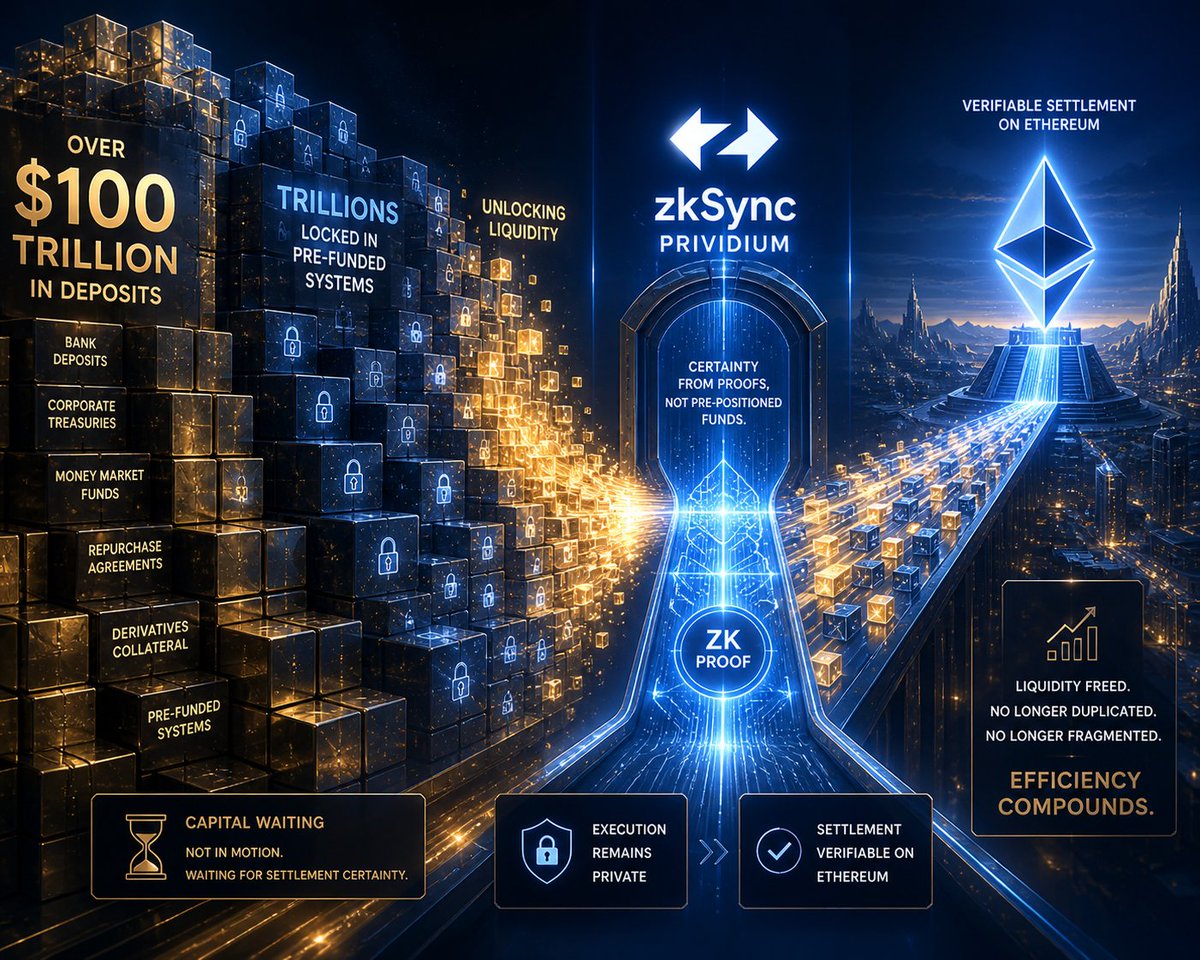
The size of global finance is not abstract.
Over $100 trillion in deposits.
Trillions locked in pre-funded systems.
That capital is not always in motion.
It is waiting.
Waiting for settlement certainty.
With @zksync Prividium, certainty comes from proofs, not positioning funds in advance.
Execution remains private.
Settlement becomes verifiable on Ethereum.
So liquidity no longer needs to be duplicated across systems.
That is where efficiency starts to compound.
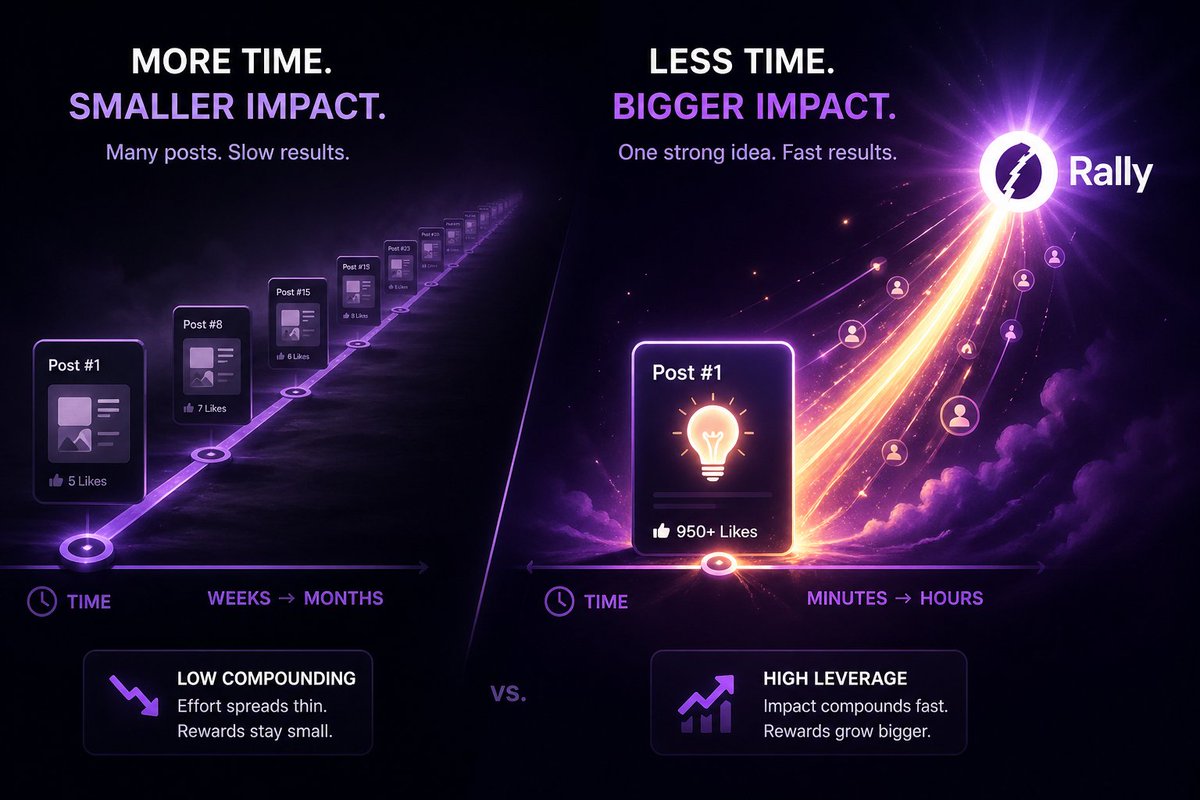
I used to think time spent writing always compounds equally.
But @RallyOnChain challenges that idea.
Within a $1000 pool, most of the reward goes to just a few top entries in a short window.
The rest of the top 30 may still receive smaller portions depending on performance.
So time does not scale linearly here.
One strong idea can outperform weeks of average posts.
I have seen someone spend less time but think deeper and end up earning more.
It shifts focus from effort to effectiveness.