“Where did you find God?”
“I found him where I left creatures.”
“Who are you anyway?”
“I am a king.”
“And where is your kingdom?”
“In my soul, where everything is in good order; where the passions obey reason, and reason obeys God.”
“How have you come to such a state of perfection?”
“By silence. I practice silence towards men, while I cultivate the habit of speaking with God. Conversing with God is the way I found and maintain my peace of soul.”
-St. Alphonsus
"Maybe I'm stating the obvious, but this was new to me:
In reading Acts 9 just now, Paul is persecuting the Church just before he converts.
Light engulfs him as he hears Jesus speaking, and afterwards he loses his sight. And a thought occurred to me.
I always assumed it to be the case that God took his vision away. But, it just dawned on me as I was reading...could it be that Paul was blinded by seeing the Uncreated Light, which he had approached and was looking at "in an unworthy manner"? (to use his own words)
Because at the moment of exposure, he wasn't yet in a state of repentance/faith. So, the Uncreated Energies in the Holy Mysteries can actually have a negative effect on us, as the Orthodox do indeed teach (not being able to enter the holy of holies, Moses only being permitted to see God's glory pass by from the cleft of the rock, not receiving Holy Communion without first examining your conscience and confessing your sins, etc.)
This would mean that it wasn't Jesus *punishing* him with blindness, as I had previously viewed it, but rather that it was merely the natural cause/effect of Paul's own decisions that led him to that state.
He was *not* walking in the Light.
And since light has no part with darkness, the darkness within him drove the light from his eyes.
This seemingly minor detail is extremely significant. Because, once again, it engenders a radically different understanding of God's character.
The former is a spiteful, and arguably somewhat petty God who needs to retaliate to even the score, while the latter is entirely without malice or resentment, and it was merely His presence—being truly holy—that Paul's fallen senses reacted against, like dry leaves coming into contact with fire.
The Lord did not take his sight away and then restore it. Rather, the Lord restored Paul inwardly, and then He restored him again, physically.
First, Paul had to reckon with his encounter with the risen Christ whom he had rejected. This changed his mind.
He then ate and drank nothing for 3 full days (fasting is directly associated with a conscious deepening of one's repentance). This revealed a softening of his heart.
And then, by God's grace, the scales fell from his eyes.
Honestly, I just hadn't looked closely enough at this passage again until now since converting. And since the Protestant tradition places little to no emphasis on the teaching of "Uncreated Light" (I had never even heard of it from anyone before), it was just yet another one of those unknown unknowns.
This is just one of many reasons why we need the Church with Her historic witness and divinely guided preservation of the apostolic deposit of faith via Holy Tradition, in order to *fully* understand even the smallest details in biblical theology in their proper context.
Without the Church, you have blind spots that literally condition your view of God without you even knowing it."
-- Macarius Johnson
"Maybe I'm stating the obvious, but this was new to me:
In reading Acts 9 just now, Paul is persecuting the Church just before he converts.
Light engulfs him as he hears Jesus speaking, and afterwards he loses his sight. And a thought occurred to me.
I always assumed it to be the case that God took his vision away. But, it just dawned on me as I was reading...could it be that Paul was blinded by seeing the Uncreated Light, which he had approached and was looking at "in an unworthy manner"? (to use his own words)
Because at the moment of exposure, he wasn't yet in a state of repentance/faith. So, the Uncreated Energies in the Holy Mysteries can actually have a negative effect on us, as the Orthodox do indeed teach (not being able to enter the holy of holies, Moses only being permitted to see God's glory pass by from the cleft of the rock, not receiving Holy Communion without first examining your conscience and confessing your sins, etc.)
This would mean that it wasn't Jesus *punishing* him with blindness, as I had previously viewed it, but rather that it was merely the natural cause/effect of Paul's own decisions that led him to that state.
He was *not* walking in the Light.
And since light has no part with darkness, the darkness within him drove the light from his eyes.
This seemingly minor detail is extremely significant. Because, once again, it engenders a radically different understanding of God's character.
The former is a spiteful, and arguably somewhat petty God who needs to retaliate to even the score, while the latter is entirely without malice or resentment, and it was merely His presence—being truly holy—that Paul's fallen senses reacted against, like dry leaves coming into contact with fire.
The Lord did not take his sight away and then restore it. Rather, the Lord restored Paul inwardly, and then He restored him again, physically.
First, Paul had to reckon with his encounter with the risen Christ whom he had rejected. This changed his mind.
He then ate and drank nothing for 3 full days (fasting is directly associated with a conscious deepening of one's repentance). This revealed a softening of his heart.
And then, by God's grace, the scales fell from his eyes.
Honestly, I just hadn't looked closely enough at this passage again until now since converting. And since the Protestant tradition places little to no emphasis on the teaching of "Uncreated Light" (I had never even heard of it from anyone before), it was just yet another one of those unknown unknowns.
This is just one of many reasons why we need the Church with Her historic witness and divinely guided preservation of the apostolic deposit of faith via Holy Tradition, in order to *fully* understand even the smallest details in biblical theology in their proper context.
Without the Church, you have blind spots that literally condition your view of God without you even knowing it."
-- Macarius Johnson
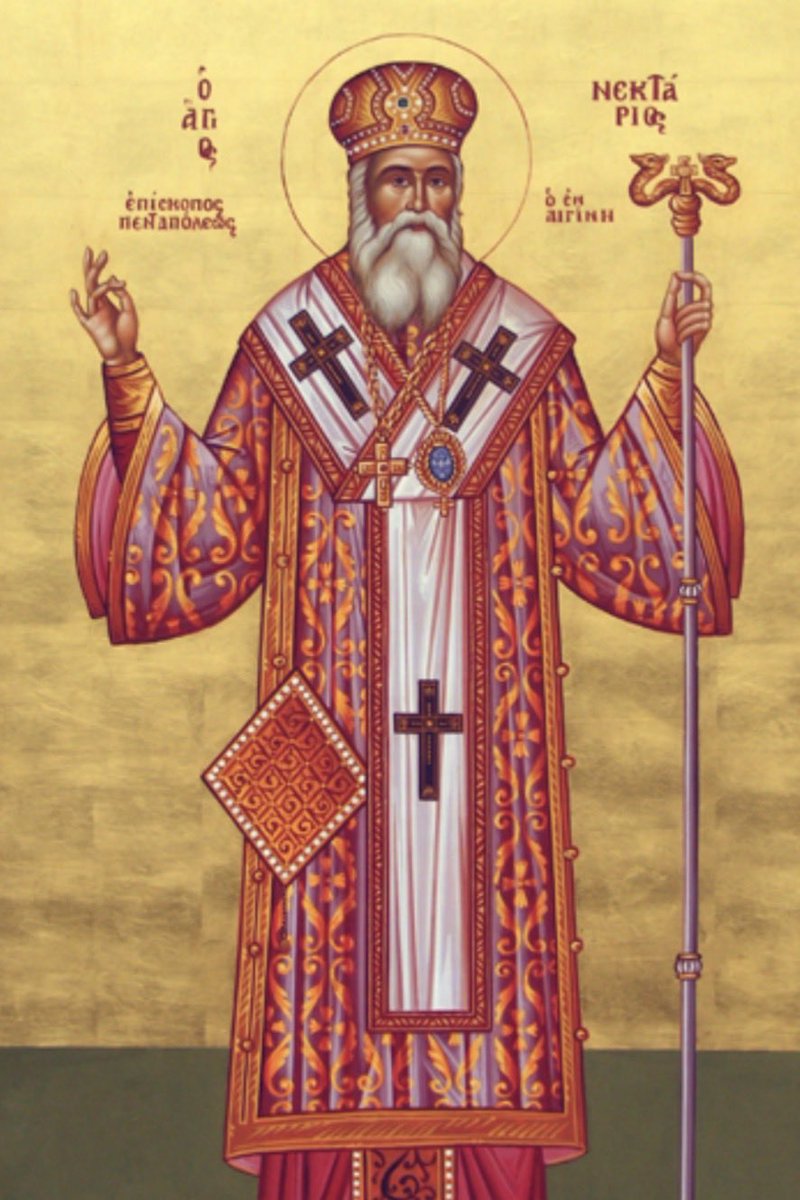
“Do not despair if your loved ones do not understand your path. Truth has always been a stranger to the world before it became its light.”
Saint Nektarios of Aegina