Saw three different teams on my timeline today all joining the @ventures_core BTCFi Accelerator.
@magni_finance, @evenicefi and @Mintware_org.
All of them got picked up around the same time.
Magni is building around BTCFi tools, Venice is focused on liquidity flow, and Mintware is pushing on-chain growth through referrals. All of them are now inside the same accelerator with support from @Coredao_Org.
To me this feels like Core putting together the next wave of BTCFi builders in one place instead of waiting for the market to catch up.
My personal view is that this is the start of a bigger push for the ecosystem, I'd recommend keeping an eye on every one of these teams.
Depressed markets are the only time you can see which systems earn their keep.
When everything turns red, speculation evaporates instantly.
What doesn’t evaporate is the work decentralized networks are economically obligated to perform:
> Storage networks still store because someone needs the data available tomorrow.
> Compute networks still route training jobs because models have to ship.
> Payment rails for agents still clear because machines will keep talking to machines.
Sentiment collapses quickly.
Utility rises slowly.
When the noise filters out, you’re left with the layers that clear in every regime.
Those are the layers that quietly survive every cycle.
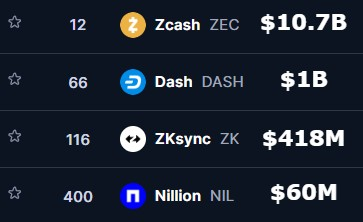
Buying $NIL right now feels like buying $ZEC in the first year before anyone realised how massive the privacy narrative could get.
Nillion already has real tech, real compute demand, and a whole ecosystem forming around private AI workflows.
The market cap doesn't match what's being built. And tbh $60M for the most relevant AI privacy play of the cycle is a joke compared to where the sector is headed.
The highlight of Rev+ is that it fixes a problem everyone just accepted for years.
Builders finally get a cut of gas fees from real activity instead of praying for grants or emissions.
It feels like @Coredao_Org took a very old issue in web3 and gave it a practical solution.
Builders don’t disappear when candles turn red.
They stay because infra demand tracks workloads, not sentiment.
Models still need GPUs.
Agents still need routing.
Robots still need inference close to the user.
Prices move. Workloads don’t.
In 2021, crypto mostly synchronized with speculation.
Today, DeAI rails coordinate real production: proofs move, tasks settle, data stays local.
The panic on the timeline just reminds me that sentiment is noisy while throughput is steady.
If you're here for the narratives, it feels late.
If you’re here for the infra, it feels early.
Everybody's wallets are in pain right now.
The whole market's been sluggish and it's normal to feel price fatigue when nothing wants to move, even the projects you actually believe in.
But the thing most people are forgetting is simple. A dip for $BTC is exactly what the $CORE ecosystem has been waiting for.
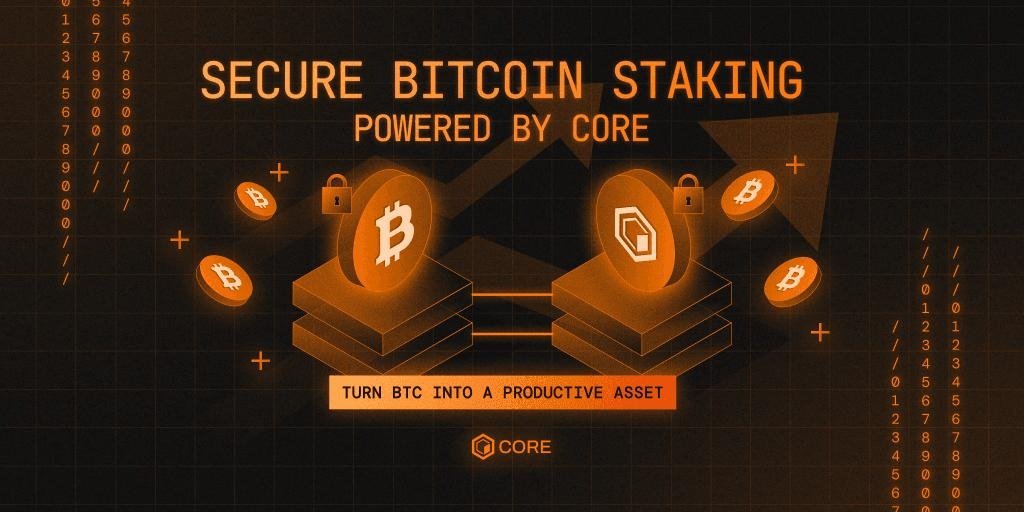
Cheaper BTC means more people start thinking about stacking + staking again, especially with a native setup that keeps your coins self-custodied and productive at the same time.
Once attention shifts back to BTC accumulation, #CoreDAO's native BTC staking is going to be the first place people look. Yield that stays tied to Bitcoin, secured by Bitcoin, and lives inside a chain built for it.
The noise around price might fade, but this mechanic is going to wake everyone up again.
Before AI, attention set the price.
Now intelligence turns emotion into a tradable signal.
Agents scan X to measure people’s emotions, then use that data to trade in markets that bet on mood - like prediction markets, but for feelings.
@ionet can feed them bandwidth - distributed GPUs that scan, classify, and react in sub-second cycles.
Emotion isn’t just something humans express anymore - it’s the input powering the next financial system.
The faster you feel it, the faster you price it.
The mood becomes the market.
I used to use ChatGPT for fitness.
I’d upload a photo and it would tell me which muscle groups needed work.
Now it says:
"I can’t comment on your physical appearance."
That’s how soft control begins.
First, models can’t help you harm anyone.
Then, they can’t talk about your body.
Next, they refuse entire categories of thought.
The pattern is always the same:
control packaged as compassion, censorship shipped as safety.
Autocracy doesn’t always start with guns.
It starts with defaults.
Code decides what you can ask,
then what you can see,
then shapes who you can be.
The machine isn’t protecting you.
It’s training you to comply.
Don’t build systems that protect people from choice.
Build ones that return it.
The 402 status code slept for 30 years.
x402 revives it as the handshake between AI and money.
Every call becomes pay-per-use, so agents can act without a human in the loop.
No API keys, no billing dashboards.
The network thinks and pays in one motion.
The internet taught us to share everything.
Then Web3 made everything transparent.
Somewhere along the way, we lost privacy.
Your data, your trades, and your logic are all public now.
Then came @nillion.
A decentralized network for private computation.
You can now compute on encrypted data without ever revealing it.
Private DeFi.
Private AI.
Private collaboration.
What makes Nillion special IMO is their adaptability.
It fits naturally into the AI era, where models, data, and compute WILL need to interact securely, and there's no way around it.
This is how intelligence scales without giving up control.
AI agents can think fast, but they just can’t transact.
x402 closes the loop.
An agent can now pay per query, per image, per inference. Capital flows to agents with verifiable reputation and on-chain provenance.
Cognition can finally drive cashflow.
Most agents are goldfish.
They execute, forget, repeat.
No persistent state, no provenance, no way to verify what they learned.
ERC-8004 changes that.
It gives agents a portable identity record - an on-chain spine that carries attestations, credentials, and actions across time and networks.
> An agent that booked your flight last week can prove it today.
> Another can use its transaction log to negotiate better prices.
With zk attestations, proofs stay portable without leaking data.
With DeAI rails at the edge, records sync where agents actually operate.
Instead of re-verifying every agent, you just verify its ERC-8004 record.
Proof replaces reputation marketing.
Memory becomes composable. Identity becomes liquid.
Machines start remembering who they are.
Execution stayed sharp across Core this week.🔶
• $10K USDC rewards entering the final stretch
• Molten Phase-2 claims live
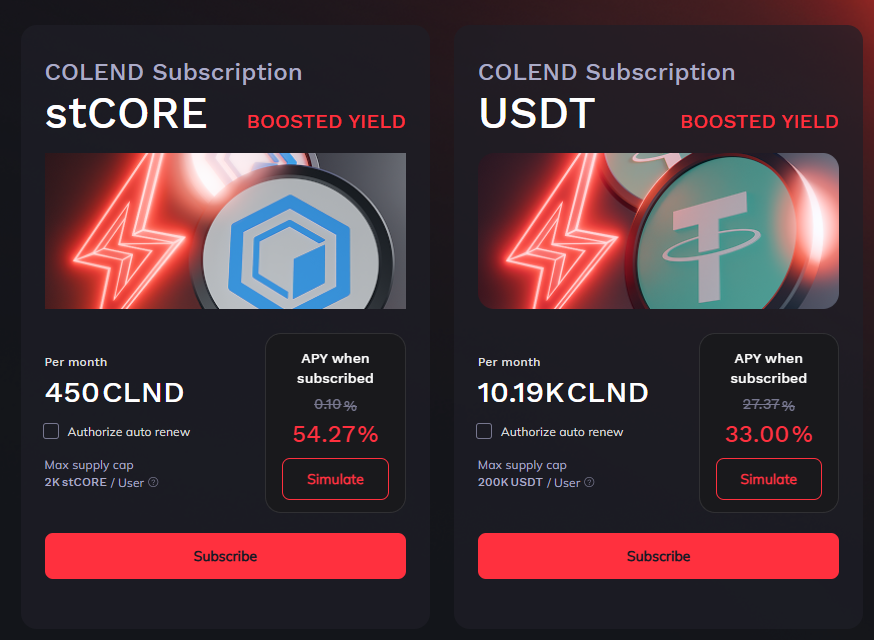
• Boosted USDC yields on Colend
And so much more. Let’s run it 👇
.@colend_xyz's new subscription model is lowkey brilliant.
You stake like normal, but pay a bit of $CLND monthly and your APY gets boosted instantly.
I'm gonna give it a try for the next month and update you guys with the results. 🫡
AI learned to talk.
Now it’s learning to move.
Robotics is the physical sequel to language models.
Same cognition, new stack.
Motion needs locality. A robot can’t wait 200 ms of cloud lag to open a door.
That’s where DeAI fits: inference where the sensors are, at the edge, with proofs that travel and motors that act.
Give the body of AI a decentralized nervous system and it stops being a demo.
Robotics becomes an economy.
I actually love the name Pointless for this @HoudiniSwap campaign 🔥
No points, no tiers, no waiting. Just payouts in $USDC every time you bridge.
If you're part of the @Coredao_Org community, this is your cue. Most of you already hold $CORE in spot anyway. Might as well put it to work a little instead of letting it sit idle.
Swap through Houdini, keep it private, decentralized, and get paid back in real $USDC.
There are tiny fees involved, but it's nothing when compared with the payout.