@rmantha2 @alifc If the coin is not needed then how would you propose Ethereum secures its network? How is Ethereum supposed to prevent bad actors from spamming the network? And how do you avoid accidental or hostile infinite loops or other computational wastage in code without gas fees?
Hoooooly shit. Here's @LidoFinance, on the topic of solo node operators. (source: https://t.co/c1r7viVYWg)
- “We think that most of the stake should be managed by professional operators”
- “Most solo operators are not rational … they do it for fun”
12/ When the merge occurs we’ll have this structural seller that has filled every Ethereum buyer for the last seven years disappear at one moment in time, paired with increased discretionary demand
11/ This will be paired with a very dramatic fundamental increase in value that will probably also stimulate discretionary demand.
And also a massive increase in the staking rate which will also fuel discretionary demand.
1/ There are several things leading up to an extraordinary supply shock for eth.
Key among these is the merge: the most powerful structural flow catalyst to ever occur in the crypto space.
10/ This will create the lifting of the ceiling that has historically capped the price of the asset.
Instead of needing new money flowing into the network every day to sustain price, you will instead need new money leaving the token every day to keep the price from rising.
9/ Ultimately you can never sustain any parabolic rise in crypto history because you create so much sell pressure by actually producing the parabolic rise.
The merge fixes this problem.
There will be no more miner issuance dictating the entire market.
8/ This creates a very reflexive price action where when the asset goes up in value it naturally pushes the price back down, because it creates more sell pressure.
This is because the supply is denominated in tokens but the demand is denominated in fiat.
7/ The structural seller of a proof-of-work asset is the miner.
Miners receive issuance denominated in tokens. Therefore issuance linearly correlates with the price of the asset.
6/ The crypto space is dominated by BTC and ETH. The rest of the market tends to follow their behaviour. Both assets are proof-of-work
The space at large, and the macro crypto cycles, are governed by these proof-of-work supply and demand dynamics
5/ Fundamentals can only impact price through their ability to affect supply and demand.
Structural supply and demand forces are extremely important.
Proof-of-stake assets in general have much more favorable supply and demand dynamics than proof-of-work assets.
4/ Supply and demand is the price that you see when you look at any asset
It is the price at which buyers and sellers are at equilibrium
The only thing that actually impacts price is supply and demand
3/ The merge is the most powerful structural flow catalyst to ever occur in the crypto space.
Because this is very hard to price in, we can expect it to have a dramatic impact.
2/ The crypto space trades on supply and demand. Price is determined by an equilibrium between buyers and sellers.
The most important factor is structural supply and demand factors.
We can see this with the bitcoin halving event every four years.
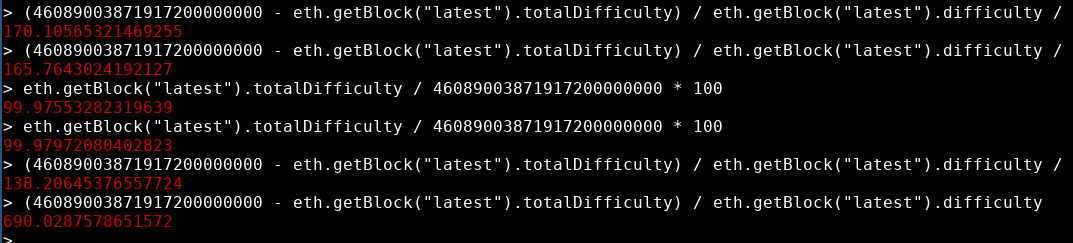
We're very close to a historical event. We're testing PoS on #Ethereum. Today will be the first mainnet shadow fork ever. We're roughly 690 blocks (~2 h) away from TTD. Follow here: https://t.co/T20ZMgApYw or https://t.co/Uod8WBsqtw
Huge props to @parithosh_j! #TestingTheMerge