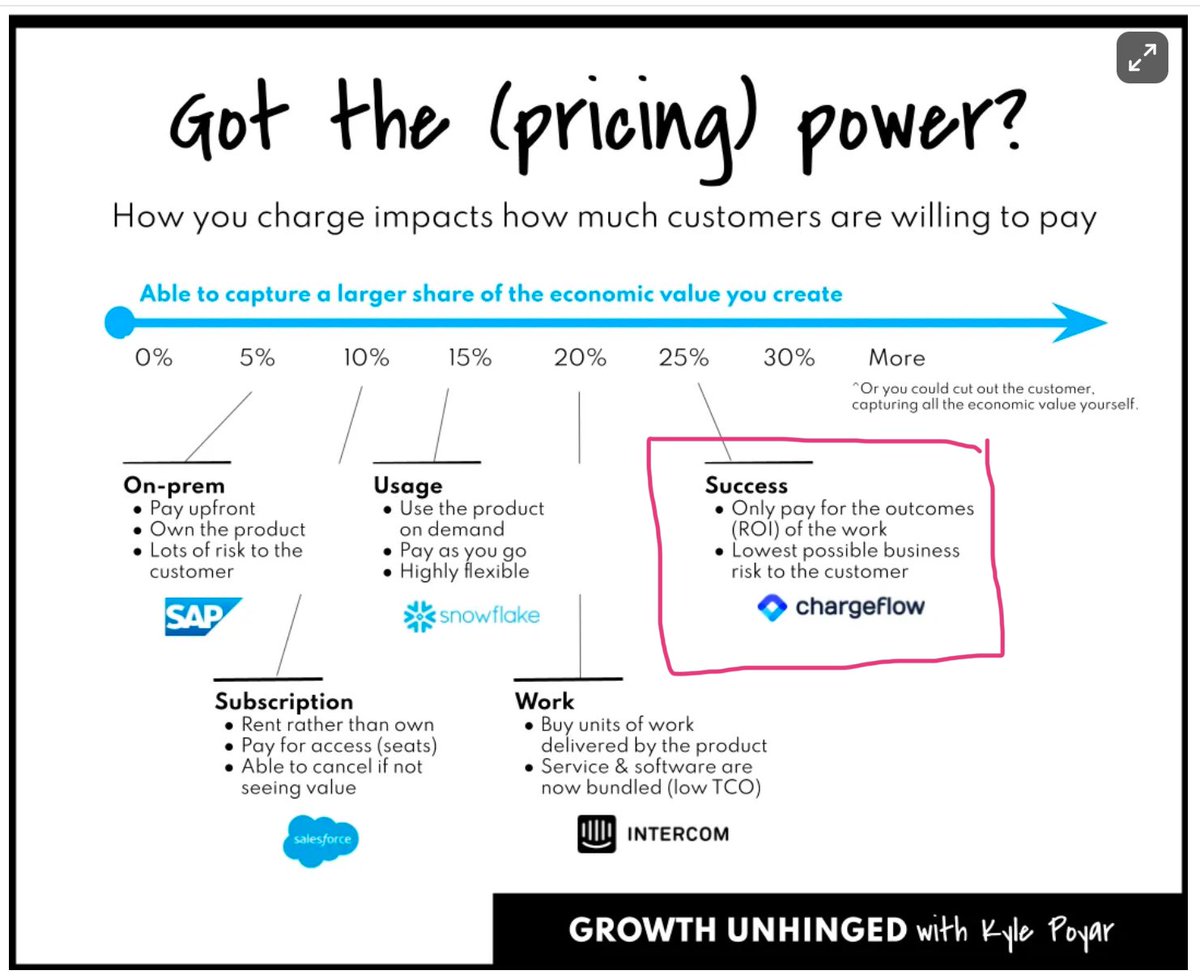
@chiefmartec@poyark Selling work, not necessarily success. Success-based pricing is complex and the most challenging. Measuring value for the customer isn’t a straight line.
Excited to announce I'm launching a VC Platform newsletter! 🚀
After nearly a decade immersed in the @VCPlatform world, I'm excited to start sharing tried-and-tested strategies to optimize your fund's approach.
Sign up 👉 https://t.co/bjzOXa7MR0
Do you have a project that needs hands-on resources in #DataScience, #MachineLearning, or #AI? Sponsoring a capstone project might be the solution.
Learn more about our upcoming virtual information sessions.
July 18: https://t.co/Zg1hIQIpPX
August 1: https://t.co/Lwcl6zH7Lt
A ton of leaders in SaaS, from HubSpot to ServiceNow to Blackline get 40% or more of their revenue from partners and the channel
Yet, it's 0% for many startups
What are you doing about that?
Haidt writes that he hopes to “roll back the phone-based childhood” by 2025. He urges parents to delay giving their children smartphones until driving age. If enough parents start doing this, it will create a tipping point. A world where children can be kids again.
“The Great Rewiring,” he writes, “devastated the social lives of Gen Z by connecting them to everyone in the world and disconnecting them from the people around them.” Boys were “swallowed whole” by virtual worlds, never learning agency and independence in this world.
And in what Haidt calls “the largest uncontrolled experiment humanity has ever performed on its own children,” we’ve allowed tech companies to place in the hands of our children addictive devices that steal their sleep, fragment their attention and manipulate their emotions.
The tragic result is that we’ve been “over-protecting children in the real world … and under-protecting them online.” Teens need the slings and arrows of embodied experience to become functional adults. They need in-person friendships and social networks.
There’s been a parallel decline in the amount of time teens spend in face-to-face play with others. Physical play confers mental and social benefits that are essential for a young person’s development, but increasingly, over-protective parents keep their kids indoors.
Teen girls disappeared into social media, boys into video games and pornography. “Gen Z became the first generation in history,” he writes, “to go through puberty with a portal in their pockets that called them away from the people nearby and into an alternative universe.”