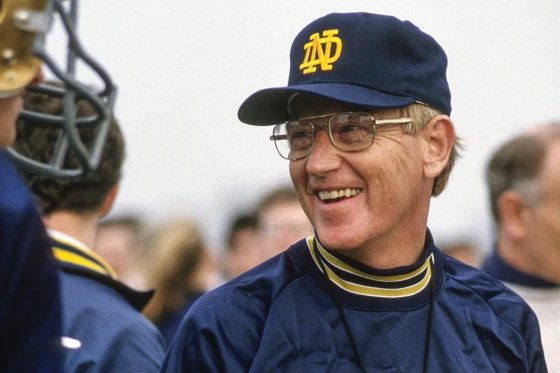
We are working on a training for schools and business staff. “An Uncommon Team of Trust!" - Gene Haydock's wisdom!) - "Next to physical survival, the greatest need of a human being is psychological survival, to be understood, to be affirmed, to be validated, to be appreciated!
OMG everyone needs to listen up this young Harvard Graduate’s Speech because this young man is going to make a difference in this World & how we as humans see others no matter what their background is.This literally brought me to tears because of what is happening in the World.
Coming soon! “The Uncommon Team!” For school staff, students, and businesses! Lessons and thoughts from Gene Haydock, the Uncommon Educator! Please share! Priceless!#UncommonTrust
Denzel Washington had a 1.8 GPA when his university asked him to leave. Years later he stood at a podium and told 5,000 Ivy League graduates: "If you don't fail, you're not even trying."
March 1975. He'd switched majors three times at Fordham: pre-med, pre-law, journalism. Cardiac morphogenesis was the course that broke him. He couldn't pronounce it. He couldn't pass it.
He was 20 years old, sitting in his mother's beauty shop in Mount Vernon, when an elderly woman under a hair dryer pointed at him and said he was going to travel the world and speak to millions of people.
He went back to Fordham and switched majors a fourth time. Theater.
Two years later he played Othello as a senior. Graduated 1977. American Conservatory Theater in San Francisco. Film debut 1981. Best Supporting Actor for Glory in 1989. Best Actor for Training Day in 2001. Tony in 2010. Presidential Medal of Freedom in 2025.
In 2011, Penn picked him as commencement speaker. The Oscars and the Tony made him eligible. His son Malcolm, a sophomore studying film, made him the actual pick. The university secretary called him their first choice, no debate.
The speech itself is about failure. He told the graduates he once had a 1.8 GPA. He failed an audition for a musical because he couldn't sing. He delivered it all in the cadence his father used in the pulpit. Reggie Jackson's 2,600 strikeouts. Edison's 1,000 failed experiments. The "fall forward" refrain ran the entire 22 minutes.
A single YouTube upload of the speech has crossed 35 million views. Every motivational compilation runs it. Every business school plays it.
The woman in the beauty shop said millions. She was off by two orders of magnitude.
In Navy SEAL training, students who failed daily had to do two extra hours of punishment.
They called it “circus.”
Those students should have burned out first.
Instead, they got stronger than everyone else.
Admiral McRaven spent 20 minutes explaining the 10 lessons SEAL training taught him:
Lesson 1: Make your bed.
Every morning, the first thing instructors inspected was your bed. Corners square. Covers tight. Pillow centered.
"It seemed ridiculous at the time. We were aspiring to be real warriors."
"But if you make your bed every morning, you will have accomplished the first task of the day. It will encourage you to do another task, and another, and another."
"And if by chance you have a miserable day, you will come home to a bed that is made. That you made."
Lesson 2: Find someone to help you paddle.
Students were broken into boat crews. Seven men paddling through 8 to 10 foot surf.
"Every paddle must be synchronized. Everyone must exert equal effort or the boat will be dumped back on the beach."
"You can't change the world alone."
Lesson 3: Measure a person by the size of their heart, not their flippers.
The best boat crew was "the munchkin crew." No one over five-foot-five.
"They out-paddled, out-ran, and out-swam all the other boat crews."
"The big men would make fun of the tiny little flippers the munchkins put on their tiny little feet. But these little guys always had the last laugh."
"SEAL training was a great equalizer. Nothing mattered but your will to succeed."
Lesson 4: Get over being a sugar cookie.
Several times a week, uniform inspections. Hat perfectly starched. Belt buckle shiny.
"No matter how much effort you put in, it wasn't good enough. The instructors would find something wrong."
Fail the inspection, you ran into the surf. Then rolled in sand until covered head to toe. "Sugar cookie."
"Many students couldn't accept that all their efforts were in vain. Those students didn't make it through training."
"Sometimes no matter how well you prepare or perform, you still end up as a sugar cookie. It's just the way life is sometimes."
Lesson 5: Don't be afraid of the circus.
Fail to meet standards, your name went on a list. End of day: "circus." Two hours of extra calisthenics designed to break you.
"No one wanted a circus. More fatigue meant the following day would be more difficult."
"But everyone made the circus list. And an interesting thing happened. Over time, those students got stronger and stronger."
"Life is filled with circuses. You will fail often. It will test you to your very core."
Lesson 6: Sometimes you have to slide down the obstacle head first.
The obstacle course record had stood for years. Seemed unbeatable.
Until one student went down the slide for life head first. Mounted the top of the rope instead of swinging underneath.
"Dangerous. Seemingly foolish. Fraught with risk."
"Instead of several minutes, it took him half that time. He broke the record."
Lesson 7: Don't back down from the sharks.
The waters off San Clemente are breeding grounds for great white sharks. Night swims were mandatory.
"If a shark begins to circle your position, stand your ground. Do not swim away. Do not act afraid."
"If the shark darts towards you, summon all your strength and punch him in the snout. He will turn and swim away."
"There are a lot of sharks in the world."
Lesson 8: Be your very best in the darkest moments.
Underwater ship attacks. Divers swim over two miles to the target. As you approach, the steel structure blocks all light.
"The keel is the darkest part of the ship. You cannot see your hand in front of your face. The noise is deafening. You can easily become disoriented."
"At the darkest moment of the mission is when you must be calm. When all your inner strength must be brought to bear."
Lesson 9: Start singing when you're up to your neck in mud.
Hell Week. Six days of no sleep. Constant harassment.
His class was ordered into the mud flats. "The mud consumed each man until there was nothing visible but our heads."
Eight hours until sunrise. Instructors said five men could quit and everyone could leave.
"Then one voice began to echo through the night. Terribly out of tune. Sung with great enthusiasm."
"One voice became two. Two became three. Before long everyone was singing."
"Somehow the mud seemed warmer, the wind a little tamer, and the dawn not so far away."
"If I have learned anything, it is the power of hope. One person can change the world by giving people hope."
Lesson 10: Don't ever, ever ring the bell.
A brass bell hangs in the center of the compound.
"All you have to do to quit is ring the bell."
"Ring the bell and you no longer have to wake up at 5 o'clock. No longer have to do the freezing cold swims. No longer have to endure the hardships."
"Don't ever, ever ring the bell."
This 20 minute speech will teach you more about discipline, resilience, and hope than every self-help book combined.
Bookmark & give it 20 minutes today, no matter what.
In 2014, Admiral William McRaven gave a 19-minute masterclass to 8,000 students on changing the world.
He led missions that changed history
His lessons:
• Never, ever ring the bell
• The little things matter
• Don’t fear the circuses
10 lessons from 36 years as a Navy SEAL:
As they lay Coach Lou Holtz to rest today at Notre Dame with many many of his former players there it’s the perfect time to look back on Coach Holtz greatest speech of all-time ☘️🙏🏼
Lou Holtz looking back at life:
"How lucky I am to be married to the person I am, to be in the country we have, to have the children we have... I don't think you live your life in regrets... you can be happy or sad, that's your choice. I choose to be happy."
Rest in Peace 🙏
"Today everybody wants to talk about their rights and their privileges.
50 years ago, people talked about their obligation and responsibility.
You have obligations to other people.
If you want to fail, you have the right to fail.
You do not have the right to cause other people to fail because you do not do everything to the very best of your ability."
As mentioned on air the other day at @KWCH12, this is my FAVORITE Super Bowl commercial of all time.
I remember when it aired, and I froze.
God made a farmer.
The Lawless family is made of a bunch of farmers. I may not know much about it, but I'm proud to be a part of a community that provides. Cheers to farmers. And cheers to my dad as we'd ride to grandma's farm in Belle Plaine when I was little. We often listened to Paul Harvey. Good day!
#Superbowl #Superbowlcommercial #PaulHarvey #Commercial #farmlife #farmer
A great educator does more than teach content. They create safety, belief, and connection, the very conditions the brain needs to grow. Brain research shows that when children feel seen, supported, and encouraged, their brains are more open to learning, resilience, and confidence. Long after the lessons are forgotten, kids remember how a teacher made them feel and that feeling quietly shapes who they become.
Everytime I see Trump demean hecklers, I am reminded how President Obama handled interruptions.
I guess that’s one of the reasons Obama earned the Nobel prize.
15 Ways to Incorporate Maslow Before Bloom… Then Gardner, Jung & Goleman into Your Classroom & School
(for students and staff)
1. Start with Safety Before Content
What it is: Prioritizing physical and emotional safety before instruction.
Brain-based: A stressed nervous system can’t access the prefrontal cortex.
Try today: Greet students by name and ask one genuine check-in question.
2. Normalize Feelings Without Letting Them Run the Room
What it is: Validating emotions while still holding expectations.
Brain-based: Naming emotions calms the amygdala.
Try today: Say, “I see you’re frustrated. Let’s slow this down together.”
3. Teach Skills, Not Just Correct Behavior
What it is: Viewing behavior as communication.
Brain-based: Skills replace survival responses.
Try today: Ask, “What skill might be missing here?”
4. Offer Multiple Ways to Learn (Gardner)
What it is: Honoring different intelligences.
Brain-based: Engagement increases when strengths are activated.
Try today: Let students show learning through writing, speaking, drawing, or building.
5. Build in Movement (for Everyone)
What it is: Short, intentional movement breaks.
Brain-based: Movement increases oxygen and dopamine.
Try today: 60 seconds of stretching or walking mid-lesson.
6. Create Predictability and Structure
What it is: Clear routines that reduce anxiety.
Brain-based: Predictability lowers threat response.
Try today: Post a simple daily agenda and stick to it.
7. Focus on Relationships Over Compliance
What it is: Connection before correction.
Brain-based: Humans regulate through safe relationships.
Try today: Spend two uninterrupted minutes talking with one student or colleague.
8. Name Strengths Out Loud
What it is: Helping students and staff recognize what they’re good at.
Brain-based: Strength recognition builds intrinsic motivation.
Try today: Tell someone, “I noticed you’re really good at…”
9. Teach Emotional Literacy (Goleman)
What it is: Helping people identify and express emotions accurately.
Brain-based: Emotional awareness improves regulation and decision-making.
Try today: Use a feelings word beyond “good” or “bad.”
10. Normalize Stress, Don’t Pathologize It
What it is: Teaching that stress is part of being human.
Brain-based: Fear of stress increases stress.
Try today: Say, “This feels hard because it is hard—not because you’re failing.”
11. Encourage Reflection and Meaning (Jung)
What it is: Helping students connect learning to identity and purpose.
Brain-based: Meaning increases memory and engagement.
Try today: Ask, “Why might this matter outside of school?”
12. Model Regulation as an Adult
What it is: Adults being aware of their own nervous systems.
Brain-based: Emotions are contagious.
Try today: Take one slow breath before responding when frustrated.
13. Allow Productive Struggle, Not Toxic Stress
What it is: Supporting challenge without overwhelm.
Brain-based: Learning happens in the optimal stress zone.
Try today: Ask, “Is this challenging or shutting you down?”
14. Support Staff Needs, Not Just Student Needs
What it is: Applying Maslow to adults too.
Brain-based: Burned-out adults can’t co-regulate kids.
Try today: Check in with a colleague and really listen.
15. Remember: Regulation Comes Before Reasoning
What it is: Calming first, teaching second.
Brain-based: The brain must feel safe to think.
Try today: Pause the lesson to reset instead of pushing through.
From the book Maslow Before Bloom… Then Gardner, Jung & Goleman by Dr Bryan Pearlman
This story was truly heartwarming. I found it in the CBS archives. A man approaches a CBS reporter in Russia after realizing they are American and shares the story of his captivity. He had been held in a concentration camp alongside American soldiers, separated from them by a large fence.
Each American soldier received five kilos of food from the Red Cross every Friday, but the Germans allowed nothing for the Red Army POWs. They were given only a small amount of soup each day and were constantly starving.
Some U.S. soldiers came up with a plan with the Red Army POWs across the fence to throw food over to the Russian prisoners. The plot was eventually discovered, and the Gestapo brought all 8,000 American soldiers outside and demanded they reveal the names of the Russians involved on the other side. Not a single American opened his mouth or betrayed them.