Thrilled to be featured (along with a few of the many rising stars of digital history) in this week's PNAS Front Matter: https://t.co/gQzms3mfI4 "Historians Use Data Science to Mine the Past"
My plenary call: a global index of climate harms. Have a database? Contact me or Ruth Mostern at Pitt. Watch this initiative!
https://t.co/jE4Bk7QbOE
My article: https://t.co/PYIXCkJcot
My War Over Rent talk: how to build representative social history beyond cherry-picking. The tapestry method connects patterns across a century of debates to individual lives in the archives.
https://t.co/4bz6b56U4q
What a terrific AI and History Conference at Johns Hopkins! Historians tackled archives, research tools, teaching, and reliable evidence. Explore the talks and recordings:
https://t.co/5ucHVkBxBf
For the first time today: the culmination of 15 years experimenting with digital history—and what it teaches us about navigating archives with AI.
1:30 ET, Baltimore + livestream:
https://t.co/DZrDPc4NfC
@DuttonBooks preorder:
https://t.co/0Xk7tOt3Fr
Are we living in an “age of AI”—or deciding to call it one?
Harvard’s Center on the Legal Profession asked historians how eras are made, why diffusion matters more than invention, and how historical memory cuts through hype.
https://t.co/CsHZlt6sBL
Irish tenants used maps, ledgers, and court records to challenge rising rents. Their evidence helped create the world’s first Land Court.
The history leaves us with a durable question: who controls the record?
https://t.co/tGcOHw9kQt
Subscribe for more essays.
AI didn’t save me from work. It helped replace repetitive Canvas labor with cumulative intellectual work.
The lesson for universities: use machines to reduce paperwork. Use the savings to bring humans back into the room.
https://t.co/oJ96MSqSp2
What happens when AI breaks our ability to establish what actually happened?
Some of the most consequential AI risks require no future capability jump. They are already here. A thread. 🧵
As I told Shae: “You don’t see Anthropic and OpenAI funding labs of historians and archivists. Maybe they should be.”
More on Episode 1 of Out of Tokens, and the right to a verifiable past:
https://t.co/SAtSaQ2I89
We need a right to a verifiable past: the right to inspect the evidence behind consequential claims about history, government, science, and public life.
Trustworthy AI needs historians, archivists, librarians, and social scientists—not computer scientists alone.
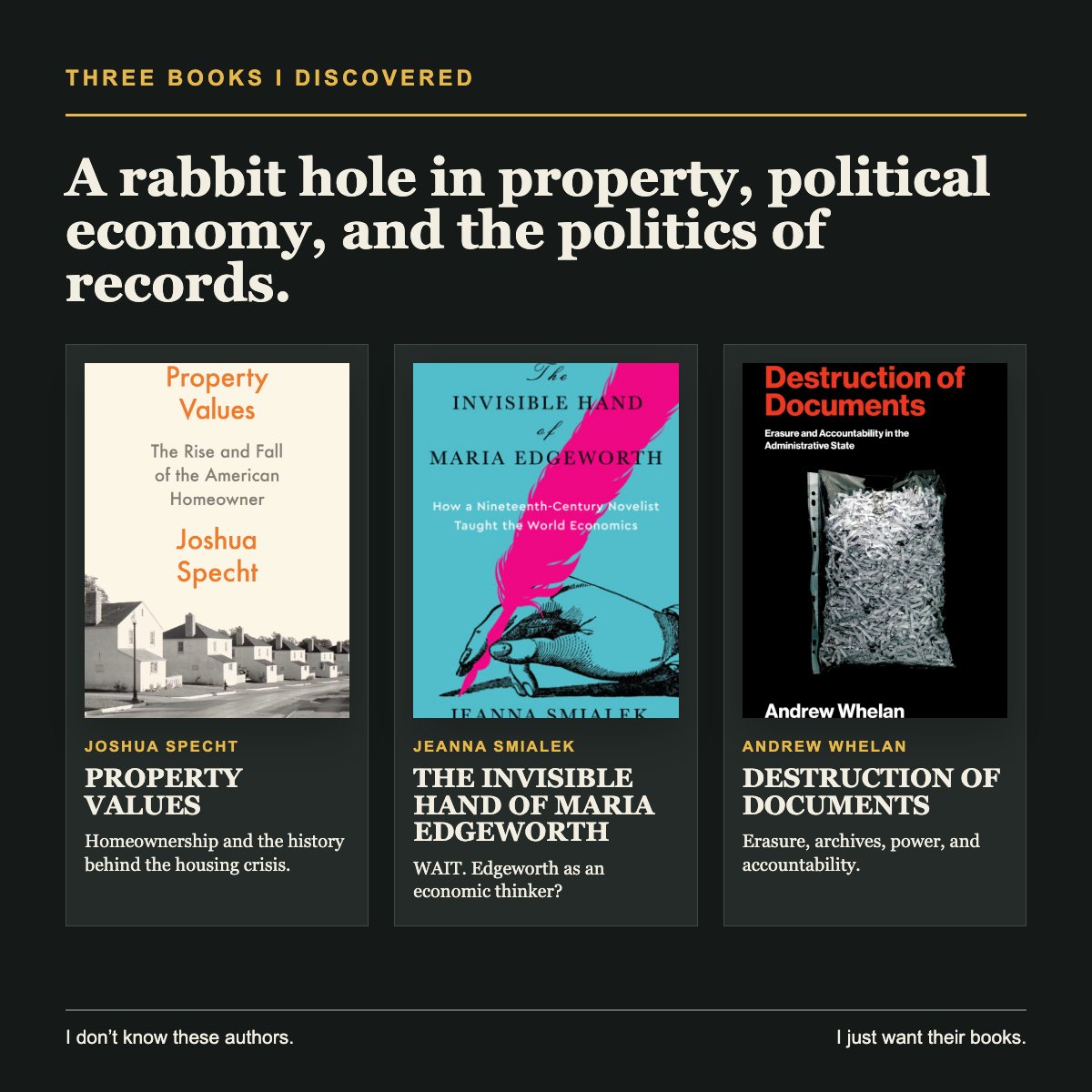
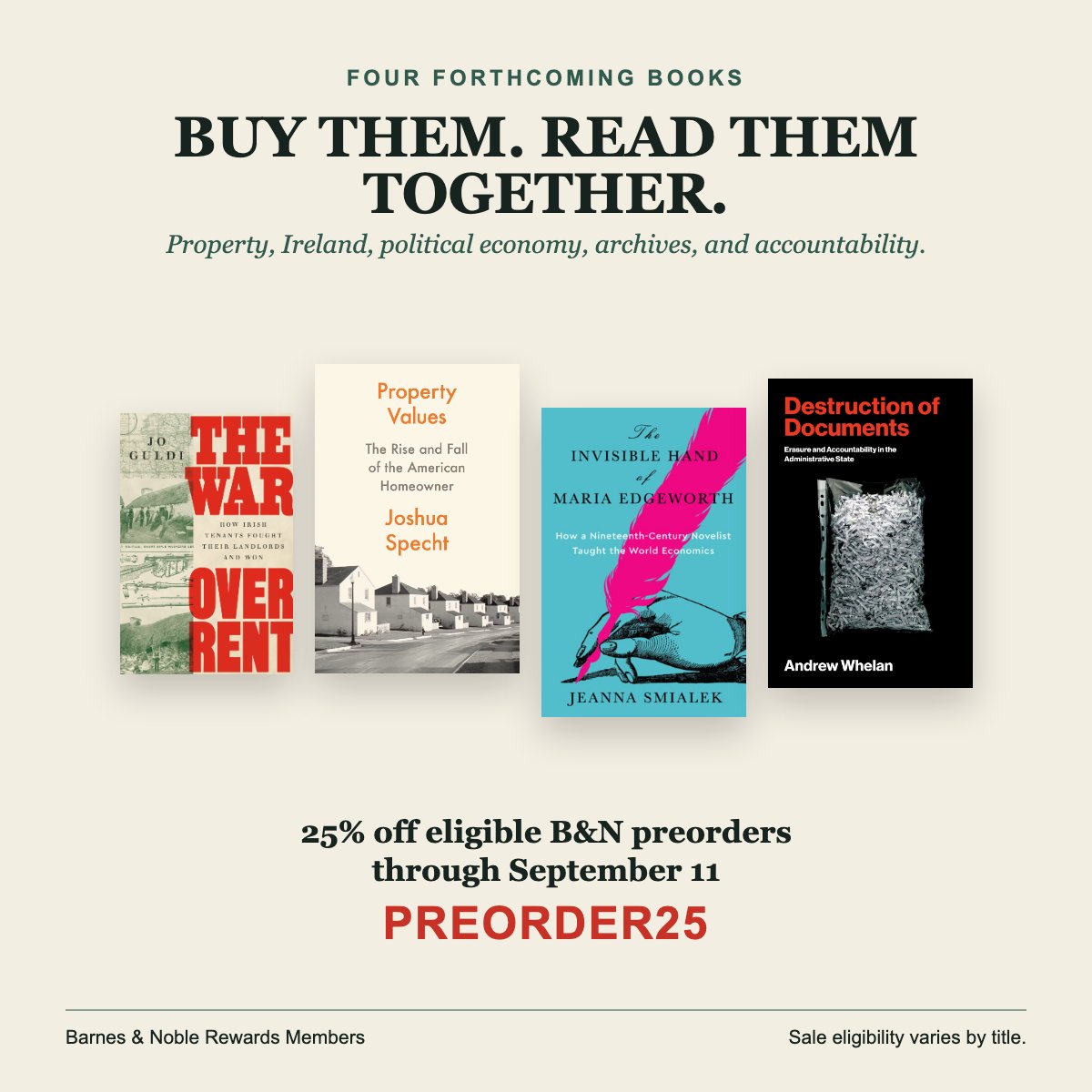
Well, this was dangerous. A preorder sale led me to @joshspecht on property, @jeannasmialek on Maria Edgeworth as an economic thinker, and Andrew Whelan on destroyed records and power. @duttonbooks’s THE WAR OVER RENT connects all three. PREORDER25
Turning Points is out—and our Trento conversations are in print.
My chapter asks what text mining does to evidence: Was that anecdote typical? What did the archive omit?
The digital turn didn’t make interpretation obsolete. It made its problems newly visible.
https://t.co/qmXNV9c4NS
I'm in Boulder this week for a series of events to help launch my new book, Building Postcarbon Futures.
Stoked to see it--and this stellar group of contributors--finally in print.
CUP: https://t.co/6QnACHQ3Fo
A*azon: https://t.co/6QnACHQ3Fo
Bookshop: https://t.co/63SKdT5utS
A good excuse to preorder books! B&N is offering 25% off all preorders for Rewards Members through Sept. 11 (+10% for Premium Members). That includes The War Over Rent, Data by Design, and The Father of the Man. Preorders matter to authors. Code: PREORDER25 ❤️📚