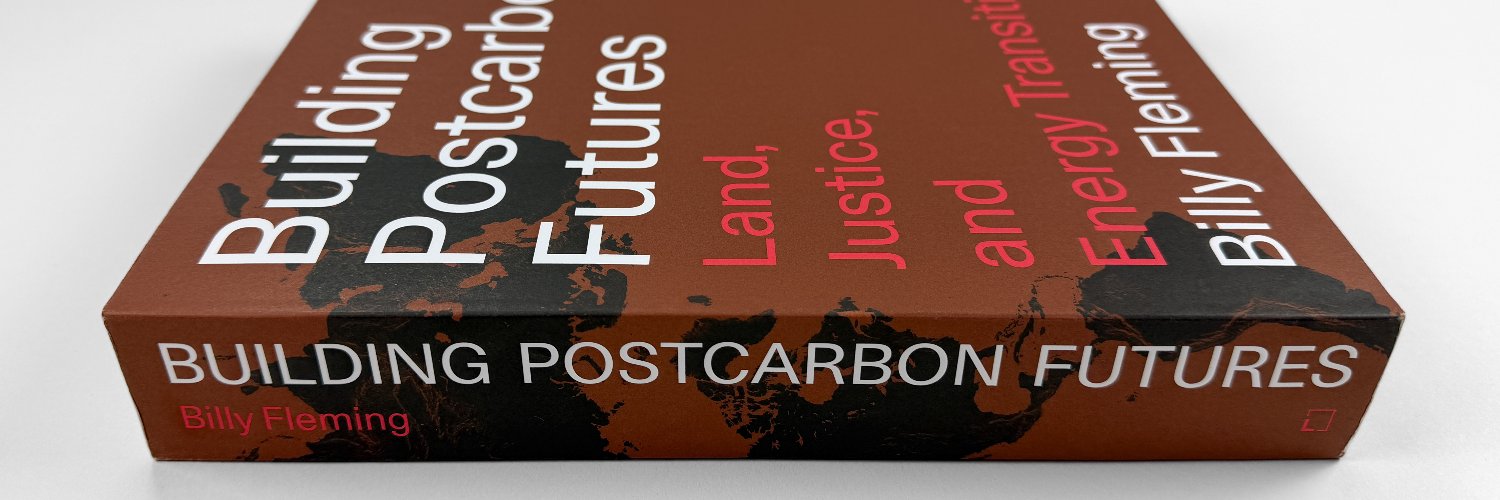
My brilliant book designer, Cristian Ordonez, just did a photoshoot for my beautiful child. I'm going to share one a day on here and remind you all to Preorder it soon!
CUP: https://t.co/6QnACHQ3Fo
Indie Bookshops: https://t.co/63SKdT5utS
Ama*on: https://t.co/M5TdExPGng
I don’t really understand how a core argument for BAAJA is that it will clear a bottleneck of all large scale industrial and infrastructure projects, but won’t lead to more data centers being built than the status quo.
Does the bill streamline development or not?
I think all these things can all be simultaneously true?
— the permitting bill would unlock a ton of clean energy buildout/absolutely critically needed transmission lines
— it would lead data centers to shoulder a higher burden of their costs
— it would also lead to more data centers overall, which is maybe a big problem if you take AI existential risk seriously and other AI downsides
— A lot of people on both sides of this debate absolutely are corrupted by money but many of them on each side are not and have good faith concerns for/against the bill
@fredstaffordcs Those pricing measures are obviously being negotiated (some would say dictated) by industry, so they’re not going to dissuade developers from building anything.
I didn’t expect to log on here during thanksgiving week and find people on twisting themselves into knots to say which unions count and which don’t, re: BAAJA. The organized labor force isn’t a monolith, no individual union or local is a monolith. They’re motley spaces.
I didn’t expect to log on here during thanksgiving week and find people on twisting themselves into knots to say which unions count and which don’t, re: BAAJA. The organized labor force isn’t a monolith, no individual union or local is a monolith. They’re motley spaces.
@jnoisecat@Matthuber78 Yeah I mean I obvi agree on that broader point in the abstract—everyone (left and otherwise) tends to use unions as a prop, elevating them when their interests align and deemphasizing them when they don’t.
@Matthuber78 I’m not sure if you understand the point. Are you saying AFL speaks for all organized labor? Are you aware that there’s almost certainly disagreement within the unions and federation writ large about this? Are you aware the labor movement doesn’t universally support BAAJA?
Our job, I think, isn’t to cater federal policy to that base impulse. It’s to pay them well to build better projects, and that means making hard choices about the kinds of infrastructure and built environment projects to support and which to wind down. BAAJA does not do this.
It also misunderstands the entire incentive structure of the building trades. They’re not an especially ideological set of unions—they want contracts for big projects to keep their members employed. I think most would be both excited and appalled by what that means in practice.
Tim Noah has a great piece on BAAJA in @newrepublic urging Dems to block it and hacking down some of its farcical presumptions. https://t.co/qs4ZYlLb8C
Not a video game person but I do love when something social happens that results in “lost economic productivity.” The solar eclipse—so much chatter about corporate losses when folks just walked out of their offices to look at the sky.
@arne__ness Well, some of the loudest voices on it now have also been saying it consistently, if quietly, since the end of the Obama Admin. This is just their pretense to shout about it again.
There may be a technical path to zero/negative emissions on this path. But I do not see a political one, as it will only get harder to build new clean energy capacity as people get more and more polarized in response to this abundance-themed buildout.
Yes and also the central concern with BAAJA imo is that it keeps the US on its current transition pathway: growing clean energy capacity *and* growing emissions.
All while stoking continued backlash to reindustrialization in rural and suburban communities that swing elections.
Building lots of clean is ofc extremely important, but within that the climate left tends to dispute market a) appetite for clean and b) ability to rapidly outcompete fossil without active state intervention beyond cutting red tape, including market (re)design
Centrist US climate politics seems to revolve mostly around a belief that the only meaningful thing to do is allow markets to build lots of clean energy in the US. That allows for A) narrow advocacy around cutting red tape & B) ignoring that a crisis is actively unfolding here