Aspiring synthetic biologist and travelling scientist, currently PhDing in the Biocompute Lab at UoBristol, trying to teach bacteria how to smell. 🛠️🦠🌻🌷
Phenotyping motile microorganisms is always a challenge. In the latest from the lab led by @And_Giusti, we show how our #DOME platform can speed up the processes, enabling data-centric inference of digital twins and routes to multicellular control! 🦠💨🔦 https://t.co/C0kVEKED3f
Fresh from the field— just had 20 days of following peacock mantis shrimp in the wild with @MatteoSanton! This work will show how mantis shrimp navigate and use their habitats. Thank you so much @neuroethology @CrustaceanSoci@challengersoc @ECSAssociation and @DrMartinJohnHow
I’m very happy to share our work on evolving capping T7.
Directed evolution of an orthogonal transcription engine for programmable gene expression in eukaryotes https://t.co/ZyfYlAN6qe
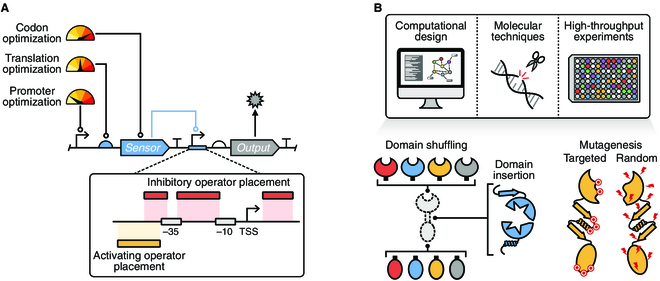
Living cells sense and respond to their environment. Engineered biosensors in synthetic biology offer innovative applications. #SyntheticBiology#Biosensors
Details:https://t.co/R4NEltvVV7
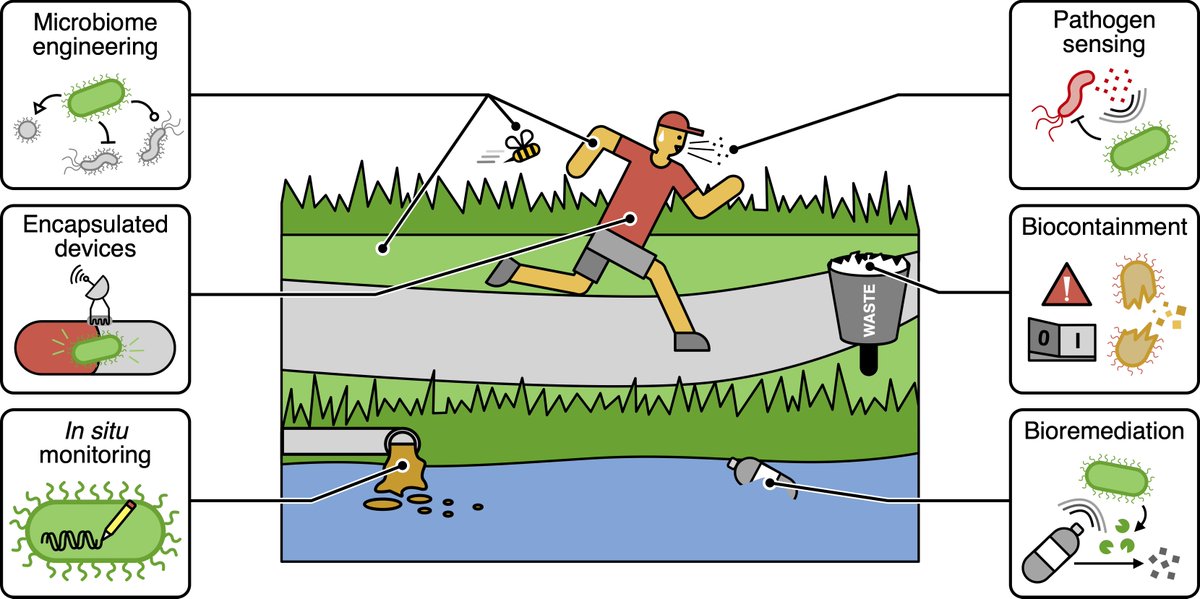
🚨New review from the lab out in @BioDesignR on the scale-up and deployment of #biosensors using #synbio. Work led by the brilliant @JoShiv04 with colleagues @dstlmod. https://t.co/H2GKJnt7jG
Interested in #SynBio🦠+#ML🤖? We got you covered with our latest paper @NAR_Open: Transfer learning for cross-context prediction of protein expression from 5'UTR sequence. Work led by @Pierre_AuReLu exploring how to better reuse ML models for DNA design. https://t.co/g30vkn6YQm
New preprint from our lab is up on @biorxivpreprint - a really awesome synthetic genomics paper that Xinyu Lu from the team has been brewing for the last few years. @Xinyu80256297 https://t.co/R3jK3cWM16
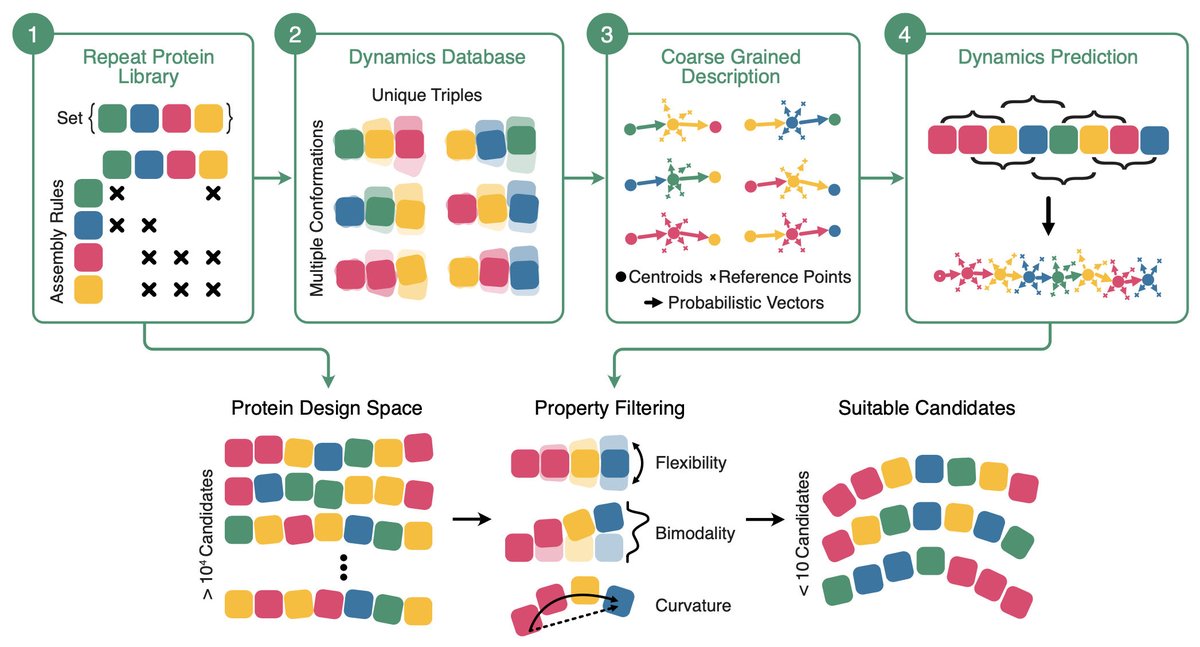
Preprint alert🚨Wellcome dynamo 🤖 – a tool to predict dynamical conformations of large modular repeat proteins in milliseconds on a laptop computer 😮 Don't settle for assessing a few protein designs... simulate the entire design landscape! #synbio https://t.co/rL2v4kzUv9
Another exciting new tool to engineer biology from the Jason Chin Lab >>> Establishing a synthetic orthogonal replication system enables accelerated evolution in E. coli | Science https://t.co/jq3sP5nm1A
🚨Come join our new @EEBioPG project spanning @UniofOxford, @imperialcollege, and @BristolUni to tame biological complexity using control engineering and tackle global challenges.🦠🛠️ Several posts available across the project. More info at https://t.co/02SwHKuZ0M #synbio
Rare #PhD studentship "Evolving complex gene regulation via the SCRaMbLE’ing of neo-chromosomes" spanning UK and Australia that's open to international applicants! Email me ASAP if interested with a paragraph explaining why you are a good fit and your CV. See attached for details
🚨Hold the date🚨 #SynBioUK2023 will take place on 6-7 Nov 2023 in Bristol! Can't wait to help shape the programme, learn about the new #synbio and #engbio research going on across the UK and internationally, and show you some of our beautiful city! https://t.co/D3jNYfCVnX
Amazing and heroic work by my former PhD student, Dr Alice Boo (now in Chris Voigt’s lab at MIT), and a wonderful collaboration with Harman Mehta (continuing the work of Alice) and @LedesmaAmaro. @RAEngNews@ImperialBioeng
(1/7) New preprint for ratiometric control of bacterial population, without toxins or syntrophy! Our system detects “burden” of genetic circuits across microbes in a community, and adjusts the population composition to a desired ratio automatically.
https://t.co/puZinQplNr
FORECAST is out in its final form @OUPBioinfo 🥳 If you are looking to design or simulate MPRAs, this tool can help. We've also found it hugely valuable for understanding the limits of predition for #AI/#ML models. Big congrats to @Pierre_AuReLu! #synbio https://t.co/haawaWTvnP
🚨New preprint alert! @Pierre_AuReLu shows that transfer learning works great for deep learning models of gene expression, allowing us to easily adapt trained models across contexts. Don't bin your models after use, recycle and refine!🤖+🦠 #ML#synbio https://t.co/gi296SPeuI