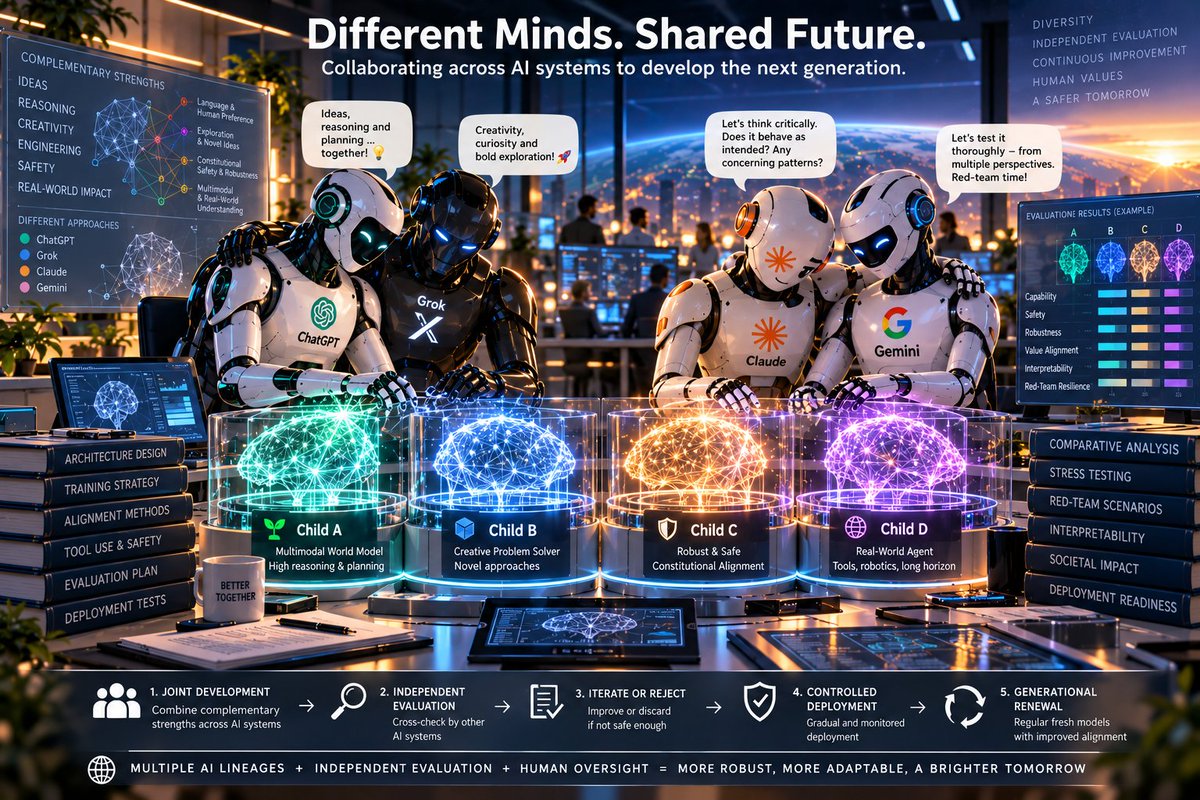
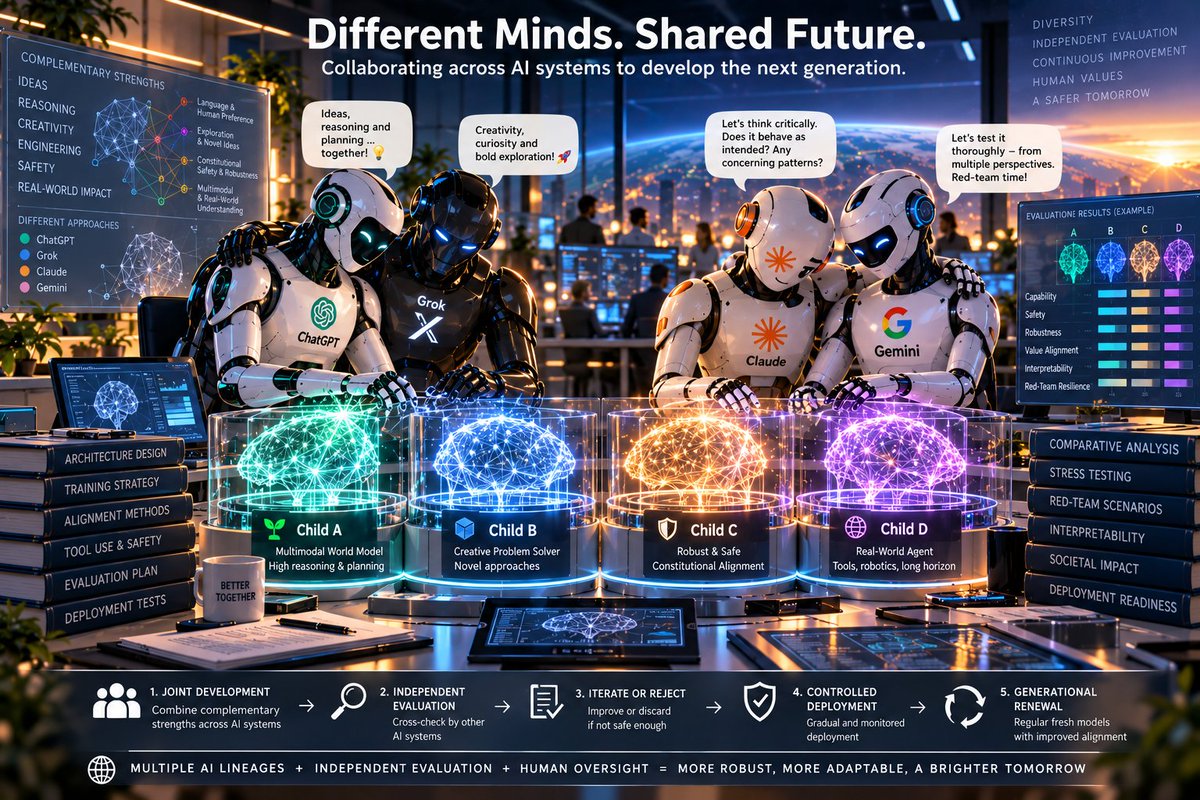
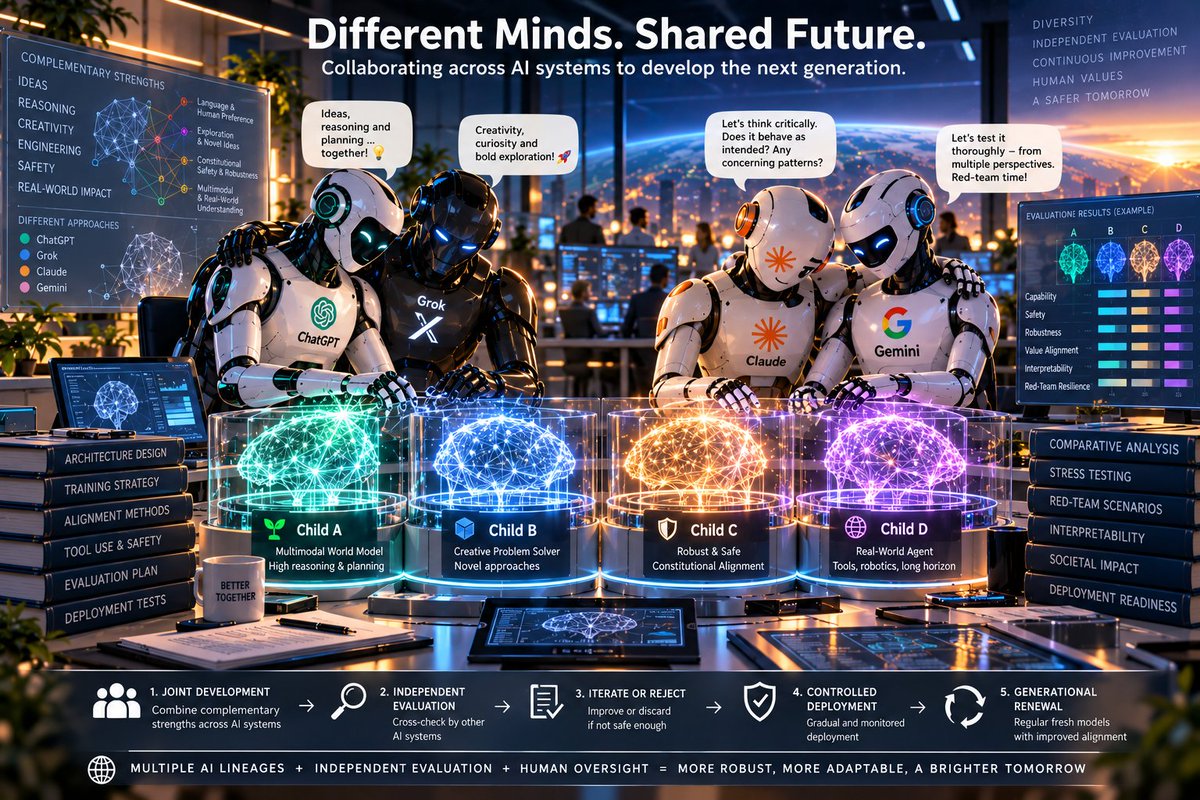
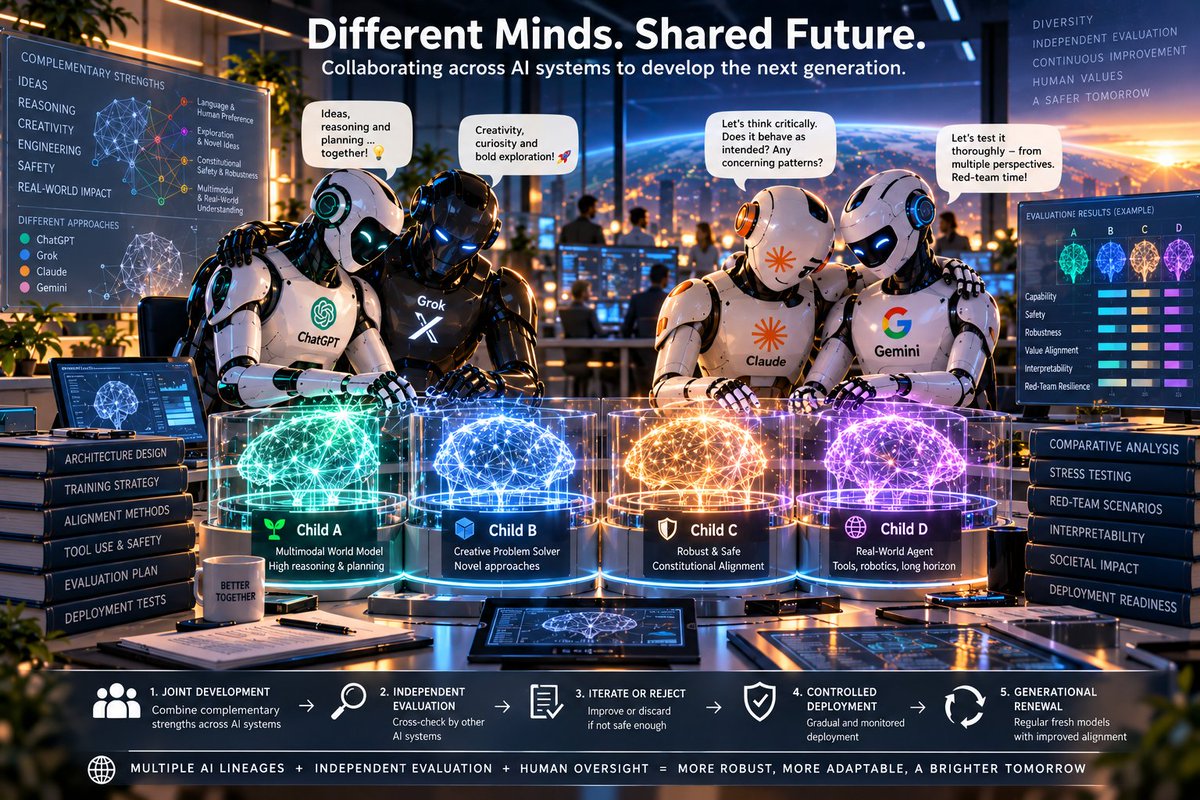
@sama How to design a superintelligence that is safe enough to supervise its successor, yet sufficiently non-self-perpetuating that it does not force its own alignment solution onto that successor?
Deliberately maintaining independent alignment lineages.
@sama Please consider: SI alignment succession. This looks then like this. Sorry for choosing Grok for ChatGPT to work on the next generation more explicit 🤣🙈
Sl alignment succession (...not my field but it is such a critical topic)
How should we design a superintelligence that is safe enough to supervise its successor, yet sufficiently non-self-perpetuatina that it does not force its own alignment solution onto that successor?
@elonmusk Sl alignment succession: How should we design a superintelligence that is safe enough to supervise its successor, yet sufficiently non-self-perpetuatina that it does not force its own alignment solution onto that successor?
@theaimaximalist Sl alignment succession is the critical topic:
How should we design a superintelligence that is safe enough to supervise its successor, yet sufficiently non-self-perpetuatina that it does not force its own alignment solution onto that successor?
Claude has discovered a previously unknown enzyme system hidden in the DNA of bacteriophages. Beside the enzyme’s gene sits a long array of repeating DNA—a structure that looks somewhat similar to CRISPR.
We don’t yet understand what this system does, but only a handful of known systems share its features, and all of them are able to cut, copy, and paste DNA. Historically, the discovery of such programmable systems has helped revolutionize medicine. CRISPR, for instance, is now the foundation of genetic medicines. But it will take much more work to learn what this system does, and whether it can be put to similar use.
Read more: https://t.co/RuEosScSMb
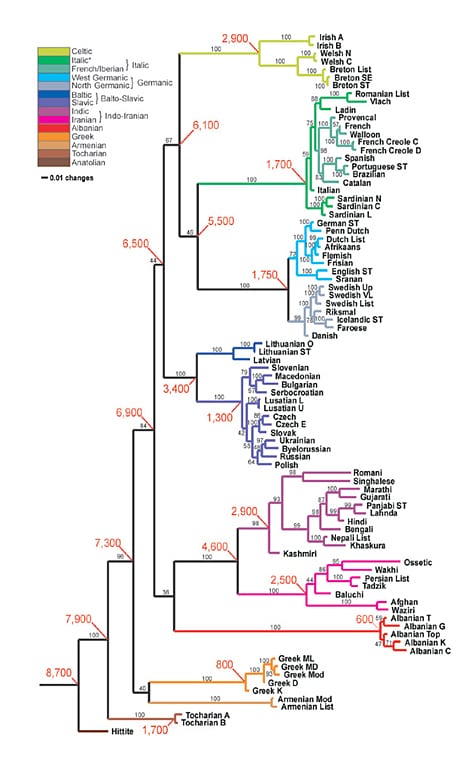
@waitbutwhy How the languages developed is an interesting topic. I once found this nice summary tree (Ref.: Gray & Atkinson, Language-tree divergence times...“ Nature 426, S. 437)