The new @LivingWageUK real Living Wage rates are out!
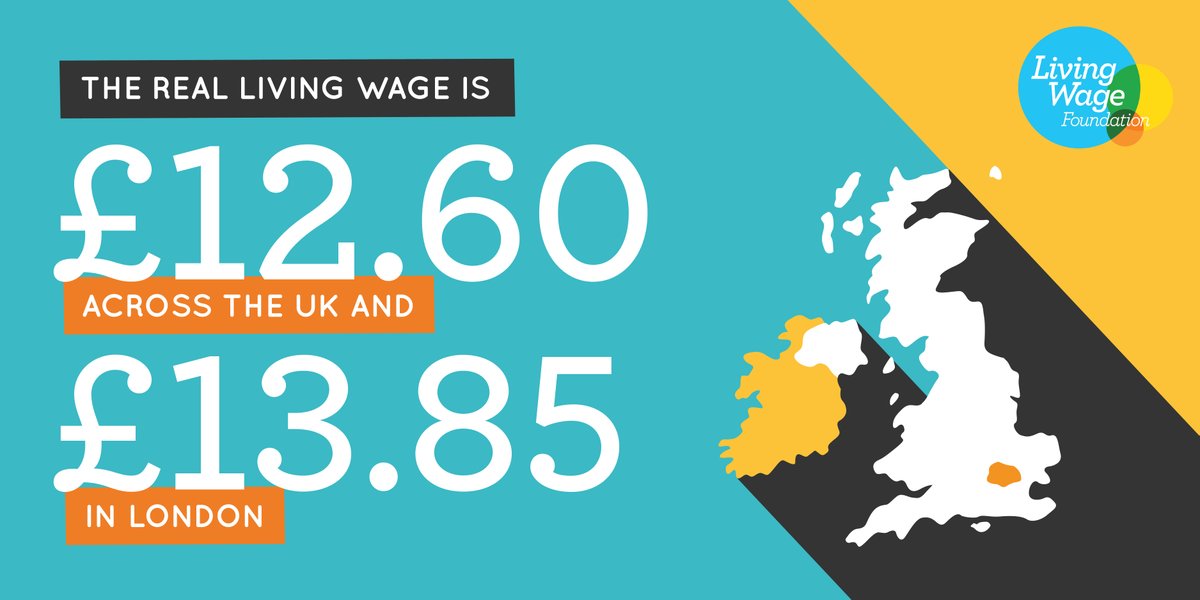
Both the UK and London #LivingWage rates have risen: £12.60 (UK) £13.85 (London) meaning a pay-rise for almost half a million workers so they can continue to meet their everyday needs.
Find out more: https://t.co/730ZXN33cC
🎉We're delighted to announce that we've published our 'Charting your Course: Earnings boost after University and College' report🎉
It helps young people, parents, and teachers access essential information on potential earnings after secondary school.
https://t.co/k1ZV4JqH03
📢💥New report 💥
Today, we release the UK Insecure Work Index 2024.
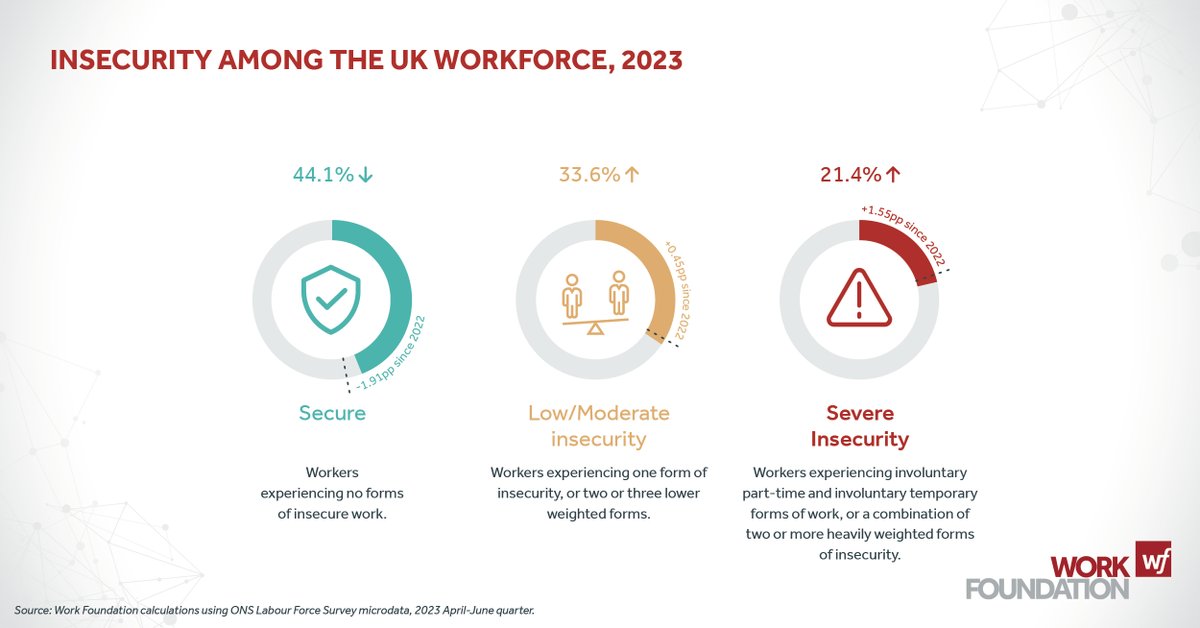
We found that in 2023, an estimated 6.8 million people (21.4%) were in severely insecure work – an increase of 500,000 from 2022.
This represents over 1 in 5 workers in the UK. (1/9)
https://t.co/FquJfWYjMM
Bit of personal news: I'll be leaving @LivingWageUK to take up a new role in a month's time. More importantly, there is now an excellent job going:
Senior Research Manager
Salary: £47,236 + £3150 London Weighting
Location: Flexible
Deadline: 4th March
https://t.co/PQOCuKysu2
Sharp increase to the National Living Wage (NLW) provides welcome boost for UK's lowest paid, who are at the sharp end of the cost-of-living crisis. However, gap between the NLW and real LW has actually grown compared to 2022. Many workers will continue to struggle on new NLW.
📢 New @jrf_uk research 📢
The number of people experiencing destitution has more than doubled in 5 years.
3.8m people- 1m of them children- experienced this most severe form of hardship, unable to meet their basic physical need to be warm, dry, clean and fed.
🧵1/5
The NEW Living Wage rates for 2023/24 are out! 🎉
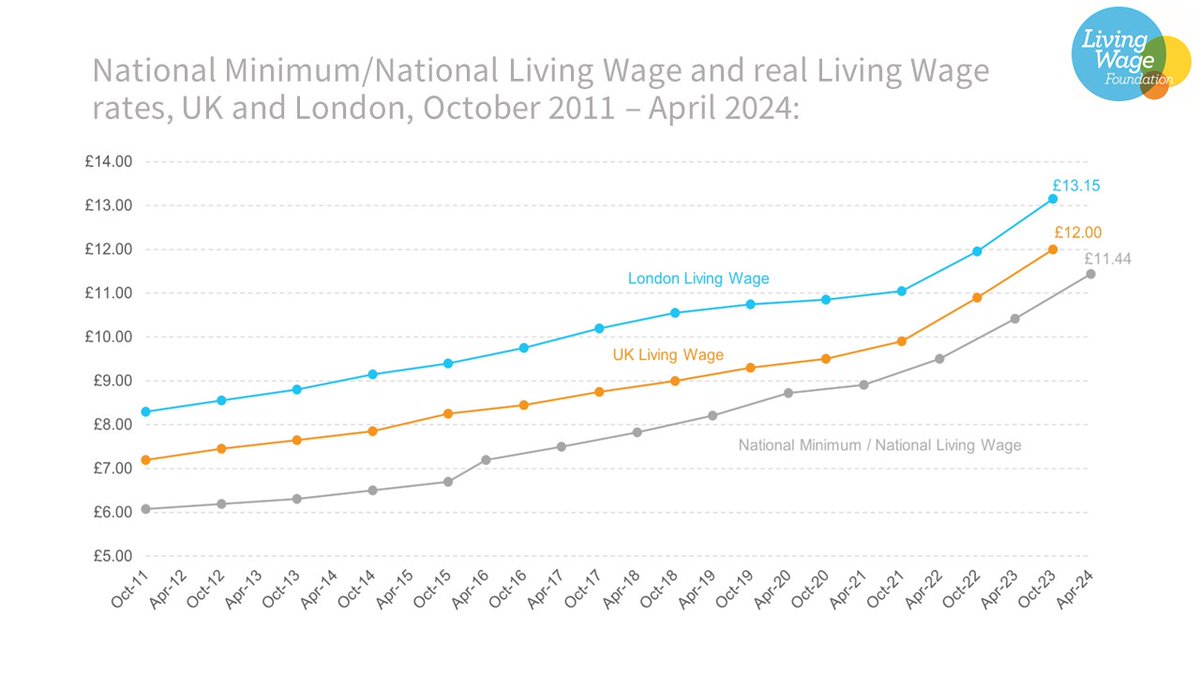
Both our #LivingWage rates have risen: £12 (UK) £13.15 (London), meaning a pay-rise for hundreds of thousands of workers. With the rising cost of living, it’s more important than ever.
Find out more ⬇️
https://t.co/1AXpPdI02j
New report 📢💥🧵
We have released new research looking at how secure work can reduce regional inequality & help to level up the UK.
2.2million (19.4%) of the 11m workers living within the nine Mayoral Combined Authorities & Greater London are in severely insecure work. (1/9)
📢NEW from @jrf_uk
We know poverty is deepening in the UK, so we wanted to look at what how sticky very deep poverty is, what increases people's risk of it and what protects people from it.
7 things that stood out for me...
📢We have another great opportunity to join the Living Wage Foundation team! We're looking for a Research Officer to develop our growing evidence base.
Deadline for applications: 11:59 19th October
#LivingWage
Find out more and apply: https://t.co/Bwrrlrdawc
🏆Our #Researchoftheweek goes to @LivingWageUK for their recent report on Precarious pay and uncertain hours: Insecure work in the UK Labour Market. (1/7)
🧵👇
https://t.co/sdsU7WKIOe
@billwells_1@PaulBivand@LivingWageUK@Work_Life_You We also routed out those that were in Insecure roles due to choice or preference as much as possible. For instance, only carrying forward those that worked <16hrs who also wanted to work more, and the same for those with a temp job who wanted a permanent job.
New @LivingWageUK research on Insecure Work. Quick summary below.
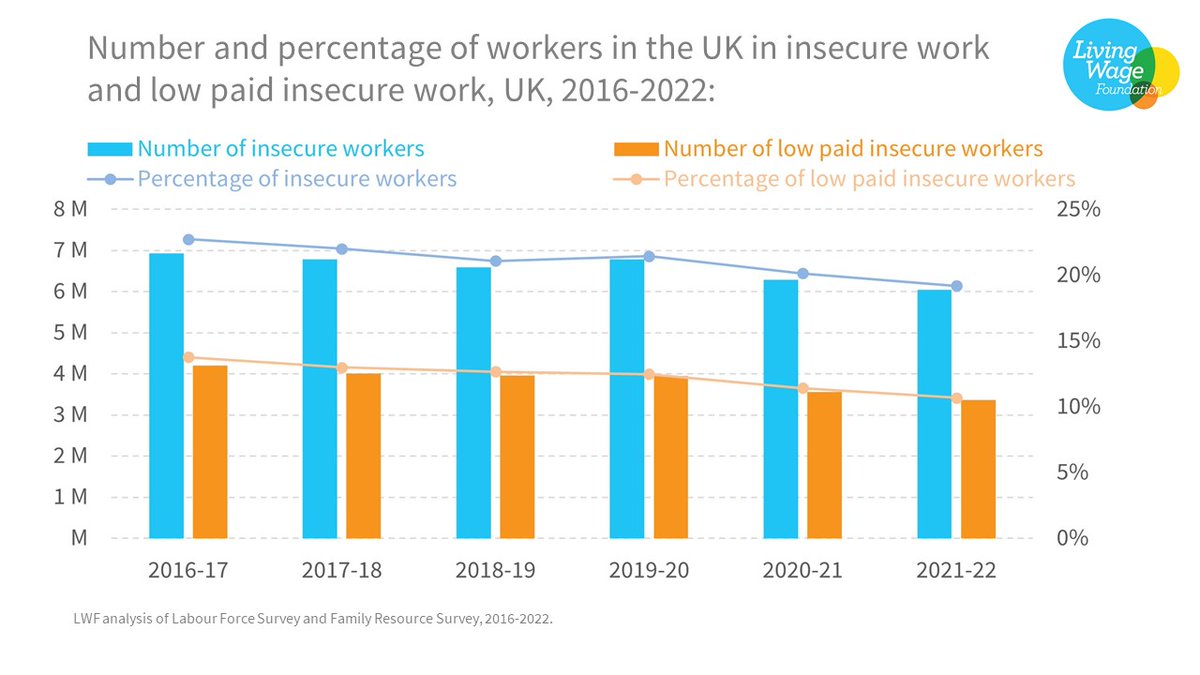
Insecure work impacts 6.1m workers throughout the UK - around a fifth of all workers. Meanwhile, 3.4m are in low paid insecure work. Both of these are slightly down on previous years. 1/5
@billwells_1@PaulBivand@LivingWageUK@Work_Life_You Some would, some wouldn't. Though workers can still be satisfied with more 'insecure' roles, for instance, they may like the flexibility that comes with ZHCs though that doesn't make the ZHC particularly secure.
A clear drawback of insecure work is being called into work without sufficient notice. Our polling data suggests 59% of workers with varying hours have been called into work with less than a week’s notice – a consistent feature of working life (as shown in the graph). 4/5